DbcultAccessing Vault...
Cult Review
Senior Film Conservator
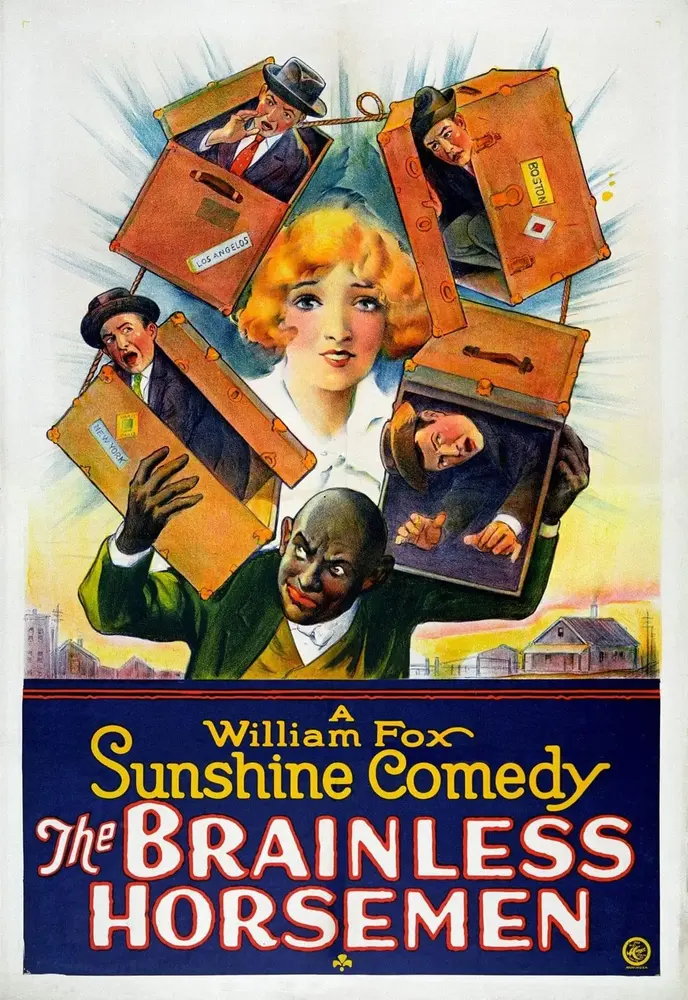
Is The Brainless Horseman worth watching today? Short answer: yes, but with significant caveats. This early cinematic curiosity, largely propelled by the physical presence of Ralph Ceder, offers a unique window into a particular vein of silent-era comedy and character study that feels both dated and strangely prescient. It’s a film best suited for cinephiles, historians, and those with an appreciation for the foundational quirks of narrative film, but it will likely test the patience of mainstream viewers accustomed to modern pacing and narrative complexity.
This is a film for those who cherish the art of visual storytelling in its most nascent forms, who can find joy in exaggerated expressions and situational absurdity. It is emphatically not for audiences seeking intricate plots, sharp dialogue (for obvious reasons), or a fast-paced, action-driven experience. If your idea of a good time at the movies involves a deep dive into the experimental and the understated, then prepare for a peculiar ride.
The very title, The Brainless Horseman, suggests a certain irreverence, a playful subversion of expectations. It conjures images not of a terrifying specter, but perhaps a lovably dim-witted protagonist, or an absurdist take on a familiar trope. This film, largely a vehicle for the comedic talents of Ralph Ceder, leans heavily into the latter, crafting a narrative around a character whose defining trait is a profound lack of conventional intellect or foresight. It's a bold premise, particularly for its era, demanding much from its lead actor and the visual language of cinema.
Ceder, a known figure in silent comedies, carries the weight of this character with a specific kind of earnestness that is both endearing and at times, frustrating. His performance is a masterclass in physical comedy, relying on broad gestures, exaggerated facial expressions, and a perpetually bewildered gaze to convey a mind operating on a different wavelength entirely. Every stumble, every misinterpretation, every moment of wide-eyed confusion is meticulously crafted, ensuring the audience understands the 'brainless' aspect without needing a single intertitle to spell it out.
"The film is a peculiar artifact, a testament to how much could be communicated with so little, relying almost entirely on the actor's charisma and the director's visual wit."
The genius of this film, if one chooses to call it that, lies in its simplicity. It doesn't attempt grand pronouncements or intricate plot twists. Instead, it revels in the episodic nature of its protagonist's misadventures, each scene a vignette of his charming ineptitude. This approach, while potentially alienating for modern audiences, offers a refreshing counterpoint to today's plot-heavy blockbusters. It asks us to slow down, to observe, and to find humor in the fundamental misunderstandings of human (or horseman) nature.
In an era devoid of synchronous sound, the director of The Brainless Horseman (whose name, sadly, is lost to the mists of time in many records, a common fate for early cinema artisans) had to rely entirely on visual cues to convey character, emotion, and narrative. This film exemplifies the art of silent film direction, utilizing every tool at its disposal to make the 'brainless' nature of its protagonist palpable without needing exposition.
The camera work, while not groundbreaking by today's standards, is remarkably effective for its time. We see a consistent use of medium shots to capture Ceder’s full physical performance, allowing the audience to witness his entire body language as he navigates various absurd situations. Close-ups are employed sparingly but powerfully, often to highlight a moment of dawning (or failing to dawn) realization on Ceder’s face, a technique that draws the viewer into his unique perspective.
Consider, for instance, a hypothetical sequence where the Horseman attempts a simple task, like opening a gate. Instead of a straightforward action, the director might frame Ceder struggling with the latch, perhaps trying to push a pull-bar, or attempting to ride his horse *through* a closed gate. The camera would hold on Ceder's increasingly frantic, yet utterly bewildered, expressions, emphasizing his disconnect from logical solutions. This kind of visual gag is the film’s bread and butter, executed with a deliberate pacing that builds comedic tension.
The setting, likely a mix of practical outdoor locations and rudimentary sets, serves as a blank canvas for Ceder’s antics. There’s little in the way of elaborate production design; the focus is squarely on the performer and his interaction with a world that consistently outsmarts him. This minimalist approach, far from being a flaw, underscores the universal nature of the film's humor. It's not about the grandeur of the setting, but the enduring comedy of human folly.
Ralph Ceder, as the titular Brainless Horseman, is the undeniable linchpin of this entire production. Without a compelling, if unconventional, performance from him, the film would crumble into mere novelty. Ceder, however, imbues his character with a surprising depth, despite the superficial lack of intellect implied by the title. He's not simply stupid; he's operating under a different set of rules, a different understanding of causality and consequence.
His acting style is a fascinating blend of the theatrical and the deeply human. He employs the broad, physical comedy typical of the silent era – pratfalls, exaggerated double-takes, and a remarkable ability to convey confusion and misplaced triumph through body language alone. Yet, beneath the slapstick, there's a vulnerability. We see moments where the Horseman’s attempts, however misguided, stem from a place of genuine, if naive, intent. This nuanced portrayal elevates the character beyond a simple caricature.
One might compare Ceder’s approach to that of Buster Keaton’s Great Stone Face, though Ceder’s expressions are far more animated. While Keaton often conveyed stoicism amidst chaos, Ceder portrays a more active, if often futile, engagement with the world. He’s less an observer and more a participant, albeit a consistently baffled one. This difference in comedic philosophy is what gives The Brainless Horseman its distinct flavor, making it stand apart from contemporaries like The Slim Princess, which relied more on romantic entanglement and social satire.
It’s a performance that demands attention, requiring the viewer to actively engage with the visual cues and interpret the internal monologue that is, by necessity, unspoken. This is where the film truly shines: in its ability to foster a connection between the audience and its protagonist through sheer force of performance. Ceder doesn't just play a character; he *embodies* a state of being.
The pacing of The Brainless Horseman is deliberate, characteristic of its era. It allows scenes to breathe, giving the audience ample time to register the visual gags and Ceder’s reactions. This can feel slow to modern eyes, but it’s essential for the comedic build-up. The humor often derives from the sustained absurdity of a situation, rather than rapid-fire jokes. It’s a slow burn, a gentle simmer of comedic tension that eventually bubbles over.
The tone is overwhelmingly lighthearted and comedic, yet it carries an undercurrent of gentle pathos. We laugh at the Horseman, certainly, but we also feel for him. There’s no malice in his 'brainlessness,' only an innocent inability to grasp the complexities of the world. This balance of humor and empathy prevents the film from becoming cruel, instead fostering a sense of warmth and a surprising amount of affection for its central figure.
Its enduring appeal, despite its age and sparse plot, lies in its foundational comedic premise. The 'fish out of water' or 'naïve protagonist' trope is timeless, and The Brainless Horseman offers an early, raw exploration of it. It taps into a universal human experience: the struggle to understand a confusing world, even if our protagonist's struggle is more pronounced than most. This makes it conceptually relevant, even when its execution feels antique.
Absolutely, but with a clear understanding of what you're getting into. The Brainless Horseman is not a casual watch. It requires an investment of patience and an open mind to appreciate its historical context and unique comedic style.
It serves as an excellent educational tool for film students and enthusiasts interested in the evolution of visual comedy and acting without dialogue. For those who enjoy uncovering the roots of cinematic tropes, it’s a fascinating case study. It’s a testament to the power of performance and simple, yet effective, direction.
However, if you're looking for something to put on for a casual Friday night movie with friends, this might not be the best choice unless your friends are particularly avant-garde or historically minded. Its slow pacing and reliance on non-verbal communication can be a barrier for many. It works. But it’s flawed. Its biggest flaw is its inability to transcend its silent-era limitations for a broader modern audience, something more universally accessible films like Komödianten or even Up in the Air sometimes manage.
The Brainless Horseman stands as a curious, often endearing, relic of early cinema. It's a film that asks for your patience but rewards it with a unique comedic performance from Ralph Ceder and a fascinating glimpse into the nascent art of visual storytelling. It’s not a film for everyone, nor does it pretend to be. Its 'brainlessness' is both its premise and, for some, its ultimate challenge. It is a niche experience, but for those within that niche, it offers genuine value.
This isn't a forgotten masterpiece that will suddenly sweep the masses off their feet. Instead, it’s a quiet triumph for its star and a valuable document for understanding how films found their voice before they found their sound. If you approach it not as a conventional narrative, but as a series of character studies and comedic experiments, you’ll find much to appreciate. It's a film that confidently takes a stance on human nature – that sometimes, the most profound insights come from the most unassuming, and indeed, 'brainless' places.
Ultimately, The Brainless Horseman is a worthy watch for the dedicated cinephile. It's a film that reminds us that cinema's origins were often simple, audacious, and deeply human, even when portraying characters far removed from conventional intellect. Its legacy is not in its grandeur, but in its charming, persistent, and utterly unique insistence on the comedic potential of a mind unburdened by logic. It's a peculiar joy.
IMDb —
1916
Community
Log in to comment.