DbcultAccessing Vault...
Cult Review
Senior Film Conservator
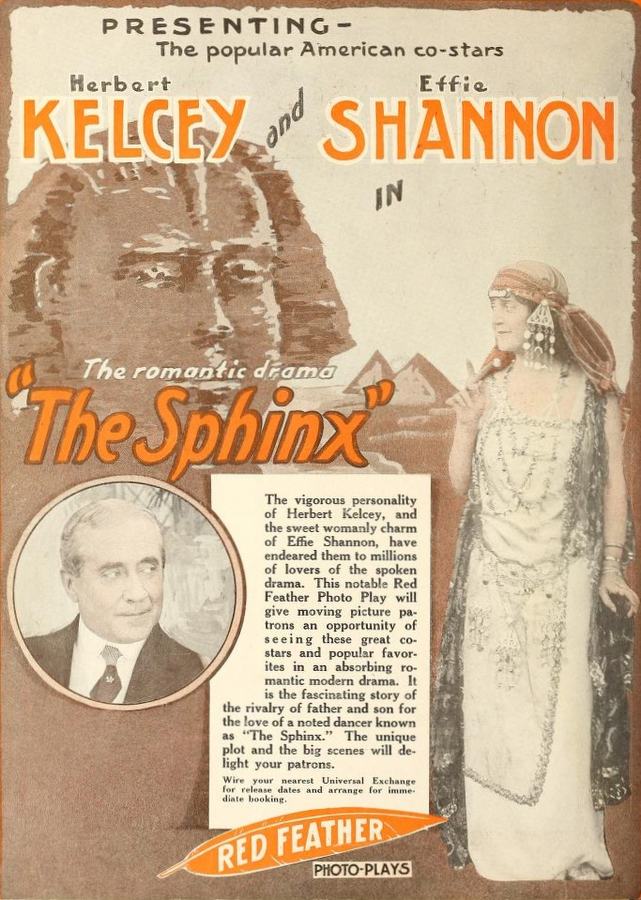
Stepping back into the flickering shadows of early cinema, one often encounters narratives that, despite their age, resonate with an astonishing contemporaneity. Such is the case with The Sphinx, a 1916 silent drama penned by the prolific Raymond L. Schrock. This isn't just a film; it's a social commentary wrapped in a scandalous love triangle, a daring exploration of desire, deception, and the brittle foundations of familial loyalty. In an era where moral codes were outwardly rigid yet frequently tested behind closed doors, The Sphinx dared to pry open a particularly uncomfortable can of worms: a father and son entangled with the same enigmatic woman.
The brilliance of Schrock's screenplay lies in its elegant simplicity, yet profound psychological depth. We are introduced to the Macklin household, ostensibly a picture of genteel respectability. Arthur Macklin, portrayed with a nuanced gravitas by Herbert Kelcey, is a widower, a man whose public persona likely conceals a private yearning. His son, Charles, brought to life by the earnest Louise Huff (a casting choice that, in retrospect, offers an interesting gender-bending dynamic for the time, though common in early cinema for youthful male roles), embodies the impetuousness of youth, perhaps searching for something beyond the conventional. Their shared secret, the exotic dancer known only as The Sphinx, becomes the fulcrum upon which their lives, and indeed their very identities, pivot. This character, a siren of the stage, represents a departure from the demure domesticity expected of women in that period. Her allure is her mystery, her independence, her very 'otherness.' She is a catalyst, rather than a fully fleshed-out character in the modern sense, a mirror reflecting the desires and societal anxieties of the men who pursue her.
The tension in The Sphinx isn't merely derived from the illicit nature of the affairs, but from the ticking time bomb of their inevitable discovery. It's a testament to the era's storytelling that such a scenario could hold an audience rapt without a single spoken word. The filmmakers rely heavily on visual cues, the subtle shifts in posture, the intense gazes, the dramatic intertitles, to convey the emotional maelstrom brewing beneath the surface. When Charles and Arthur find themselves simultaneously at The Sphinx's dwelling, the explosion is not just external but deeply internal for both men. Charles's furious denunciation of The Sphinx is not just anger at her, but perhaps a profound self-loathing, a realization of his own moral compromise. Arthur's violent reaction, knocking out his son, is a complex cocktail of emotions: shame, possessiveness, and a desperate attempt to maintain control over a situation spiraling rapidly into public scandal. One might compare this kind of domestic implosion, where hidden lives collide with devastating force, to the psychological thrillers of the era, though perhaps less overtly sinister than something like The House of Mystery, where the secrets are more macabre. Here, the mystery is of the human heart, not a haunted manor.
The cast of The Sphinx navigates this intricate emotional landscape with the exaggerated yet often deeply affecting pantomime characteristic of early silent film. Louise Huff, in the role of Charles, conveys youthful idealism and subsequent disillusionment with admirable clarity. Her expressions, though broad by today's standards, were precisely what was needed to communicate complex internal states to an audience accustomed to interpreting visual cues. Herbert Kelcey, as Arthur, embodies the tormented patriarch, a man torn between societal expectations and personal desires. His performance in the climactic confrontation must have been particularly powerful, showcasing a range from paternal authority to desperate vulnerability. Effie Shannon, whose role isn't explicitly detailed in the plot synopsis but often played strong female characters, likely brought a commanding presence to whatever part she inhabited, perhaps a moralizing figure or a confidante. The Sphinx herself, likely portrayed by Beatrice Noyes or another actress of the era adept at conveying allure and exoticism, remains an object of fascination. Her power lies not in dialogue, but in her projected image, a silent film equivalent of the femme fatale who disrupts the established order. William Bechtel and Charles Compton, while perhaps in supporting roles, would have contributed to the film's atmospheric texture, grounding the melodrama in a believable social context.
Raymond L. Schrock's writing is a cornerstone of this film's enduring appeal. Schrock was a prolific screenwriter, known for his ability to craft compelling narratives that often explored contemporary social issues or human foibles. In The Sphinx, he masterfully constructs a morality play, albeit one with a surprisingly ambiguous resolution. The decision by Arthur to marry The Sphinx, rather than abandon her, complicates the traditional 'fallen woman' narrative. It suggests a certain defiance of societal norms, or perhaps a deeper, more genuine affection on Arthur's part, or even a desperate attempt to legitimize a scandal. This twist elevates the film beyond simple melodrama, hinting at the complexities of human relationships that defy easy categorization. The subsequent return of Charles to his fiancée, Frances, feels like a retreat to safety, a reassertion of conventionality after a brush with the forbidden. It's a fascinating contrast: one man embraces the scandal, the other recoils. This duality offers rich ground for thematic analysis, inviting viewers to ponder the nature of love, duty, and personal liberty.
The portrayal of 'The Sphinx' herself, as an exotic dancer, is particularly noteworthy. In early cinema, such characters often served as symbols of temptation, danger, or societal 'otherness.' They were frequently punished for their transgressions or for simply existing outside the domestic sphere. Films like The Call of the Dance would have similarly explored the allure and perils associated with the world of performance. However, Schrock's choice to have Arthur marry her, rather than cast her aside, offers a glimmer of subversion, even if the film ultimately reinforces a return to traditional values for Charles. It’s a subtle nod to the burgeoning conversations about women’s roles and agency, even in a context that still largely constrained them.
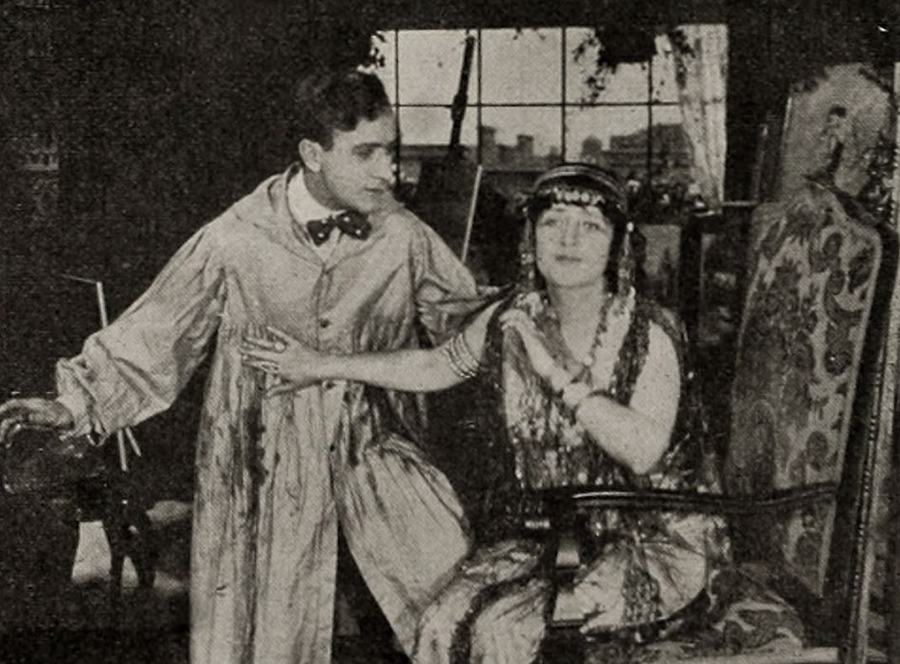
Analyzing The Sphinx also provides a valuable lens through which to appreciate the artistry of silent film direction. Without spoken dialogue, filmmakers had to master a unique visual vocabulary. Close-ups were used to emphasize emotional states, often accompanied by intertitles that either conveyed dialogue or provided narrative exposition. The editing rhythm would dictate the pacing of emotional beats, accelerating during moments of high drama and slowing for reflection. The use of light and shadow, though perhaps less sophisticated than in later German Expressionist works like Der Andere, would still have been crucial in establishing mood and character. For instance, the clandestine meetings with The Sphinx would likely have been filmed in chiaroscuro, emphasizing their secretive and morally ambiguous nature. The costumes, too, played a significant role, with The Sphinx's attire undoubtedly contrasting sharply with the more conservative dress of Frances, Charles's fiancée, visually underscoring the conflict between passion and propriety.
The film's themes of forbidden love and betrayal echo through cinematic history, finding new forms in every generation. The concept of a hidden affair, particularly one that crosses familial lines, is a potent narrative device. It taps into primal fears of exposure and the destruction of the family unit. Consider the emotional devastation wrought by similar secrets in more modern dramas, or the sheer scandal of something like An Affair of Three Nations, albeit on a geopolitical scale. Here, the 'nations' are the father, the son, and the enigmatic woman who binds and then shatters their world. The film doesn't offer easy answers, nor does it preach in an overt manner. Instead, it presents a scenario and allows the audience to grapple with the moral implications, a hallmark of effective storytelling regardless of the era.
What makes The Sphinx, and indeed many silent films, so compelling for contemporary viewers is their raw, unfiltered emotionality. Without dialogue to intellectualize or rationalize, feelings are often presented in their purest, most visceral form. The shock of Charles's discovery, his subsequent outburst, and Arthur's violent response are stripped of verbal nuance, making them all the more impactful. This directness, coupled with the dramatic tension inherent in the plot, ensures that the film remains a powerful piece of cinema history. It reflects not only the storytelling conventions of its time but also the underlying anxieties and desires of a society navigating rapid change.
The resolution of the plot, with Arthur marrying The Sphinx and Charles returning to Frances, is particularly telling. It suggests a complex interplay of consequences and choices. Arthur, perhaps embracing a form of love or commitment that defies social censure, solidifies his bond with The Sphinx. Charles, meanwhile, seeks refuge in the familiar, a testament to the comforting pull of established social order after a brush with chaos. This dichotomy, the father embracing the forbidden while the son retreats to the conventional, offers a fascinating study in character and societal pressure. It's a narrative that, while perhaps not as overtly tragic as The Lost Chord, certainly explores themes of harmony disrupted and the search for resolution, whether conventional or defiant.
Moreover, The Sphinx serves as a valuable artifact for understanding the evolution of narrative film. It demonstrates how early filmmakers tackled complex interpersonal relationships, moral quandaries, and psychological drama using the tools available to them. The film’s ability to generate suspense, elicit empathy, and provoke thought without spoken words is a powerful reminder of cinema’s fundamental capacity for visual storytelling. It's not just a historical curiosity; it's a vibrant example of how human emotions and societal conflicts have been rendered on screen for over a century. Raymond L. Schrock and the cast, including Louise Huff, Herbert Kelcey, and Effie Shannon, delivered a piece of work that, even through the haze of time, speaks to the timeless struggles of the human heart. For those interested in the foundational narratives of early Hollywood, The Sphinx is a compelling and often unsettling journey into the darker corners of familial love and societal expectation.
In conclusion, The Sphinx stands as a compelling testament to the power of silent cinema to tackle profound and often uncomfortable human dramas. Its narrative, woven by the skilled hand of Raymond L. Schrock and brought to life by a dedicated cast, continues to intrigue and challenge viewers, proving that some stories, particularly those concerning the labyrinthine complexities of the human heart, transcend the boundaries of time and technology. It's a film that asks us to look beyond the surface, much like the enigmatic dancer herself, and consider the hidden desires and difficult choices that define us all.
IMDb —
1920
Community
Log in to comment.