DbcultAccessing Vault...
5/10
Senior Film Conservator
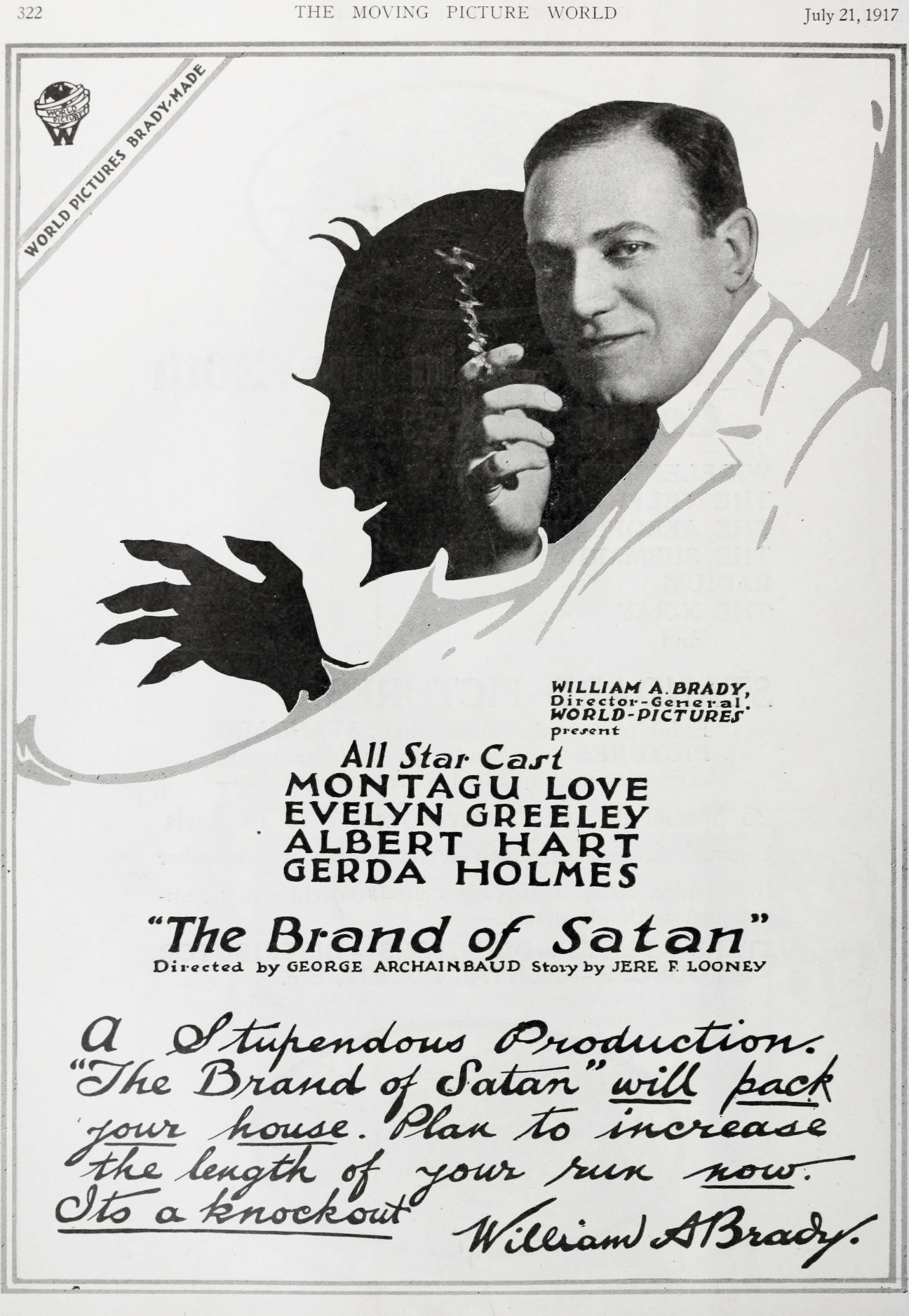
A definitive 5/10 rating for a film that redefined the boundaries of cult cinema. The Brand of Satan remains a cornerstone of transgressive art.
In the nascent years of the twentieth century, cinema was rapidly evolving from a mere novelty of motion into a sophisticated vehicle for psychological inquiry. The Brand of Satan (1917) stands as a towering, if often overlooked, monument to this transition. While contemporary audiences might be more familiar with the patriotic fervor found in The Little American, Peerce’s work here delves into a far more claustrophobic and internal theater of war. The film introduces us to a man whose existence is a palimpsest of identity—a respectable facade beneath which lurks the "Brand," a mark of predestined or perhaps supernatural malevolence that manifests as a notorious strangler.
The 1917 landscape was one of profound upheaval, and the arts reflected a burgeoning fascination with the duality of man. This was the era where the theories of Freud and Jung began to seep into the collective consciousness, and The Brand of Satan captures this zeitgeist with visceral precision. Unlike the more whimsical or adventurous fare of the period, such as Adventures of Carol, this film embraces a somber, almost nihilistic aesthetic that challenges the viewer to confront the darkness within the self.
The weight of the film rests squarely on the shoulders of J. Herbert Frank. His portrayal of the dual protagonist is a masterclass in silent film acting, avoiding the overly broad pantomime that plagued many of his contemporaries. When he is the law-abiding citizen, his movements are measured, his posture erect, embodying the Victorian ideal of self-control. However, as the "other" takes hold—the strangler who stalks the foggy alleyways—Frank undergoes a metamorphosis that is more internal than external. It is in the widening of the eyes, the tension in the jaw, and the subtle shift in his gait that the horror truly resides.
This performance invites comparison to the rugged masculinity seen in The Bruiser, but Frank offers something far more nuanced. He isn't just a physical threat; he is a psychological enigma. The supporting cast, including the luminous Evelyn Greeley and the formidable Montagu Love, provide a necessary grounding for Frank’s spiraling descent. Love, in particular, brings a gravitas that balances the more sensationalist aspects of the plot, ensuring the film remains a drama of consequence rather than a mere penny dreadful.
Writer Jere F. Looney crafts a narrative that is surprisingly taut for its time. The pacing avoids the episodic nature found in many silent serials, such as the Danish import Manden med de ni Fingre IV. Instead, Looney builds a sense of inevitable doom. The revelation that the protagonist and the strangler are one and the same is not handled as a cheap twist but as a tragic inevitability. This thematic preoccupation with destiny is a recurring motif in 1917 cinema, echoing the sentiments found in The Child of Destiny, where the characters are often at the mercy of forces far beyond their control.
The script also manages to weave in a social critique of the urban environment. The city is depicted as a labyrinthine monster in its own right, a place where anonymity allows the "Brand" to flourish. This urban dread is a far cry from the rural landscapes of The Law of the North, highlighting a shift in the American psyche as the population moved toward industrial centers. The strangler is a product of the city—a manifestation of its hidden vices and its cold, impersonal nature.
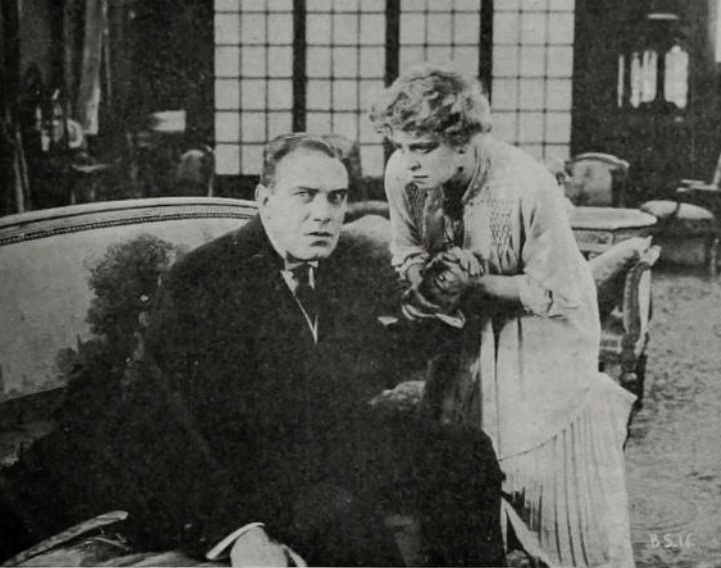
Technically, The Brand of Satan is a revelation. The use of low-key lighting to delineate the two worlds of the protagonist is an early example of what would later become the hallmark of German Expressionism and American Film Noir. The shadows are not merely absences of light; they are active participants in the storytelling. They swallow the characters, hide their sins, and reflect their fractured minds. This visual sophistication is often missing in more straightforward dramas like The Ploughshare or the historical epic Valdemar Sejr.
The camera work, while largely static as per the conventions of the time, utilizes framing to emphasize isolation. We often see the protagonist framed by doorways or windows—architectural barriers that mirror his mental compartmentalization. When the strangler emerges, the camera seems to move closer, creating an oppressive sense of intimacy that is genuinely unsettling. It lacks the lightheartedness of Come Robinet sposò Robinette, choosing instead to dwell in the macabre.
At its core, the film is an interrogation of the Victorian moral code. The idea that a "good" man could harbor such a "demonic" alter ego was a direct challenge to the era's belief in the inherent goodness of the civilized man. It suggests that the "Brand" is not something external, but a dormant part of the human condition. This exploration of moral ambiguity is far more complex than the clear-cut heroics of Masked Ball or the sentimentalism of Little Miss Optimist.
The film also touches upon the class anxieties of the time. The protagonist's dual life allows him to traverse different social strata, from high society to the criminal underworld, much like the characters in A Little Brother of the Rich or The Rogues of London. However, while those films often focus on the glamour or the overt crime, The Brand of Satan focuses on the psychological toll of this transgression. The protagonist is not a hero of the people; he is a victim of his own biology and social standing.
When we look at the broader tapestry of 1917 cinema, The Brand of Satan occupies a unique niche. It lacks the grand scale of Uncle Tom's Cabin, yet it possesses a psychological depth that the latter lacks. It is a film that demands to be seen not just as a historical curiosity, but as a precursor to the modern psychological thriller. The themes of identity, guilt, and the duality of man would go on to be explored in countless films, but few would capture the raw, primal fear of the "strangler within" as effectively as this.
Even in its moments of melodrama, there is a kernel of truth that resonates. The final act, which I will not spoil, offers a resolution that is both tragic and profoundly moving. It reminds us that the struggle for the soul is a perennial theme in art, one that remains as relevant today as it was in the silent era. Whether compared to the grace of The Last Dance or the grit of contemporary thrillers, The Brand of Satan remains a haunting reminder of the darkness that can dwell in the human heart.
IMDb 7.2
1930
Community
Log in to comment.