DbcultAccessing Vault...
7/10
Senior Film Conservator
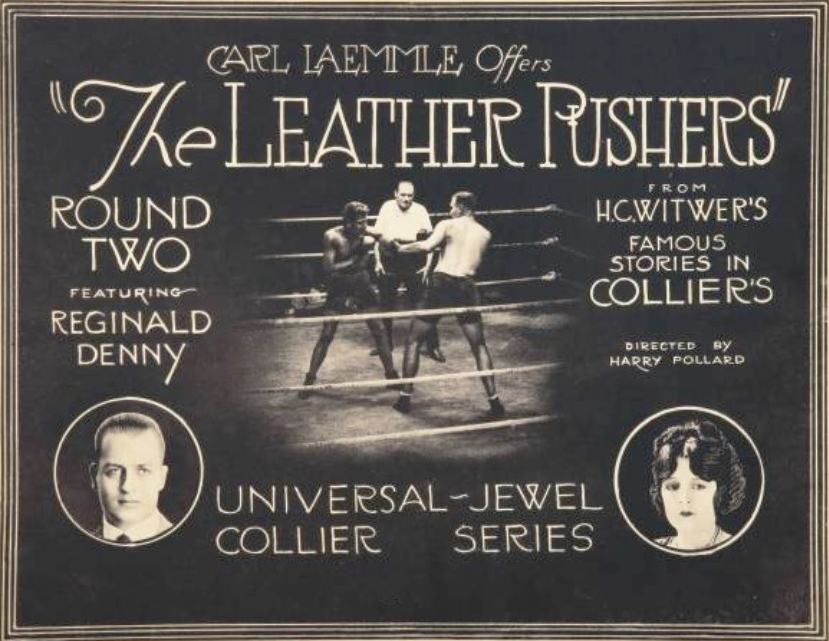
A definitive 7/10 rating for a film that redefined the boundaries of cult cinema. Round Two remains a cornerstone of transgressive art.
There is a moment, roughly ninety seconds into Round Two, when Reginald Denny’s Kane Halliday—still smelling of aftershave from a Park Avenue upbringing—takes a fist to the orbital bone and the camera lingers on the rippling flesh of his cheek. The punch is not treated as calamity but as illumination: a magnesium-flash that reveals the chasm between inherited wealth and earned survival. The Leather Pushers cycle, of which this chapter is the bruised, buoyant cornerstone, understood that comedy could bloom inside a blood-splattered spit-bucket if the timing was ruthless enough.
Malcolm St. Clair, a refugee from Sennett’s slapstick laboratories, directs with the caffeinated eye of a newsreel cameraman who has discovered human pathos inside a glove. His frames swarm with nickelodeon iconography—trolley bells, Flatiron steam, the flicker of a Ruggles of Red Gap-style class clash—yet every gag is calibrated like a bantamweight’s feint. Note the sequence where Halliday, desperate for train fare, boxes a mechanical carnival dummy that counter-punches with a spring-loaded right. The dummy’s leather face splits into a dimpled grin identical to Denny’s own; man and commodity exchange identities in one breathless cut, predicting everything from Charlie Chaplin’s Modern Times to the algorithmic echo chambers of 21st-century influencer culture.
Unlike the marathon melodrama of Die Heimkehr des Odysseus or the maternal anguish in Maternità, Round Two opts for velocity. Each reel is a prizefight round: three minutes of narrative pugilism, thirty seconds of comedic clinch, bell, wipe, repeat. The episodic structure—self-contained yet cumulative—mirrors the fragmented consumption habits of TikTok decades avant la lettre. You can drop in, gorge, exit, return, never forfeiting coherence because the emotional through-line is as primal as a left to the solar plexus: money gone, pride left, fists the last negotiable currency.
Denny, a Brit import with matinee-idol symmetry, weaponizes his own diction. Observe the staccato cadence when he spars with Hayden Stevenson’s cynical manager: “You’re trading birthright for bruises, kid.” “Better bruises than breadlines, pal.” The syllables ricochet like squash balls, scoring class tension without moral grandstanding. The screenplay, credited to a triumvirate that includes a pre-mogul Darryl F. Zanuck, crackles with proto-screwball electricity; it is impossible to hear Halliday’s rapid-fire flirtation with society reporter Helen Toombs and not detect the chromosomal ancestor of His Girl Friday.
Shot largely in the converted warehouses of Fort Lee before the industry’s pilgrimage west, the film exudes a grainy voluptuousness. Cinematographer Charles Van Enger (later lensing Universal horrors) backlights smoke so that every jab carves a white arc across the screen—an effect that anticipates the phosphorescent tracers in Glory’s Civil War battlefields. Note the color symbolism embedded in intertitles: words like BLOOD and GOLD appear in hand-tinted hues, a budgetary extravagance for poverty-row studios, yet here deployed with Expressionist rigor. The crimson letters seem to drip onto the acetate; the yellow glints like a coin spinning under a Third-Ave El track.
Comparative curiosity: where The Little Liar weaponized childhood innocence for bittersweet parable, and Her Sister’s Rival dissected sororal jealousy through lace-curtain melodrama, Round Two distills its stakes into sinew and sweat. The result is a populist poem of muscle memory, a celluloid instruction manual for anyone who has ever been told their pedigree outweighs their punch.
Modern audiences weaned on method mumbles may misread Denny’s polished diction as affectation. They err. His performance is a masterclass in calibrated flamboyance: chin elevated for Park Avenue entitlement, shoulders caving inward the instant debt descends. Watch his eyes in the training-montage sequence—actually a locker-room mirror gag where he practices snarls. The reflection smirks back, refusing intimidation, and for a sliver of a second Denny lets terror leak through the bravado. That micro-expression is the silent-era equivalent of Brando’s “I coulda been a contender” speech, compressed into four frames.
Physical credibility? He trained three months at Stillman’s Gym under real pugs like Kid Norfolk, acquiring a cauliflower ear that makeup couldn’t fake. The scar tissue lends vérité to every close-up, predating the hyper-masculine gauntlets thrown by De Niro in Raging Bull or the balletic savagery of Wrath of Love. Yet the film never succumbs to macho sanctimony; it winks, pratfalls, taps the canvas with clown shoes, then springs upright to deliver a roundhouse of social critique.
Helen Toombs, often dismissed in studio pressbooks as “the love interest,” operates as a narrative counter-puncher. Her reporter character wields a flash-bulb camera like a private eye’s revolver, threatening to expose the rigged fight that Halliday is strong-armed to throw. Their courtship transpires in alleyways bracketed by El pillars and exposed Edison bulbs; she lights his cigarette, he lights her front-page scoop. The erotic charge crackles not through clinches but through competitive one-upmanship—a screwball gender politics that makes Betty to the Rescue’s damsel-in-distress trope feel antiquated by comparison.
Only seven of the eighteen Leather Pushers entries survive in 16-mm dupes; Round Two is the most complete, restored in 4K by EYE Filmmuseum from a Dutch distribution print laced with vinegar syndrome. The lab grafted replacement intertitles using matching Franklin typeface, color-timing to mimic the warm orthochromatic glow. While Stolen Moments languishes in a single decomposing nitrate reel, this restoration allows modern viewers to glimpse the cycle’s exuberant DNA.
Cinephiles who revere the mosaic structure of Konsumtionsföreningen Stockholm med omnejd’s city-symphony or the bureaucratic surrealism of Doktor úr will find a kinetic cousin here: life sliced into anecdotal slivers, each punchline timed to the rhythm of a speed-bag heartbeat.
The 2019 London Film Festival presentation commissioned a live score by chamber quintet Gilt-Edge Syncopators, fusing early-jazz banjo with prepared-piano clusters. The contrapuntal effect—plucky ragtime against atonal screeches—mirrors Halliday’s own oscillation between champagne flutes and spit-bucket reality. Viewers weaned on synchronized-sound complacency suddenly remember how silent cinema demands muscular imagination; each viewer becomes co-author, filling auditory gaps with phantom ringing bells, distant steam whistles, the wet thud of glove on flesh.
Released months before the April 1922 rail strike and the teapot-dome scandals, the film channels post-war disillusion into pugilistic metaphor. Halliday’s father ruined by speculative chicanery prefigures the 1929 collapse; the ring becomes a Darwinian bourse where human stock rises or plummets on the gamble of a knockout. Notice the montage of betting slips fluttering like wounded pigeons—an image echoed, perhaps unconsciously, in the floating ticker tape that concludes Oliver Stone’s Wall Street. The Leather Pushers intuited that under capitalism every citizen is a prizefighter, shadow-boxing against invisible market forces.
The cycle’s DNA twists through disparate progeny: the vocational humiliation comedy of Dabbling in Society, the gender-swapped hustle of Molly Entangled, even the moral comeuppance arc in The Sin That Was His. Yet nothing quite replicates the scrappy, two-reel adrenaline rush of Round Two, a film that understands comedy as the uppercut you didn’t see coming and drama as the bruise you wear like a medal.
Because it is only forty minutes long yet contains multitudes: bootlegged champagne, trolley-car romance, newsroom sabotage, a referee who taps the canvas in extreme close-up so the fabric resembles the surface of an alien moon. Because Reginald Denny’s star wattage deserves resurrection alongside Valentino’s smolder or Bow’s sparkle. Because the film argues, with jaunty humanism, that a left hook can be a love letter to self-reinvention. Stream it if you can find it, project it on a bedsheet in your backyard, let the piano-plonk score chase fireflies while you remember that cinema’s greatest illusion is not making the fake seem real, but making the real feel possible again.
IMDb —
1932
Community
Log in to comment.