DbcultAccessing Vault...
Cult Review
Senior Film Conservator
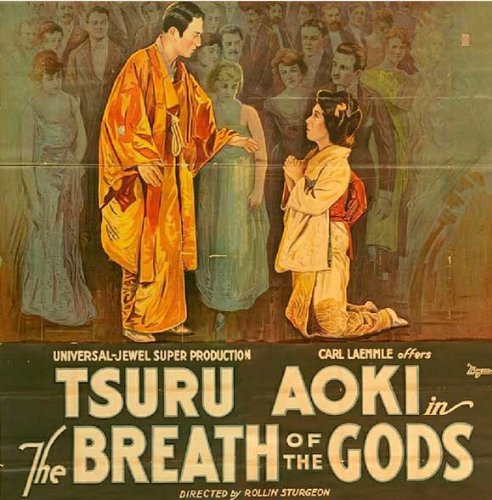
There is a moment halfway through The Breath of the Gods when the camera simply waits. Rain needles the lacquered eaves; a paper lantern exhales its flame; Yuki’s kimono sleeve, soaked indigo, clings to her wrist like bruised sky. No title card barges in to explain the hush. You are left alone with the thud of your own pulse, suddenly aware that silence itself can be a blade. In that hush I understood why this 1920 one-reel wonder—long dismissed as a mere footnote in Universal’s wartime output—deserves to sit beside the era’s most lacerating romances, even if celluloid vinegar has nibbled its edges.
Director Rollin S. Sturgeon opens on Washington’s tidal basin, letting melting snowflakes collide with blossom drift; the metaphor is clear—ephemeral meets eternal. Cinematographer Virgil Miller shoots Yuki’s introduction through a veil of hanging kimonos on a dormitory clothesline: a half-disclosed face, a flash of obi the color of arterial blood. Compare that visual modesty to the postcard pomp of The Victoria Cross, where every frame screams imperial pageantry. Sturgeon opts for negative space, coaxing tension from what we cannot see—an aesthetic that will pay tragic dividends once the lovers are separated by 7,000 miles of Pacific bitterness.
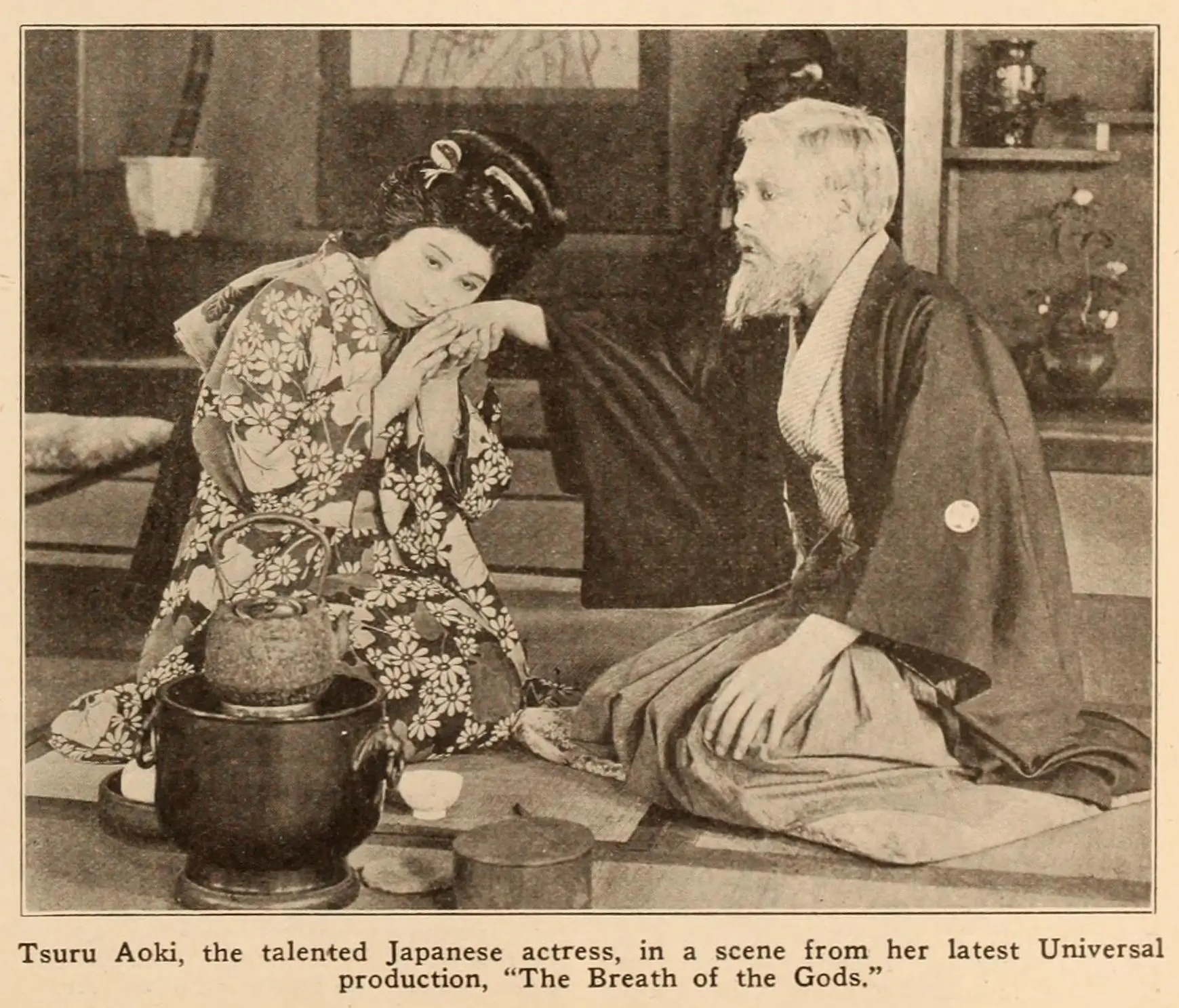
Screenwriter Charles J. Wilson, borrowing liberally from Mary McNeil Fenollosa’s unpublished short story, reframes the Russo-Japanese War not as artillery choreography but as a domestic siege. Every treaty clause, every midnight telegram, becomes a potential chisel aimed at Yuki’s autonomy. When Pierre steals that memorandum—its contents never disclosed beyond "Port Arthur supply routes"—he’s not committing espionage; he’s trying to rewind time, to fold the map back onto itself so that two hearts can overlap again. It’s a fool’s errand, the picture insists, because politics devours tenderness the way a forge consumes rice paper.
As Yuki, Tsuru Aoki glides between bowed compliance and ocular insurrection without once resorting to maiden-meek clichés. Watch her pupils when her father pronounces the betrothal: the iris tremor registers as micro-earthquake, a tectonic shift from daughter to commodity. Opposite her, Pat O’Malley’s Pierre is all gangly bravado; his American swagger curdles into feverish desperation once malaria and guilt set in. Their chemistry is less kiss-heavy than breath-heavy—an exchange of exhalations that feels borderline illicit in a film where even a wrist revealed from a sleeve is coded erotica.
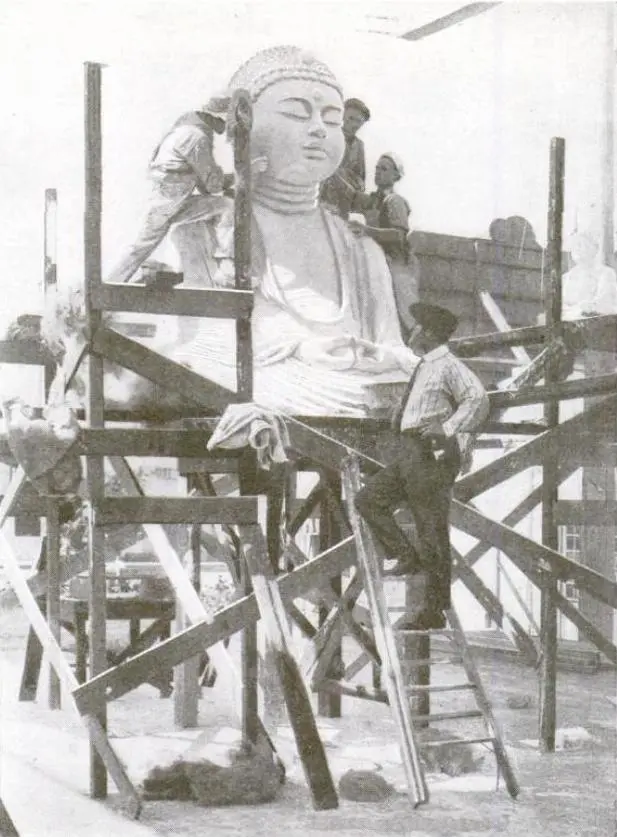
Meanwhile, Arthur Edmund Carewe sculpts Prince Hagane as neither mustache-twirling tyrant nor honorable adversary. Instead, he gifts the character a stiff-backed melancholy: here is a man marrying for alliance, unexpectedly coveting genuine affection, yet too shackled by protocol to articulate the want. When he barters Yuki for the document, the flicker in Carewe’s eyes betrays a hope that surrender might purchase intimacy—a self-delusion that makes his final march down the candle-lit corridor almost as pitiable as the lovers’ collapse.
Few silents hinge a plot on document larceny without plunging into slapstick. Breath of the Gods treats the pilfered dispatch like a cursed heirloom. Pierre claws it beneath his sweat-drenched coat, but the parchment becomes radioactive; every heartbeat seems to glow through his linen, branding him traitor to both nations. The film’s most electric shot arrives later: Hagane kneels at a low table, the fire before him guttering, and lays the retrieved document atop the coals. Wilson’s title card reads only "Honor restored is honor burned." The flames lick kanji-laden rice paper, turning diplomacy to floating black butterflies—an image so primal it retroactively rewrites the earlier love letters between Yuki and Pierre, suggesting that all words, once spoken in passion or politics, end as smoke.
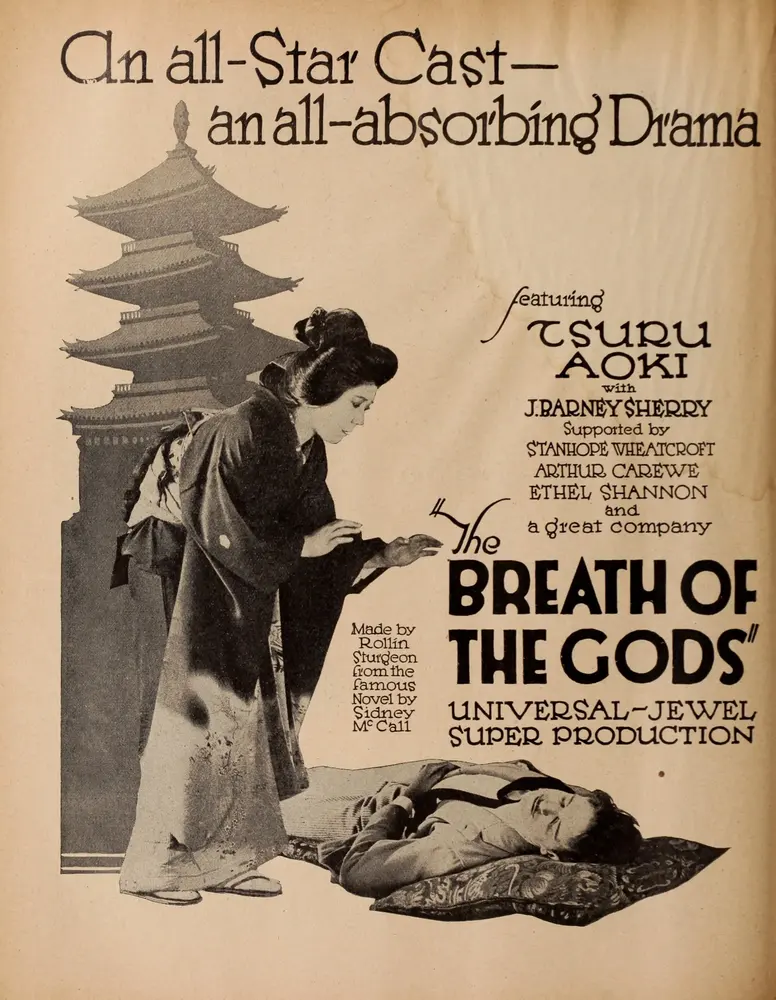
Rather than graphic steel, Sturgeon gives us ritual restraint. Yuki kneels on a pure-white futon, blade entering off-frame; the sole visual cue is a spreading stain, blooming like plum ink dropped into water. Miller’s camera dollies back, revealing the room’s symmetry upended—folded screens toppled, flower petals strewn as if a hurricane of etiquette has passed through. Because we are denied a close-up of wound or face, our minds sketch the agony, rendering it more grueling than any gore modern cinema can spray. Cue the funeral procession: Hagane’s retainers bear her makeshift bier beneath torii gates, lantern light strobing across their expressionless masks. The moment channels the fatalistic cadence of Bondage yet feels uniquely Shinto—death as transference of burden, not terminus.
No original score survives, so modern festival showings commission new accompaniment. I caught a 2019 MoMA print with a shō-infused quartet; reeds fluttered like wounded birds during Pierre’s delirium, while taiko heartbeats underscored Hagane’s ultimatum. The effect re-ancestrs the narrative, turning what could have been exotica into lament. Be warned: many YouTube bootlegs slap generic piano, flattening the ritual specificity into Victorian parlormush. Seek venues that honor the cultural dissonance—your sternum will thank you.
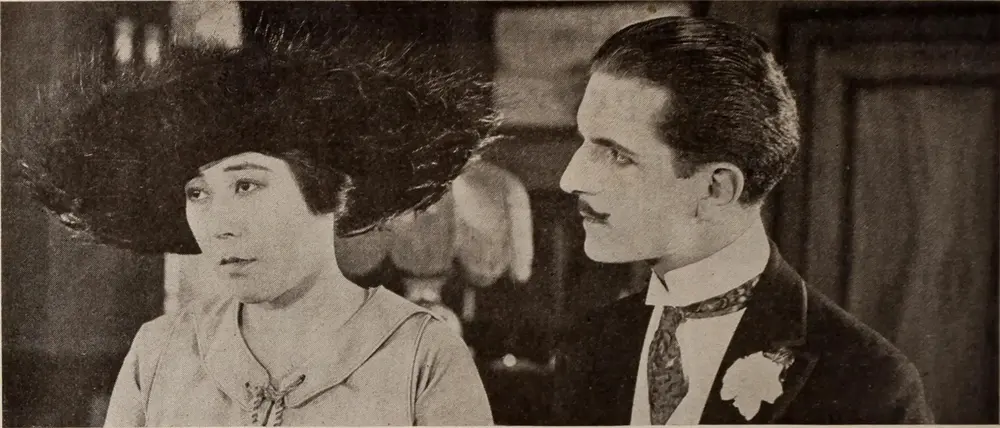
Today’s gaze cannot ignore the film’s ethnic calculus: a Japanese actress (Aoki) fronts a tale penned by white Americans, lensed through a Caucasian ensemble in yellow-face periphery. While Aoki’s presence partially disrupts Hollywood’s habit of total oriental masquerade, side characters like Mai Wells’s maid still slant into pidgin caricature. Contextualizing, the picture sits midway between the unapologetic orientalism of Rebecca the Jewess and the tentative authenticity of A Romance of the Redwoods. It’s an artifact laced with arsenic: progressive for 1920, problematic for 2024—handle with tongs, but do handle.
Compare the film’s fatalist romance to Poor Relations or Tender Memories, both of which cushion tragedy behind familial piety. Breath of the Gods refuses cushioning: every emotional obligation—filial, marital, patriotic—turns to shrapnel. Its closest spiritual sibling might be Im Zeichen der Schuld, though that German melodrama sanctifies redemption where Sturgeon savors annihilation. Critics who relegate the movie to "war-time programmer" miss its bruised modernity: characters orbit desire yet collide with institutional immensity, a theme Antonioni would echo four decades later.
Only 28 of the original 42 minutes are accounted for in the Library of Congress’s nitrate vault; fire claimed the rest in 1931. What survives begins mid-flirtation on D.C. streetcar and ends with Pierre cradling Yuki’s corpse at the break of a blood-red dawn. The missing reels allegedly detailed Pierre’s diplomatic initiation and a banquet where Yuki performs koto for embassy elites. Animation historians have experimented with rotoscope-interpolated stills to plug gaps; results feel heretical, like grafting porcelain with plasticine. Better, I argue, to accept lacunae as metaphors for cultural memory—absence as aura.
Because in an age when "content" slathers every surface, here is a film that believes love can still be lethal, that a single purloined page can tilt empires, that silence can howl louder than Dolby barrage. Because Tsuru Aoki’s eyes—half-shadowed beneath a sedge hat—contain multitudes of exile, prefiguring the diasporic ache found in today’s global cinema. Because watching nitrate flicker is akin to cradling actual time: those photons bounced off actors who crumbled to dust almost a century ago, yet for 28 minutes they breathe again, tentative as gaslight.
The Breath of the Gods is imperfect, politically prickly, and mutilated by entropy—yet it remains the rare silent that treats passion as geopolitical nitroglycerin. It will not soothe; it will haunt. Approach expecting the gentle melancholy of Rosemary and you’ll recoil. Approach prepared for a haiku soaked in kerosene and you might exit the screening with shattered composure, swearing you can still smell rain-soaked tatami and hear a lover’s breath that refuses, despite death, to cease.
"Some films you watch; others watch you. Breath of the Gods belongs to the latter—its gaze lingers long after credits have crumbled to white."
Seek the restoration. Wear black. Bring no popcorn—crunching would feel sacrilegious inside this cathedral of quiet combustion.
IMDb 7.5
1926
Community
Log in to comment.