DbcultAccessing Vault...
Cult Review
Senior Film Conservator
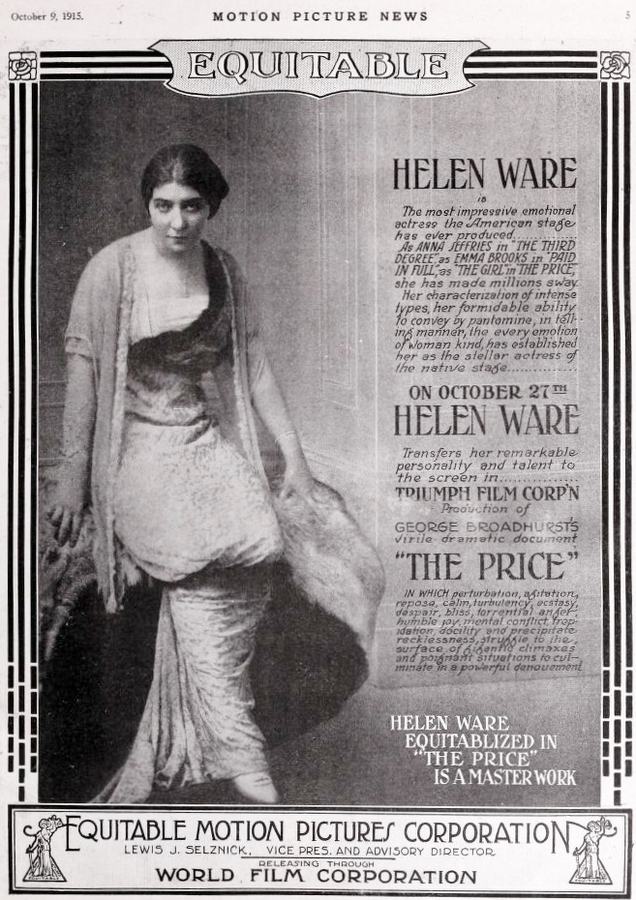
Broadhurst’s 1914 curio The Price arrives like a moth-eaten valentine slipped between the pages of cinema’s pubescent diary—its lace edges singed, its ink still heady with turpentine and forbidden musk. Viewed today, the film feels less a relic than a ghost that refuses to acknowledge its own burial, flitting across projector beams with a coyness both maddening and magnetic.
From the first iris-in, the narrative lunges at the jugular of Gilded Age precarity: chandeliers swapped for cold coffee, governess French for stenographer English. The crash lands harder precisely because we never glimpse the opulence—only the echo, reverberating in the girl’s stunned pupils. That visual frugality proves shrewder than any montage of caviar; absence becomes the sharpest blade. The film intuits that ruination is not a station but a vertigo, and Blanche Douglas, all clavicles and candle-wax pallor, embodies that free-fall with a tremulous dignity that makes Pickford’s brand of pluck seem almost bourgeois.
John Merkyl’s painter—christened simply Valentin in the intertitles—oozes the louche magnetism of one who has traded sincerity for signature. His studio, cluttered with half-finished aristocrats, doubles as boudoir and bourse: every stroke an IOU to the landlord, every caress a down-payment on inspiration. The secretary’s labor is quietly itemized: 120 w.p.m., 6 a.m. to midnight, carnal collations extra. Golden’s camera—static yet voyeuristically angled—lets us watch capitalism crawl inside romance and hollow it out, long before Marxist critics coined the phrase.
Enter James Cooley’s physician—an early instance of the screen doctor minus the Cadillac grin. His diagnosis is swift: the patient suffers not from neurasthenia but from a deficit of respect. The courtship scenes unfold in antiseptic whites and seaside grays, a chromatic reprieve from the studio’s umber debauch. Their love is built on consent forms and long walks, a radical departure from the artist’s modus of unbutton while the paint dries. When the girl finally accepts the doctor’s proposal, the film stages its most subversive cut: a chapel interior superimposed over a blank canvas—implying that a life can be authored without exploitation.
Helen Ware’s housekeeper—former wife #1—slides into the marital sanctum with the noiseless menace of arsenic in the soup tureen. Instead of daggers, she wields gossip; instead of pistols, a diary bound in calf-skin. The film’s second half compresses into claustrophobic interiors, prefiguring the parlor dread of Mute Witnesses and the marital gaslighting that would later bloom in Sirk. Each whispered insinuation is punctuated by Ware’s half-smile, a rictus that knows the walls have ears and ears have owners.
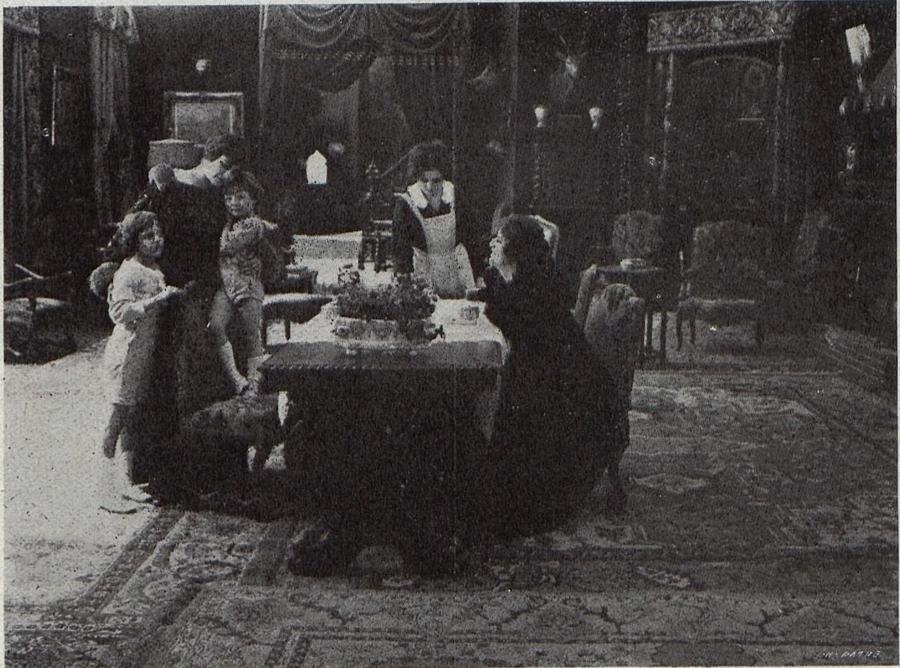
When the ledger of trysts is finally declaimed, the camera dares to inch closer to Douglas’s face—an unusual gambit for 1914—and the tear that beads in the cupid’s bow of her lip feels electrically modern. The diary reading is staged like a tribunal: husband, wife, and meddler form a warped trinity around the mahogany table. The scene’s brilliance lies in its refusal to grant anyone moral high ground; the wife’s prior cruelty is laid bare alongside the artist’s lechery, proving complicity is a contagion.
The riverbank finale, replete with ice-blue tinting, could have capsized into melodrama, yet the intervention of the maid—an uncredited performance of steely pragmatism—grounds the film. Her monologue, delivered via emphatic gesture and a single intertitle (“Living is harder, but it’s the only way to bury the dead”), lands as a proto-feminist gauntlet, outstripping the moral capitulation of Ill-Starred Babbie.
Surviving prints—scattered across Bologna’s vaults and a Missouri barn—bear water stains that resemble topographical maps of heartbreak. Yet those scars amplify authenticity; the emulsion itself seems bruised by the plot. Restoration efforts have wisely left apertures of decay intact, allowing cigarette burns to flirt with candlelight, thereby letting the contemporary viewer feel the celluloid’s mortality.
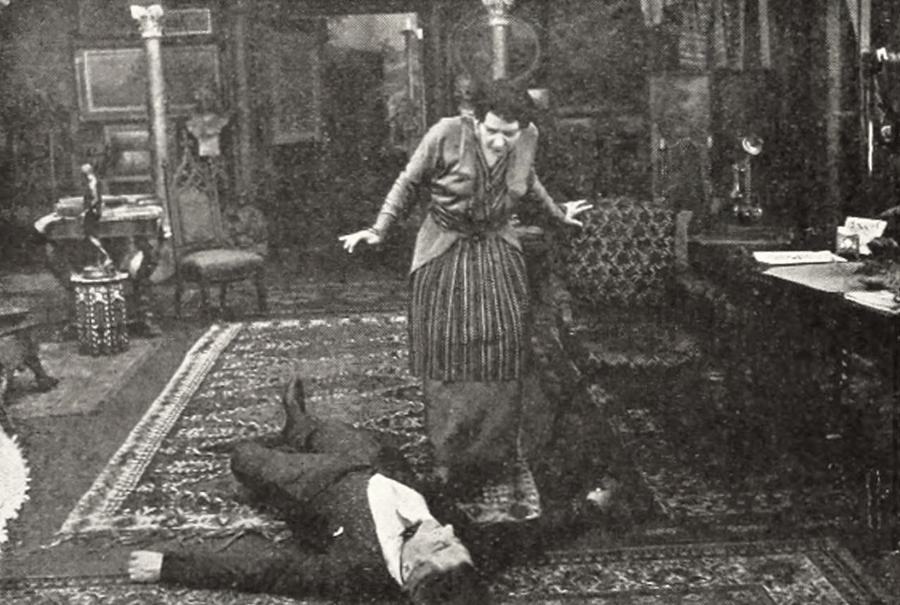
Merkyl times his collapse with an almost balletic precision: knees fold, palette clatters, the easel teeters like a drunk metronome. Douglas answers with a blink that swallows galaxies—her irises registering not horror but the instant resignation of someone who realizes they’ve been absolved by mortality. The cumulative effect is a masterclass in scaled-down naturalism, miles removed from the semaphore histrionics that marred The Last Days of Pompeii the previous year.
Where Lucille Love chased cliffhangers across continents, The Price drills inward, mining the psychological substrata that would later nourish Sjöström and Dreyer. Its DNA also snakes through the domestic noir of the 1940s, yet its DNA feels rawer, bereft of Hays Code balm; sin here is neither sanitized nor scourged—merely lived through.
Modern screenings often pair the film with Max Richter-esque strings, but I’d argue for solo piano—each keystroke a dropped coin, echoing the title. The austerity accentuates caesuras where audiences supply their own remorse, an economy no talkie could afford once chatter became currency.
The ledger ultimately balances: one life bartered, one resurrected, one confession spilt like turpentine, one marriage left to cauterize itself. The Price dares to suggest redemption is not celestial rebate but daily installment, compounded by forgiveness and the dogged refusal to blink first. That thesis, delivered sans histrionics, earns the film a rare quotient of staying power—an obelisk of shame and mercy, still casting shadows across the century that followed.
IMDb 6.7
1914
Community
Log in to comment.