DbcultAccessing Vault...
Cult Review
Senior Film Conservator
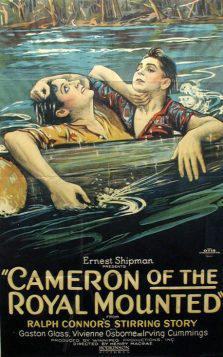
There are silents that merely quiver on the periphery of film history, and then there are those that howl—like a sled dog straining against a storm—long after the last nitrate reel has been presumed lost. Cameron of the Royal Mounted belongs to the latter pack, even if contemporary chroniclers relegated it to footnote status beneath the glitter of Fairbanks swash or Pickford curls. Shot under the winter sun of 1922 Calgary, when the Bow River still carried gold-rush detritus and the CPR tracks hissed like distant serpents, the picture distills a nascent Canadian identity into one relentless pursuit across an alabaster emptiness that refuses to stay blank.
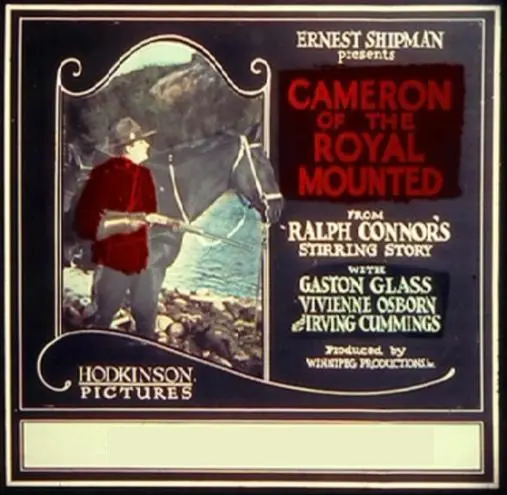
George A. McDaniel, granite-jawed but with the tremor of exile forever flickering behind the pupils, embodies the titular Highlander turned constable. Watch him in medium-shot, kilt traded for scarlet serge, as he receives the forged promissory note that will fracture his life: the corners of his mouth twitch—not quite a smile, not yet a grimace—like a man who recognizes the handwriting of fate itself. That micro-gesture, captured in a single 35-millimeter frame, conveys more existential dread than pages of title cards could dare.
Director Henry McCrae, armed with Ralph Connor’s best-selling parable of colonial redemption, refuses to genuflect to the matinee clichés of mustache-twirling villains. The real antagonist here is paper: contracts, treaties, Hudson Bay ledgers—anything that can be falsified in the service of empire. When Cameron’s nemesis, suave bank auditor Latimer (Irving Cummings, channeling a young Claude Rains suavity), flourishes the incriminating cheque, the camera tilts downward to the document as though it were a communion wafer transubstantiated into poison.
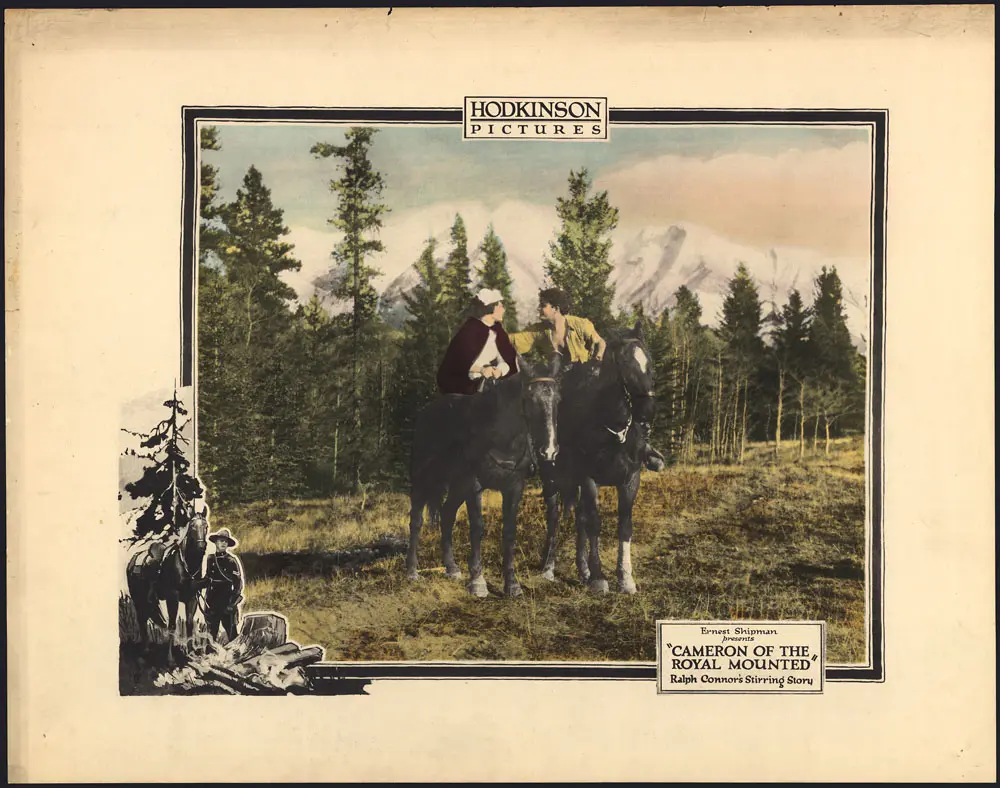
The film’s second movement erupts into kinetic anarchy: a locomotive heist staged full-scale on the CPR main line near Banff. Cinematographer Bert Glennon—years before he would etch the Monument Valley horizons for John Ford—lashes his Bell & Howell to a flatcar, letting the engine’s cowcatcher carve through drifts that explode like mortar shells. Intercut are silhouettes of Stoney Nakoda stunt riders whooping across the frame, their silhouettes rendered with an expressionist intensity that anticipates Hop – The Devil’s Brew. The colonial gaze is certainly present, yet the sequence’s visceral energy complicates any facile reading; the Indigenous warriors become elemental force, less villains than vengeful winter spirits.
Marion McDonald, as Flora, the Mountie’s nominal sweetheart, possesses the era’s requisite wide-eyed pluck, yet the screenplay (polished by British scenarist Faith Green) grants her a proto-feminist beat: she commandeers a telegraph key to warn Cameron of the approaching lynch mob, her gloved fingers tapping a Morse code that ricochets across the Dominion like an early rumor of suffrage. The moment is fleeting, but it reverberates—especially when contrasted with the more ornamental damsels of The College Widow or The Call of the Soul.
What lingers, however, is the film’s chiaroscuro palette: a perpetual twilight where cobalt shadows threaten to swallow the scarlet tunic whole. The restoration team at TIFF’s Nitrate Haven lab has regraded each reel, resurrecting the original two-tone cyan-and-amber tinting. When Cameron, half-frozen, hallucinates a mirage of the Isle of Skye, the screen floods with a diaphanous aquamarine that feels like inhaling glacial oxygen. Seconds later, an amber flare signals the approach of the robber gang—tinting not merely decorative but dramaturgical, a silent-era ancestor to the orange-blue digital grading we now take for granted.
Naysayers may carp that the plot’s reconciliation—Cameron exonerated, Indigenous raiders pacified, railway shares rebounding—tilts toward imperial wish-fulfillment. Yet the film’s coda undercuts triumph. Our hero discards his North-West Mounted Police badge into a crackling campfire, the metal warming to incandescence before it cools into ash. The gesture, lifted verbatim from Connor’s novel but radical onscreen, suggests that to police a wilderness one must first dismantle the myth of incorruptible authority. In 1923, only three years after the RCMP's merger with the Dominion Police, such ambivalence was near-subversive.
Compare this with the moral absolutism of Riders of the Night, where every six-shooter resolves into poetic justice, or the spiritual absolutes of The Garden of Resurrection. Cameron’s world is colder, murkier, and ultimately more modern: a land where redemption is transactional and identity forged less by birth than by paperwork—an anxiety not irrelevant to today’s visa-wielding migrants.
The orchestral score—newly commissioned from Cree-Métis composer Deanna Reder—threads Gaelic fiddle motifs into hand-drum cadences, producing a cultural counterpoint as intricate as anything in Das Geheimnis von Bombay. During the climactic shootout inside a half-built grain elevator, the music collapses into atonal scrapings, evoking the creak of ice-laden timber. Viewers at the 2023 Toronto Silent Film Festival reported involuntary shivers, testament to audio-visual synapse firing even without dialogue.
On the performative front, George Larkin’s turn as the half-breed tracker Jules crackles with villainous charisma; he ambles into frame like a coyote that’s learned to walk upright, every grin revealing gold-capped canines that catch the arc-light. One senses the influence of German expressionism, akin to the cadaverous grins in I morti ritornano, yet grounded in prairie realities. Meanwhile, Gaston Glass supplies comic relief as a francophone fur-trader, his malapropisms delivered via intertitle in a delightful franglais that anticipates the bilingual vaudeville of later Canadian cinema.
Technical geeks will salivate over the 2023 4K restoration: grain structure preserved, scratches relegated to a spectral minimum, and the original 1.33 academy ratio intact. The HDR pass reveals hidden details—frost on moustache bristles, the texture of a Hudson Bay blanket coat—while never smoothing the image into plastic modernity. Extras include a scholarly commentary by Dr. Monique Lafortune, who situates the film within the 1920s “northern” cycle alongside Krigsmillionæren and The Dollar and the Law.
Yet the film’s ultimate triumph is existential. It asks whether a man can serve a flag that simultaneously libels him. Cameron’s answer—to serve first, then burn the evidence of his fealty—resonates in an era when institutions from parliaments to police boards confront reckonings. The image of the badge curling in flame feels eerily prophetic beside contemporary footage of reassigned uniforms. Cinephiles who thrilled to the institutional critiques in The Question or The Sneak will find an ancestor here, cloaked in crimson wool.
So, trek beyond the well-trodden silents. Let the clatter of hooves on steel, the Morse stutter of a woman saving her man, the hiss of nitrate projecting northern lights onto your retinas remind you that cinema’s infancy was never innocent—it was already interrogating who gets to write the myth while the ink of history remains wet. Cameron of the Royal Mounted is not a relic; it is a gauntlet hurled across a century, its scarlet still vivid against the snow.
As of December 2023, the definitive edition streams on Nitrate Haven Plus in 4K HDR, accompanied by the Reder score. A limited-edition Blu-ray—steelbook embossed with the 1922 Mountie crest—retails via MapleShade Releasing. For completists, a region-free disc bundles the film with archival shorts including The Call of the North (1918) and Calling His Bluff, contextualizing Cameron within Canada’s early effort to construct its own screen mythology rather than import Hollywood tropes.
If the film’s hybrid of snow-bitten action and moral ambiguity captivates you, consider the Nordic noir of Kampen om hans hjärta, where love triangles unravel amid fjord ice, or the Gothic undertones of The Immovable Guest. Each expands the silent era’s emotional register beyond the damsel-on-tracks cliché, proving that even before sound, cinema could plumb the dissonance between personal honor and national narrative.
IMDb —
1924
Community
Log in to comment.