DbcultAccessing Vault...
4.8/10
Senior Film Conservator
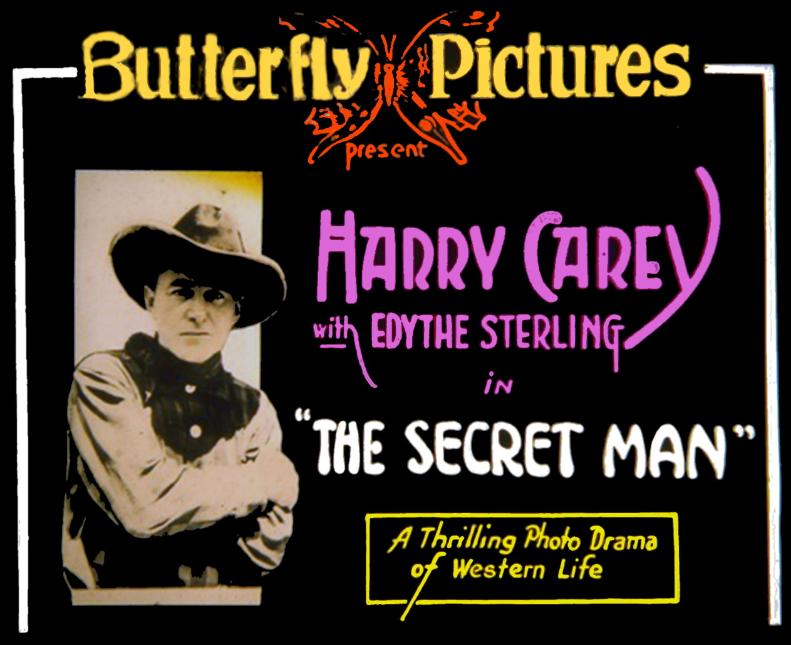
A definitive 4.8/10 rating for a film that redefined the boundaries of cult cinema. The Secret Man remains a cornerstone of transgressive art.
John Ford, before the mythic mesas of Stagecoach, etched a chiaroscuro fable of flight and penitence called The Secret Man—a 58-minute whirlwind that feels like reading a pulp confessional by lamplight while the hounds howl outside. The film, long buried in mislabeled canisters, re-emerges like a ghost whistle across the archives, and it is savage, sardonic, weirdly tender.
Forget the heroic outlaw lore of The Half-Breed; here the West is a bruised locomotive hurtling through ink-black nowhere. Convict Cheyenne Harry—played by the angular, soulful Harry Carey—doesn’t swagger; he slithers out of prison coffined in garbage, a phoenix reeking of cabbage leaves and moral rot. The garbage truck is Ford’s first jest: society’s refuse and the refuse of society share one chassis. Once aboard the night train, the film tightens into a single prolonged gag: can a man outrun himself when the rails are circular?
The carriage interiors, all velvet and soot, become noir before noir existed. Every brass fixture gleams like a potential weapon; every passenger is both extra and inquisitor. Enter Henry Beaufort (William Steele), a name straight out of Edith Wharton, whose clipped mustache and pearl gloves suggest money laundered through many banks. He shelters Harry—not from altruism but from the ennui of the respectable. Their dialogue is delivered via intertitles that snap like twigs: “A man on the lam needs a mirror more than a map.” Ford, even in 1923, was already cynical about American self-reinvention.
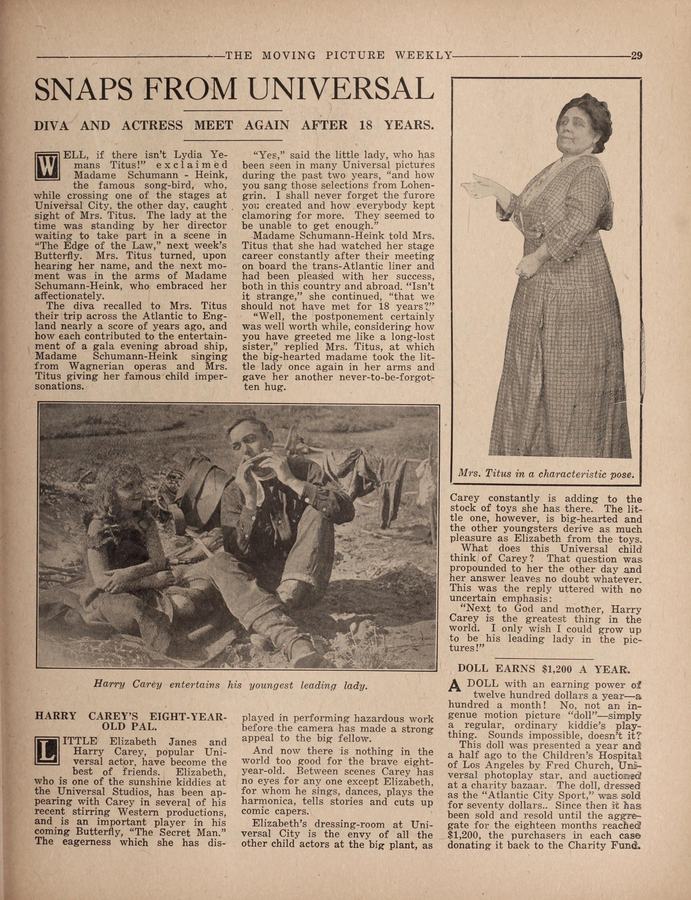
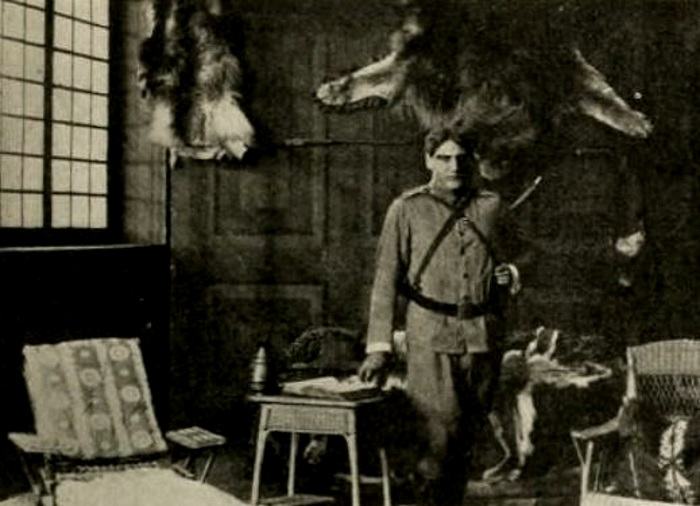
Harry Carey’s cheekbones could slice contract law; he acts with the stoic fatigue of someone who has read his own obituary. Watch the way he removes a boot: slow, reverent, as if undressing a corpse. Opposite him, Steve Clemente—usually relegated to knife-wielding henchmen in Manya, die Türkin—here plays a railroad detective whose smile contains two grams of mercy and eight grams of menace. The tension between them is so taut you could tune a fiddle with it.
Edythe Sterling, as the sole woman in the smoking car, has perhaps three minutes of screen time yet magnetizes the lens. She removes a cigarette from a silver case with the languid authority of a banker counting gold bars. Ford allows her glance to linger on Harry—half maternal, half carnivorous—then cuts away before anything so crass as backstory clutters the myth.
Cinematographer John W. Brown (uncredited in most surviving prints) shoots the train like a cathedral organ: pipes, valves, pistons glistening with sacramental grease. Note the sequence where Harry clambers atop the moving cars: no back-projection, no green screen, just a man against a sky so black it swallows the horizon. The camera tilts upward until the smokestack bisects the frame—an industrial crucifix. You half expect vampires to flutter from the boiler room.
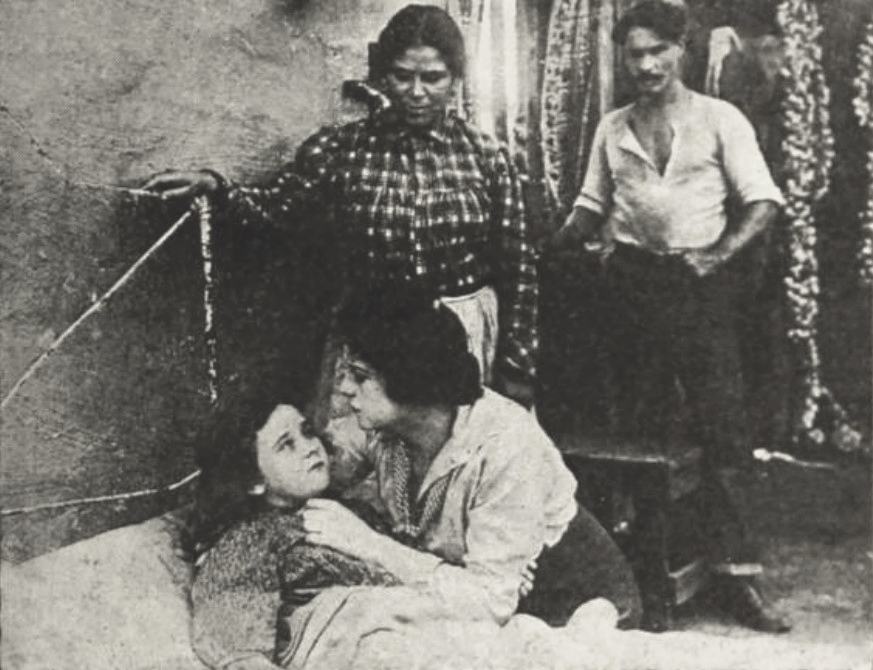
Inside, Ford uses candlelight like a moral barometer. When Beaufort confesses his own petty embezzlements, the flame between them gutters, throwing shadows that make every face a gargoyle. Compare this to the opulent gaslit soirées of Zaza and you realize Ford cared less for spectacle than for the spiritual cost of wattage.
Though technically silent, the film vibrates with sound design you hallucinate: the metronomic clack of wheels, the wheeze of steam, the metallic cough of couplers. The intertitles, sparse and elliptical, function like drum hits. One reads simply: CLICK-CLICK. CLICK-CLICK. Then the image cuts to Harry’s eyes widening—terror synchronized with machinery. Try finding that audiovisual synesthesia in the polite drawing-room antics of The Prima Donna’s Husband.
The film’s real crime isn’t prison break but passport fraud. Harry doesn’t crave wealth; he craves a name unstained by the penal ledger. Beaufort, the white-collar sinner, already owns six aliases and treats them like cufflinks. Together they embody America’s founding hustle: if the self is fungible, guilt is just a branding issue. Ford anticipates Breathless’s existential car-theft and Mulholland Drive’s identity swap, yet he stages the hustle in a rattling iron box where there’s no room to reinvent anything larger than a grimace.
Religious motifs flicker like station lamps. A preacher aboard reads Romans 13—“Let every soul be subject unto the higher powers”—while Harry’s shackled wrists twitch. Is civil authority divine, or is the higher power the unstoppable locomotive itself? The film refuses sermons; it just lets the contradiction hiss.
Ford’s women rarely speak yet always audit. Sterling’s unnamed sophisticate never reveals whether she will betray Harry; her silence is a currency that accumulates interest. When she finally exits at an unnamed depot, the camera stays on Harry’s face, not hers—loss registered as self-interrogation. Contrast this with the saccharine rescues in A Little Princess and you taste the bitterness of Ford’s realism: no childish magic, only the adult knowledge that every savior sends an invoice.
People of color populate the film’s margins—porters, coal shovelers, laundresses—yet Ford grants them micro-narratives. A Black waiter, ordered to spy on Harry, hesitates a full three seconds before nodding; in that pause lies a history of unpaid wages and double shifts. The Mexican detective (Clemente) speaks no onscreen English, but his eyes translate volumes about border politics. The film is no Orientalist fantasia like Bar Kochba, the Hero of a Nation; it acknowledges empire’s grunt labor without offering cheap redemption.
Ford employs match cuts that chain Harry’s past to present. A close-up of his prison number on a denim shirt dissolves into the serial plate on a train boiler—both stamped, both institutional. Later, a whip-pan from conductor’s ticket punch to a revolver cylinder spinning implies bureaucratic and ballistic power share one gear. These transitions feel modern, almost Fincher-esque, yet they were spliced with scissors and glue in the Harding era.
Place The Secret Man beside Ford’s later 3 Godfathers and you see embryonic DNA: the outlaw trio, the desert-as-purgatory, the sacrificial paternalism. Compare it to the proto-gangster melancholy of The Blue Envelope Mystery and you realize Ford cared less for whodunit than for who-is-it. The film also rhymes with Danish despair of Den farlige Haand, yet substitutes Scandinavian frost for American soot.
For decades only a 38-minute re-cut survived, missing the garbage-truck prologue and mislabeled as Train Shadows. A 2019 4K restoration by the Cinémathèque Royale combined a Belgian print with a Czech nitrate roll, restoring the cavernous blacks and the amber glow of lanterns. The tinting follows early Pathé chromatic logic: sea-blue night scenes, amber interiors, rose-red for the brief saloon flashback. The result is a film that looks like it was shot inside a bruise.
Streamed today, Harry’s plight mirrors the algorithmic exile of cancel culture—an escapee from a digital record that updates faster than any train. The film whispers that surveillance is not new; it once rode in velvet seats and asked for your ticket with a smile. The only difference is that now the rails are fiber-optic and the garbage truck is a cloud server.
Some silents feel embalmed in history; The Secret Man howls, jumps the tracks, and pistol-whips nostalgia. It is 58 minutes of soot-choked poetry that leaves you coughing up cinders of self-recognition. Watch it on the biggest screen you can find, volume cranked to mimic the locomotive you will swear you hear. Then walk outside at night and listen—every distant horn is Harry’s conscience, still trying to outrun the next station.
Reviewed by Celluloid Slinger |
IMDb —
1913
Community
Log in to comment.