DbcultAccessing Vault...
Cult Review
Senior Film Conservator
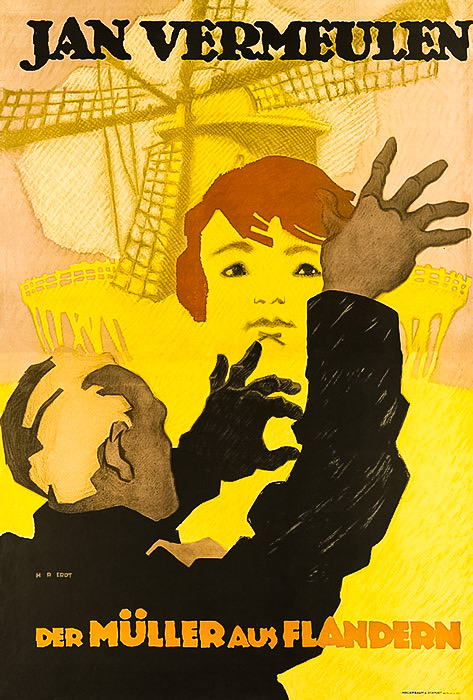
Stepping back into the nascent days of cinema, Georg Jacoby's Jan Vermeulen, der Müller aus Flandern emerges not merely as a relic, but as a vibrant testament to the storytelling power that defined an era. This film, a poignant narrative woven with threads of betrayal, unwavering love, and the relentless pursuit of justice, offers a compelling glimpse into human resilience against the backdrop of a picturesque, yet often perilous, rural Flanders. It's a cinematic experience that, despite its vintage, resonates with universal truths, proving that foundational human struggles are, indeed, timeless.
Jacoby, a director whose prolific output shaped early German cinema, demonstrates a remarkable command of visual storytelling in Jan Vermeulen. Without the crutch of spoken dialogue, he meticulously crafts a world where every gesture, every lingering gaze, every subtle shift in posture conveys volumes. The film’s narrative unfolds with an almost operatic grandeur, each act building inexorably towards a cathartic climax. His ability to evoke deep emotional responses through carefully composed shots and the expressive performances of his cast is nothing short of masterful. One might draw parallels to the emotional intensity found in films like An Innocent Magdalene, where the narrative weight rests heavily on visual pathos and the audience's empathetic connection to suffering innocence. Jacoby understands the power of contrast, juxtaposing the pastoral serenity of the Flemish countryside with the dark undercurrents of human malevolence, creating a dramatic tension that keeps the viewer utterly captivated.
The cinematography, though perhaps rudimentary by modern standards, possesses an inherent artistry that speaks to the era’s innovative spirit. The Flemish landscape itself becomes a character, its rolling hills and the imposing structure of Jan's mill serving as both backdrop and metaphor. The mill, with its perpetually turning sails, symbolizes not just livelihood but the relentless grind of fate and the unwavering cycle of life. The interplay of light and shadow, a hallmark of silent cinema, is employed with particular finesse here. Bright, sun-drenched scenes depicting Jan and Liesel's idyllic life give way to deeper, more ominous tones when Baron von Kessel's nefarious plans begin to unfurl. This visual dichotomy effectively communicates the film's central conflict – the purity of honest labor versus the darkness of aristocratic corruption. The aesthetic choices here are reminiscent of the evocative, often stark, visual poetry seen in other period dramas, emphasizing mood and atmosphere over overt exposition.
The strength of Jan Vermeulen lies significantly in the compelling performances of its cast, who, without dialogue, relied entirely on their physical presence and facial expressions to convey emotion. Richard Bruno, as the titular Jan Vermeulen, embodies the virtuous everyman with remarkable conviction. His portrayal of Jan's journey from contented miller to unjustly accused prisoner, and finally to a man resolute in seeking vindication, is deeply moving. Bruno's expressive eyes and steadfast demeanor allow the audience to viscerally feel his despair and his enduring hope. Liesel, brought to life by Rose Feldkirch, is a beacon of fidelity and resilience. Her anguish upon Jan's arrest and her subtle defiance against the Baron's advances are portrayed with a delicate strength that makes her character truly memorable. Feldkirch avoids the pitfalls of melodrama, instead opting for a nuanced performance that elevates Liesel beyond a mere damsel in distress.
Fred Immler, as the conniving Otto, delivers a performance that perfectly encapsulates the duplicity and moral cowardice of a man willing to be a pawn in another's wicked game. His furtive glances and nervous energy belie a deeper corruption. Similarly, the other supporting players, including Alfred Jürgens as the loyal Hendrik, Karl Berger as the sympathetic Franz, and Léo Lasko as the formidable Baron von Kessel, each contribute essential layers to the narrative tapestry. Lasko, in particular, crafts a villain whose arrogance and calculating cruelty are palpable, providing a formidable antagonist against which Jan's virtues shine even brighter. The ensemble's synergy is truly impressive, a testament to Jacoby's direction and the actors' profound understanding of their craft in the silent era, where every gesture had to be meticulously calibrated for maximum impact, much like the precise staging and dramatic poses that would have been critical in a production like The Black Crook.
At its core, Jan Vermeulen, der Müller aus Flandern is a powerful treatise on justice and moral rectitude. It explores the fragility of truth when confronted by power and privilege, and the enduring human spirit's capacity to overcome adversity. The film masterfully illustrates how a corrupt system can be manipulated, but also how unwavering loyalty and the collective conscience of a community can ultimately prevail. The narrative arc, which sees Jan stripped of his freedom and reputation only to reclaim them through perseverance and the aid of true friends, is a deeply satisfying exploration of redemption. This thematic resonance links it to other films that champion the underdog or expose societal injustices, where the audience is invited to root for the triumph of virtue over vice. The struggle for truth against overwhelming odds could be seen echoing in the dramatic narratives of films like Martha's Vindication, where personal honor is at stake.
While Georg Jacoby is primarily known for his directorial prowess, his role as a writer for Jan Vermeulen, der Müller aus Flandern cannot be overstated. The narrative structure is remarkably tight, with each plot point serving to advance the story and deepen the character arcs. The pacing, crucial in silent films to maintain audience engagement, is expertly handled, balancing moments of quiet despair with bursts of dramatic action. The screenplay avoids unnecessary digressions, focusing intently on the central conflict and the emotional journey of its protagonists. This narrative economy is a testament to Jacoby's understanding of cinematic storytelling, allowing the visual medium to carry the bulk of the exposition and emotional weight. It's a skill that distinguishes effective silent film narratives from those that merely present a series of events; here, there's a clear, compelling dramatic spine.
Set against a period of significant social and economic change, Jan Vermeulen, der Müller aus Flandern subtly reflects the anxieties and aspirations of its time. The conflict between the landed aristocracy (Baron von Kessel) and the industrious working class (Jan Vermeulen) would have resonated deeply with contemporary audiences, highlighting the persistent class struggles that characterized much of European society. The film’s celebration of honesty, hard work, and communal solidarity offers a moral compass that remains relevant today. It speaks to the universal yearning for fairness and the innate human desire to see good triumph over evil. In this sense, its themes are as potent now as they were upon its initial release, cementing its place not just as a historical artifact but as a piece of art with enduring messages. The timeless quality of its emotional core brings to mind the universal themes of love and sacrifice explored in films like The Voice of Love or Der Zug des Herzens, proving that certain narratives transcend the specificities of their era.
The film's climax is a masterclass in building and releasing dramatic tension. The village festival, intended by Baron von Kessel as a public declaration of his victory, transforms into the stage for his downfall. The dramatic timing of Hendrik's intervention, armed with irrefutable proof, followed by Jan's unexpected reappearance, creates a powerful sense of catharsis. This moment, where justice is finally served and the villain is exposed, is executed with a theatrical flair that would have undoubtedly left audiences cheering. The visual spectacle of the entire community witnessing the Baron's disgrace and Jan's vindication is immensely satisfying. It’s a classic narrative payoff, expertly handled, and provides a powerful resolution to the film's intricate web of deceit and struggle. Such a dramatic reveal and public confrontation are staples of storytelling, seen across various genres and periods, even in grander, more epic narratives like El grito de Dolores o La independencia de México, albeit on a different scale of consequence.
Jan Vermeulen, der Müller aus Flandern, though perhaps not as widely known as some of its contemporaries, deserves recognition for its robust narrative, compelling performances, and sophisticated direction. It stands as a powerful example of early cinema's capacity for profound emotional engagement and complex storytelling. Jacoby's vision, combined with the evocative performances of Bruno, Feldkirch, and the rest of the cast, creates a film that transcends its silent origins to deliver a timeless message about the strength of character, the corrosive nature of greed, and the ultimate triumph of justice. For enthusiasts of early film, or anyone with an appreciation for classic dramatic narratives, this is a film that offers rich rewards. It’s a testament to the fact that even in cinema’s infancy, filmmakers were crafting works of enduring artistic merit, shaping the grammar of a new art form with skill and passion. The enduring appeal of such foundational storytelling can be seen in the consistent presence of similar themes throughout cinematic history, from the early days to modern blockbusters, demonstrating the universal appeal of narratives that pit good against evil, much like the clear moral lines drawn in a film such as The Firefly.
Ultimately, Jan Vermeulen, der Müller aus Flandern is more than just a historical curiosity; it is a vibrant piece of cinematic art that continues to speak to audiences across generations. Its exploration of human frailty and strength, set against a beautifully rendered Flemish backdrop, makes it a compelling watch. The film reminds us that the pursuit of justice, the power of loyalty, and the resilience of the human spirit are stories that will always find an audience, regardless of the technological advancements in filmmaking. It underscores the foundational truth that narrative, character, and emotion remain the bedrock of truly impactful cinema, a lesson as relevant now as it was when the first reels of this remarkable film spun into motion. This film, in its quiet dignity and dramatic power, truly solidifies its place in the pantheon of early cinematic achievements, a compelling narrative that stands shoulder to shoulder with other dramatic triumphs of its era.
IMDb 5.6
1935
Community
Log in to comment.