DbcultAccessing Vault...
Cult Review
Senior Film Conservator
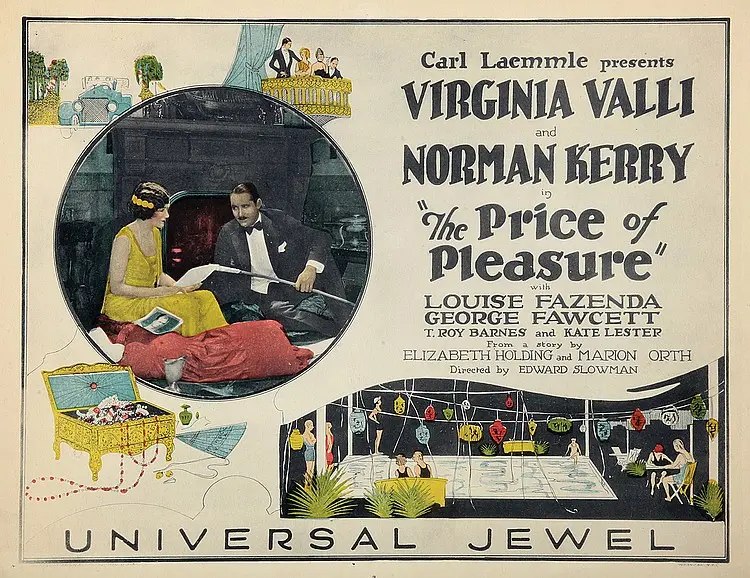
The celluloid landscape of 1925 was often a battleground for the burgeoning American identity, a period where the rigid structures of the Gilded Age collided violently with the frantic, aspirational energy of the Jazz Age. The Price of Pleasure, directed by Edward Sloman, stands as a quintessential artifact of this era, weaving a tapestry of romantic idealism and brutal social realism. It is a film that demands we look past the veneer of the 'shop-girl' trope to witness the systemic cruelty inherent in the pursuit of the American Dream.
The narrative opens within the cavernous, suffocating aisles of a New York department store. Here, Linnie Randall (portrayed with a luminous vulnerability by Virginia Valli) is not merely a clerk; she is a ghost in the machine of commerce. When she wishes for a single week of 'real pleasure,' it is not a call for hedonism, but a desperate plea for personhood. The irony, of course, is that her escape is facilitated by Garry Schuyler (Norman Kerry), a man whose very existence is a testament to the leisure she lacks. Kerry’s performance as the 'mechanic' is layered with a patronizing charm that underscores the inherent power imbalance of their union.
While contemporary audiences might draw parallels to All Dolled Up, Sloman’s work here is significantly darker. The 'one week' of bliss is filmed with a soft-focus romanticism that feels almost feverish, a stark contrast to the sharp, angular shadows of the Schuyler mansion that follow. This transition serves as a visual metaphor for the death of the dream and the onset of the cold, aristocratic reality.
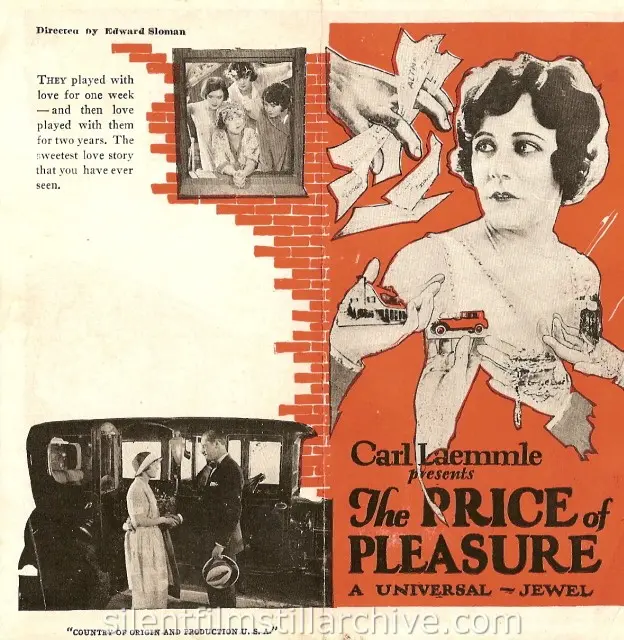
The introduction of the Schuyler matriarch and sister introduces a level of psychological horror rarely seen in silent melodrama. They do not merely dislike Linnie; they view her as a contaminant. The dialogue intertitles, penned with surgical precision by Marion Orth and her team, reveal a world where 'class' is a weapon of exclusion. The mother’s assertion that Garry’s life is 'ruined' by a shop-girl is the catalyst for the film's most visceral sequence.
"The film masterfully deconstructs the Cinderella myth, replacing the glass slipper with the crushing weight of a luxury automobile."
The accident—where Garry unknowingly runs over his fleeing wife—is a masterstroke of tragic irony. In his attempt to 'save' her or pursue her, he physically embodies the destructive force of his own social standing. This moment elevates the film from a mere romance to a critique of the accidental violence the elite inflict upon the proletariat. It echoes the thematic gravity found in Atonement, albeit through a much earlier lens of cinematic language.
The second act provides a fascinating shift in tone. As Garry is sent to Europe—a classic trope for the wealthy to 'heal' through distance—Linnie is forced into the underworld of the cabaret. Here, the film takes on a gritty, almost expressionistic quality. The cabaret is not a place of joy, but a site of labor and survival. Virginia Valli’s transition from the wide-eyed dreamer to the hardened, protective mother is the emotional anchor of the film.
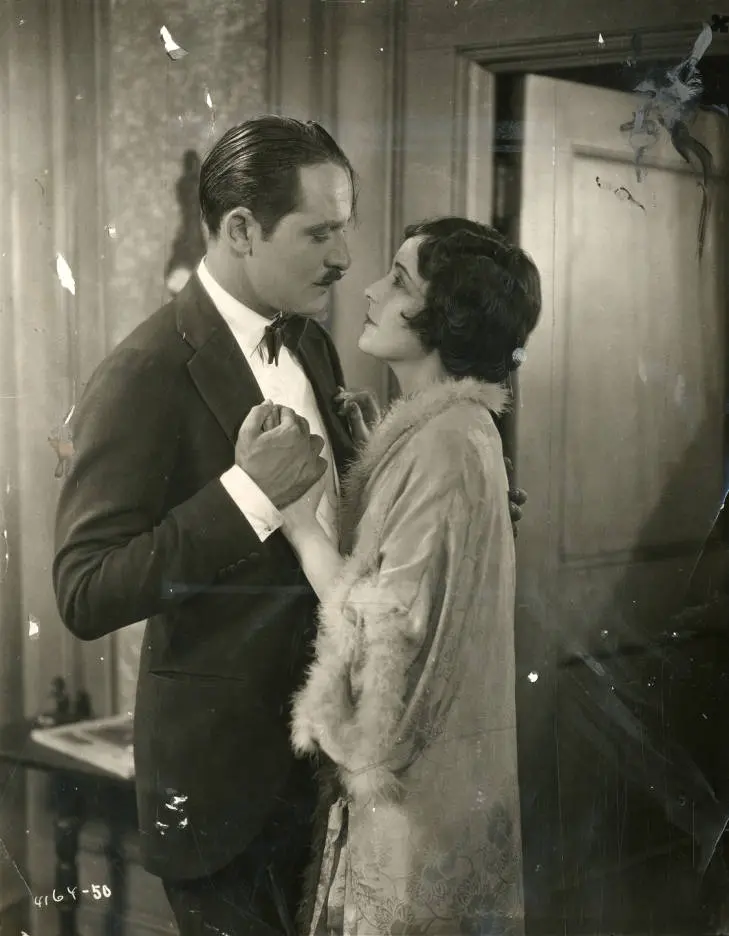
The presence of the child adds a layer of maternal melodrama that was a staple of the era, yet Sloman avoids the mawkish sentimentality that plagues films like Two Little Imps. Instead, the focus remains on Linnie’s agency. She is no longer waiting for a prince; she is fighting the 'chicanery' of a family that would rather see her dead than acknowledge her as an equal. The legal battles that ensue are a precursor to the modern courtroom drama, highlighting the ways in which the law is often a tool for the preservation of wealth.
Technically, The Price of Pleasure is a triumph of silent era lighting. The use of chiaroscuro during the cabaret scenes creates a sense of entrapment, while the sprawling estate scenes are flooded with a cold, unforgiving light. The editing, particularly during the car accident and the subsequent mental breakdown of Garry, uses rapid cutting to simulate a fractured consciousness, a technique that feels remarkably modern.
The cast is uniformly excellent. Louise Fazenda and T. Roy Barnes provide much-needed levity, though their humor often has a biting edge that complements the film's darker themes. Kate Lester, as the icy mother, delivers a performance of such distilled venom that she becomes one of the most memorable antagonists of 1920s cinema. Her performance contrasts sharply with the more ethereal presence of characters in films like The Willow Tree.
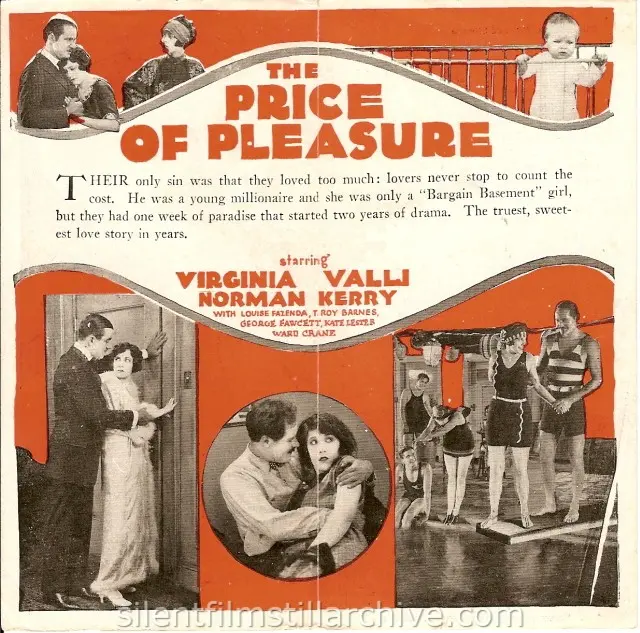
What makes The Price of Pleasure endure is its refusal to offer a simple, sanitized happy ending. While the couple is eventually reunited, the 'price' mentioned in the title is literal and steep. It is a price paid in blood, trauma, and the loss of innocence. The film suggests that while love might cross class lines, it cannot erase them without a total dismantling of the existing order.
In comparison to the international flavor of Istanbul'da istirap or the moral inquiries of Blutschande, this film is uniquely American in its obsession with upward mobility and the barriers thereto. It shares a certain DNA with I Will Repay regarding the themes of justice and social debt, but it grounds these concepts in the domestic sphere of marriage and motherhood.
Ultimately, Sloman has crafted a work that is both a product of its time and a timeless critique of social hypocrisy. The narrative arc—from the department store floor to the aristocratic mansion and finally to the cabaret stage—mirrors the chaotic flux of the 1920s. It is a film that rewards the modern viewer with its sophisticated visual storytelling and its unapologetic engagement with the complexities of the human condition.
A staggering achievement in silent melodrama, 'The Price of Pleasure' transcends its genre tropes to deliver a searing indictment of class rigidity. Virginia Valli gives the performance of her career, and the film's visual language remains as potent today as it was nearly a century ago. It is a mandatory viewing for those interested in the evolution of social commentary in American cinema.
IMDb —
1926
Community
Log in to comment.