DbcultAccessing Vault...
7.9/10
Senior Film Conservator
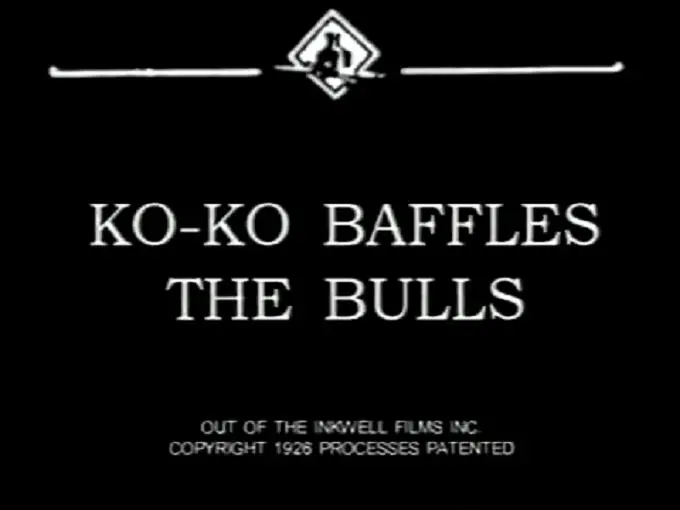
A definitive 7.9/10 rating for a film that redefined the boundaries of cult cinema. Ko-Ko Baffles the Bulls remains a cornerstone of transgressive art.
Does Ko-Ko Baffles the Bulls still work after nearly a century? Short answer: yes, but primarily as a masterclass in visual subversion. This film is for those who love the 'fourth wall' being shattered; it is not for viewers who demand a linear, logic-driven plot.
This is a film that exists in the friction between the hand of the creator and the will of the character. It is chaotic. It is inventive. It is, quite frankly, a bit unhinged. While contemporary audiences might be used to the meta-humor of Spider-Man: Across the Spider-Verse, Fleischer was doing this with a dip pen and a rotoscope while the ink was still wet.
1) This film works because it treats the drawing board as a physical, dangerous landscape where the laws of physics are secondary to the whims of the artist.
2) This film fails because the detective subplot feels slightly padded, even for a short film, losing some of the kinetic energy established in the opening.
3) You should watch it if you want to see the literal birth of meta-fiction in animation and understand the technical roots of the medium.
The 'Out of the Inkwell' series was always about the struggle for dominance. In Ko-Ko Baffles the Bulls, Max Fleischer isn't just an animator; he is a god-figure who has lost his grip. When Max draws the detective, he isn't just creating a character; he is creating a tool of suppression. This is a recurring theme in silent cinema, where the creator often fears the creation, much like the darker undertones seen in The Dream Cheater.
The scene where the detective emerges from the inkwell is a technical marvel for 1925. The way the ink flows and solidifies into a rigid, authoritative figure is a visual metaphor for how rules are imposed on imagination. Ko-Ko and Fitz aren't just running from a cop; they are running from the structure of the medium itself. They want to stay in the white space of the paper, free from the 'plot' Max is trying to force upon them.
Ko-Ko isn't a hero; he's a fugitive from his own existence.
There is a brutal simplicity to the way Fleischer handles the transition between live-action and animation. Unlike the more polished, 'safe' worlds of early Disney, Fleischer’s world feels grimy and unpredictable. It’s weird. It’s tactile. When Max’s hand enters the frame, it feels like an intrusion. This isn't the whimsical magic of a fairy tale; it’s the mechanical labor of a workshop.
Yes, this film is absolutely worth watching for anyone interested in the evolution of visual storytelling. It provides a rare look at how early filmmakers used camera tricks and rotoscoping to bridge the gap between reality and fantasy. If you enjoy seeing the 'gears' of a movie while you watch it, this is a top-tier recommendation.
For the casual viewer, the appeal lies in the slapstick. The bullfighting sequence is a riot of impossible geometry. The way the bull interacts with the animated characters, only to be subverted by the 'real' world elements, is a precursor to the gag structures we see in Looney Tunes decades later. It lacks the sentimental weight of something like The Waif, but it makes up for it in pure, unadulterated energy.
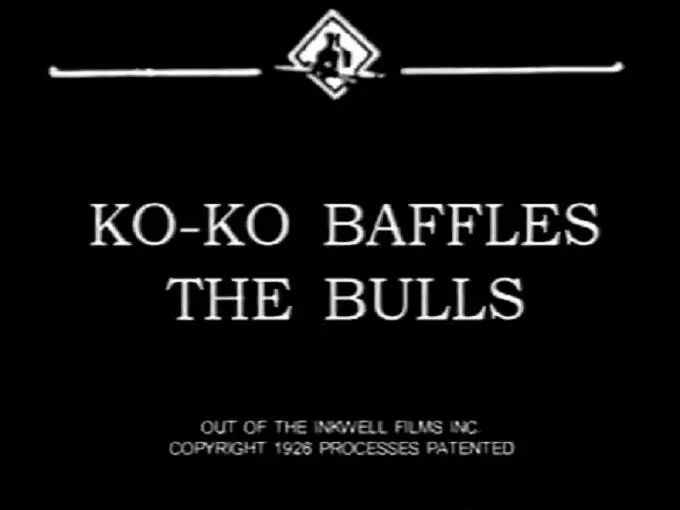
We have to talk about the rotoscoping. Max Fleischer’s brother, Dave, famously dressed up in a clown suit to provide the reference for Ko-Ko’s movements. This gives Ko-Ko a weight and a fluidity that was unmatched by his contemporaries. While other characters of the era moved with a jerky, 'rubber hose' style, Ko-Ko moves with the grace—and the awkwardness—of a real human being.
This realism makes the 'baffling' of the bulls even more effective. When the bull charges, the stakes feel strangely high because the movement is so grounded. It’s a jarring contrast to the surrealist gags. One moment Ko-Ko is moving like a man, the next he is being flattened like a pancake. This tension between realism and abstraction is what makes Fleischer’s work so enduring.
Compare this to the stage-bound aesthetics of Sawdust. While other films were trying to replicate the theater, Fleischer was trying to invent a new language. He understood that the screen was a flat surface that could be manipulated, not just a window into a room. Every time the detective 'steps' onto the paper, Fleischer is reminding us that the movie is a lie. That honesty is refreshing.
The introduction of the detective character is where the film takes its most interesting turn. Initially, he is the antagonist—the 'fun-killer' sent by Max. But the film brilliantly flips the script when Ko-Ko and Fitz decide they need their own detective to find Max. This suggests a bizarre codependency. The characters realize they cannot exist without their creator, even if that creator is their primary source of conflict.
This psychological depth is often overlooked in early animation. It’s not just a series of gags; it’s a story about the fear of abandonment. When the characters think Max is kidnapped, their world becomes unstable. The inkwell, once a place of refuge, becomes a void. It’s a surprisingly dark turn for a 'funny animal' cartoon.
The pacing here is frantic. It’s almost exhausting. But that’s the point. The film is meant to feel like a chase that never ends. The 'Bulls' of the title are both literal and metaphorical—they represent the obstacles that both the creator and the characters must overcome to find a common ground. It’s a dizzying experience that mirrors the rapid industrialization of the 1920s.
Ko-Ko Baffles the Bulls is more than just a historical curiosity. It is a vibrant, aggressive piece of filmmaking that challenges the viewer to think about what they are watching. It doesn't just entertain; it interrogates. Max Fleischer was a pioneer who understood that the greatest strength of animation is its ability to break its own rules.
While it might not have the narrative polish of modern features, its raw creativity is undeniable. It is a foundational text of the medium. It’s flawed. It’s frantic. But it works. If you want to see where the soul of animation was forged, look no further than this inkwell.

IMDb 7.2
1929
Community
Log in to comment.