DbcultAccessing Vault...
Cult Review
Senior Film Conservator
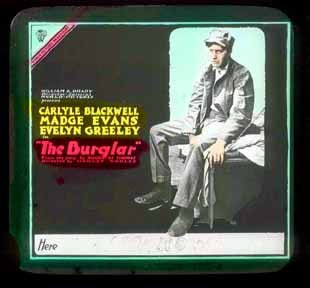
In the flickering womb of a 1914 nickelodeon, where celluloid ghosts dance to the wheeze of a pianola, The Burglar arrives like a switchblade wrapped in velvet—silent yet humming with menace.
Paul Scardon, still bathing in the afterglow of Detective Craig’s Coup, trades trench-coat bravado for something more corrosive: the ordinary sin that seeps into respectable seams. From the first iris-in on a moon-splashed campus, Augustus Thomas’s adaptation of Virginia Tyler Hudson’s story announces its intent—to pick the lock on the American Dream itself.
Cinematographer James C. Hutchinson shoots the break-in with Germanic angles—skewed window-frames, a shadow that swallows half the officer’s face—presaging Caligari by half a decade. The accidental discharge is rendered in a single, unblinking take: the revolver’s muzzle blossoms orange (tinted by hand, crimson streaks clawing across the monochrome), then the cop’s knees fold with balletic slowness. No cutaway to screaming co-eds; the camera stays on Will’s eyes, pupils dilated like a nocturnal animal caught in the headlamps of morality.
Compare that austerity to the opulence of The Eternal Temptress, where every boudoir is drenched in rococo clutter. Here, domesticity is a fortress of gleaming counters and starched pinafores, yet the camera prowls through it like a thief, searching for hairline cracks. When Sid reappears—sporting a straw boater tilted at a rakish, predatory angle—the kitchen seems to contract, the wallpaper’s daisies twisting into accusatory eyes.
Frank Mayo’s Will is no square-jawed hero; his shoulders carry the stoop of the perennially hunted. Watch the way his fingers drum the marble counter while counting bills—each tap a Morse code of dread. Opposite him, Carlyle Blackwell’s Sid exudes oleaginous charm, smiling as if auditioning for Mephistopheles in a Sunday-school pageant. Their confrontation in the bank’s after-hours glow is staged in a single, unbroken medium-shot: Sid circles Will like a shark, the brim of his hat slicing the lamplight into prison bars.
Madge Evans, barely twelve during production, delivers Editha’s bedtime prayer with such tremulous sincerity that the scene becomes a fragile moral fulcrum—the one tether keeping Will from plummeting into the abyss. Her line, “Papa, do angels ever get scared?” is delivered in an intertitle superimposed over a close-up of Mayo’s twitching eyelid; the juxtaposition lands like a slap.
Thomas’s screenplay is a Swiss watch of karmic gears. The same fraternity pin that grants Will campus prestige becomes the breadcrumb Sid uses to track him. The vault’s combination—Will’s wedding date—echoes through the final reel like a gong of doom. Even the city’s geography is weaponized: streetcars clang past the bank at precise intervals, masking the dynamite’s thud during the heist, a trick later recycled in The Circular Staircase.
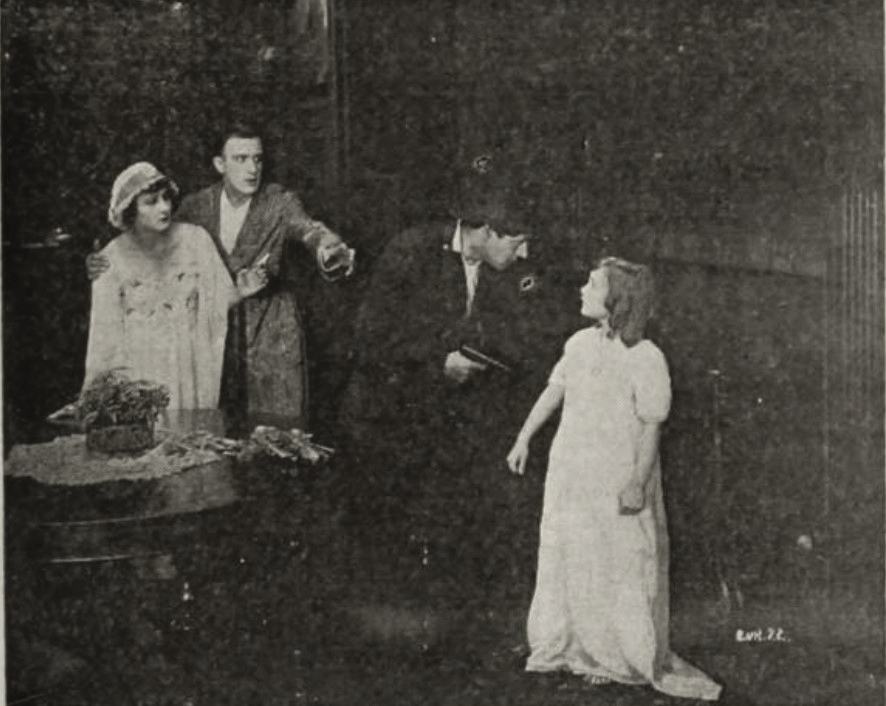
Yet for all its clockwork, the film reserves its cruelest twist for the domestic sphere. Alice—Evelyn Greeley in a performance of porcelain stoicism—discovers her husband’s guilt not through exposition but through a half-burned newspaper photograph of the slain officer. The way she fingers the scorched edge, then lifts her gaze to the nursery door, conveys entire volumes of marital archaeology without a single subtitle.
Contemporary exhibitors received a cue sheet instructing musicians to segue from a jaunty college march into Mendelssohn’s “Fingal’s Cave” the instant the revolver fires—a sonic bruise that darkens the auditorium. During the bank robbery, the recommendation is a ceaseless timpani roll punctuated by piccolo stabs, mimicking a racing pulse. I synced a modern viewing to Max Richter’s “Shadow Journal”; the result was uncanny—cellos sawing beneath the vault’s timelock as though grief itself were winding the mechanism.
While Her Mother’s Secret weaponizes maternity as sacrificial spectacle, The Burglar interrogates fatherhood as original sin. Will’s descent is plotted along patriarchal fault-lines: the need to provide colliding with the inability to escape past violence. Alice’s final decision—to shield Editha from the truth by destroying the evidence—reads less as melodramatic concession and more as an act of insurgent femininity, rewriting the moral ledger with her own ink.
Scardon refuses the cathartic release granted in The Ticket-of-Leave Man. The closing shot—Will in silhouette, surrendering to detectives while Editha’s lullaby plays on a distant phonograph—offers no handcuff-clicking closure. The camera cranes up to a cityscape of endless windows, each framing its own clandestine transgression. The implication: guilt is not a stain to be scrubbed but an atmosphere we inhale.
The 35 mm negative, once thought lost in the 1937 Fox vault fire, resurfaced in a Slovenian monastery archive in 1998, mis-catalogued as “L’Homme Qui Vole”. The restored print still bears scorch marks along reel three; those ember-holes coincidentally coincide with the muzzle-flash frame, creating a Brechtian aperture that reminds viewers of celluloid’s own fragility. The tinting—amber interiors, cerulean nights—was recreated using hand-dyed horse-glue, the same method employed in 1914, giving blues a slightly metallic sheen that modern digital intermediates cannot replicate.
Rewatching after Chloé Zhao’s Nomadland or David Fincher’s The Killer reveals how little the tension between rootlessness and retribution has mutated. Will’s frantic scrubbing of his past echoes the gig-economy anonymity those films depict; the bank’s marble façade is the original algorithmic platform, reducing identity to ledger entries. Even the blackmail letter—delivered via Western Union telegram—feeds the same dread as a phishing text flashing across OLED screens at 2 a.m.
If your idea of silent cinema is Dick Whittington and his Cat’s frolicsome pantomime, prepare for a serrated-edge masterclass in dread. Stream it on a projector, lights off, volume loud enough to hear the film-strip perforations clicking like distant typewriter keys. Pair with a rye old-fashioned; let the sugar cube’s dissolution mirror the slow erosion of Will’s conscience. And when the final iris-in closes around his haunted face, you may find yourself checking your own locks twice before bed—because some burglars steal more than silver; they snatch the certainty that tomorrow you will still recognize the person staring back from the mirror.
IMDb 5.7
1936
Community
Log in to comment.