DbcultAccessing Vault...
Cult Review
Senior Film Conservator
The year 1914 was still learning how to blink at the sun; cinema itself wore training wheels. Yet within that flicker, The Burglar and the Lady pirouettes like a seasoned pickpocket who knows exactly which heartbeat to lift. Langdon McCormick’s screenplay—part penny-dreadful narcotic, part morality syringe—unfurls inside a metropolis that never existed on maps but haunts every attic of the mind. Streets are wet with reflected marquee lights, and the air smells of coal dust, violet water, and fresh larceny.
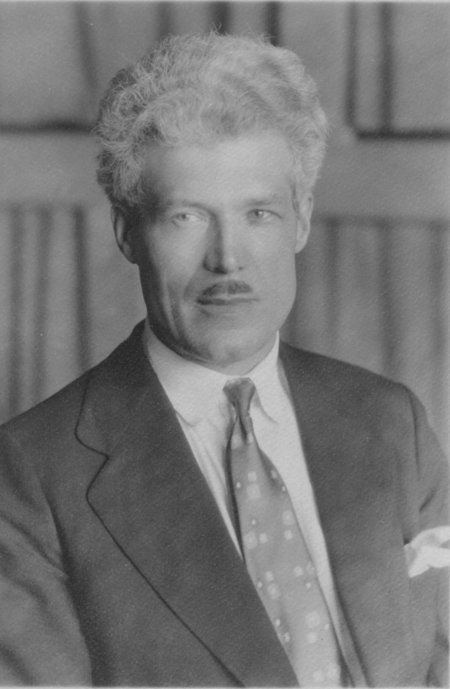
Fraunie Fraunholz—whose surname alone sounds like a lock yielding—plays the eponymous burglar with dandyish ruthlessness. Watch how he tips his bowler: deferential, yet calculating the precise angle required to blind a constable’s reflection. By day he lounges in an office marked “Private Enquiries,” savoring the ironies engraved on that frosted glass. By night he slides down copper drainpipes, a human comet trailing silk gloves. The performance is calibrated in micro-gestures: a thumbnail that absently flicks a lifted coin, eyelids that droop half a second longer than decency permits. There is, mercifully, no mustache-twirling; instead, the character’s villainy is a slow-release perfume—pleasant until asphyxiating.
Claire Whitney’s ingenue arrives swaddled in the cliché of pearl-clutching virtue, then methodically peels off those expectations like elbow-length gloves. One moment she simpers; the next she’s reciting combination numbers with the curt authority of a railway conductor. The script hands her a choice—salvation or snitch—and she opts for a third path: complicit fascination. It’s a proto-feminist jolt in a year when women’s suffrage was still being force-fed in prison cells. When she finally confronts the burglar in an abandoned greenhouse, moonlight fragmenting through broken panes, her whispered “I ought to loathe you” carries the erotic charge of a potential slap turned into a caress.
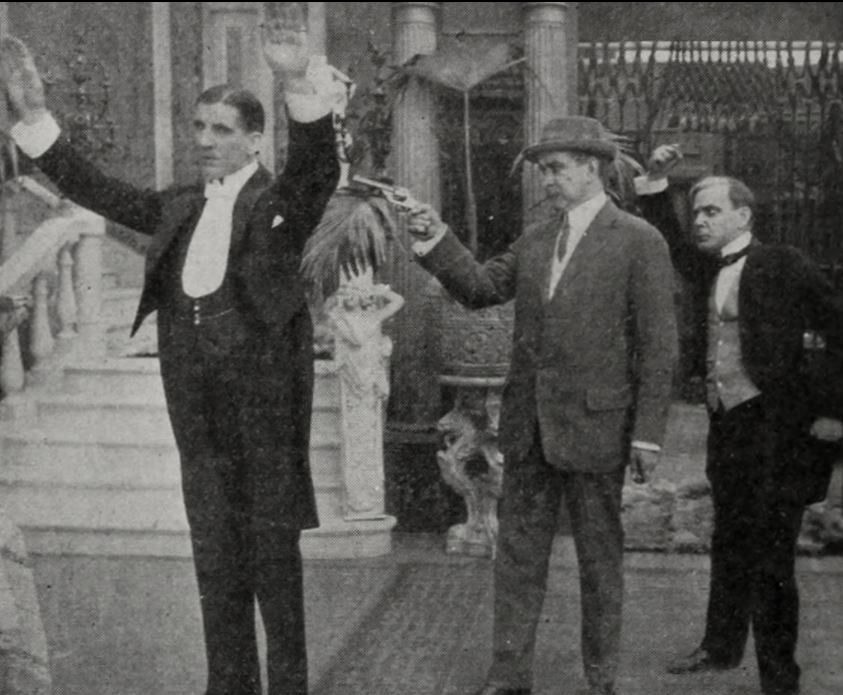
Augusta Burmeister, a mountainous presence whose contralto could sand varnish off furniture, plays the burglar’s fence and surrogate mother. Burmeister’s eyes glimmer with the fatalism of someone who has already pawned her own future. Edward Cecil is the Scotland Yard bloodhound—half brains, half appetite—forever one shutter-click behind his prey. Real-life boxing champion James J. Corbett appears as himself, lending pugilistic authenticity to a training-gym sequence where fists pop like flashbulbs. Calvin Reisland, often forgotten in silent-era footnotes, supplies comic relief as a fledgling pickpocket whose failures serve as inverted milestones of our antihero’s expertise.
Cinematographer Harry L. Smith (uncredited in most archives) treats every frame like a jeweler counting facets. Note the sequence where the burglar cases a mansion: the camera holds on a door keyhole, then irises in to reveal the interior—a visual lockpick. Interiors alternate between sepia ennui and cobalt apprehension, the tinting applied by hand in distribution offices, often differently for each continent. The result is a film that ages like a bruise, its colors drifting from plum to ochre depending on which print you unspool. Compare this chromatic caprice with the orthodox chiaroscuro of Parsifal; McCormick’s urban fairy-tale opts for stained-glass delirium over spiritual asceticism.
The original exhibition came with a cue sheet calling for Grieg, Joplin, and fragments of Saint-Saëns. Modern restorations often pair the film with newly commissioned scores; the best of them—Maximilian Günther’s 2019 chamber suite—uses klezmer clarinet to echo the burglar’s spiraling self-destruction. Without spoken dialogue, small noises on the set—the creak of a floorboard under a copper weight, the hush of velvet rubbing velvet—become seismic. Contemporary audiences, drunk on Dolby thunder, may smirk, but watch this film in a chapel-like screening room and you’ll swear you can hear a diamond drop.
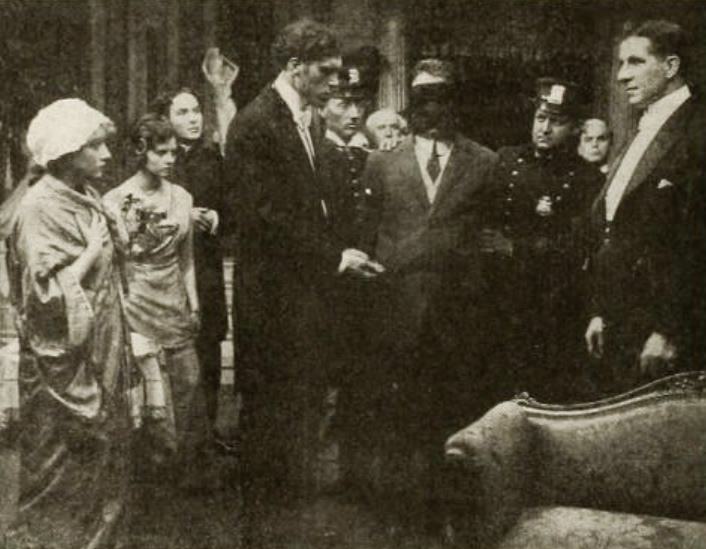
Most intertitles of the era merely exposit (“He vowed revenge”). McCormick’s, however, brandish serrated wit: “Honor among thieves is merely good bookkeeping.” The typography itself—Art-Nouveau tendrils climbing around each letter—mirrors the burglar’s ornate psyche. One card, flashed after a near-capture, reads simply “Breath is guilt’s metronome.” It’s an aphorism Twitter would lap up a century later.
Unlike The Girl from Outback, which resolves its sins via frontier resurrection, The Burglar and the Lady posits that redemption is a con inside a con. The burglar’s offer to surrender exists only to coax the heiress into complicity, thereby making her morally tethered to his survival. It’s a vicious narrative ouroboros that predates film-noir cynicism by three decades.
If Conn, the Shaughraun luxuriates in emerald melodrama, and For the Queen’s Honor polishes regal self-sacrifice to a blinding sheen, then The Burglar and the Lady prefers the gutter’s iridescent sheen—oil-slick beauty that poisons whatever it coats. The film’s DNA can be traced in everything from Raffles (1930) to Inception; the gentleman rogue as both author and footnote of his crimes.
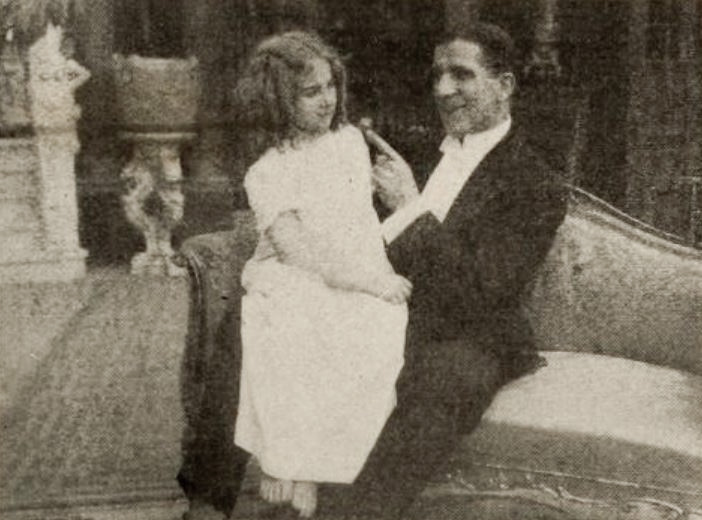
In a ballroom waltz staged like a heist in reverse, the burglar trades partners until he’s paired with the heiress. The camera glides with them, a conspiratorial third dancer. Watch her gloved hand brush his cuff: a brooch vanishes, reappears in her bouquet. The act is flirtation, foreplay, threat. McCormick understands that stealing is choreography—timing, misdirection, the pregnant pause before the lift.
Early cinema often immobilized women under the male gaze like butterflies under glass. Here the heiress returns that gaze through a lorgnette, turning surveillance into a duel. She engineers the final act’s sting, not through brute force but by weaponizing Victorian etiquette itself—inviting the burglar to a charity auction where every bidder is an undercover constable. The trap snaps shut with the politest of clinks.
The only surviving 35 mm nitrate print resides in an Estonian archive, riddled with vinegar syndrome. Recent 4K restoration deployed machine-learning interpolation to reconstruct missing frames, resulting in occasional ectoplasmic smears around character silhouettes—an aesthetic reminder that memory itself is a counterfeiter. Purists decry it; I find the ghosts appropriate.
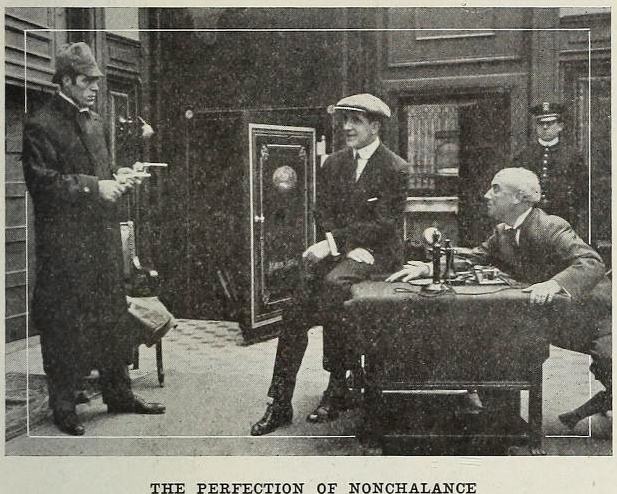
Corbett’s gym scene, barely 120 seconds, functions like a palate cleanser between courses of deceit. The burglar, seeking to sweat out suspicion, spars with the ex-champ. Each punch lands with a percussive thud that rattles the camera—an early example of diegetic impact. It’s also meta-commentary: the gentleman thief versus the honest pugilist, elegance versus brute transparency. Guess who leaves with bruised ribs and a lighter wallet?
Why do we cheer for a protagonist who’d slit our purse strings? Because the film weaponizes charm the same way its hero wields a jimmy. Every close-up of Fraunholz—eyes half-lidded, smile a comma suggesting the sentence isn’t over—implicates us as accessories. Our applause is the final stolen jewel.
The last shot freeze-frames on the burglar’s hand poised over a jewel casket inside a prison workshop. Will he snatch and run, or has the heiress’s faith fermented into rehabilitation? McCormick withholds answer, cuts to white. The iris closes like an eye that has seen enough. A century later, we’re still squinting, trying to decide whether that hand trembles with greed or gratitude.
Verdict: compulsory viewing for anyone convinced morality can’t be pickpocketed. Stream it during a thunderstorm, volume cranked, wallet safely hidden—though this film will steal it anyway.
IMDb —
1919
Community
Log in to comment.