DbcultAccessing Vault...
Cult Review
Senior Film Conservator
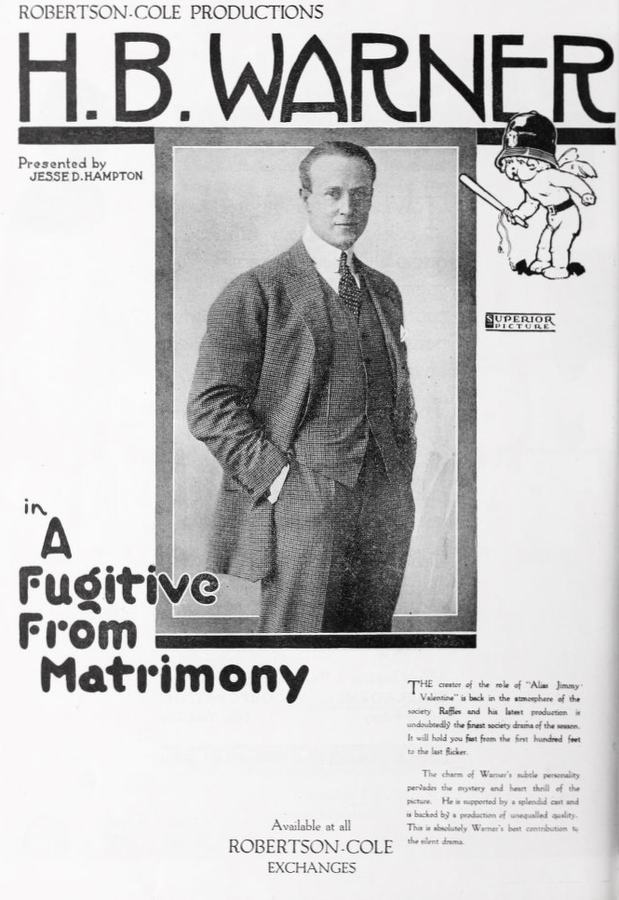
When the Riggs family arrives in Ossining, the very air seems to tremble with the promise of newfound grandeur, a promise that is as fragile as the oil‑slick sheen that brought them wealth. Their opulent manor, perched on a gentle rise, gazes across the manicured lawns of Stephen Van Courtlandt, a bachelor whose reputation for aloofness is matched only by his aversion to the matrimonial expectations of his social circle.
Mrs. Riggs, ever the architect of ambition, perceives Stephen not merely as a neighbor but as a stepping stone—a conduit through which her daughter Barbara might ascend the ladder of high society. She orchestrates soirées, flutters through parlors, and whispers of a future where the Riggs name is spoken with reverence alongside the old‑money families of New York.
Stephen, however, is a man of solitary pursuits. He finds solace in the quiet cadence of a fishing line, the gentle ripple of water masking the tumult of expectations that press upon him. It is during one such solitary outing that destiny, in the form of Chimmy the Cricket, an escaped convict from Sing Sing, materializes. Chimmy, gaunt and desperate, proposes a daring exchange of clothing—a ruse designed to elude the relentless pursuit of the prison guards.
The exchange is swift, almost theatrical: Stephen’s refined attire is swapped for the ragged garb of a criminal, and Chimmy, now cloaked in gentlemanly finery, disappears into the woods. The guards, bewildered, give chase to the wrong man, granting Stephen a fleeting window of escape that leads him, quite literally, over the wall of the Riggs estate.
Clambering onto the roof, Stephen spots an open window in Barbara’s bedroom. He slips inside, heart pounding, and finds himself face‑to‑face with a young woman whose eyes glitter with a mixture of curiosity and compassion. Barbara, believing she has stumbled upon a chance to rehabilitate a felon, offers him the butler’s livery—a gesture that, in the rigid moral climate of the 1920s, is both scandalous and heroic.
Mrs. Riggs enters the scene moments later, her composure unshaken despite the absurdity of the situation. Upon learning Stephen’s true identity, she declares that an immediate public announcement of engagement is the only remedy to preserve Barbara’s reputation. The proclamation, made in the drawing‑room before a gathering of local dignitaries, binds the two protagonists in a contract that is as much about social optics as it is about personal desire.
The ensuing weeks are a study in paradox. Stephen, still garbed in the butler’s uniform, navigates the household with a mixture of dignity and discomfort, while Barbara oscillates between admiration for his perceived bravery and lingering suspicion that he remains a criminal in disguise. Their interactions are peppered with witty repartee, lingering glances, and moments of genuine tenderness that hint at an affection blossoming beneath the veneer of obligation.
Complicating matters further is the disappearance of Mrs. Riggs’s treasured jewels—a scandal that threatens to unravel the fragile equilibrium of the household. Accusations swirl, and Stephen, despite his own precarious position, becomes the prime suspect. It is here that Chimmy re‑enters the narrative, his loyalty to Stephen unwavering. Together, they devise a plan to expose the true thief, a scheming servant whose greed eclipses any sense of loyalty.
The climax unfolds in a dramatic confrontation within the manor’s grand ballroom. Light from crystal chandeliers casts a kaleidoscope of reflections as the guilty party is unmasked, the stolen jewels recovered, and Stephen’s innocence vindicated. The audience, both within the film and beyond the screen, erupts in applause, and the social order is restored—though now altered by the genuine love that has taken root between Stephen and Barbara.
From a performance standpoint, Adele Farrington delivers a nuanced portrayal of Mrs. Riggs, balancing the character’s social ambition with a palpable vulnerability. Matthew Biddulph’s Stephen exudes a quiet strength, his eyes conveying the internal conflict between personal freedom and societal expectation. Seena Owen, as Barbara, captures the youthful exuberance of a woman caught between duty and desire, her expressive gestures speaking volumes in the silent medium.
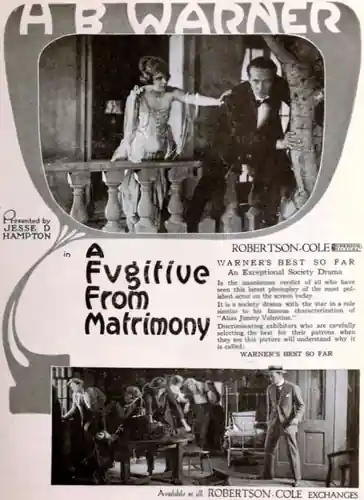
The film’s direction, attributed to Fred Myton, showcases an adept handling of visual storytelling. The use of chiaroscuro lighting accentuates the moral ambiguities of the characters, while the intertitles are sparingly employed, allowing the actors’ physicality to drive the narrative forward. The cinematography, with its sweeping shots of the estate and intimate close‑ups during moments of tension, creates a visual rhythm that mirrors the film’s thematic oscillation between comedy and drama.
When placed alongside contemporaneous works such as Three X Gordon and Northern Lights, A Fugitive from Matrimony distinguishes itself through its deft blend of social satire and romantic intrigue. While The Married Virgin leans heavily into melodrama, and Satan in Sydney explores darker moral territories, this film occupies a middle ground, offering both levity and depth without sacrificing narrative cohesion.
Thematically, the film interrogates the constructs of marriage as a transactional tool, a notion that resonates with modern audiences attuned to discussions of agency and consent. Barbara’s initial willingness to reform a convict reflects a progressive, albeit idealized, view of redemption, while Stephen’s resistance to matrimonial pressure underscores a timeless yearning for personal autonomy.
Moreover, the film’s treatment of class dynamics is noteworthy. The Riggs family’s sudden ascent into wealth juxtaposed against Stephen’s inherited aristocracy creates a tension that mirrors the broader societal shifts of the Roaring Twenties, a period marked by rapid economic change and evolving social mores.
The supporting cast, including H.B. Warner as the steadfast butler and Lule Warrenton as the cunning housemaid, enrich the tapestry of the narrative, each character contributing a distinct perspective on the central conflict. Their interactions provide comic relief without undermining the gravity of the plot’s pivotal moments.
From a technical perspective, the film’s preservation status is a testament to the dedication of archivists who recognize its cultural significance. Restorations have allowed contemporary viewers to experience the original tinting—subtle amber hues that enhance the romantic atmosphere—while the intertitles have been meticulously reconstructed to retain the film’s authentic voice.
In the broader context of silent cinema, A Fugitive from Matrimony stands as a compelling artifact of an era where visual expression reigned supreme. Its narrative complexity, combined with a deft balance of humor, romance, and social commentary, renders it a valuable study for scholars and enthusiasts alike.
For those seeking a film that transcends its temporal confines, offering insights into early 20th‑century gender roles, class mobility, and the perennial tension between individual desire and societal expectation, this work delivers in spades. Its legacy endures, inviting repeated viewings and scholarly discourse, much like the timeless classics it shares lineage with, such as King Lear and Officer 666.
Ultimately, A Fugitive from Matrimony is more than a silent romance; it is a meticulously crafted tableau that captures the zeitgeist of an America in flux, where oil fortunes could buy estates, but not necessarily the approval of an entrenched aristocracy. The film’s resolution—Stephen and Barbara’s authentic union—serves as a hopeful affirmation that love, when rooted in mutual respect, can bridge even the most formidable social chasms.
In sum, the film offers a richly layered experience: a narrative that entertains, performances that resonate, and a visual style that continues to inspire. Whether you are a devotee of silent cinema or a newcomer eager to explore the foundations of modern storytelling, A Fugitive from Matrimony warrants a place on your watchlist.
IMDb 7
1920
Community
Log in to comment.