DbcultAccessing Vault...
7.9/10
Senior Film Conservator
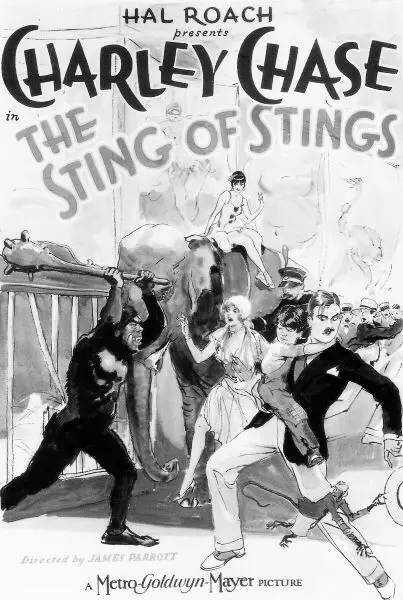
A definitive 7.9/10 rating for a film that redefined the boundaries of cult cinema. The Sting of Stings remains a cornerstone of transgressive art.
Is 'The Sting of Stings' worth watching today? Short answer: yes, absolutely, but primarily for those with a deep appreciation for early cinematic slapstick and a tolerance for its era's comedic sensibilities. This film is a delightful, if occasionally jarring, peek into a bygone era of physical comedy, making it perfect for film historians and silent film enthusiasts, yet potentially alienating for audiences accustomed to modern narrative pacing and humor.
This film works because of its relentless comedic energy and the undeniable chemistry between its lead performers, particularly in their escalating frustration. This film fails because its narrative structure is often a thin excuse for a series of escalating gags, lacking the emotional depth or character development that might resonate more broadly today. You should watch it if you're eager to witness the raw, unfiltered comedic talent of Charley Chase and Edna Marion, and appreciate a film that prioritizes pure, unadulterated chaos over intricate plotting.
The premise of 'The Sting of Stings' is deceptively simple, yet ripe for comedic exploitation. We open on Charley Chase and Edna Marion, a couple radiating an almost palpable smugness over their shiny new automobile. Their decision to extend a hand of charity, specifically to six children from Juvenile Hall, feels less like genuine altruism and more like a public display of their newfound prosperity. This initial, slightly self-serving motivation immediately sets a fascinating, if subtle, undercurrent to the ensuing madness.
The film quickly establishes that these are not your average 'underprivileged' waifs. Each child, from the moment they are introduced, is a distinct, miniature force of nature, embodying various forms of juvenile delinquency. The car ride to the carnival, intended as a serene journey, rapidly devolves into a masterclass in vehicular mayhem, a precursor to the sustained pandemonium that defines the rest of the picture. It’s a classic setup: good intentions meet unavoidable, uncontrollable reality, and the results are predictably, gloriously disastrous.
What makes this setup particularly effective is the gradual escalation. It’s not an immediate explosion of chaos, but a slow, insidious erosion of Charley and Edna’s composure. A stolen hat here, a spilled drink there, escalating to full-blown property damage and public humiliation. The film is a masterful study in the art of the slow burn, not for character development, but for the sheer comedic build-up of exasperation. The 'sting' isn't just the children's antics; it's the subtle commentary on performative charity, and the universe's swift, humorous rebuke.
H.M. Walker, as the writer, lays the groundwork for the mayhem, but it’s the direction that truly brings 'The Sting of Stings' to life with such vibrant, relentless energy. The film operates at a breakneck pace, a characteristic often found in silent comedies, where visual gags must land swiftly and consecutively to maintain audience engagement. There is little room for quiet contemplation; every scene is packed with action, reaction, and escalating comedic tension.
Consider the sequence within the carnival itself. From the moment they step through the gates, the children scatter, each finding a new way to wreak havoc. The director masterfully juggles multiple concurrent sight gags, often cutting rapidly between Charley and Edna’s increasingly desperate attempts to maintain control and the children’s various destructive escapades. One child might be dismantling a concession stand, another pickpocketing an unsuspecting patron, while a third is actively sabotaging a carnival ride. This multi-layered chaos is difficult to orchestrate, yet it feels fluid and organic.
The film’s pacing is its superpower. It allows no time for the audience, or indeed the protagonists, to catch their breath. The relentless barrage of unfortunate events ensures that the comedic energy never wanes. This is a deliberate choice, contrasting sharply with films like The Princess of Park Row, which might lean more on narrative progression. Here, the plot is merely a scaffold for a series of expertly timed, often elaborate, physical gags. The camera work, while not groundbreaking, is functional and clear, ensuring that every pratfall, every scuffle, and every exasperated facial expression is perfectly framed for maximum comedic impact. It's a testament to the directorial skill that such a chaotic premise never feels messy, only hilariously out of control.
The comedic heavy lifting in 'The Sting of Stings' falls squarely on the shoulders of its lead duo, Charley Chase and Edna Marion. Both deliver performances that are not only uproariously funny but also surprisingly nuanced, especially within the confines of silent film comedy. Charley Chase, in particular, is a master of the slow burn. His initial smugness slowly gives way to bewilderment, then frustration, and finally, a sort of resigned, wide-eyed terror as his day spirals out of control.
Chase's physicality is impeccable. Whether it’s his increasingly frantic attempts to corral the children, his desperate pleas for understanding, or the subtle twitch of his eye as another one of his possessions is destroyed, every movement and expression is calibrated for comedic effect. He embodies the everyman pushed to his absolute breaking point, and his reactions are entirely relatable, even when exaggerated for slapstick purposes. He doesn't just react to the chaos; he becomes a part of it, often inadvertently making things worse for himself.
Edna Marion, as his long-suffering partner, is equally brilliant. Her performance provides a vital counterpoint to Chase's escalating panic. She begins with a similar air of self-satisfaction, but her descent into exasperation is perhaps even more pronounced. Marion’s expressions are a symphony of disbelief and annoyance, evolving into a palpable sense of 'I told you so' mixed with sheer exhaustion. Her chemistry with Chase is palpable; they feel like a genuine, if comically beleaguered, couple. The non-verbal communication between them, particularly as they exchange glances of utter despair, is a highlight of the film.
The ensemble of child actors, while largely unnamed, are also crucial. Each child, whether played by Jackie Levine, Gabe Saienz, or Mickey Bennett, manages to convey a distinct personality of mischief. From the mischievous grin to the purposeful destruction, they are perfectly cast as pint-sized agents of anarchy, making the protagonists' plight all the more hilarious. Their collective performance creates a formidable, multi-headed comedic antagonist that never lets up, offering a stark contrast to the more innocent portrayals seen in films like Young Sherlocks.
The visual language of 'The Sting of Stings' is a masterclass in silent film clarity and comedic framing. Without dialogue, every gesture, every prop, and every camera angle must contribute directly to the storytelling and, more importantly, the humor. The cinematography, while not overtly artistic in a modern sense, is incredibly effective in serving the film's primary goal: making people laugh.
The use of wide shots is particularly prevalent and crucial. These allow the audience to take in the full scope of the chaos, whether it's all six children simultaneously creating havoc in the car or spreading out across the carnival grounds. This wide framing ensures that the multi-layered gags are visible and understandable, preventing any confusion that might arise from too many close-ups in rapidly unfolding scenes. It's a practical approach that prioritizes comedic impact over stylistic flair.
However, the film also employs well-timed close-ups to emphasize the protagonists' reactions. Charley Chase's contorted face, Edna Marion's exasperated sighs – these moments are punctuated by tighter shots that draw the audience into their escalating misery. The contrast between the expansive chaos and the intimate moments of despair is a key element of the film's visual rhythm. The lighting is straightforward, bright, and functional, ensuring that all the action is clearly visible, a necessity for a film so reliant on physical comedy.
The visual gags themselves are often ingenious, relying on a combination of clever staging and precise timing. The destruction of the new car, piece by piece, is a running visual joke that is both funny and painful to watch. The carnival setting provides a rich backdrop for a variety of visual opportunities, from malfunctioning rides to stolen prizes. The film’s visual storytelling is direct, punchy, and utterly effective, proving that sometimes, the simplest approach is the best for pure comedic impact.
Yes, 'The Sting of Stings' is absolutely worth watching today for specific audiences. It offers a fascinating glimpse into the mechanics of early slapstick comedy. Fans of classic silent films will find much to appreciate here. It's a short, sharp burst of comedic energy.
If you enjoy the rapid-fire gags and physical humor of the silent era, this film will delight you. It showcases the raw talent of its lead performers. It’s a historical document of comedic evolution. However, it might not resonate with viewers seeking modern narrative complexity or subtle humor.
Beyond the surface-level gags, 'The Sting of Stings' inadvertently touches upon several intriguing themes, even if its primary goal is pure entertainment. The most prominent, of course, is the idea of charity gone wrong. Charley and Edna's initial benevolence is quickly punished, raising questions about the motivations behind good deeds and the often-unforeseen consequences.
There's also a subtle commentary on social class and expectations. The 'underprivileged' children from Juvenile Hall are not depicted as victims to be pitied, but rather as agents of chaos, subverting the expectations of both their benefactors and the audience. This portrayal, while potentially problematic by today's standards, was a common comedic trope of the era, contrasting the 'respectable' with the 'unruly' for laughs.
The tone of the film is relentlessly comedic, almost to the point of exhaustion. It's a celebration of pure, unadulterated slapstick, where physical discomfort and property damage are the primary sources of humor. There's no moralizing, no deep character arcs, just a sustained, escalating barrage of visual jokes. This commitment to its comedic style is both its greatest strength and, for some modern viewers, its biggest challenge. It works. But it’s flawed.
Compared to other films of the period, such as The Mystery Road, which might have explored more dramatic narratives, 'The Sting of Stings' is a focused, almost single-minded pursuit of laughter through chaos. Its comedic DNA can be seen influencing later, more sophisticated comedies, demonstrating the enduring appeal of well-executed physical humor. It’s a film that demands you turn off your critical brain and simply enjoy the ride, however bumpy it gets.
'The Sting of Stings' is a riotous, albeit one-note, explosion of silent-era slapstick. It's a film that knows exactly what it wants to be – a non-stop barrage of physical comedy – and executes it with precision and boundless energy. While its narrative thinness and potentially dated sensibilities might deter some, its sheer comedic force, driven by the masterful performances of Charley Chase and Edna Marion, makes it an essential watch for anyone with an appreciation for the foundational elements of screen comedy. It's not a film that will change your life, but it will certainly make you laugh, and perhaps even wince, at the chaotic consequences of good intentions gone hilariously awry. A robust 7.5 out of 10 for its era-defining comedic prowess.
IMDb 6.7
1933
Community
Log in to comment.