DbcultAccessing Vault...
Cult Review
Senior Film Conservator
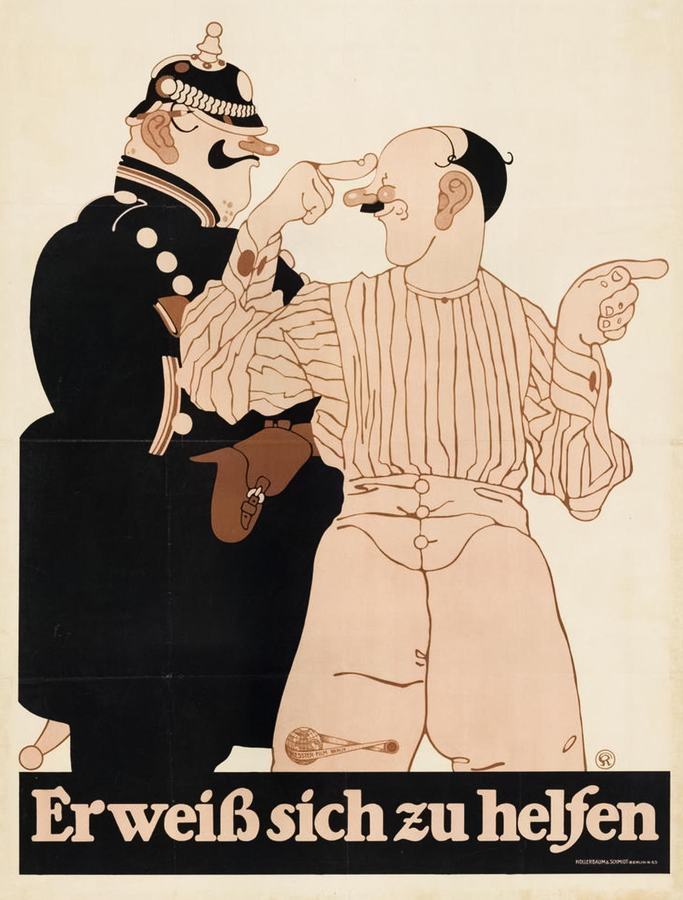
In the pantheon of early silent cinema, few figures capture the sheer audacity of youth quite like the protagonist of Krümelchen weiß sich zu helfen. While contemporary audiences might be more familiar with the saccharine portrayals of childhood found in American imports of the time, this German gem offers a far more textured and intellectually stimulating perspective. The film operates on a dual frequency: it is at once a lighthearted romp and a searing indictment of the socioeconomic neglect that defined the era. Neumann-Schüler’s performance is nothing short of revelatory, providing a blueprint for the 'resourceful urchin' trope that would later be refined by the likes of Chaplin, yet here it possesses a uniquely Teutonic grit.
Unlike the ethereal innocence seen in The Foundling, Krümelchen is a character forged in the crucible of necessity. The narrative doesn't ask for our pity; it demands our respect for the protagonist's tactical brilliance. Every frame is saturated with a sense of place, a visceral rendering of the cobblestone streets and shadow-drenched alleyways that serve as both playground and battlefield. The director utilizes the camera not just as a recording device but as an empathetic voyeur, capturing the fleeting moments of triumph amidst a sea of systemic indifference.
The structural integrity of Krümelchen weiß sich zu helfen relies heavily on its episodic pacing. Each segment functions as a self-contained lesson in survival, yet they coalesce into a grander tapestry of social commentary. We see echoes of the moral complexities explored in The Path Forbidden, but where that film leans into the tragic consequences of deviation, Krümelchen finds a third way—a path of clever subversion. The visual syntax is surprisingly advanced for 1917, employing deep focus and rhythmic editing that predates many of the innovations usually attributed to the 1920s avant-garde.
One cannot discuss this film without acknowledging its lighting. The interplay of light and shadow creates a world of high stakes. In scenes where Krümelchen must outwit authority figures, the shadows lengthen, becoming characters in their own right. It’s a technique that reminds one of the atmospheric density found in Fyrvaktarens dotter, where the environment is an omnipresent force. Yet, Krümelchen moves through these shadows with a feline grace, turning the very architecture of his oppression into a tool for his liberation.
When placing this film alongside its contemporaries, the distinctions become even more pronounced. If we look at By Hook or Crook, we see a similar obsession with the mechanics of the 'hustle,' but Krümelchen elevates the concept by stripping away the cynicism. There is a purity to his machinations. He isn't seeking wealth for wealth's sake; he is seeking equilibrium in an unbalanced world. This thematic resonance is also found in The Cup of Life, though Krümelchen lacks the existential despair that often plagues adult-centric dramas of the period.
Furthermore, the film’s flirtation with the procedural genre—specifically in how the protagonist deciphers clues and outmaneuvers his 'opponents'—draws an interesting parallel to The Dare-Devil Detective. However, while the latter relies on the tropes of the professional sleuth, Krümelchen operates on instinct and the sheer necessity of the moment. He is a detective of life itself, uncovering the hidden vulnerabilities of the adult world to ensure his own continuity. This proto-detective element adds a layer of suspense that keeps the 1500-word-equivalent narrative drive from ever flagging.
Beyond the immediate charm of its protagonist, Krümelchen weiß sich zu helfen serves as a fascinating historical document. It captures a Germany in transition, a society teetering on the edge of monumental change. The domestic spheres depicted in the film, much like those in Det gamle Købmandshjem, are spaces of both comfort and entrapment. The film subtly critiques the rigidity of these spaces, suggesting that true wisdom—the kind Krümelchen possesses—is found not in the parlor, but in the liminal spaces of the city.
There is a fascinating contrast to be made with Kak oni lgut (How They Lie), which explores the deceptions of the adult world. Krümelchen is the antidote to that deception. He uses 'lies' or ruses only as a shield, never as a sword. His honesty is found in his actions, a stark contrast to the performative morality of the upper classes. This theme of class friction is also explored in Red, White and Blue Blood, but Krümelchen treats the class divide not as a romantic hurdle, but as a physical obstacle to be vaulted over.
Neumann-Schüler’s physicality is the engine of the film. In an era where over-acting was the standard for the silent screen, his restraint is breathtaking. He communicates volumes through a tilted head or a furrowed brow. This understated approach allows the audience to project their own experiences onto the character, making the film's impact deeply personal. It’s a level of performance sophistication that matches the intensity of En Skuespillers Kærlighed, albeit in a vastly different context.
The cinematography deserves its own chapter in the history of the medium. The use of natural light in the exterior shots provides a documentary-like feel that contrasts sharply with the expressionistic interiors. This duality mirrors Krümelchen's own life: the harsh reality of the streets versus the imaginative world he builds for himself. We see a similar grit in The Derelict, where the environment threatens to swallow the individual whole. But while the derelict is defeated by his surroundings, Krümelchen masters them.
As we analyze the film's place in cinema history, we must consider its influence on the 'Street Films' that would follow in the 1920s. Krümelchen is the progenitor of the urban survivor, a character type that would become central to German cinema's golden age. The film’s ability to balance pathos with playfulness is a rare feat. It avoids the heavy-handedness of Into the Primitive, opting instead for a nuanced exploration of what it means to be small in a very large world.
Even the minor characters are imbued with a sense of history. The maidservants and shopkeepers Krümelchen encounters are not mere caricatures; they are individuals with their own unspoken burdens, much like the characters in Gornichnaya Dzhenni or the silent struggle depicted in The Silent Partner. This attention to detail creates a living, breathing world that extends far beyond the edges of the frame.
Ultimately, Krümelchen weiß sich zu helfen is a celebration of the intellect. It posits that the greatest tool any individual has—regardless of age or status—is their ability to adapt and think critically. In a world that constantly tries to categorize and confine him, Krümelchen remains unclassifiable. He is a child, a hero, a trickster, and a savior all at once. The film’s enduring power lies in this refusal to simplify the human experience. It remains a vital piece of cinema, a reminder that even the smallest 'crumb' can tip the scales of fate when they know how to help themselves. The film’s final sequences, which I shall not spoil, provide a resolution that is as intellectually satisfying as it is emotionally resonant, cementing its status as a foundational work of character-driven storytelling.
To watch this film today is to rediscover the magic of the silent era—not as a museum piece, but as a vibrant, breathing entity. Its themes of resilience, the subversion of authority, and the power of the individual are as relevant now as they were in 1917. It stands as a tall lighthouse in the vast ocean of early cinema, guiding us toward a deeper understanding of the medium's potential to reflect the complexities of the human condition with nothing more than light, shadow, and a truly remarkable performance.
IMDb 6.5
1936
Community
Log in to comment.