DbcultAccessing Vault...
Cult Review
Senior Film Conservator
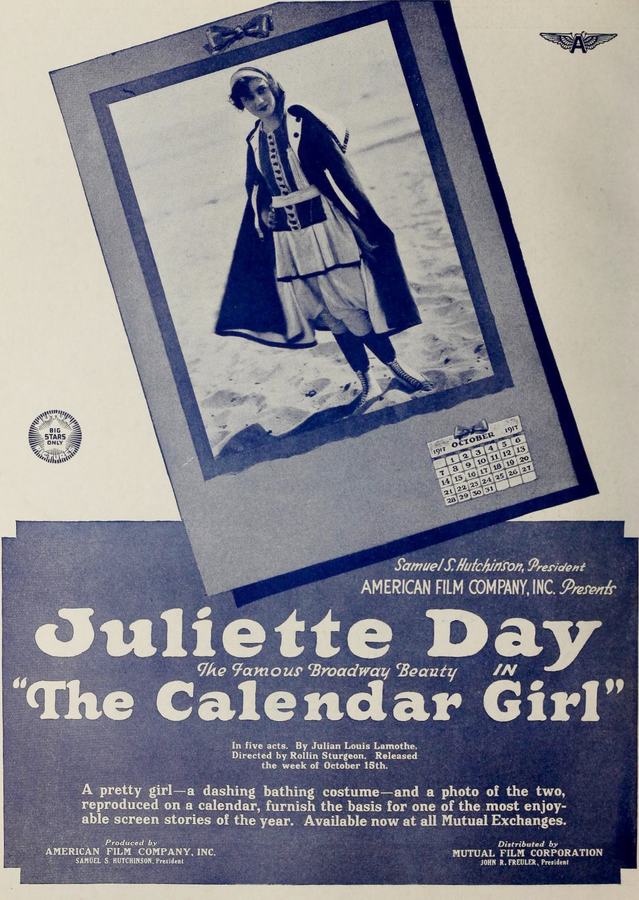
Stepping back into the flickering, sepia-toned world of 1917 cinema, one encounters a fascinating artifact in Julian La Mothe’s The Calendar Girl. This silent-era gem, starring the effervescent Fritzi Ridgeway, offers more than just a quaint narrative; it provides a compelling window into the societal anxieties, burgeoning consumerism, and evolving roles for women at the cusp of modernity. Far from being a mere historical curiosity, the film resonates with themes that remain remarkably pertinent, exploring the commodification of identity and the struggle for personal autonomy in an increasingly image-driven world. Its narrative, while rooted in the melodramatic conventions of its time, skillfully weaves elements of social commentary with moments of genuine humor and burgeoning romance, delivering a viewing experience that transcends its century-old vintage.
At the heart of The Calendar Girl is Mildred Manning, affectionately known as Middy, brought to life with a captivating blend of innocence and burgeoning spirit by Fritzi Ridgeway. We first encounter her as a diligent, if somewhat overlooked, apprentice in the bustling, fashionable atelier of Madame Lizette. This establishment, a microcosm of early 20th-century haute couture, serves as Middy's crucible, a place where she hones her skills amidst the rustle of silks and the sharp click of scissors. Her beauty, however, is not destined to remain hidden beneath the utilitarian apron of an apprentice. George Martin, Madame Lizette’s discerning brother, possesses a keen eye not just for fashion, but for the inherent charisma of a potential muse. He 'discovers' Mildred, plucking her from the obscurity of the workshop and thrusting her into the more glamorous, albeit objectifying, role of a model. This initial transformation is pivotal, marking Mildred's unwitting entry into a world where her appearance becomes her primary currency, a theme that echoes in later cinematic explorations of female identity and societal pressures, such as in Her Own People, where characters also grapple with self-perception against public expectation.
The narrative truly ignites when Mildred, in a moment of inspired improvisation, takes a rejected bathing suit – a garment deemed unwearable by the atelier's exacting standards – and, with a few deft adjustments and a touch of innate flair, transforms it into a stunning, covetable creation. This act of spontaneous genius, an early testament to her untapped creative potential, inadvertently catches the eye of Madame Lizette. Ever the astute businesswoman, Madame sees not just a beautiful design, but a potent advertising opportunity. She devises a clever, if ethically dubious, scheme: Mildred is to be dispatched to the beach, her striking figure adorned in the newly revitalized bathing suit, a living advertisement for Madame's brand. This scene is a brilliant encapsulation of the nascent advertising industry's willingness to blur the lines between art, commerce, and personal exploitation. Mildred becomes a pawn in a larger game, her individuality subsumed by her role as a promotional tool.
At the sun-drenched shore, Madame Lizette’s machinations unfold with calculated precision. A reporter and photographer, commissioned specifically for Madame’s calendar advertising campaign, are lying in wait. Their mission: to capture Mildred’s image, to immortalize her beauty for mass consumption, regardless of her consent. The ensuing pursuit is a delightful blend of slapstick and simmering tension, as Mildred, suddenly aware of the orchestrated publicity and feeling deeply exposed, attempts to evade the relentless lens of the camera. Her flight from these agents of commercial exploitation leads her to an unexpected sanctuary: the automobile of Philip Gordon, a distinguished lawyer. Lamar Johnstone portrays Gordon with a suitable air of sophisticated bemusement, his character initially an unwitting participant in Mildred’s desperate escape. The spontaneous decision to take refuge in his car sets in motion a chain of events that will irrevocably intertwine their destinies.
Fearing further exposure and desiring to maintain a semblance of respectability, Mildred implores Gordon to drop her off at a fashionable residence, a grand facade she hopes will lend her an air of social standing. This act of impulsive deception, a common trope in early romantic comedies, provides the film with one of its most charmingly humorous moments. When Gordon, intrigued by the enigmatic beauty, later returns to the address to call upon her, he is met not by the youthful enchantress, but by an aging spinster, whose bewildered greeting deepens the mystery surrounding Mildred. This comedic misunderstanding, born of Mildred's desperate attempt to control her image and circumstances, serves as a delightful narrative device, highlighting the chasm between appearance and reality, and setting the stage for Gordon's eventual, more determined pursuit of the truth. It's a classic setup, reminiscent of the mistaken identity plots found in films like The Ghost House, though here imbued with a lighter, more romantic touch.
Despite Mildred's fervent objections and her desperate attempts to prevent it, her photograph inevitably appears in Madame Lizette's calendar. Her image, once a private reflection, is now publicly disseminated, adorning walls and offices, a stark symbol of her loss of control and the commodification of her beauty. This moment is a profound turning point for Mildred. The initial thrill of being a model, the fleeting glamour, is replaced by a deep sense of violation and indignation. In a powerful display of burgeoning agency, Mildred quits her job at Madame Lizette's, severing ties with the very establishment that propelled her into the spotlight. Her defiance doesn't end there; she threatens legal action, seeking to prevent the continued use of her image for advertising purposes. This act of rebellion, a young woman challenging the powerful commercial forces that seek to exploit her, positions Mildred as a proto-feminist figure, a woman asserting her right to her own likeness and identity.
It is precisely at this juncture, when Mildred is at her most vulnerable yet most resolute, that Philip Gordon re-enters her life. Having been captivated by her fleeting appearance and subsequently perplexed by her disappearance, he traces her through the very calendar that has become the source of her distress. Gordon's re-emergence is not merely as a curious admirer, but as a potential ally, a legal counsel capable of helping her reclaim her image. However, his intentions are not purely professional. He sees in Mildred a woman of spirit and beauty, and he refuses to let her go again until she promises to marry him. This somewhat audacious proposal, leveraging her predicament for romantic gain, is a fascinating reflection of the era's romantic conventions, where a man's protective instincts could intertwine with his amorous pursuits. While it might raise eyebrows today, in 1917, it would likely have been seen as a chivalrous, albeit persistent, declaration of intent, ensuring a 'happy' resolution within the societal norms of the time.
Beyond its charming narrative, The Calendar Girl offers a rich tapestry of themes for contemporary analysis. The most prominent is the burgeoning power of commercial advertising and its impact on individual identity. Mildred’s journey from anonymous apprentice to reluctant public figure underscores the nascent stages of a consumer culture where personal image could be commodified and exploited. Madame Lizette, masterfully portrayed by Clarissa Selwynne as a figure of shrewd ambition, embodies the ruthless entrepreneurial spirit that sought to capitalize on beauty and novelty. The film implicitly critiques this system, showing Mildred's distress at losing control over her own likeness, a struggle that resonates with modern discussions around privacy, intellectual property, and the digital age’s relentless demand for personal branding.
Furthermore, the film is a subtle yet significant exploration of female agency in an era of profound social change. Mildred's decision to quit her job and pursue legal action is a powerful assertion of her autonomy. It’s a refusal to be merely an object, a testament to her desire to reclaim ownership of her image and her future. This theme of a woman fighting for her place and voice against societal expectations is a recurring motif in early cinema, seen in films like True Nobility, where female characters often navigate complex social landscapes to assert their worth. Her arc can be viewed as an early cinematic depiction of a woman finding her voice and demanding respect, even if the ultimate resolution is tied to a romantic partnership, a common trope for 'happy endings' in silent film.
The romantic element, spearheaded by the persistent Philip Gordon, adds another layer to the film. While his methods might seem a touch overbearing by today's standards, his character represents a certain type of heroic figure prevalent in the era – a man of means and influence who can protect and provide for the woman he loves. The interplay between Mildred's desire for independence and Gordon's protective affections creates a dynamic tension that propels the latter half of the narrative. It’s a dance between a woman seeking self-determination and a man offering a form of security, a common narrative compromise in films addressing female ambition during this period. The film also touches upon themes of class mobility, as Mildred's ascent from apprentice to model, and then potentially to the wife of a lawyer, hints at the changing social structures of the time, where individual talent and beauty could offer pathways to new opportunities, much like the aspirational journeys depicted in films such as The Market of Vain Desire.
Fritzi Ridgeway delivers a performance that anchors The Calendar Girl with considerable grace and emotional depth. Her portrayal of Mildred is nuanced, evolving from wide-eyed innocence to determined defiance. Ridgeway masterfully employs the expressive pantomime characteristic of silent film acting, conveying Mildred’s initial discomfort, her creative spark, her indignation, and ultimately, her budding affection for Gordon, all without a single spoken word. Her ability to project complex emotions through gesture and facial expression is a testament to her skill and the demanding nature of silent screen acting. She makes Mildred a relatable figure, one whose struggles with public image and personal agency feel surprisingly contemporary.
Lamar Johnstone, as Philip Gordon, provides a strong, if somewhat conventional, male lead. His character is the quintessential silent film hero – handsome, resourceful, and ultimately, a romantic idealist. Johnstone's performance complements Ridgeway's, providing a stable presence against Mildred's more tumultuous journey. The supporting cast, particularly Clarissa Selwynne as Madame Lizette, adds considerable flavor. Selwynne imbues Madame with a formidable, almost villainous, charm, making her a memorable antagonist whose commercial ambition drives much of the plot's conflict. The dynamic between Madame and Mildred is crucial, highlighting the power imbalances inherent in the fashion and advertising industries of the period.
Julian La Mothe’s direction, while perhaps not groundbreaking in its cinematic language compared to some of the more experimental works of the era like The Wrath of the Gods, is nonetheless effective in telling a clear, engaging story. The pacing is consistent, allowing the audience to invest in Mildred’s plight and root for her eventual triumph. The use of intertitles is judicious, providing necessary exposition and character thoughts without overwhelming the visual storytelling. The film’s aesthetic, typical of its time, relies on well-composed shots and clear visual cues to convey narrative information and emotional states. While it may not possess the grandiosity of epics like From the Manger to the Cross, its intimate focus allows for a more personal and relatable drama.
In conclusion, The Calendar Girl is more than just a forgotten film from the silent era; it is a vibrant, engaging piece of cinema that speaks to enduring human experiences. It reminds us of the power of images, the complexities of personal agency, and the often-unpredictable path to love and self-discovery. For cinephiles and historians alike, it offers a valuable glimpse into the evolving landscape of early 20th-century America, where traditional values began to contend with the relentless march of modernity and the burgeoning influence of mass media. Its narrative, though wrapped in the conventions of its time, contains universal truths about the struggle for identity and the desire for control over one's own narrative. Viewing it today, one can appreciate its historical significance as well as its surprising contemporary relevance, proving that some stories, even without spoken words, continue to resonate across the decades, echoing the timeless human quest for recognition and self-determination.
IMDb —
1914
Community
Log in to comment.