DbcultAccessing Vault...
Cult Review
Senior Film Conservator
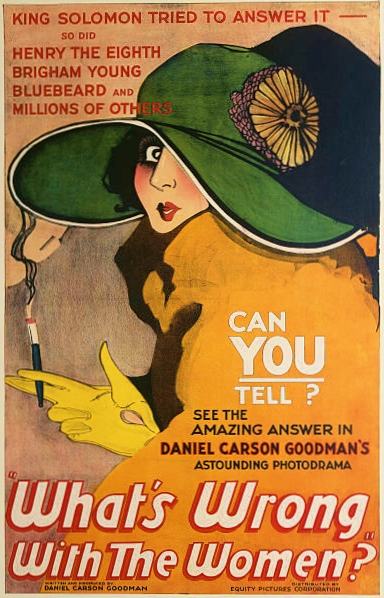
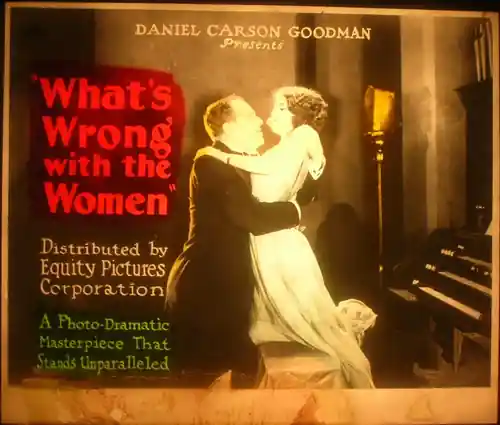
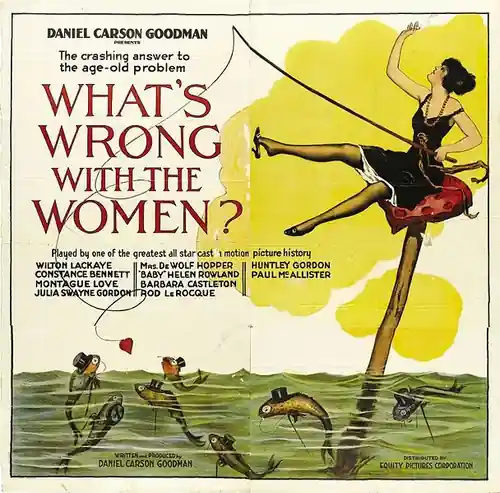
Stepping into the flickering glow of a silent film like "What's Wrong with the Women?" is akin to opening a time capsule, not just to a bygone cinematic era, but to a moment of profound societal introspection. Released in 1922, this picture, penned by the perceptive Daniel Carson Goodman, doesn't merely present a story; it poses a question, one that echoed through the Jazz Age and continues to resonate today. The film, in its essence, is a grand, often humorous, sociological experiment conducted on celluloid, observing men grappling with the shifting sands beneath their feet as women began to redefine their place in the world.
At the heart of this cinematic inquiry is Richard Thorne, portrayed with admirable gravitas and a touch of bewildered charm by Paul McAllister. Thorne is the quintessential patriarch of his time – successful, assured, and utterly convinced of the natural order of things, particularly concerning the fairer sex. His journey is one of gradual, often reluctant, awakening. His domestic sphere, initially perceived as a sanctuary of predictability, becomes the primary crucible for his enlightenment. Barbara Castleton, as his wife, delivers a nuanced performance, her character a quiet storm of unexpressed desires. She isn't the overtly rebellious flapper, but rather a woman whose intellect and spirit yearn for more than the gilded cage of domesticity, a yearning that Thorne, in his ingrained traditionalism, consistently misinterprets as mere feminine caprice.
The film truly comes alive through its ensemble, each actor embodying a distinct facet of the era's complex gender dynamics. Constance Bennett, even in her early career, shines as Thorne's daughter, a vibrant embodiment of the flapper generation. Her vivacious pursuit of personal freedom – from dancing the Charleston to asserting her right to choose her own path – stands in stark contrast to her father's staid expectations. Her scenes are electric, capturing the youthful exuberance and defiance that marked a radical departure from Victorian sensibilities. This dynamic offers a fascinating parallel to the generational clashes explored in films like The Little Diplomat, though with a more direct focus on female emancipation.
But the exploration of womanhood extends beyond the family unit. Thorne's professional life introduces him to a formidable businesswoman, played with understated power by Hedda Hopper. Hopper's character is a revelation, a woman who navigates the cutthroat world of commerce with an intelligence and resolve that initially disarms, then grudgingly earns, Thorne's respect. She is not a caricature, but a fully formed individual, challenging the prevailing notion that a woman's place was solely in the home. Her presence in the narrative is a powerful statement on the burgeoning opportunities for women in the public sphere, a theme that, while perhaps less overtly dramatic, is just as significant as the romantic entanglements often seen in contemporary dramas like He Fell in Love with His Wife, which often confined women to domestic roles.
Then there is the artistic temperament, personified by Dorothy Hammerstein. Her character, a struggling painter, embodies the quest for creative self-expression, often at odds with societal expectations of feminine decorum. Thorne's encounters with her are marked by a profound misunderstanding of her motivations, highlighting the chasm between practical, material-driven male perspectives and the more abstract, passion-driven female artistic impulse. This artistic exploration, though brief, adds another rich layer to the film's inquiry, reminiscent of the introspective character studies found in European cinema of the period, such as Monika Vogelsang.
While the title provocatively asks "What's Wrong with the Women?", the film, with subtle irony, suggests that the real 'wrong' lies in the male inability to comprehend. Wilton Lackaye and Huntley Gordon, as Thorne's bewildered confidantes, provide much of the film's comic relief. Their discussions, often held over cigars and brandy, are a delightful portrayal of male solidarity in the face of perceived feminine enigma. They represent the collective male consciousness of the era, struggling to reconcile traditional views with the undeniable evidence of women's evolving independence. Their advice to Thorne is often well-meaning but hopelessly outdated, further underscoring the central theme.
Rod La Rocque, as a younger, more progressive suitor to Thorne's daughter, offers a refreshing counterpoint. His character is more attuned to the modern woman, less burdened by the rigid expectations that hobble Thorne. He symbolizes the future, a generation of men more willing to embrace equality and partnership, though not without his own share of youthful missteps. His presence injects a dynamic tension, highlighting the generational gap in understanding and providing a glimmer of hope for a more harmonious future.
Visually, the film is a testament to the sophisticated storytelling techniques of the silent era. The use of expressive intertitles, nuanced facial expressions, and carefully choreographed physical comedy conveys complex emotions and social commentary without a single spoken word. The mise-en-scène, from opulent drawing rooms to bustling city streets, serves as a backdrop to the unfolding drama, meticulously reflecting the societal strata and aspirations of the time. The direction, while not attributed in the provided information, skillfully balances moments of broad comedy with poignant observations, ensuring that the film never descends into mere caricature.
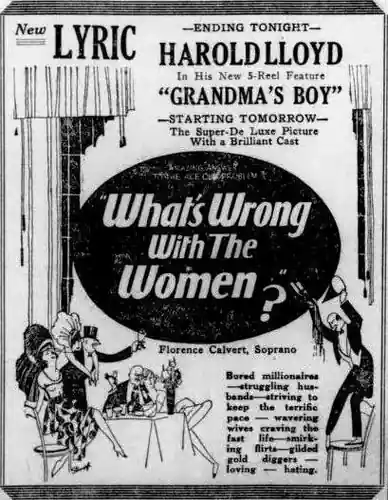
The performances are uniformly strong, with Julia Swayne Gordon and Montagu Love adding further depth to the supporting cast, enriching the social tapestry with their portrayals of various societal figures. Even Helen Rowland, whose role may be smaller, contributes to the overall mosaic of womanhood presented. The sheer breadth of female characters, each distinct and purposeful, is a remarkable achievement for its time, especially when compared to films that often presented more singular, idealized, or villainous female archetypes, such as The Alien or Appearance of Evil.
Goodman's screenplay is particularly commendable for its foresight. It doesn't offer easy answers or simplistic resolutions. Instead, it invites the audience to ponder the questions alongside its characters. The film concludes not with a definitive statement on "what's wrong," but with a more mature understanding that perhaps nothing is inherently 'wrong' at all, and that the perceived problems stem from a lack of empathy and a resistance to change. This nuanced approach elevates it beyond mere entertainment, positioning it as a significant social document of its period.
"What's Wrong with the Women?" is more than just a historical curiosity; it is a vital piece of cinematic heritage that captures a pivotal moment in the ongoing evolution of gender relations. Its themes of independence, misunderstanding, and the quest for mutual respect are timeless. While the fashions and social conventions depicted are undeniably of their era, the underlying human dilemmas remain strikingly contemporary. It reminds us that the struggle for understanding between men and women is a perpetual dance, one that requires constant communication, empathy, and a willingness to challenge ingrained perceptions.
The film's exploration of evolving female roles is particularly poignant when viewed against the backdrop of other films from the era that often reinforced traditional gender stereotypes. While a film like Her Country's Call might have emphasized patriotic sacrifice in a more conventional female role, "What's Wrong with the Women?" dared to delve into the internal lives and societal aspirations of women beyond such narrow definitions. It posits that the 'mystery' of women is not an inherent flaw, but rather a reflection of the complex, multifaceted nature of human beings, irrespective of gender. The film encourages a shift from judgment to curiosity, from prescription to acceptance.
In its silent grandeur, this film speaks volumes, not just about the women it portrays, but about the society that was learning, sometimes awkwardly, to accommodate their burgeoning power and individuality. It is a testament to the power of cinema to reflect, question, and ultimately, shape our understanding of the human condition. For anyone interested in the early days of cinema, the history of women's rights, or simply a captivating story of human interaction, "What's Wrong with the Women?" remains an essential viewing experience, a vibrant echo from a transformative age.
IMDb —
1924
Community
Log in to comment.