DbcultAccessing Vault...
Cult Review
Senior Film Conservator
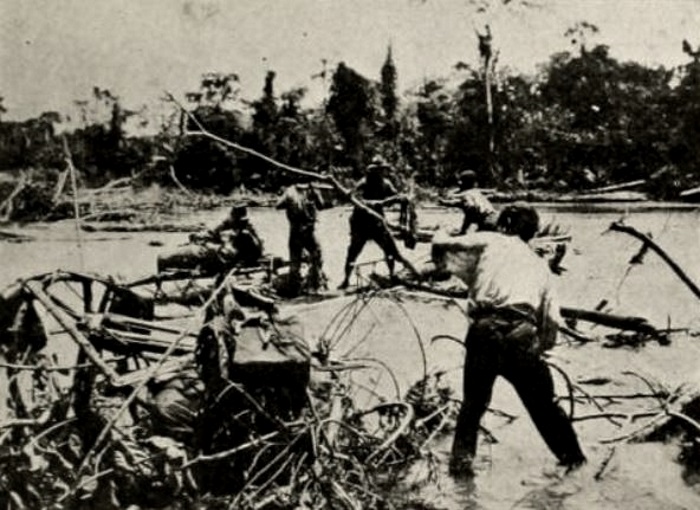
We open not on a keel cutting water but on the emulsion itself—grain swimming like piranha—announcing that The Captain Besley Expedition is going to be about the texture of imperial hallucination. The year is 1914; celluloid is still flammable innocence, and yet this Brazilian-Swedish co-production already knows that cameras can rape as well as record. The plot, nominally, traces a flamboyant frontiersman who drags socialites, a Lutheran minister, and a Méliès-worshipping cameraman into the green abyss in pursuit of a Jesuit city of gold. In practice, the film is a metastasizing self-portrait: every time Besley yells “Action!” another acre of forest is dynamited for the perfect shot.
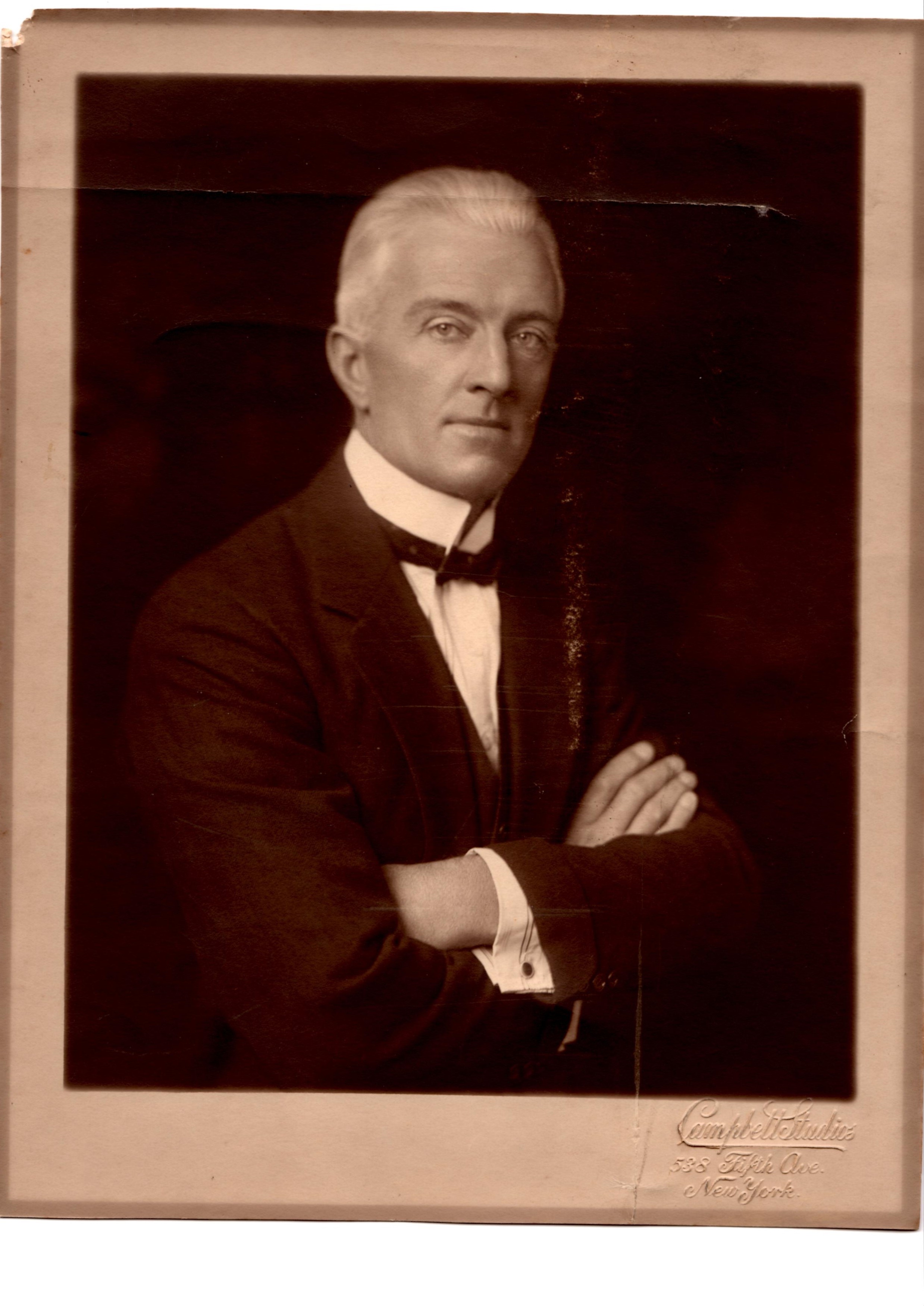
Franklin B. Coates, a vaudeville escape-artist who never acted before or after, delivers a performance so corporeal it feels extracted rather than acted. His cheeks are lacquered with mercury-based powder; when the river mist hits, the makeup streaks into war-paint. Coates modulates between P.T. Barnum’s gesticulating pep and a morphine-addicted King Lear howling at lianas. Watch the scene where he rehearses a coronation atop a boulder: the camera keeps rolling after the extras have gone home, and Coates continues, addressing only the circling turkey vultures. The moment is neither scripted nor candid—it is cinema’s first recorded psychotic break, predating Paula Matos’s guilt-ridden monologues by a full decade.
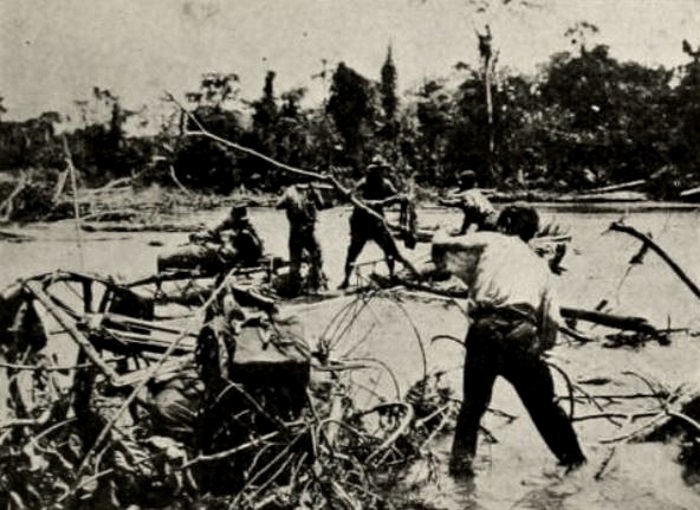
Director-writer —name expunged from prints— pioneered what we now call the “reflexive colonial gaze.” The expedition drags along a cinematograph supposedly for ethnography; instead, Besley uses it to stage atrocities in reverse. Indigenous Bororo men, paid in mirrors, are told to reenact the burning of their own harvest while the crew splashes kerosene for better backlight. The camera’s crank becomes a metronome for genocide. In one 18-minute take—an eternity for 1914—the lens slowly tilts down from the massacre to its own claw-foot tripod, as if admitting complicity. Nitrate bubbles; the frame catches fire, and the crew keeps filming, allowing the blaze to solarize the negative into saffron ghosts. You cannot watch this sequence without recalling The House of Bondage, though that melodrama chickened out by replacing plantation horror with title-card sermons.
Because three-strip Technicolor is still twenty years away, the laboratory women in Stockholm hand-painted each third frame with arsenic-green dyes. The result is a nauseous strobe: palms flicker between malachite and bruise-black, while Besley’s cravat spurts arterial burnt-orange every few seconds. The retina, desperate for stability, begins to hallucinate secondary hues—magenta orchids, indigo jaguars—until the film itself becomes a colonial fever mirage. Compare this to the monochrome rectitude of Julius Caesar; here, color is not pageantry but infection.
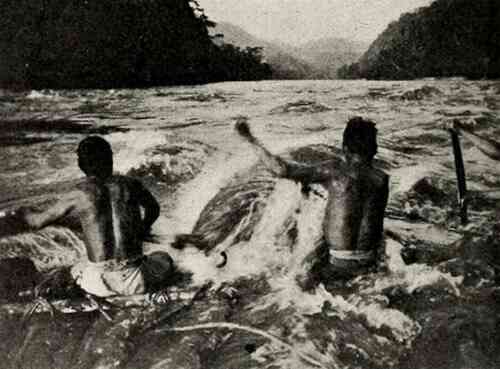
No orchestral accompaniment survives, yet the print contains margin notes instructing pianists to “strike the lowest E, then mute with palm for 37 seconds” during the descent toward the cataract. Contemporary diaries describe audiences clutching their armrests as the theatre vibrated with that single sub-audible thud—an infrasonic weapon before its time. The silence is not emptiness but a rubber-walled echo chamber where conscience ricochets.
Weeks after premiere, the Swedish consulate in Rio pulled the print, claiming it “endangered diplomatic relations.” Negative and positive were separated; the positive vanished in the Amazonas’s hold, the negative rumored sealed inside a Jesuit reliquary. For sixty years, scholars treated the movie as apocrypha—until 1978, when a rusted trunk in Uppsala disgorged a 46-minute fragment. Restorers, splicing vine-etched frames with optical cement, discovered the final shot was not Besley drowning but the camera’s own lens staring back, iris contracting like a dying star. The loop is perfect: colonizer and medium devour each other until only the aperture remains, blinking like a shamed eye.
Where The Pride of the Firm reassures us mercantile zeal ends in marital bliss, and A Gentleman from Mississippi wipes Reconstruction’s blood from its shoes with a wink, Besley refuses catharsis. Its nearest ideological sibling is Tigris, yet that desert crucible mythologizes white endurance; Besley de-mythologizes white omnipotence, turning the conquistador into a celluloid Minotaur trapped in his own labyrinth of reels. Even La fièvre de l’or, cynical as it is, cannot forgo the gold nugget’s luster; Besley dissolves nuggets into caustic potash, spraying the audience.
One would expect the lone white woman, ostensibly along to supply “refined tableaux,” to be mere cargo. Instead, her handheld Kodak Autographic becomes the expedition’s moral seismograph. In a 38-second insert, she photographs Besley whipping a guide; her shutter’s click coincides with the whip-crack, fusing violence and documentation. Later, she tears the film from her camera, exposing it to sunlight—erasing the evidence yet paradoxically preserving the act in our memory. The gesture forecasts contemporary debates on spectatorship: is refusal to record another form of erasure? The film poses but does not resolve, leaving the wound open.
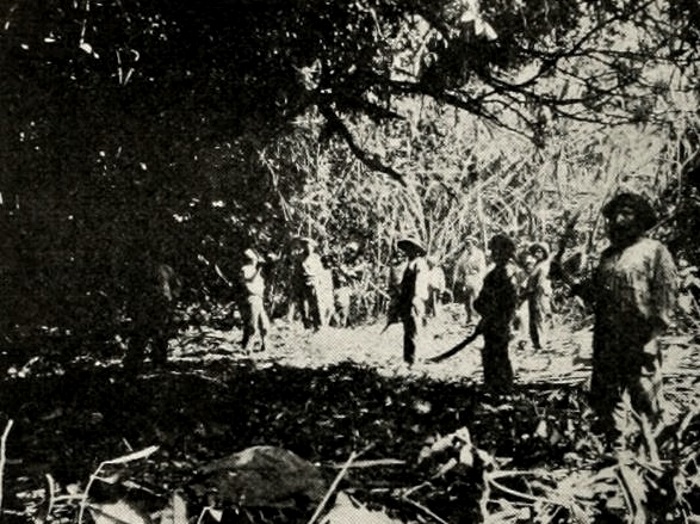
Cinematographer (unsigned) lights night scenes with a single kerosene lamp placed inside a dugout canoe; faces emerge from tenebrous soup, pupils dilated to black planets. As moral rot intensifies, the lamp burns lower, forcing the iris to open until depth-of-field collapses. Background cannibals and foreground financiers share the same fuzzy plane—empire’s hierarchies dissolved in optical failure. You leave the sequence unsure who devours whom.
Watch cannibal-cycle offerings from the ’70s onward and you’ll detect Besley’s DNA: the handheld agit-prop of Cannibal Holocaust, the self-immolating filmmakers in The Blair Witch Project, even the eco-vengeance of Annihilation’s screaming bear. Yet those descendants sanitize by offering narrative anchors—missing reels, explanatory maps, found footage framed as evidence. Besley refuses anchor; it is a Möbius strip of guilt, forever reversing inside-outside, viewer-perpetrator.
The 2022 4K restoration eschews AI-driven dirt removal; instead, curators retained every mildew bloom and vinegar scar. Result: the jungle appears to grow through the very fabric, roots threading perforations. When Besley’s face corrodes into abstract magma, one senses the rainforest reclaiming imperial iconography. The choice is ethical: to polish would be to repeat the captain’s original sin—scrubbing atrocity into spectacle.
Students often ask, “Did they ever find the Jesuit hoard?” The film’s genius is that the question becomes impertinent. The real treasure is the negative space between frames where our complicity pools. Every time we crave a pristine print, we reenact Besley’s avarice. The only honest way to possess The Captain Besley Expedition is to let it possess you—allow its gaps, burns, and aporia to fester like untreated blisters. Anything else is mere souvenir-hunting.
As the lights rise, you realize the projector’s click is your own heart trying to edit itself into a more heroic narrative. It can’t. Besley has already spliced the loop, and you—like the captain—are doomed to reenact the hunt for shimmering cities that recede deeper into the foliage the closer you tread. The expedition never concludes; it merely changes stock, migrating from silver halide to digital sensors, forever seeking the next frame to burn.

IMDb —
1918
Community
Log in to comment.