DbcultAccessing Vault...
Cult Review
Senior Film Conservator
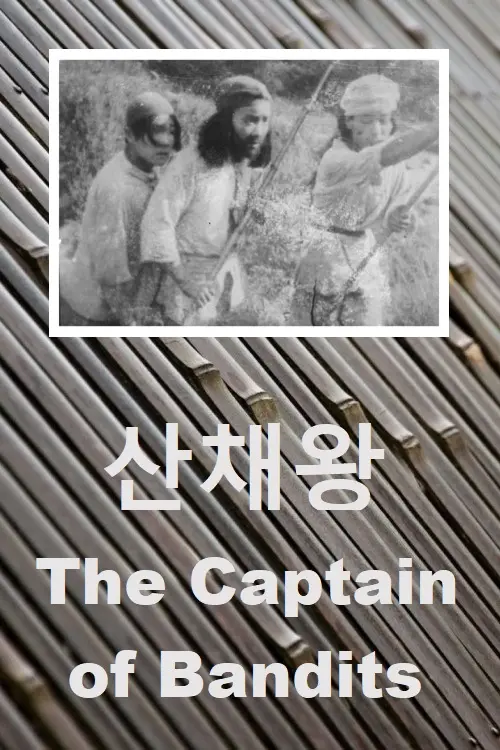
Does 'The Captain of Bandits' still resonate in an age of complex narratives and CGI spectacles? Short answer: yes, but with significant caveats that demand a specific kind of viewer. This is a film crafted for those who appreciate the foundational myths of rivalry and romance, yet it will likely alienate audiences seeking nuanced character development or modern pacing.
It’s a historical artifact, a snapshot of early cinematic storytelling that, while undeniably simplistic by today’s standards, offers a fascinating glimpse into the origins of dramatic conflict on screen. This isn't a casual viewing experience; it's an archaeological dig into cinema's past.
Early in the film, the narrative establishes its core with an almost brutal efficiency. The stakes are clear, the characters drawn with broad strokes, and the trajectory towards a definitive resolution is unmistakable. This directness, while sometimes jarring, is also its most potent charm.
This film works because of its raw, archetypal conflict and the sheer earnestness of its performances, which, for their era, carry a surprising weight of conviction. It’s a testament to the enduring power of elemental storytelling. This film fails because of its often simplistic execution and jarring tonal shifts, which betray its narrative potential, leaving much of the emotional landscape unexplored. You should watch it if you are a film historian, a student of early genre cinema, or someone who can appreciate narrative purity over modern polish. It’s a masterclass in what cinema *was* rather than what it *is*.
'The Captain of Bandits' strips storytelling down to its very bones, presenting a narrative so fundamental it feels less like a script and more like a myth etched into celluloid. At its heart lies a formidable romantic entanglement: two heroes, embodied with a compelling, if somewhat over-the-top, intensity by Gi-tak Jeong and Hong-sik Kang, find themselves hopelessly in love with the daughter of a notorious bandit king. This isn't a subtle dance of affections; it's a direct, undeniable collision of desires, setting the stage for an inevitable, tragic showdown.
The film doesn’t waste time on intricate backstories or moral ambiguities. The characters are defined by their roles: the competing suitors, the coveted heroine, the powerful patriarch. This economy of characterization is both a strength and a weakness. It allows the core conflict to shine with unadulterated clarity, yet it leaves little room for the kind of emotional complexity that modern audiences have come to expect.
The bandit king’s daughter is less a character with agency and more a narrative prize, a catalyst for the escalating tension between the two men. Her desires, if any, are largely secondary to the male-driven conflict that consumes the screen. This is a stark reminder of the film’s historical context, where female characters often served as plot devices rather than fully fleshed-out individuals.
The culmination, as the title implies, is a duel to the death. This isn't merely a fight; it’s a ceremonial sacrifice, a brutal arbitration of love and honor. One man falls, and the other claims his prize. The film concludes not with a resolution of peace, but with the stark reality of a love won through violence and loss, a surprisingly bleak undertone for what might otherwise be perceived as a straightforward romance. It's a testament to the raw, unfiltered emotional logic of early cinema.
The acting in 'The Captain of Bandits' is a fascinating study in early cinematic performance, where the theatrical roots of the medium are still profoundly visible. Gi-tak Jeong and Hong-sik Kang, as the dueling heroes, don't so much portray characters as they embody archetypes. Their performances are broad, expressive, and often melodramatic, a style perfectly suited to the nascent language of film, which relied heavily on visual cues to convey emotion.
Kang, in particular, delivers a performance marked by an almost restless energy. His movements are expansive, his expressions bold, ensuring that even from a distance, the audience understands his character’s passion and determination. There’s a scene where his character first lays eyes on the bandit king’s daughter, and the intensity in his posture, the slight tremor in his hand, speaks volumes without a single line of dialogue. It's a powerful, if unsubtle, portrayal of immediate infatuation.
Jeong, by contrast, brings a more brooding intensity to his role. His heroism feels more internalized, his gaze often carrying a weight of silent suffering. During the inevitable build-up to the duel, his quiet resolve, etched onto his face, creates a compelling counterpoint to Kang’s more outwardly demonstrative portrayal. The contrast between their acting styles actually elevates the central conflict, making the clash of their characters feel genuinely epic, even if the execution is rudimentary.
Jeong-suk Kim, as the bandit king’s daughter, navigates a challenging role with a quiet dignity. Her character is largely reactive, a fulcrum around which the male drama revolves. Yet, through subtle shifts in her gaze and posture, she conveys a sense of inner turmoil and resignation that hints at a deeper emotional landscape than the script explicitly allows. Her performance, while constrained, is a poignant example of an actress making the most of limited material, hinting at the future potential for female characters in cinema.
The supporting cast, including Baeksu Lee and the formidable Jeong-suk Kim, contribute to this tapestry of earnestness. They populate the world of the bandits with a palpable sense of community and loyalty, even if their individual roles are largely functional. The performances, collectively, serve as a valuable historical document, showcasing the transition from stage to screen and the evolving techniques of conveying character without the crutch of extensive dialogue.
Ilje Jo’s direction in 'The Captain of Bandits' is, by modern standards, remarkably straightforward. This isn't a criticism; rather, it’s an observation of the aesthetic priorities of early cinema. The camera often remains static, adopting a theatrical perspective that frames the action much like a stage play. There are no elaborate tracking shots or dizzying close-ups designed to manipulate emotion with surgical precision. Instead, Jo relies on the inherent drama of the narrative and the expressive physicality of his actors.
The cinematography, while basic, serves its purpose with commendable clarity. The framing is functional, ensuring that the key players and their actions are always visible. Lighting, too, is rudimentary, often relying on natural light or simple, flat illumination. Yet, in its simplicity, there’s an honesty. When the two heroes finally meet for their duel, the wide shot, capturing both men in their entirety against a stark backdrop, emphasizes the isolation and gravity of their confrontation. There’s no hiding behind fancy camera work; the tension is generated purely by the characters and their predicament.
One could argue that this lack of sophisticated technique is a limitation, but it also forces the viewer to engage with the story on a more fundamental level. Unlike modern blockbusters that often overwhelm with visual information, 'The Captain of Bandits' demands that you pay attention to the emotional beats conveyed through body language and the stark narrative progression. It’s a study in narrative economy, where every frame, every gesture, carries a specific weight.
Comparing it to other films of the era, such as The Puppet Crown, one sees a similar commitment to clear, if unadorned, visual storytelling. The focus is on communicating plot points and emotional states directly, without the flourishes that would become commonplace in later decades. This makes 'The Captain of Bandits' an invaluable piece for understanding the evolution of cinematic language, demonstrating how early filmmakers began to harness the power of the moving image to tell compelling stories.
The pacing of 'The Captain of Bandits' is perhaps its most challenging aspect for a contemporary audience. It’s a film that oscillates between moments of rapid narrative progression and stretches of almost languid contemplation. The setup of the love triangle, for instance, feels almost instantaneous, thrusting the audience into the conflict without much preamble. This directness can be jarring, especially for viewers accustomed to more gradual character introductions and world-building.
However, once the core conflict is established, the film often settles into a slower rhythm, allowing the tension to simmer. This isn't always successful. There are moments where the narrative feels less like it's building suspense and more like it's simply waiting for the next plot point to arrive. The dramatic beats, while impactful, sometimes feel isolated rather than part of a smoothly flowing emotional arc.
The tonal shifts are also quite pronounced. The film can move from moments of intense, almost operatic melodrama—particularly during the emotional outbursts of the rival heroes—to scenes of stark, almost documentary-like realism in its depiction of bandit life. This unevenness can be disorienting, preventing a consistent emotional immersion. It’s as if the film hasn’t quite decided whether it wants to be a gritty adventure or a tragic romance, often attempting to be both simultaneously.
The climactic duel, for example, is handled with a gravity that feels earned, yet the events leading up to it sometimes lack the necessary escalating tension. It works. But it’s flawed. The raw emotionality of the actors often has to compensate for the sometimes-stilted pacing, forcing them to carry the narrative weight through sheer force of will. This makes the film a compelling study in how early filmmakers grappled with the rhythm of storytelling on screen, often through trial and error, paving the way for the sophisticated editing and pacing techniques that would emerge later.
Does 'The Captain of Bandits' offer contemporary entertainment? Not in the traditional sense. Is it valuable for film studies? Absolutely. Will it appeal to casual viewers? Unlikely.
For those with a deep interest in cinematic history, this film is a fascinating artifact. It showcases the foundational elements of dramatic storytelling before the advent of complex visual effects or intricate character psychology. It's a window into a bygone era of filmmaking.
However, for the average moviegoer seeking modern thrills, intricate plots, or relatable characters, 'The Captain of Bandits' will likely feel slow, simplistic, and emotionally distant. Its charm lies in its historical context, not in its ability to compete with today's blockbusters.
It's a film that demands patience and an appreciation for its place in the timeline of cinema. If you approach it as a historical document rather than a piece of contemporary entertainment, its value becomes clear. Otherwise, you might find yourself struggling to connect with its dated sensibilities.
‘The Captain of Bandits’ is less a film to be enjoyed in the contemporary sense and more a cinematic relic to be studied and appreciated for its historical value. Its simple, almost brutal narrative of love, rivalry, and a fatal duel provides a fascinating window into the early days of filmmaking, showcasing how fundamental dramatic conflicts were brought to the screen before the advent of complex techniques. It's a testament to the enduring power of archetypal storytelling, even when presented with a raw, unpolished hand. While its dated sensibilities and straightforward execution will undoubtedly challenge modern audiences, for those with a keen interest in the evolution of cinema, it offers a surprisingly potent, if rudimentary, experience. It’s not a film for everyone, but for the discerning cinephile, it’s a vital piece of the cinematic puzzle, reminding us where it all began.
IMDb 6.9
1935
Community
Log in to comment.