DbcultAccessing Vault...
Cult Review
Senior Film Conservator
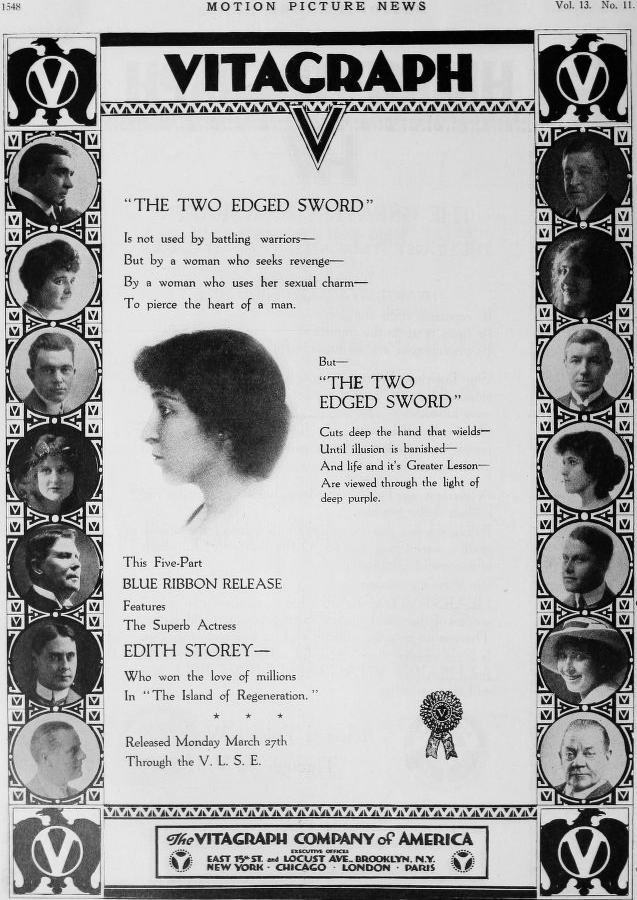
Step back into the nascent days of cinematic storytelling, where flickering images and impassioned gestures conveyed narratives of profound human drama. The Two Edged Sword, a compelling silent film penned by the insightful Lillian Case Russell and Eugene V. Brewster, emerges from this era as a stark, resonant exploration of desire, misinterpretation, and the devastating repercussions of a moment's folly. This isn't merely a period piece; it's a timeless testament to the complexities of the human heart, demonstrating how easily a casual dalliance can unravel lives with irreversible finality.
In an age less accustomed to the nuanced psychological portrayals that modern cinema affords, The Two Edged Sword leverages the potent visual language of silent film to plunge us into a narrative rife with emotional turmoil. The film masterfully portrays a world where societal expectations often clash with individual longings, and where the boundaries of propriety, once crossed, unleash a torrent of unforeseen consequences. It’s a narrative that, despite its vintage, feels remarkably contemporary in its dissection of marital discontent and the fragile nature of human connection. The performances, delivered with the characteristic intensity and expressiveness of the silent era, breathe life into characters whose fates are irrevocably intertwined by a series of choices, each more perilous than the last.
At the heart of this poignant drama is Dorothy, portrayed with a compelling blend of restlessness and vulnerability by Edith Storey. Her existence, while outwardly comfortable under the diligent provision of her husband, Gordon Allen (Robert Gaillard), has succumbed to a pervasive ennui. Gordon, a man of unwavering work ethic, embodies the stoic, reliable husband of his time, yet his devotion, perhaps, lacks the spark or imaginative engagement Dorothy craves. Her boredom isn't a malicious failing but a quiet desperation, a yearning for something more, something undefined, beyond the predictable rhythms of her domestic life. This yearning is a familiar motif, explored across various cinematic landscapes, from the subtle dissatisfactions in The Eternal Grind, where working-class women seek agency, to more overt marital discord in later dramas. Dorothy’s plight resonates with a universal human truth: material comfort alone cannot satiate the soul's deeper hungers.
Her decision to embark on a vacation with her friend Evelyn (Josephine Earle) isn't merely a desire for a change of scenery; it's an unspoken plea for escape, a tentative step outside the confines of her perceived marital cage. The farm, a pastoral idyll, represents a stark contrast to her urban existence, promising a simpler, perhaps more authentic, experience. This setting, often romanticized, here becomes a crucible, a place where the unexamined assumptions of one world collide with the raw realities of another. Edith Storey’s portrayal of Dorothy captures this internal conflict with remarkable clarity, her expressions conveying a woman on the precipice of a profound, and ultimately tragic, self-discovery.
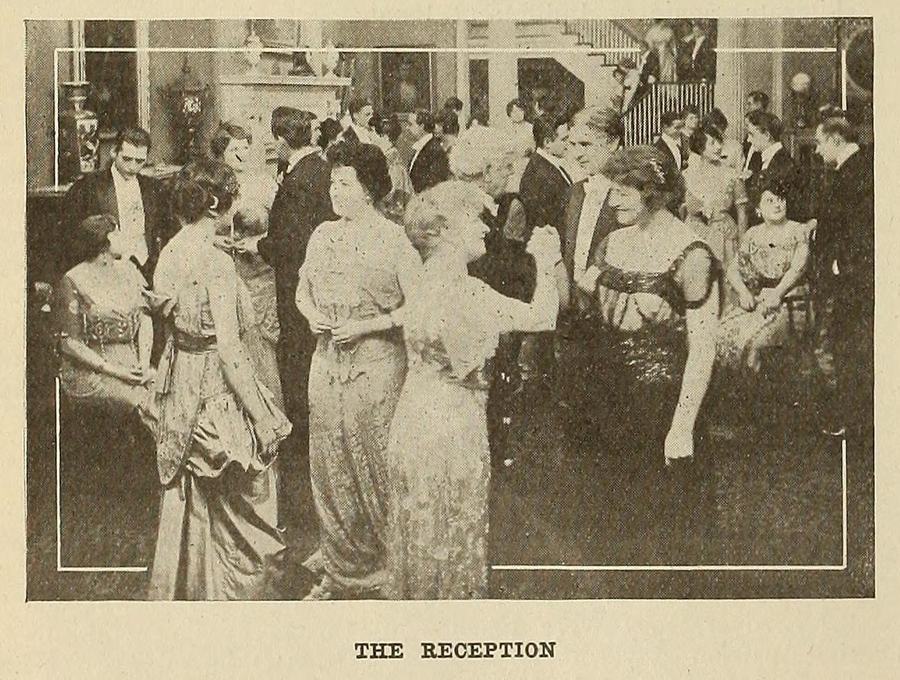
It is on this seemingly innocuous farm that Dorothy encounters Jed, the handsome, rugged farmer, whose portrayal by Marion Henry is imbued with an earnest, unvarnished charm. Their initial interactions are framed by Dorothy’s casual flirtation, an innocent pastime for a woman accustomed to the lighter social graces of urban life. For Jed, however, these fleeting moments of attention, these shared glances and whispered pleasantries, are imbued with a weight of profound significance. He is a man of the earth, his emotions perhaps less guarded, his interpretations more literal. He sees not a flirtatious diversion but a genuine connection, a burgeoning romance with a woman who has, however inadvertently, ignited a powerful, consuming passion within him.
The stark contrast between Dorothy’s casual intent and Jed’s profound interpretation forms the central tragic irony of the film. His infatuation, born of genuine feeling and perhaps a touch of naiveté regarding the complexities of the outside world, is utterly sincere. This dramatic irony is expertly woven into the narrative by writers Russell and Brewster, creating an escalating tension that is palpable even in the silent medium. The audience, privy to both Dorothy’s indifference and Jed’s growing devotion, watches with a sense of foreboding as the misunderstanding deepens. Jed’s sister, Mary (Nellie Anderson), acts as a voice of reason and concern, her efforts to intercede and protect her brother from inevitable heartbreak adding another layer of tragic inevitability. Her character embodies the protective instinct, a keen awareness of the social chasm that separates her brother's world from Dorothy's. Nellie Anderson delivers a performance that speaks volumes through her worried glances and determined actions, a silent harbinger of the impending doom.
The precarious balance of misunderstanding and unspoken desire is shattered with the unexpected arrival of Gordon Allen. His surprise visit, intended as a loving gesture, becomes the catalyst for the narrative’s brutal climax. Dorothy’s warm greeting and affectionate kiss, a natural expression of her marital bond, serves as a devastating revelation for Jed. In that singular moment, the full, crushing weight of his misjudgment descends upon him. The casualness of Dorothy’s actions, which to her were entirely innocuous, is exposed as a cruel deception from Jed’s perspective, shattering his world into irreparable fragments. Robert Gaillard's portrayal of Gordon, initially the hardworking, somewhat oblivious husband, transforms into a figure of righteous indignation and protective fury.
The ensuing physical confrontation between Gordon and Jed is more than a mere brawl; it is a primal clash of male pride, territoriality, and wounded honor. Gordon’s decisive victory, while seemingly restoring order, only serves to deepen Jed’s humiliation and despair. For a man whose entire emotional landscape has been upended, this public defeat is the final, unbearable blow. Jed's subsequent act of suicide is portrayed with a stark, uncompromising realism, a tragic testament to the devastating power of unrequited love and shattered illusions. This moment, a sudden and shocking pivot in the narrative, underscores the film’s titular 'two-edged sword' – the very forces that draw people together can, when misunderstood or misused, inflict profound and irreparable harm. The emotional weight of this scene is carried by the raw, silent anguish of the actors, leaving a lasting impression on the viewer.
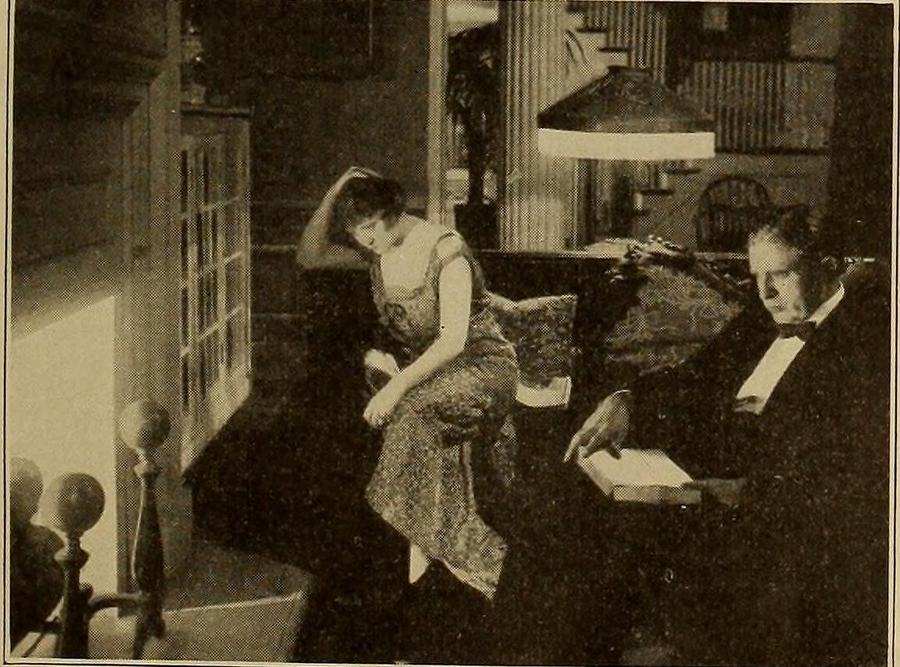
From the ashes of Jed's tragic demise rises Mary, his sister, now consumed by a searing, unyielding desire for retribution. Nellie Anderson's transformation from a worried sibling to a figure of formidable vengeance is one of the film's most powerful arcs. Her grief, transmuted into a cold, calculated fury, sets the stage for the narrative’s final, chilling act. Mary's vow of vengeance isn't a fleeting emotion; it's a deep-seated commitment, driven by love for her lost brother and a profound sense of injustice. She holds Dorothy directly responsible for Jed's fate, her casual flirtation having ignited a spark that led to his destruction.
This theme of personal vengeance, a raw, uncompromising pursuit of justice outside the bounds of law, echoes through cinematic history. One might draw parallels to the relentless pursuit of justice (or revenge) seen in films like A Fight for Freedom; or, Exiled to Siberia, where characters are pushed to extreme measures to right perceived wrongs. Mary’s character embodies the dangerous allure of personal vendetta, demonstrating how grief can warp morality and drive individuals to desperate acts. Her unwavering resolve to make Dorothy pay for her brother's death adds a chilling, suspenseful layer to the film, transforming it from a domestic drama into a taut psychological thriller. The silent film medium, with its reliance on exaggerated gestures and facial expressions, perfectly conveys Mary's simmering rage and grim determination.
The silent era demanded a unique brand of acting, where emotions were writ large across faces and bodies, conveying complex inner worlds without a single spoken word. The cast of The Two Edged Sword rises to this challenge with remarkable skill. Edith Storey, as Dorothy, delivers a performance that balances superficial charm with underlying dissatisfaction, her gestures oscillating between carefree abandon and startled realization. Her portrayal allows the audience to understand, if not condone, her actions, making her a tragically flawed protagonist rather than a simple villain.
Robert Gaillard’s Gordon is a study in stoicism and eventual eruption. His quiet dignity as the hardworking husband gives way to a fierce protectiveness, culminating in the visceral fight scene. Marion Henry’s Jed is perhaps the film’s most heartbreaking figure. His earnestness, his burgeoning hope, and his ultimate despair are conveyed with an intensity that transcends the silent screen, making his tragic end deeply affecting. Nellie Anderson, as Mary, completes this ensemble with a transformation that is both chilling and understandable. Her journey from concerned sister to vengeful avenger is depicted with a raw power that underscores the film's dramatic weight. The supporting performances by Josephine Earle as Evelyn, and contributions from Evart Overton and Logan Paul, further enrich the film’s tapestry, adding depth and realism to the unfolding tragedy. The collective artistry of these performers ensures that the emotional core of the story is never lost, even in the absence of dialogue.
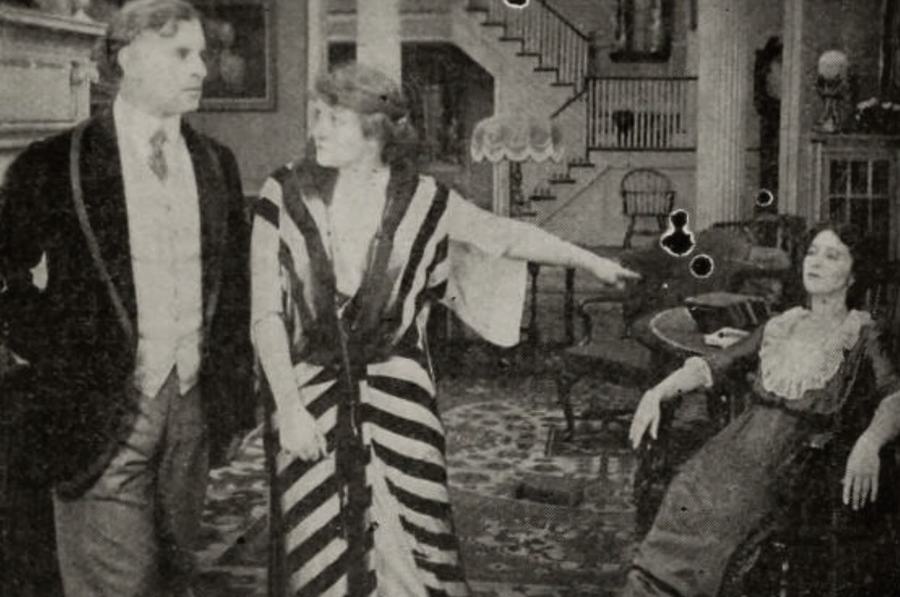
Lillian Case Russell and Eugene V. Brewster, the writers behind The Two Edged Sword, demonstrate a keen understanding of human psychology and narrative construction. Their screenplay is a masterclass in building tension and developing character through action and consequence, a particularly challenging feat in the silent medium. They eschew simplistic moralizing, instead presenting a complex web of motivations where no single character is entirely blameless or entirely villainous. Dorothy’s ennui, Jed’s romantic idealism, Gordon’s protective fury, and Mary’s vengeful grief are all presented as understandable, if ultimately destructive, human responses.
The pacing of the film is deliberate, allowing the audience to fully grasp the emotional nuances of each scene before propelling the story forward. The writers skillfully employ dramatic irony, a powerful tool that heightens the sense of impending tragedy. The plot, while seemingly straightforward, is rich with thematic depth, exploring the societal constraints placed upon women, the dangers of miscommunication, and the destructive nature of unchecked emotion. Their work stands as a testament to the power of well-crafted storytelling, proving that a compelling narrative can transcend the limitations of its medium. This nuanced approach to character and conflict elevates The Two Edged Sword beyond mere melodrama, cementing its place as a significant work of early cinema.
Beyond the stellar performances and robust screenplay, The Two Edged Sword is a testament to the visual artistry of early cinema. The direction, though uncredited in the provided information, skillfully uses framing, mise-en-scène, and editing to convey the story’s emotional beats. The contrast between the stifling urban setting and the open, yet ultimately confining, rural farm is visually striking, subtly reinforcing the film's themes. Close-ups on the actors’ faces, particularly during moments of intense emotion, draw the audience into their inner turmoil, making their silent anguish profoundly impactful. The use of intertitles, while a necessity of the era, is judicious, serving to clarify plot points and internal thoughts without interrupting the visual flow.
The film’s aesthetic, typical of its period, might appear rudimentary to modern eyes, but its effectiveness in conveying a complex and emotionally charged narrative is undeniable. It demonstrates how early filmmakers, with limited technological means, were already exploring sophisticated storytelling techniques. The visual language of the film is direct and powerful, relying on symbolism and expressive actions to communicate its profound message. Scenes like the fight between Gordon and Jed, or Jed's final, desperate act, are staged with a dramatic flair that ensures their lasting impact. This visual prowess contributes significantly to the film’s enduring power, showcasing the foundational principles of cinematic narrative that continue to influence filmmaking today.
Decades after its initial release, The Two Edged Sword remains a potent reminder of the timeless nature of human drama. Its themes of marital dissatisfaction, the perils of casual flirtation, the devastating impact of miscommunication, and the consuming fire of vengeance are as relevant today as they were in the early 20th century. The film serves as a fascinating historical document, not just of cinematic technique, but of societal mores and psychological insights from a bygone era. It prompts reflection on how perceptions of love, honor, and responsibility have evolved, or perhaps, remained stubbornly consistent.
In its exploration of justice and retribution, one might find thematic echoes in films like The Majesty of the Law, which likely grapples with the formal vs. informal systems of justice. The raw emotional intensity and tragic consequences could also be compared to the dramatic arcs in La Salome or Die Lieblingsfrau des Maharadscha, if those films delve into similar depths of passion and despair. The film’s nuanced portrayal of character, particularly Dorothy’s complex motivations, prefigures the more psychologically driven narratives that would become a hallmark of later cinema. It reminds us that even in the silent era, filmmakers were tackling profound moral and emotional dilemmas with sophistication and courage, laying the groundwork for the rich tapestry of cinematic storytelling we enjoy today.
The Two Edged Sword is more than a historical curiosity; it is a powerful, emotionally resonant film that demands engagement. Its narrative, meticulously crafted by Russell and Brewster, and brought to vivid life by a dedicated cast including Edith Storey, Robert Gaillard, Marion Henry, and Nellie Anderson, explores the dangerous interplay between desire and duty, intention and interpretation. It is a cautionary tale, demonstrating how a seemingly innocuous action can set in motion a chain of events with devastating, irreversible consequences. The film's enduring power lies in its ability to transcend its silent origins, speaking directly to universal human experiences of love, betrayal, and the relentless pursuit of vengeance. It stands as a testament to the early mastery of cinematic storytelling, a compelling drama that continues to resonate with audiences, proving that some narratives, like the 'two-edged sword' itself, cut deeply and leave an indelible mark.
IMDb 3
1923
Community
Log in to comment.