DbcultAccessing Vault...
6.8/10
Senior Film Conservator
A definitive 6.8/10 rating for a film that redefined the boundaries of cult cinema. The Drums of Jeopardy remains a cornerstone of transgressive art.
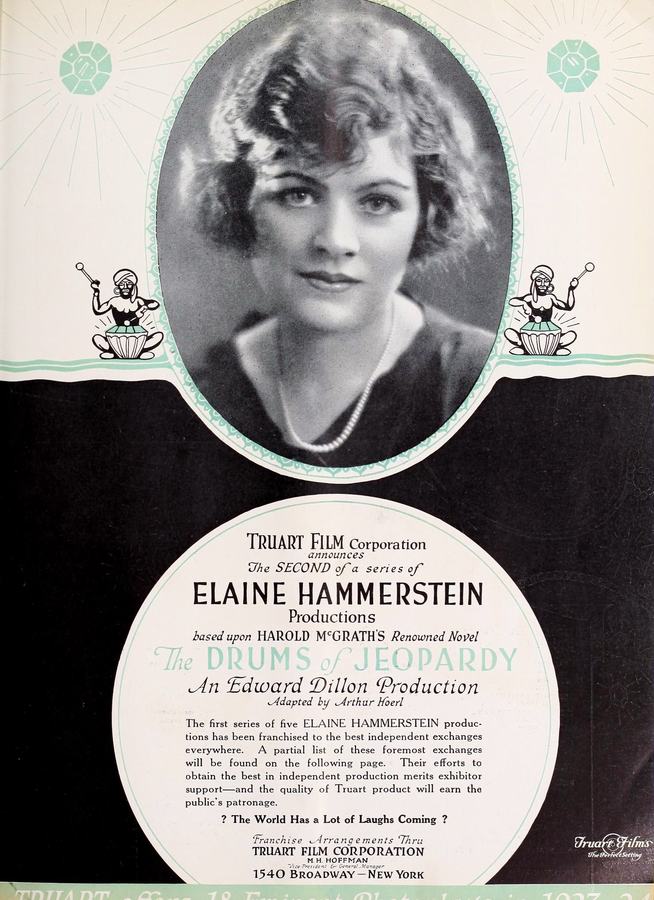
In the annals of silent cinema, certain films resonate with an almost forgotten intensity, their narratives woven with threads of grand adventure, profound peril, and a touch of the macabre. Among these, The Drums of Jeopardy, a 1923 production, emerges as a fascinating artifact, a testament to the era's storytelling prowess and its penchant for high-stakes melodrama. This motion picture, adapted from the novel by Harold McGrath, plunges its audience into a world where ancient curses and contemporary political machinations collide, all centered around a pair of emeralds whose very name conjures foreboding.
The film opens with an air of ominous grandeur, introducing the titular 'Drums of Jeopardy,' two priceless emeralds said to possess a sinister influence over their proprietors. This concept of cursed jewels, a trope deeply ingrained in folklore and fiction, serves as the potent narrative catalyst, immediately imbuing the plot with a sense of fated doom. Grand Duke Alexis of Russia, their current custodian, is a figure shrouded in the twilight of an empire, his very existence a fragile echo of a bygone era. The transfer of these emeralds to his private secretary, Jerome Hawksley, is not merely an act of inheritance but a passing of a dangerous burden, a torch lit by avarice and shadowed by violence. Hawksley, portrayed with a commendable blend of earnestness and vulnerability by Forrest Seabury, quickly finds himself ensnared in a web far more intricate than his secretarial duties ever prepared him for.
The transition of the narrative from the crumbling aristocracy of Russia to the burgeoning dynamism of New York City provides a stark and effective contrast. The jewels, entrusted to Banker Burrows, symbolize a tangible link between old-world power and new-world capitalism, a connection destined to be severed by brutal force. It is here that the true antagonist, Gregor Karlov, a Bolshevik secret agent, makes his chilling entrance. Portrayed with an unforgettable, almost primal menace by Wallace Beery, Karlov is not merely a thief but an embodiment of revolutionary fervor, a relentless force driven by ideology and a cold, calculating ruthlessness. Beery's performance is a masterclass in silent film villainy, his facial expressions and physical presence conveying a palpable sense of danger that transcends the need for spoken dialogue. He is a truly formidable foe, his actions – the murder of Burrows and the abduction of Jerome – setting in motion a chain of events that propels the story forward with relentless momentum.
The subsequent pursuit of Karlov by Dorothy Burrows, the banker's daughter, marks a pivotal shift in the film's dynamic. Elaine Hammerstein imbues Dorothy with a spirit of fierce determination, transforming her from a grieving relative into an active participant in her own destiny. She is not merely a damsel in distress awaiting rescue; rather, she is an agent of retribution, a woman propelled by personal loss and a thirst for justice. Her alliance with Cutty, a member of the U.S. Secret Service, played by Jack Mulhall, introduces a procedural element to the chase, grounding the fantastical premise of cursed jewels in the pragmatic realities of law enforcement. Mulhall's portrayal of Cutty brings a steady, competent presence, a necessary foil to the more emotional and dramatic performances around him. The duo's relentless tracking of Karlov to a café culminates in a climactic battle, a frenetic sequence that showcases the era's aptitude for staging thrilling action without the benefit of sound.
The narrative's resolution, with Karlov's demise and the recovery of the jewels, provides a satisfying, if somewhat conventional, closure to the immediate conflict. Jerome Hawksley, having endured his trial by fire, emerges transformed, and his eventual marriage to Dorothy Burrows ties a neat bow on the romantic subplot. This pairing, forged in the crucible of shared peril and mutual aid, underscores a common silent film theme: that true love can blossom even amidst the most harrowing circumstances. It's a testament to the era's belief in the triumph of good over evil, and the enduring power of human connection.
One of the most compelling aspects of The Drums of Jeopardy lies in its ability to tap into the anxieties of its time. The portrayal of Gregor Karlov as a Bolshevik agent, cold and merciless, is a direct reflection of the "Red Scare" that gripped the Western world in the aftermath of the Russian Revolution. The film shrewdly capitalizes on the prevailing fear of communist infiltration and international espionage, presenting Karlov as an almost inhuman force, driven by an ideology perceived as antithetical to American values. This thematic undercurrent adds a layer of socio-political commentary, elevating the film beyond a mere jewel heist story into a reflection of contemporary global tensions. The emeralds themselves, therefore, become not just objects of desire, but symbols of the destabilizing forces at play in a world grappling with radical change.
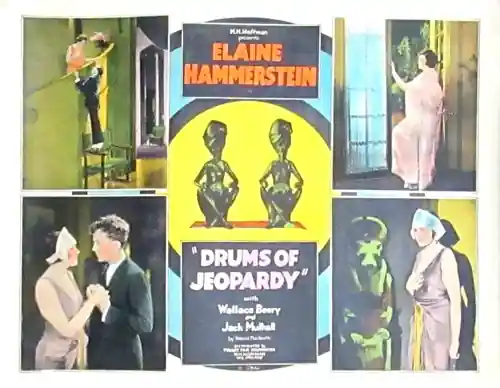
The performances across the board, particularly from the principal players, contribute significantly to the film's enduring appeal. Wallace Beery, in particular, delivers a performance that borders on iconic. His Karlov is not simply a stock villain; he is a creature of terrifying conviction, his eyes burning with an almost fanatical zeal. Beery’s ability to project such intense malevolence without uttering a single word is a masterclass in silent acting. One might even draw parallels to the chilling, silent menace found in other thrillers of the era, though Beery's Karlov possesses a distinct, almost animalistic intensity. His portrayal stands out much like the memorable, if less overtly villainous, performances in films such as Manslaughter, where the dramatic weight rests heavily on the actors' ability to convey complex emotions through gesture and expression.
Elaine Hammerstein, as Dorothy, brings a necessary counterpoint to Beery’s darkness. Her journey from initial shock and grief to determined pursuit is convincingly rendered. She embodies the strong, independent female character that, while often still tied to a romantic arc, was increasingly present in silent era narratives. Her active role in tracking down her father's killer and her eventual participation in the climactic confrontation makes her a protagonist worthy of audience investment, distinguishing her from purely passive heroines. Forrest Seabury’s Jerome, while perhaps less flamboyant, provides the steady moral compass of the film, his transformation from a somewhat naive secretary to a man capable of defending himself and those he loves being subtly but effectively portrayed.
The film's narrative structure, though adhering to certain conventions of the time, is remarkably effective in building and maintaining suspense. The initial setup in Russia, the brutal act in New York, and the subsequent chase are all paced with a kinetic energy that keeps the audience engaged. The use of intertitles, far from being a mere necessity, becomes an art form in itself, conveying not just dialogue but also mood, exposition, and thematic emphasis. The descriptions of the 'Drums of Jeopardy' and their alleged curse, delivered through these titles, amplify the sense of dread and mystery. The visual storytelling relies heavily on expressive acting and dynamic staging, particularly during the action sequences. The final confrontation in the café, for instance, is a tightly choreographed piece of silent action, demonstrating the filmmakers' understanding of how to create tension purely through movement and reaction.
Considering other films of the period, The Drums of Jeopardy stands as a robust example of a thriller that seamlessly blends elements of mystery, adventure, and romance. While it may not possess the sprawling epic scope of a D.W. Griffith production, it excels within its more focused genre. The film's ability to create a palpable sense of peril and the underlying theme of a cursed object recalls the mystical elements sometimes found in adventure stories, yet it grounds itself firmly in a contemporary setting, albeit one tinged with political unease. The relentless pursuit aspect could be seen as a precursor to many later thrillers, where a single individual or a small group takes on a formidable adversary. This kind of focused, high-stakes chase narrative can also be seen, in a different context, in a film like A Scream in the Night, where suspense is meticulously built through a series of escalating threats and dramatic reveals.
The craftsmanship of the film, from its set design to its direction, contributes significantly to its immersive quality. The depiction of New York City, while perhaps not as sprawling as later cinematic portrayals, effectively establishes a bustling urban environment ripe for clandestine activities. The costumes are period-appropriate, further rooting the story in its specific historical moment. While a director is not explicitly mentioned in the provided data, the cohesive vision and sustained tension of the film speak to a strong guiding hand, orchestrating the performances and visual elements to maximal effect. The film’s ability to evoke a sense of danger and adventure without the aid of synchronized sound is a testament to the ingenuity of silent era filmmakers, relying on visual cues, dramatic music (often performed live), and the sheer power of expressive acting to captivate audiences.
In retrospect, The Drums of Jeopardy offers more than just a glimpse into a forgotten cinematic past; it provides a compelling narrative that holds up surprisingly well. Its themes of geopolitical intrigue, the corrupting influence of wealth, and the enduring human desire for justice remain potent. The film’s success lies in its effective blend of a fantastical premise – the cursed jewels – with a very real and immediate threat in the form of Karlov and his revolutionary agenda. It's a reminder of the rich storytelling traditions that flourished in the silent era, proving that a compelling plot, strong performances, and skillful visual execution can transcend the limitations of technology. For those interested in the evolution of the thriller genre or simply seeking a captivating journey back to the early 20th century, this film offers a fascinating, if chilling, experience. It stands as a vibrant example of how silent cinema could weave complex tales of peril, passion, and political upheaval, leaving an indelible mark on its viewers, much like the sinister power attributed to the emeralds themselves.
IMDb —
1925
Community
Log in to comment.