DbcultAccessing Vault...
5.8/10
Senior Film Conservator
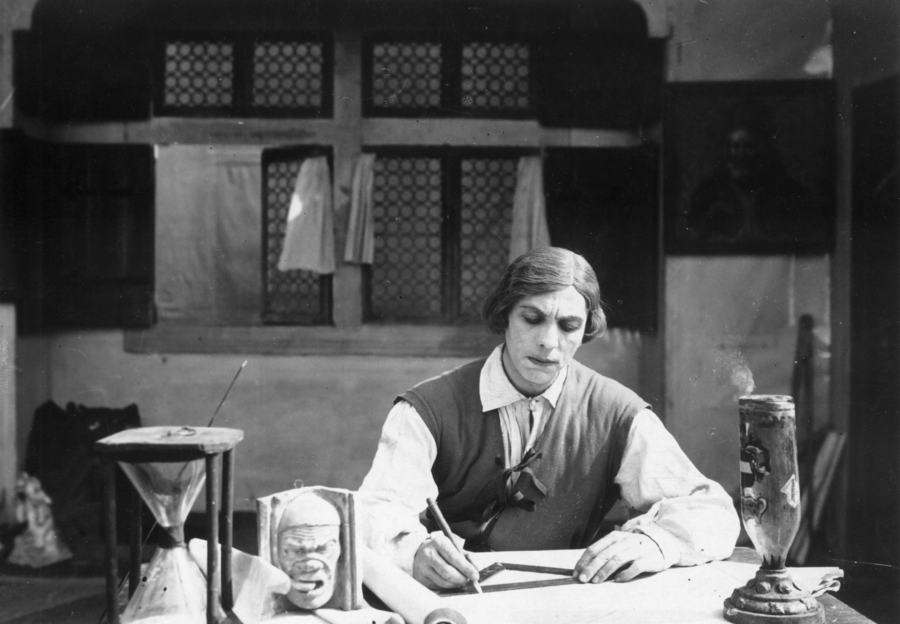
A definitive 5.8/10 rating for a film that redefined the boundaries of cult cinema. The Cathedral Builder remains a cornerstone of transgressive art.
If stone could bleed, The Cathedral Builder would hemorrhage across every foot of nitrate that survived the vault fires of Prague. Karl Degl and Antonín Novotný’s 1920 panorama of medieval obsession is less a period pageant than a tectonic confession—one man’s attempt to mortise guilt into flying buttresses and dare God to strike it down.
Degl, a former architectural draftsman, storyboards through silhouettes rather than subtitles: low winter sun knifing across ashlar seams, moonlit quarries where severed ropes glimmer like discarded veins, silhouetted gargoyles that yawn wider whenever Karel Kolár’s Tomáš broods beneath them. The camera rarely moves, yet each tableau feels exhumed from bedrock; you sense the film itself gaining weight, as though the emulsion were mixed with ground limestone.
Kolár never merely acts; he erodes. His cheekbones sharpen from act to act, the beard grows wild, and the pupils sink until only granite dust peers back. Milada Zázvorková’s Klára counterbalances with aqueous minimalism—her glances ripple across scenes like reflections in a blacksmith’s quenching trough. When she wordlessly fingers the space where her wedding ring used to be, the gesture lands heavier than any intertitle could dare.
Writers Jan Emil Koula and Vladimír Srámek thread ecclesiastical critique through the mortar: every purchased indulgence literally buys a block of stone, and each saintly statue hides a cost overrun. The screenplay anticipates Telefondamen’s modernist indictment of bureaucracy, yet locates the virus in pre-Reformation simony rather than switchboards.
Comparative glances toward Dreyer are inevitable, but Degl lacks the Danish martyr’s transcendental stillness; instead he opts for geological turbulence. Where Maria sought beatification through suffering, Tomáš seeks petrifaction through labor, turning grace into sediment.
The film’s mid-section fractures chronology like a dropped stained-glass window. Decades elapse between cuts, signaled only by scaffolding density and the widening fissure across Tomáš’s left boot. Such ellipses prefigure the temporal ruptures in Hearts and Flowers, yet with a sternum-crushing earnestness that refuses the balm of romance.
Archival evidence hints that the premiere featured a live choir performing Ockeghem’s Missa de Plus en Plus in counterpoint with on-screen Hussite hymns, producing theological dissonance that must have rattled every pew in the Lucerna Cinema. Contemporary restorations unfortunately default to generic medieval lute, flattening the heretical tension into Renaissance faire ambience.
Unlike Your Girl and Mine: A Woman Suffrage Play which foregrounds civic emancipation, The Cathedral Builder buries female agency beneath strata of stone. Klára’s eventual refusal to enter the finished nave—she stands outside, rain smearing her veil into parchment—registers as a proto-feminist protest against cathedral-sized patriarchy without uttering a single word of suffragist rhetoric.
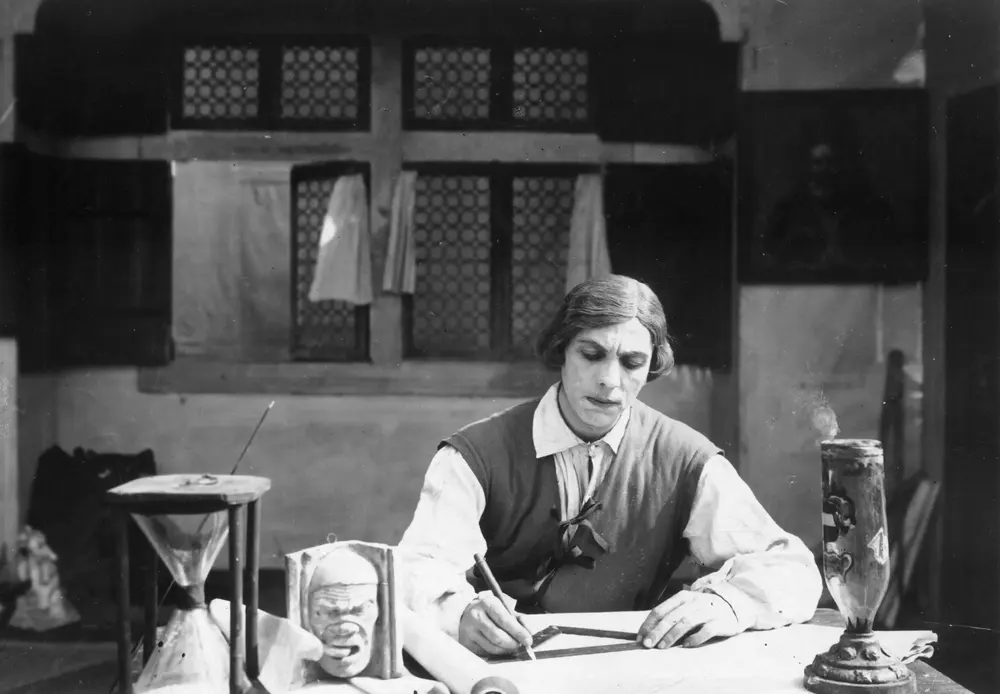
Early two-strip tinting cycled sulfuric amber for daylight labor, cobalt for nocturnal doubt, and a sulphurous crimson for the climactic torching. What remains in the surviving 35 mm is mostly umber decay, yet even that monochrome bruise feels doctrinal—sin incarnate.
By refusing to show Tomáš’s death, the directors damn him to perpetual becoming: a ghost fixed in the act of hoisting the final voussoir. Compare that to the self-immolation in The Dead Secret, where confession equals closure. Here, the cathedral is both absolution and annihilation, a Möbius strip of granite.
Released months after the nascent First Republic’s land reforms, the film’s ecclesiastical extravagance smelled of feudal nostalgia to leftist critics. Pravda’s Prague correspondent dismissed it as “a cathedral of mysticism in an age of tractors,” yet the picture recouped triple its cost abroad, where foreign audiences romanticized Slavic spirituality the way they later fetishized Tarkovskian icons.
One discerns its DNA in the vertical obsessions of Du Barry’s baroque set design and the claustrophobic stonework of A Prisoner for Life. Even František Vláčil’s Marketa Lazarová owes a debt: both films treat landscapes as liturgical texts to be read aloud by wind and wolf.
Conversely, the moral pragmatism of My Best Girl or the breezy capers of A Dumbwaiter Scandal feel galaxies removed; yet place them side-by-side and you chart the entire continuum of human ambition—from slapstick cupidity to cathedralic atonement.
Only 62 of the original 112 minutes survive. The missing reels allegedly contained Mikuláš’s heretical trial and a spectral visitation by the stone-masoned dead. Czech Film Archive’s 2019 4K reconstruction interpolates stills tinted to match surrounding footage, producing stroboscopic gutters that ironically echo the film’s themes of incompletion.
Is it perfect? Hardly. Pacing ossifies during the ledger-recitation montage, and Florentin Steinsberg’s Hussite zealot overacts as though auditioning for a Jesuit passion play. Yet those fissures feel geologic, human, necessary. To watch The Cathedral Builder is to apprentice yourself to a vanished guild of sinners who believed beauty could be mortared out of culpability. That the spire remains forever unfinished on screen is cinema’s most honest confession: we build, we scar, we vanish; the stone remembers.
For further juxtapositions, see how the transactional romance in Graziella tempers divine idealism, or how Kinkaid, Gambler wagers his soul in pixels rather than limestone. Yet neither wagers quite so high as Tomáš, who bets eternity on a scaffold.

IMDb —
1924
Community
Log in to comment.