DbcultAccessing Vault...
Cult Review
Senior Film Conservator
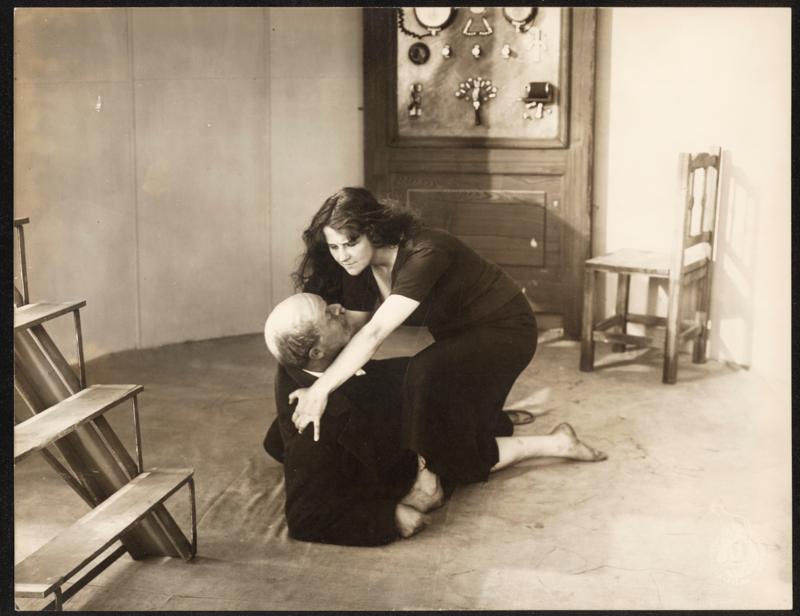
There's an undeniable allure to the cinema of a bygone era, a charm that transcends the absence of spoken dialogue and the sepia tones of aged celluloid. Danish silent film, in particular, often possesses a unique contemplative quality, a profound engagement with human drama played out against the vast, often unforgiving, canvas of nature. Det gamle fyrtaarn, a work from the early 20th century, stands as a testament to this tradition, a film that, despite its vintage, resonates with a timeless emotionality. Directed by A.W. Sandberg, a prolific and influential figure in early Nordic cinema, this picture, featuring the notable talents of Christian Schrøder, Alf Blütecher, Else Frölich, and Carl Lauritzen, is far more than a historical curiosity; it is a meticulously crafted narrative of duty, desire, and the relentless power of the sea.
The film’s opening frames immediately establish its atmospheric gravitas. We are transported to a desolate, windswept promontory, dominated by the titular old lighthouse. It’s a setting that is both majestic and isolating, a character in itself, silently dictating the rhythm of life for its inhabitants. The stoic lighthouse keeper, Frederik (portrayed with remarkable gravitas by Christian Schrøder), embodies the very essence of duty. His face, etched with the lines of countless storms and solitary nights, conveys a world of unspoken commitment. Schrøder’s performance, a masterclass in silent film acting, relies on subtle gestures and profound expressions to communicate a man whose life is inextricably woven into the fabric of his vigilant post. His very posture suggests the weight of responsibility, a silent sentinel against the unpredictable fury of the ocean.
Into this austere existence bursts the vibrant spirit of Elna (the captivating Else Frölich), Frederik’s granddaughter. Frölich imbues Elna with a youthful effervescence that is both charming and poignant, highlighting the stark contrast between her burgeoning desires and the constrained reality of her life. Her eyes, full of longing, speak volumes about a soul yearning for experiences beyond the lighthouse's beam. When Erik (Alf Blütecher), a charismatic artist, arrives on the scene, seeking inspiration in the rugged coastal beauty, the narrative truly ignites. Blütecher, with his dashing presence, perfectly embodies the romantic ideal, a catalyst for Elna’s awakening. Their burgeoning romance is depicted with a tender innocence, a visual poem of stolen glances and tentative touches, all under the watchful, albeit disapproving, eye of Frederik. The old keeper's distrust of transient souls, his almost religious devotion to his post, creates a palpable tension, a silent conflict between generations and ideals.
But no melodrama would be complete without an antagonist, and Carl Lauritzen delivers a chilling performance as Rasmussen, the local merchant. Lauritzen’s portrayal of Rasmussen is a study in subtle villainy; his avarice and possessive gaze upon Elna are communicated not through overt theatrics, but through a chilling stillness, a calculating glint in his eye. He is a man who sees opportunity in vulnerability, and the lighthouse, with its strategic location, becomes intertwined with his desire for Elna. His machinations add a layer of human perfidy to the natural dangers of the setting, creating a multi-faceted threat that Elna must ultimately confront. The intertwining of personal ambition and the grander forces of nature is a theme explored with compelling intensity by Sandberg, a characteristic that also finds resonance in the early Russian psychological dramas like Sumerki zhenskoy dushi, where internal turmoil often mirrors external chaos.
A.W. Sandberg’s direction is nothing short of masterful. He wields the camera with an artist’s eye, transforming the stark coastal environment into a powerful emotional landscape. The cinematography, though limited by the technology of the era, manages to capture the raw power of the sea, the oppressive loneliness of the lighthouse, and the delicate intimacy of human connection. The use of natural light, the framing of figures against vast horizons, and the meticulous attention to detail in the set design all contribute to an immersive experience. Sandberg understood that in silent film, every visual cue, every gesture, every environmental detail had to carry the weight of dialogue. This commitment to visual storytelling places Det gamle fyrtaarn in a lineage with other visually driven early dramas, even those from vastly different cultural contexts, such as the American frontier narratives like Colorado, which similarly relied on expansive landscapes to underscore human struggle.
The film’s climax, a ferocious storm, is where Sandberg’s directorial prowess truly shines. The tempest is not merely a backdrop; it is a character, a force that amplifies the human drama to almost mythical proportions. The visual effects, rudimentary by today’s standards, are nonetheless incredibly effective in conveying a sense of impending doom and overwhelming power. The lashing rain, the crashing waves, the creaking structure of the lighthouse – all these elements conspire to create a visceral experience. It’s a sequence that evokes the kind of primal fear and awe seen in other early cinematic spectacles, such as the grand scale depicted in films like The Great Mexican War, albeit on a more personal, localized battleground. The intensity of this sequence forces Elna into a crucible, testing her resolve, her love, and her sense of duty in a way that is both harrowing and ultimately redemptive.
At its core, Det gamle fyrtaarn is a profound exploration of sacrifice and redemption. Elna’s journey from a spirited girl caught between two loves to a woman who embraces her duty with courage is the emotional anchor of the film. Her struggle to ascend the treacherous tower, battling not only the elements but also Rasmussen’s malevolent interference, is a powerful metaphor for overcoming personal and external obstacles. Frederik’s sudden incapacitation, a cruel twist of fate, forces Elna to step into a role she may not have envisioned, but for which she ultimately proves herself capable. This theme of a character rising to meet an unexpected challenge, often driven by a sense of familial obligation or moral imperative, is a recurring motif in silent cinema, echoed in the struggles of protagonists in films like The Sins of the Mothers, where difficult choices shape destinies.
The film also delves into the nature of true loyalty. Erik’s unexpected return amidst the storm, driven by an intuitive sense of danger, serves as a powerful contrast to Rasmussen’s calculated treachery. It highlights the difference between fleeting infatuation and a deeper, more committed love that is willing to face adversity. The resolution, where Rasmussen’s perfidy is exposed and Erik’s loyalty is affirmed, provides a satisfying, if not entirely neat, conclusion. The old lighthouse, having weathered yet another storm, stands as a symbol of enduring constancy, a silent witness to the triumphs and tragedies of human lives. This narrative arc, where virtue is ultimately rewarded and villainy exposed, is a classic trope, but Sandberg executes it with a sincerity that elevates it beyond mere cliché.
The performances across the board are exemplary for the period. Christian Schrøder’s portrayal of Frederik is particularly memorable, conveying a lifetime of stoicism and quiet affection through minimal, yet potent, expressions. His bond with Elna is the emotional heart of the film, a testament to the power of unspoken love. Else Frölich captures the transition from youthful innocence to mature strength with remarkable nuance, making Elna’s choices feel earned and impactful. Alf Blütecher, as Erik, manages to be both a romantic ideal and a figure of genuine support, avoiding the trap of becoming a mere plot device. And Carl Lauritzen’s Rasmussen is genuinely unsettling, a testament to his ability to convey malevolence without resorting to over-the-top dramatics.
In a broader cinematic context, Det gamle fyrtaarn holds its own. While it may not possess the avant-garde experimentation of some contemporary European films, it excels in its commitment to classical storytelling and emotional authenticity. Sandberg’s ability to weave together a compelling narrative with strong character arcs and breathtaking visual sequences makes it a standout. It offers a glimpse into a period of filmmaking where expression was paramount, where the absence of sound forced filmmakers to innovate in visual language. Comparing its dramatic tension to films like Hämnaren reveals a shared understanding of building suspense through visual cues and character reactions, a hallmark of effective silent film direction. Its influence, while perhaps not as widely discussed as some of its contemporaries, is undeniable in the trajectory of Nordic cinema, proving that powerful stories need no spoken word to resonate deeply within the human spirit.
Ultimately, Det gamle fyrtaarn is a film that rewards attentive viewing. It’s a reminder of the enduring power of classic narratives, of human resilience in the face of overwhelming odds, and of the profound beauty that can be found in the most desolate of landscapes. For those willing to immerse themselves in its silent world, it offers a rich and deeply satisfying cinematic experience, a glowing beacon from a distant past that still illuminates the universal truths of the human condition. It stands as a testament to the enduring craft of A.W. Sandberg and his talented cast, a piece of cinematic history that continues to speak volumes without uttering a single sound. The film doesn't just tell a story; it evokes a feeling, a deep sense of place and purpose, much like the timeless tales of survival and human spirit found in narratives such as The Sundowner, which also uses a harsh environment to forge character.
The emotional landscape painted by Sandberg is rich and complex. The internal struggles of Elna, caught between the gravity of familial duty and the intoxicating pull of romantic love, are rendered with a delicate touch. Her eventual choice, not one of mere resignation but of empowered agency, elevates the narrative beyond simple melodrama. She doesn't just react to circumstances; she actively shapes her destiny, demonstrating a strength that mirrors the unyielding nature of the lighthouse itself. This transformation, a quiet yet profound revolution within her character, provides a powerful commentary on the evolving roles and expectations of women in early 20th-century narratives, a theme also subtly explored in films like The Straight Road, where protagonists navigate societal pressures and personal desires.
One cannot discuss Det gamle fyrtaarn without acknowledging the sheer craftsmanship involved in its production. The intricate model work for the storm sequences, the carefully choreographed movements of the actors, and the subtle use of intertitles to advance the plot and convey inner thoughts all speak to a highly developed cinematic language. This was an era where every frame was meticulously planned, every gesture imbued with meaning. The film’s pacing, while perhaps slower than modern audiences are accustomed to, allows for a deeper immersion into its emotional currents, building tension and pathos with a deliberate, almost poetic rhythm. It’s a testament to the artistry of the period, demonstrating how filmmakers, even without the benefit of synchronized sound, could create profoundly moving and dramatically engaging experiences. The narrative structure, while adhering to classical dramatic principles, also exhibits a certain boldness in its emotional realism, reflecting the growing sophistication of silent cinema as seen in other contemporary works like The Regeneration, which also pushed boundaries in depicting human struggle.
The interplay between the human characters and their environment is particularly striking. The lighthouse is not just a setting; it's a symbolic anchor, representing stability, tradition, and the unyielding forces of nature. The sea, in all its mercurial glory, serves as both a source of livelihood and a formidable adversary. This symbiotic relationship between humanity and its surroundings is a recurring motif in Sandberg’s work and provides a rich subtext to the film’s central drama. The isolation of the lighthouse keepers, their lives circumscribed by duty and the elements, creates a unique psychological space, a microcosm where universal themes of love, loss, and courage play out with heightened intensity. Such powerful environmental influence on character and plot is a recurring strength in many early films, reminiscent of the dramatic impact of setting in films such as Zigeuneren Raphael, where the landscape often reflects the inner turmoil of its characters.
Ultimately, Det gamle fyrtaarn is a powerful reminder of the enduring legacy of early Danish cinema. It’s a film that, despite its age, continues to speak to contemporary audiences through its universal themes and masterful execution. A.W. Sandberg, with the help of his talented cast and crew, crafted a cinematic experience that is both visually stunning and emotionally resonant. It is a film that deserves to be rediscovered and celebrated, a shining example of how silent cinema, in its purest form, could convey profound human experiences with unparalleled grace and impact. Its narrative depth and visual flair make it a compelling watch, demonstrating that true artistry transcends temporal boundaries. Much like the innovative narrative techniques found in Den sorte Varieté, Sandberg's film contributes significantly to understanding the sophistication of early cinematic storytelling.

IMDb 5.8
1935
Community
Log in to comment.