DbcultAccessing Vault...
4/10
Senior Film Conservator
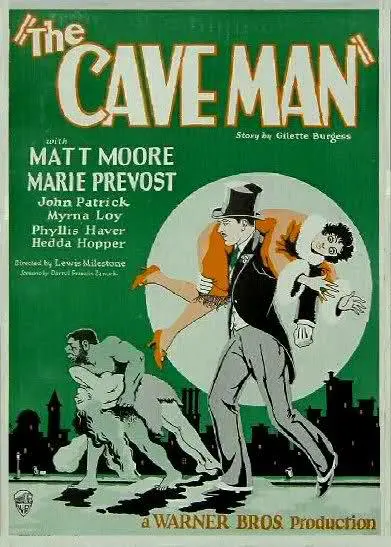
A definitive 4/10 rating for a film that redefined the boundaries of cult cinema. The Caveman remains a cornerstone of transgressive art.
Is The Caveman worth watching today? Short answer: yes, but primarily as a fascinating, occasionally uncomfortable artifact of 1920s class warfare masquerading as a comedy. It is a film for those who appreciate the biting wit of early silent era social satires and for fans of Myrna Loy before she became the 'perfect wife' of the sound era.
This film is NOT for those who demand a modern sense of political correctness or a fast-paced narrative. It moves with the deliberate, sometimes clunky rhythm of a mid-20s programmer, but its teeth are surprisingly sharp. It works because it doesn't just mock the poor; it turns its most acidic gaze toward the bored rich who treat human lives like parlor games.
Before we dive into the soot and silk, let's establish the core of this production. This film works because it leans into the absurdity of its premise without flinching, anchored by Phyllis Haver's manic, almost predatory energy. This film fails because the second-act transition from coal driver to socialite happens with such jarring speed that it strains even the most generous suspension of disbelief. You should watch it if you want to see the DNA of the screwball comedy being formed in real-time, or if you are tracking the early career of Darryl F. Zanuck.
The opening sequence of The Caveman is a masterclass in establishing character through action. Phyllis Haver, as Myra, doesn't need dialogue to convey her soul-crushing ennui. The way she handles the $100 bill—a piece of paper that could feed a family for months—with the same regard one might give a gum wrapper, sets the stage for the film’s moral landscape. When she cuts it in half, she isn't just dividing currency; she is dividing her world and inviting the 'other' to cross the threshold.
The moment Mike Smigget, played with a heavy-set, grounded physicality by Matt Moore, finds the bill, the cinematography shifts. We move from the airy, lace-heavy interiors of Myra’s apartment to the grit of the street. The contrast is stark. The coal truck driver is literally covered in the residue of the industry that fuels Myra’s comfort. It is a visual metaphor that is about as subtle as a sledgehammer, but in 1926, this kind of binary was the bread and butter of social commentary.
Unlike more sentimental films of the era, such as Sally of the Sawdust, which relies on a certain warmth, The Caveman feels colder, more calculated. It’s a film about the power of the gaze. Myra looks at Mike not as a man, but as a project. This creates an underlying tension that keeps the comedy from ever feeling truly lighthearted. It works. But it's flawed.
Phyllis Haver is the engine of this film. She plays Myra with a frantic intensity that borders on the villainous. It is a brave performance because she doesn't ask the audience to like her. She is a woman who has everything and therefore values nothing. Watching her attempt to 'civilize' Moore’s Mike Smigget is like watching a child play with a dangerous animal; there is a sense that the animal might bite back at any moment.
Matt Moore provides the necessary counterweight. His Mike Smigget isn't a caricature of the working class, at least not initially. He brings a genuine confusion to the role. In the scene where he first enters Myra’s lavish apartment, his movements are restricted, fearful of breaking the delicate porcelain of her world. This physical performance is far more effective than the title cards in conveying the vast gulf between the two characters.
Then there is Myrna Loy. While her role is smaller here than her later stardom would suggest, her presence is undeniable. Even in 1926, she possessed a screen magnetism that pulled the eye away from the leads. She plays the role with a knowing smirk, as if she is the only person in the room who realizes how ridiculous the entire situation is. Her performance here is a fascinating contrast to the more melodramatic tones found in films like Where Are My Children?.
If you are a student of cinema history, the answer is a resounding yes. The Caveman is a crucial link in the evolution of the American social comedy. It takes the 'fish out of water' trope and adds a layer of economic cruelty that feels surprisingly modern. While the humor is dated, the central question—can money and manners truly mask one’s origins?—remains a staple of storytelling.
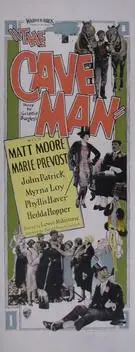
For the casual viewer, it may be a tougher sell. The silent format requires a level of focus that is often at odds with the film's light premise. However, the visual storytelling is clear enough that even those unacquainted with silent film will find it easy to follow. It is a short, punchy experience that doesn't overstay its welcome.
The writing credits for The Caveman are a 'who's who' of early Hollywood power. With Darryl F. Zanuck involved, there is an unmistakable sense of narrative efficiency. The script doesn't waste time on subplots that don't serve the central 'makeover' theme. Compared to other films of the period like Hands Up!, which leans more into slapstick, The Caveman is more interested in the psychological humiliation of its characters.
One of the most debatable aspects of the script is the ending. Without spoiling the specifics, the resolution feels somewhat unearned. It opts for a conventional 'complication' that wraps things up too neatly, ignoring the darker implications of Myra’s behavior. It’s a classic case of a film having a more interesting premise than it knows how to resolve. The 'complications' mentioned in the plot summary eventually lead to a chaotic dinner party scene that is the film's highlight, showcasing the absolute failure of Myra's experiment.
Visually, the film is a product of its time, but that isn't a slight. The use of lighting to distinguish between the 'high' and 'low' worlds is effective. The coal yard scenes are shot with a gritty, high-contrast look that makes the later, softly lit ballroom scenes feel even more artificial. The costume design also deserves a mention; the transformation of Mike Smigget is achieved through wardrobe as much as acting, and the ill-fitting tuxedo he is forced to wear becomes a character in itself.
"The Caveman isn't just a comedy about a makeover; it's a silent scream about the boredom of the elite and the resilience of the common man, even if it wraps that scream in a tuxedo."
Pros:
Cons:
When placed alongside other films of the mid-20s, The Caveman stands out for its lack of sentimentality. While a film like Darwin Was Right might use evolution for broad gags, The Caveman uses the idea of 'the primitive' to explore the rot at the heart of high society. It is less about the evolution of man and more about the devolution of the wealthy.
The film also avoids the heavy-handed moralizing found in Don't Weaken. Instead of preaching, it simply presents the absurdity of the situation and lets the audience draw their own conclusions. This 'show, don't tell' approach is one of its greatest strengths, even if the final reel falters slightly into convention.
The Caveman is a fascinating, if uneven, slice of silent cinema. It captures a specific moment in American history when the lines between the classes were being blurred by the booming economy, yet remained as rigid as ever in the minds of the elite. Phyllis Haver is a revelation, and the film’s willingness to be mean-spirited is a refreshing change from the sugary romances of the period.
While it may not reach the heights of the era's greatest comedies, it remains a vital watch for anyone serious about the history of the medium. It is a film that understands that sometimes, the most 'savage' person in the room is the one holding the scissors and the $100 bill.
IMDb 6.5
1919
Community
Log in to comment.