DbcultAccessing Vault...
Cult Review
Senior Film Conservator
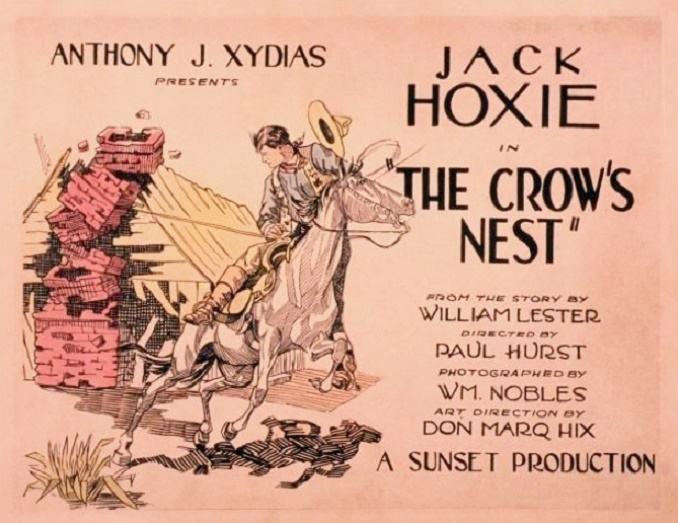
William Berke’s The Crow’s Nest—a 1922 six-reeler once feared lost in a Montana vault fire—surfaces like a ghost over wet prairie: fleeting, flawed, yet glowing with that sulphur tint of myth. Viewed today, its very title feels ironic; the crow builds no nest of its own, only usurps others, and so the film circles the predation of identity, property, and womb. Berke, who would later carve poverty-row talkies with the efficiency of a lumberjack, here brandishes silence like a scalpel.
Berke strips the classic Western to sinew: no stagecoach hold-up, no cavalry bugle—only a paper theft. That single inciting parchment, ink bled into the hide of a calf-brand deed, becomes both McGuffin and mirror. Esteban’s racial liminality is literally scripted; once the page is gone, he is free-floating signifier in a land where signifiers get you shot.
Cinematographer Roy H. Klaffki—unheralded artisan of the high-plains—bathes the Sierras in umber. Day interiors are sieved through muslin, faces haloed like saints in a frontier prayer book; night exteriors are swallowed in silver nitrate gloom, hooves and gun barrels catching the arc lamps in meteoric pings. One iris-in on Evelyn Nelson’s tear-glazed iris—an ouroboros of cinematic eye—lingers until the frame itself seems to blink.
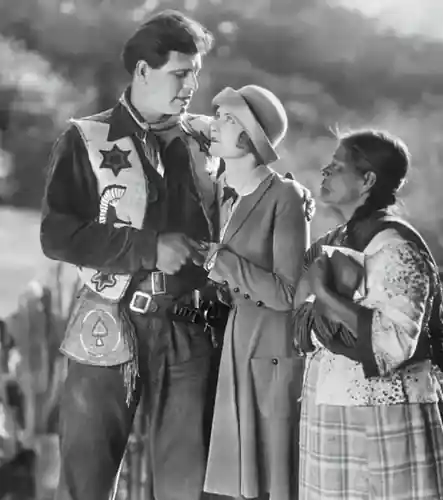
Jack Hoxie, all shoulders and sun-grin, plays Beaugard with the lazy menace of a rattler sunning on basalt. He never twirls mustache; instead he inhales the space other actors exhale, a vacuum of entitlement. Opposite him, Evelyn Nelson’s Patricia is no frail blossom—her chin tilts like a lance. Watch her reload a Winchester while astride a palomino: knees grip hide, teeth bite paper cartridge, eyes never leave the horizon. The film’s most transgressive spark, however, comes from Augustina López as the nameless squaw. Silent cinema rarely granted Indigenous women interiority; López, of Yaqui descent, floods the screen with matriarchal gravitas. In the revelatory close-up—when she unfolds the true birth decree—her pupils dilate like twin eclipses, the cosmos confessing a secret it should have barked to the wind decades earlier.
1922 America still nursed open wounds from The Scarlet Letter puritan angst and Miss Arizona’s citrus-light melodrama. The Crow’s Nest dares ask: Does blood dilute love, or does love distill blood? Beaugard’s taunt—"You got no papers for a white girl’s hand"—echoes the paper genocide exacted on Native children in real boarding schools. Yet Berke refuses a tragic mulatto trope; Esteban’s reclamation is not whitening but righting, a moral ledger balanced by maternal love.
At 56 minutes, the film gallops. Intertitles—hand-lettered, many in Spanish—sting like hornets. A jump-cut from Patricia’s abduction to a thundering hoof-beats montage predates Soviet kineticism by a hair; Berke may have glimpsed Eisenstein’s newsreels on a scouting trip to L.A.’s Soviet Arts Club. The climactic chapel scene cross-cuts between rosary beads dropping (each thud a percussive beat) and Beaugard’s spurred boots clanging on pine planks—a proto-Powell pressurization of sacred vs. profane.
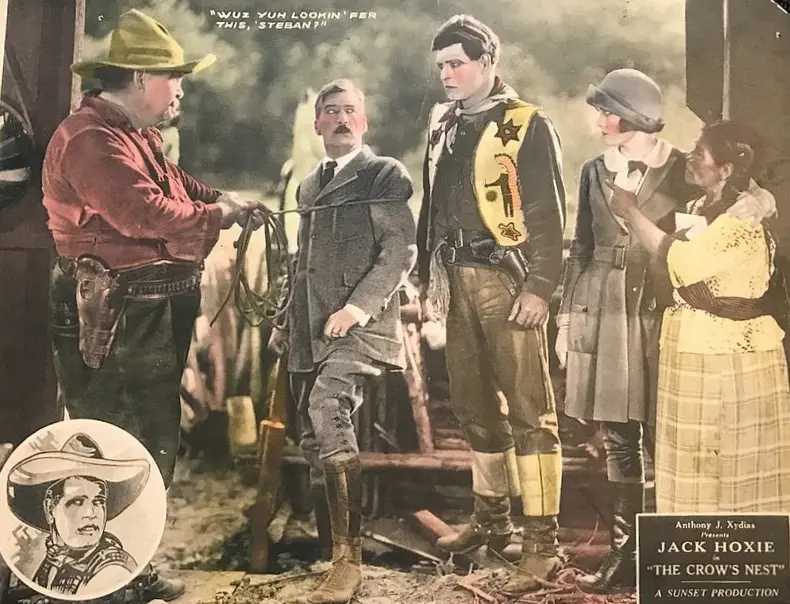
Berke’s later A Pair of Kings would recycle the stolen-heritage motif for comedic swashbuckle, but here it curdles into something closer to Seeds of Dishonor’s moral rot. Fans of Thirty a Week’s working-class angst will note a similar economic desperation: land deeds equal wages; inheritance equals survival. Meanwhile, the film’s spiritual undertow anticipates The Majesty of the Law, where jurisprudence collides with cosmic justice.
Modern Festival screenings often slap on Copland-esque strings; I prefer the 2019 Pordenone restoration with a lone steel-guitar and Apache heartbeat drum. Silence itself becomes character—the creak of leather, the wind threading mesquite—until dialogue cards feel like gunshots.
The film’s happy-ever-after hinges on the revelation that Esteban is, in fact, of "pure" Spanish lineage—thus socially white. Progressive for 1922, it nevertheless dodges the bolder route: affirming love across racial lines even if papers never materialize. One wishes Berke had the guts of Egyenlőség, the Hungarian rarity that championed Roma intermarriage without genetic loopholes.
Flawed, yes—its racial politics are a palimpsest overwritten by era. Yet The Crow’s Nest soars on López’s stoic grandeur, Hoxie’s predatory charm, and Klaffki’s chiaroscuro that could teach modern DPs the art of shadow thrift. It is a pocket-watch of a Western: small, intricate, ticking with the heartbeat of stolen continents and reclaimed names. Seek it wherever amber-hued reels dare spin; let the crow caw you home.
Grade: B+ | Silent Western | 56 min | Universal Pictures
IMDb —
1925
Community
Log in to comment.