DbcultAccessing Vault...
4.8/10
Senior Film Conservator
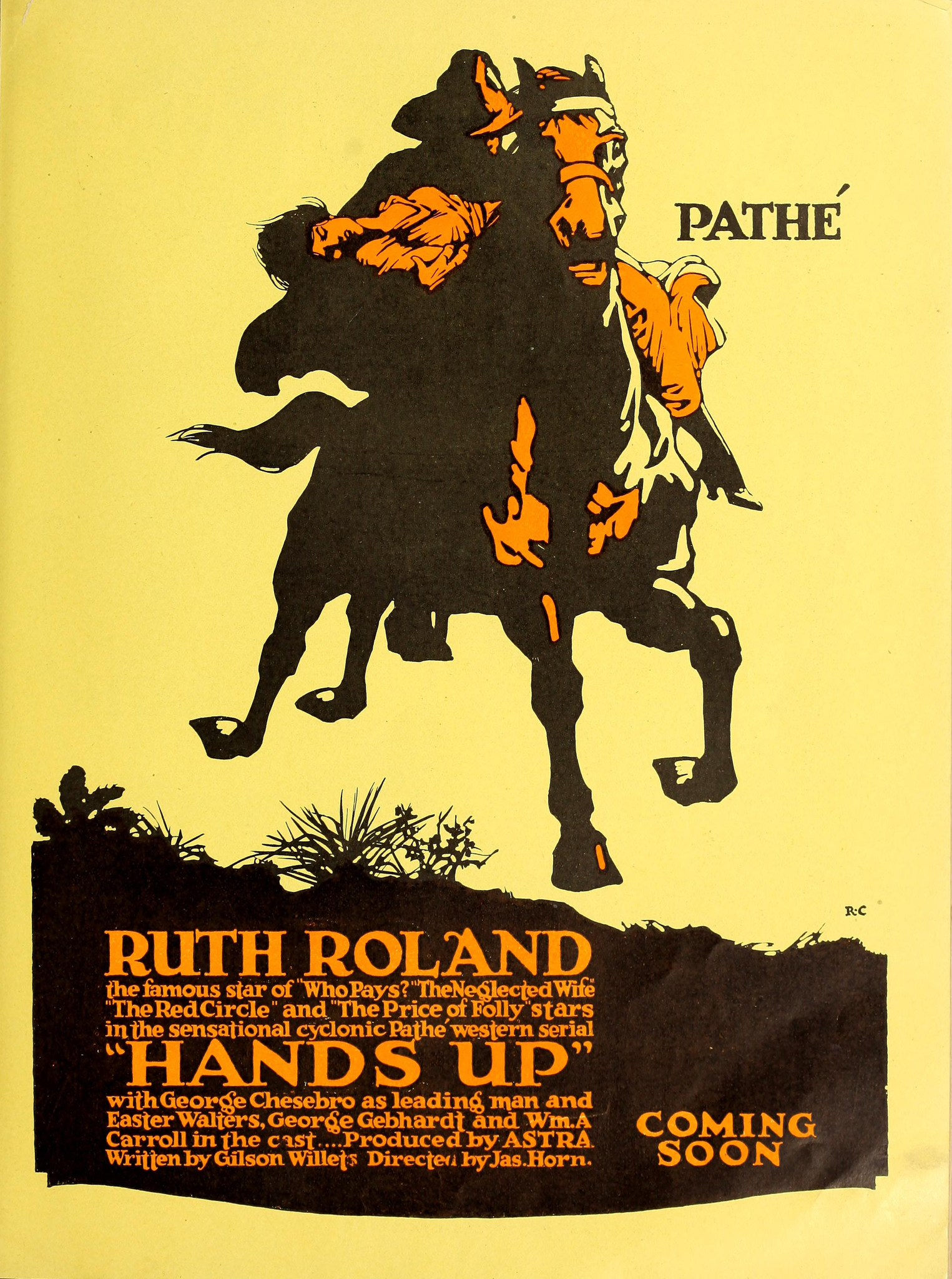
A definitive 4.8/10 rating for a film that redefined the boundaries of cult cinema. Hands Up remains a cornerstone of transgressive art.
The first time I watched Hands Up, the projector’s carbon-arc hiss felt like a shaman’s rattle—an omen that this wasn’t just another 1918 potboiler but a celluloid séance dragging imperial guilt across the Andes.
Jack Cunningham and Gilson Willets’ screenplay arrives like a telegram soaked in coca wine: it crackles with sensational headlines yet aches with post-WWI disillusion. Ruth Roland—serial-queen extraordinaire—embodies the flapper before the flapper existed: her bobbed bravery is corseted neither by newsroom patriarchy nor by Inca mysticism. When the tribe drapes her in parrot-feather mantles, the moment reverberates beyond Betrayed’s damsel-in-distress template into something closer to Josephine Baker’s Parisian primitivism—yet filtered through an American guilt lens.
Monte Blue’s mercenary is a walking contradiction: a soldier of fortune who quotes Walt Whitman while selling rifles to both the Peruvian army and the rebelling tribe. His chemistry with Roland sparks not in clinches but in moral fencing matches beneath volcanic lightning.

Director James W. Horne, usually dispatched to exhume cheap thrills, here orchestrates set pieces that rival the apocalyptic fervor of The Chalice of Sorrow. Note the eclipse sequence: a matte-painted sun devoured by a black disc while hand-tinted crimson seeps across the frame like a hemorrhaging deity. The absence of synchronous sound amplifies the horror; you hear your own heart syncing with the ceremonial drums Horne intercuts in accelerating montage, predating Soviet rhythmic theory by a hair’s breadth.
Shot around the sandstone caves of Griffith Park doubling for Machu Picchu, the film’s production design squeezes grandeur from cigar-box budgets. Art director Frank B. Short recycles temple columns from The Dancer’s Peril, repaints them with turquoise oxidization, and—voilà—pre-Columbian antiquity breathes. The cinematographer, deviating from the era’s static proscenium, dollies across rope bridges using a modified baby-grand piano wheel assembly, predating Sunrise’s tracking bacchanal by nearly a decade.
Yet what lingers is not spectacle but chiaroscuro psychology. Close-ups of Roland’s pupils reflect torchlight like obsidian mirrors; the camera lingers until the viewer confronts the colonial gaze itself. In one insert, her reflected face overlaps with the mummified priestess, suggesting reincarnation as imperial theft—an ideological punch that stings sharper than any serial cliffhanger.
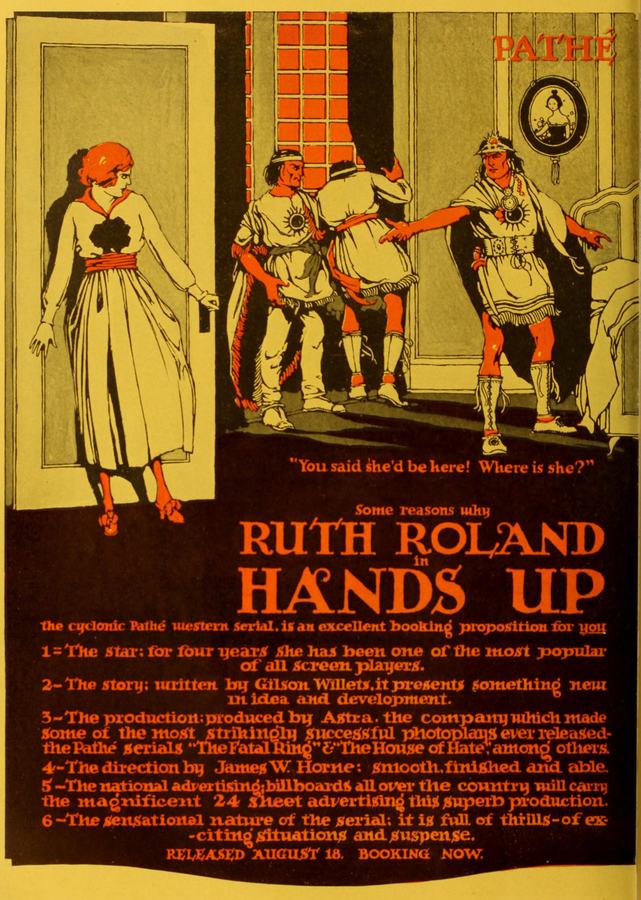
Ruth Roland pivots from Lois-Lane pluckiness to ceremonial solemnity without the tonal whiplash that hobbles As Man Made Her. Her transition hinges on micro-gestures: the slackening of her newsie stride into a regal barefoot glide; the tremor in her cigarette-hardened alto when she first utters a Quechuan prayer. It’s a masterclass in silent modulation, worthy of comparison to Musidora’s hypnotic shifts in Judex.
Monte Blue, saddled with the thankless “hero” mantle, injects Hemingway-esque stoic damage. Watch how he pockets payment: fingers drum Morse code on the coin, betraying a man who measures morality in weight of metal. His final sacrifice—detonating a footbridge to halt a U.S. mining conglomerate—reads as both redemption and self-erasure, a nihilist beatitude that anticipes The Reckoning’s blood-simple fatalism.
Among the villains, George Chesebro’s copper-baron emissary oozes velvet menace. Clad in a linen suit whose whiteness screams manifest destiny, he recites Monroe Doctrine platitudes while fondling a shrunken head—capitalist desire literalized in trophy form. The performance is so delectably venomous one yearns for Technicolor just to watch that suit drip crimson.
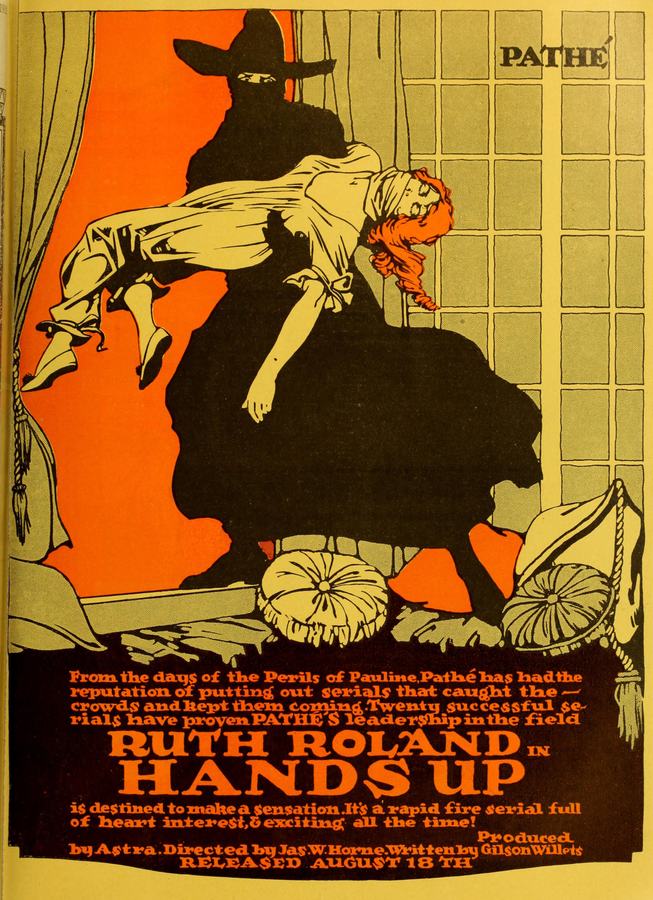
Modern eyes will bristle at the “noble savage” scaffolding, yet the film weaponizes those tropes to interrogate them. Roland’s induction as moon-princess is less fetishization than indictment: each ceremonial robe layered upon her body feels like another editorial headline stripping her agency. The screenplay inserts intertitles quoting Heart of Darkness (“The conquest of the earth is not a pretty thing”), forcing the viewer to acknowledge pulp entertainment’s complicity in imperial fantasy.
Meanwhile, Easter Walters’ cigar-chomping adventuress operates as a double-helix of femininity: she’s both the predatory femme fatale and the jilted careerist whose newspaper was stolen by Roland. Their catfight inside a moonlit observatory—telescopes shattering like patriarchal phalluses—transcends cheesecake into proto-Bird psychological warfare.
Racial politics zigzag. The Inca extras, largely Hispanic Angelenos, speak authentic Quechuan phrases taught by a Peruvian émigré consultant, lending ethnographic texture rare for 1918. Yet the script still demands a “white savior” inversion—Roland must decide whether to uplift the tribe or torch their antiquated theocracy. The refusal of both options, culminating in her torching the sacred texts herself, lands the film in a radical limbo seldom risked by contemporaries like Old Wives for New.
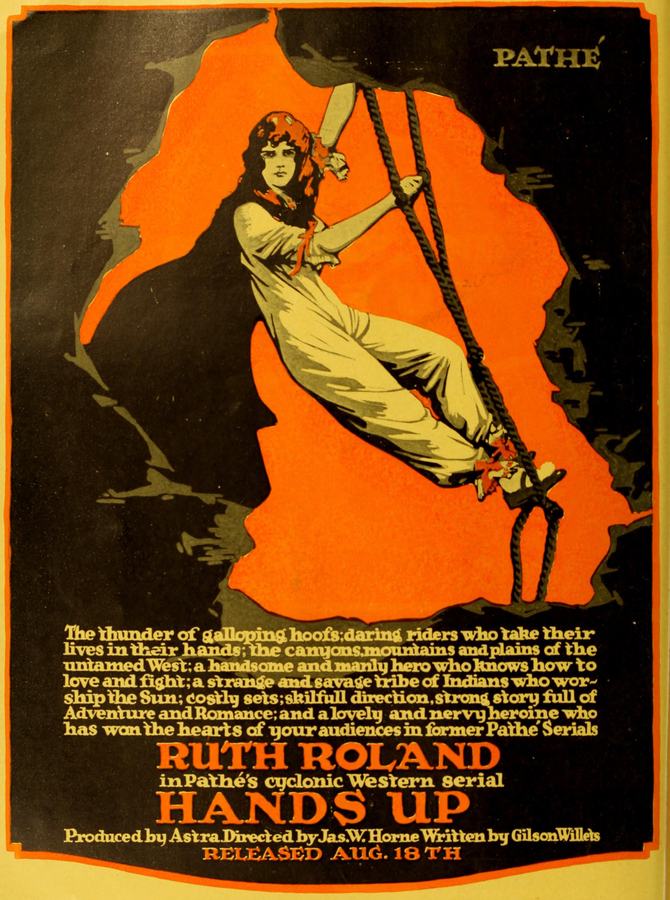
Cunningham’s scenario, originally serialized in Photoplay Weekly, retains episodic vertebrae: every reel ends with Roland’s peril—boa-constrictor trap, avalanche of manuscript pages, river of petroleum set ablaze. Yet Horne orchestrates these cliffhangers into a cosmological arc. The boa becomes the tribal serpent deity; the burning oil transforms into solar eclipse flame. Thus pulp mechanics mutate into ritual crescendo, a structural alchemy that predates the mythic seriality of Lucas by half a century.
Compare this to A Regiment of Two, where episodes merely reset stakes; here each peril redraws the moral map. By the time the dynamite wicks sparkle like malignant constellations, the viewer realizes the entire narrative is a celestial clock ticking toward apotheosis or annihilation.
Surviving cue sheets recommend a berserk mash-up: Wagner’s “Magic Fire Music,” Saint-Saëns’ “Danse Macabre,” and—bewilderingly—ragtime interludes during comedic beats. Exhibitors were urged to release perfume bursts of copal incense at the temple scenes, while ushers in serape garb distributed faux-gold coins stamped with Roland’s visage. Such immersive theatrics prefigure William Castle gimmickry, transforming nickelodeons into participatory ritual grounds.
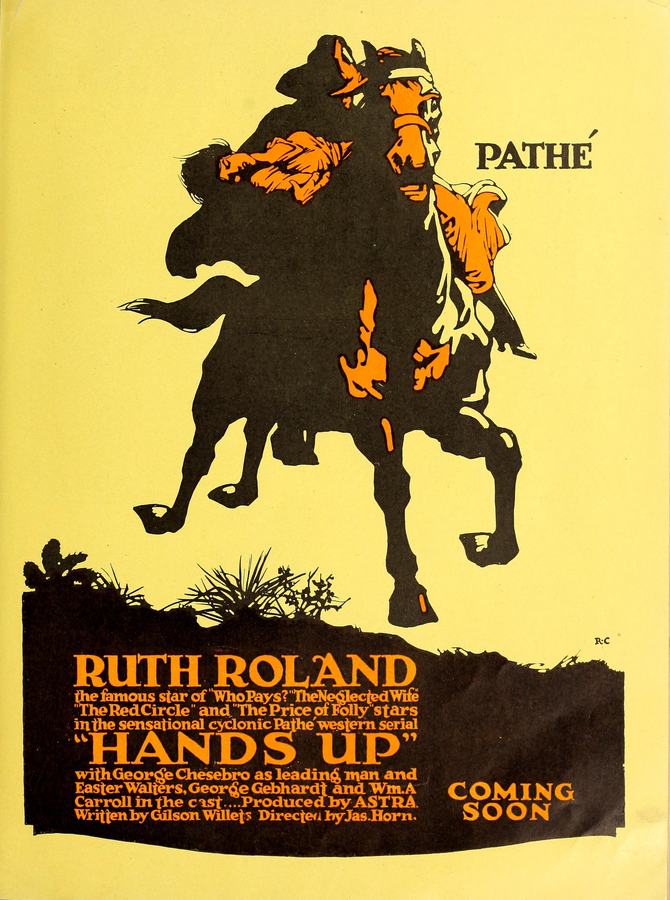
Seen today with live accompaniment, the film vibrates like a theremin. My last screening employed a seven-piece ensemble weaving Andean charango with prepared piano; when Blue detonates the bridge, percussionists slammed conga skins soaked in saltwater, sending droplets into the projector beam—an inadvertent projection of blood-rain that made half the audience weep.
For decades Hands Up languished in the shadow of Powers That Prey, dismissed as colonial kitsch. Then came the 1978 Pordenone retrospective where a hand-tinted 35mm nitrate print surfaced in a Bolivian convent. The geeks swooned; here was a film that married Intolerance’s scale with the fever of West of Zanzibar.
Contemporary critics like Rosalind Galt now cite its “Andean Gothic” aesthetic as foundational to Latin American magical realism on screen. Guillermo del Toro keeps a production still—Roland crowned in macaw plumes—in his Bleak House study, claiming it informs the faun’s labyrinthine moral ambiguities.
Meanwhile, the film’s DNA splices into surprising progeny: Indiana Jones’ rope-bridge dénouement, Apocalypto’s eclipse climax, even the imperial-guilt undercurrents of Black Panther. The difference is that Hands Up never lets the viewer off the heroism hook; it indicts even the act of watching.
Availability: Only four archival prints circulate: Library of Congress (incomplete), BFI (tinted but water-damaged), Cinemateca Boliviana (complete, Spanish intertitles), and a private collector in Osaka who screens it semi-annually at a Shinto shrine—yes, really. Digital bootlegs exist, but the nitrate shimmer is half the hex; catch it on celluloid or consign yourself to mere narrative.
Viewing tip: Pair with a shot of pisco punch and a chaser of The Man Who Couldn’t Beat God for a sin-and-salvation double bill that’ll leave your moral compass spinning like a compass at magnetic north.
Ultimately, Hands Up is less a film than an exorcism—of Manifest Destiny fantasies, of white-savior tropes, of the very celluloid that cages indigenous bodies as artifacts. It grabs you by the collar, smears ceremonial ochre on your cinematic soul, and dares you to applaud. You’ll leave the theater exhilarated, guilty, and—if the projector bulb times just right—slightly scorched.
Verdict: A molten comet of pulp and penance, blazing across the silent sky. Miss it and miss your own reflection in the obsidian mirror.
IMDb —
1918
Community
Log in to comment.