DbcultAccessing Vault...
Cult Review
Senior Film Conservator
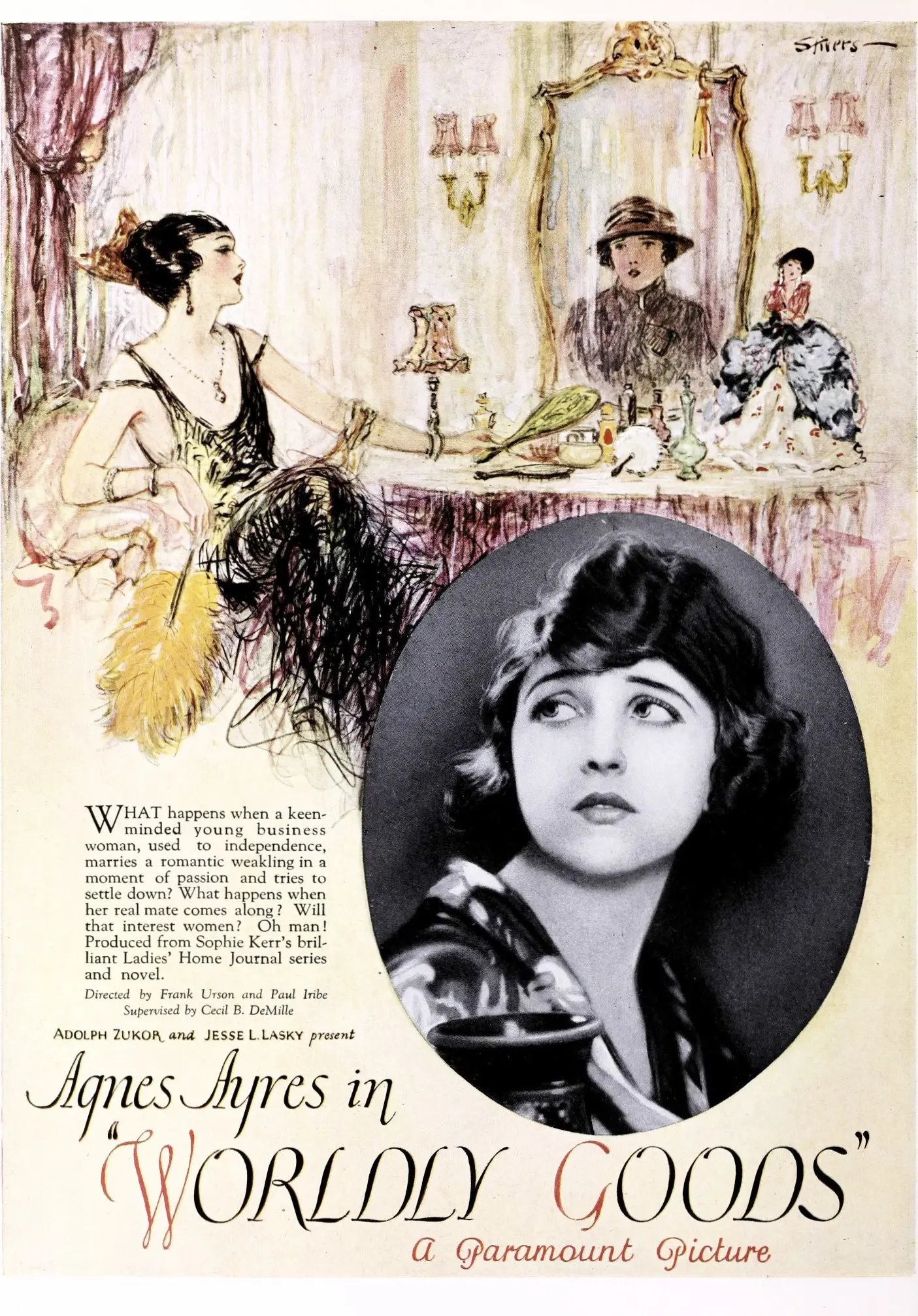
In the annals of silent cinema, where gestures spoke volumes and intertitles painted the narrative canvas, certain films stand as poignant time capsules, reflecting the social anxieties and aspirational dreams of their era. Worldly Goods, a 1921 drama penned by Andrew Percival Younger and Sophie Kerr, emerges as one such cinematic artifact. It’s a compelling, albeit often heartbreaking, exploration of ambition, marital disillusionment, and the perilous pursuit of status in a world rapidly modernizing. This isn't merely a story; it's a cautionary fable, a mirror held up to the human tendency to prioritize the superficial over the substantive, with consequences that ripple through the very fabric of personal relationships.
Our narrative centers on a young woman, portrayed with an evocative blend of idealism and burgeoning pragmatism by Cecille Evans, who finds herself at a pivotal crossroads. Before her lie two distinct paths to matrimony: one, a proposal from a wealthy playboy, offering a life of assured comfort and social standing; the other, the fervent declarations of a slick-talking car salesman, whose most valuable asset appears to be his boundless, if unsubstantiated, optimism. In a decision that sets the stage for the ensuing drama, she opts for the latter, swayed by the intoxicating promise of shared ambition and the allure of a self-made man, a common romantic ideal of the burgeoning Jazz Age. This initial choice, fraught with a subtle, tragic irony, underscores a societal fascination with the performative aspects of success, where potential often outshines proven accomplishment. It’s a decision that immediately places the character in a precarious position, her happiness staked on the vaporous promises of a man more adept at rhetoric than genuine endeavor.
Otto Lederer, as the ambitious yet ultimately feckless husband, perfectly embodies this type. His character is a master of the grand gesture and the eloquent pronouncement, yet utterly devoid of the follow-through necessary to transmute dreams into reality. The honeymoon period, predictably, gives way to a harsh domestic reality. The wife soon discovers that her new husband's interest in 'being a success' far outweighs any actual inclination to 'try to be one.' This chasm between aspiration and action forces her, eventually, into the workforce – a significant plot point that speaks volumes about evolving gender roles and economic pressures of the time. This isn't merely a personal failing on the husband's part; it's a commentary on a culture that could easily conflate bluster with brilliance, leaving individuals like Cecille Evans' character to shoulder the burden of unfulfilled expectations. Her journey from hopeful bride to disillusioned breadwinner is one of the film's most compelling arcs, showcasing the resilience and quiet strength often demanded of women in that era.
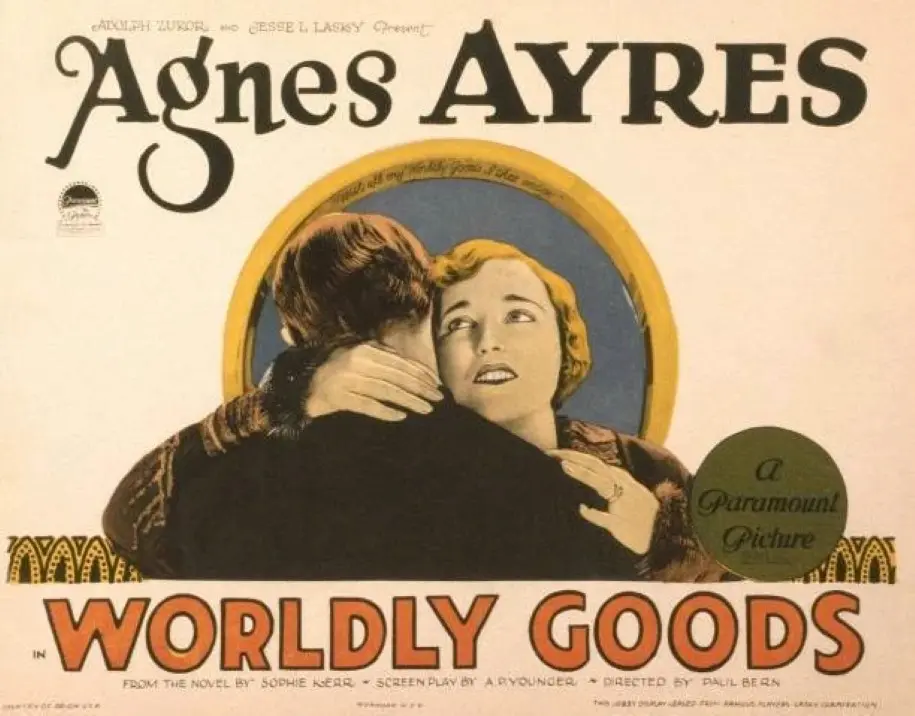
The narrative gains considerable momentum when the husband, ever the opportunist, overhears a crucial conversation. His wife's former suitor, the wealthy playboy she had once rejected, is planning to acquire a specific piece of property. This eavesdropping moment becomes the catalyst for the husband's most audacious gamble. Viewing it as a golden opportunity to finally prove his business acumen and, perhaps more importantly, to impress his increasingly disaffected wife, he resolves to purchase the property himself. However, lacking the necessary capital, he turns to a new source of funding: a beautiful and wealthy woman, a role deftly handled by Agnes Ayres. This interaction is not merely a financial transaction; it's a narrative device that introduces a potent element of jealousy and perceived infidelity into the already strained marital dynamic. The husband’s desperation blinds him to the emotional cost of such an alliance, focusing solely on the material gain and the illusory restoration of his damaged pride.
The wife’s discovery of this arrangement proves to be the breaking point. Her resentment isn't solely rooted in the financial implications; it’s a deeper wound, a betrayal of trust and an affront to her dignity. The husband's relationship with this wealthy patroness, regardless of its purely business nature, is seen as a profound transgression, a symbol of his willingness to compromise their marital integrity for his own self-aggrandizement. The demand for divorce that follows is not a sudden, impulsive act but the culmination of prolonged disappointment and a growing realization that her husband's 'worldly goods' extend only to his superficial charm and empty promises. The ensuing complications, which the plot alludes to, would have undoubtedly explored the social stigma of divorce in the early 20th century, the legal battles, and the profound emotional wreckage left in the wake of such a fractured union. This segment of the film highlights the intricate interplay between financial ambition and personal ethics, demonstrating how the pursuit of one can irrevocably damage the other.
In the silent era, actors were truly storytellers through expression and movement. Cecille Evans, as the wife, must have conveyed a nuanced arc, moving from starry-eyed hope to quiet despair, and finally to resolute defiance. Her ability to communicate these complex emotions without dialogue would have been paramount to the film's success. Similarly, Otto Lederer’s portrayal of the husband would have required a delicate balance – charismatic enough to win the initial affections, yet subtly revealing his underlying weakness and self-delusion. The transition from charming suitor to failed provider, and then to desperate speculator, demands a nuanced performance that silent film actors often mastered through exaggerated yet precise physicality and facial expressions. The supporting cast, including Maude George, Bert Woodruff, Victor Varconi, Edythe Chapman, and Pat O’Malley, would have filled out the social tapestry, providing context and emotional beats that underscore the central drama.
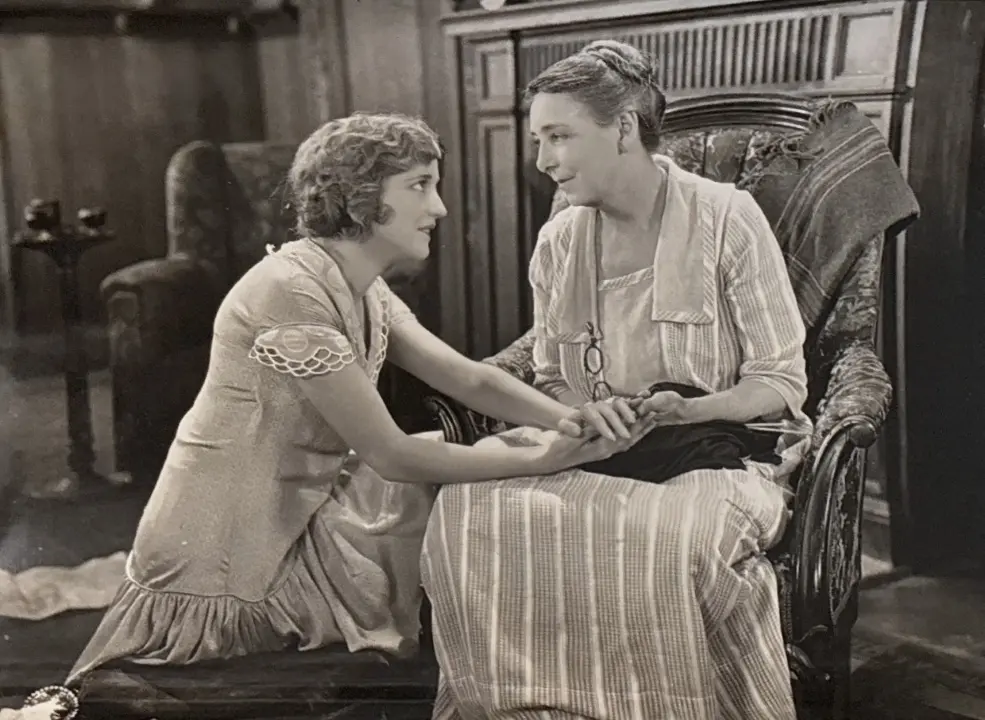
Andrew Percival Younger and Sophie Kerr’s screenplay, even without the benefit of spoken words, delves into surprisingly modern themes. The illusion of success, the corrosive nature of unchecked ambition, and the fragility of marital bonds under financial strain are timeless subjects. The film implicitly critiques a society that often values outward appearances and material wealth over genuine character and sustained effort. It's a narrative that resonates even today, reminding us that 'worldly goods' often come at a cost far greater than their monetary value. The contrast between the husband's performative masculinity and the wife's quiet resilience is a powerful underlying current, exploring the shifting dynamics of power and responsibility within a relationship.
The early 1920s, often romanticized as the 'Roaring Twenties,' was a period of immense social and economic change. Post-World War I, America was grappling with new freedoms, burgeoning consumerism, and an almost feverish pursuit of prosperity. Films like Worldly Goods serve as vital documents, capturing the zeitgeist of this transformative era. They reveal the cultural anxieties beneath the surface glamour, particularly concerning the institution of marriage and the evolving roles of men and women within it. The film's exploration of a woman's agency when faced with a husband's failings, and her ultimate demand for a divorce, speaks to a nascent shift in societal attitudes towards marital independence.
Comparing Worldly Goods to other cinematic works of its time offers further insight. One might draw parallels to films like His House in Order, which also delves into the intricacies and often destructive forces within a marriage, albeit from a different angle of past secrets and present judgments. The theme of ambition, both noble and misguided, finds echoes in the grand narratives of films such as Le nabab or even the more overtly dramatic Trompe-la-Mort, though these often dealt with financial empires and social climbing on a larger scale. The personal cost of chasing perceived success, a central tenet of Worldly Goods, is a universal motif, beautifully rendered in the intimate drama of a struggling couple.
Even in its portrayal of marital discord and the subsequent demand for divorce, Worldly Goods wasn't an anomaly. Other films of the era, such as The Door Between, explored the delicate balance of relationships and the boundaries of personal space, while comedies like Youthful Cheaters might have lightly touched upon similar themes of marital misadventure, albeit with a lighter touch. The film's strength lies in its ability to take these familiar elements and weave them into a poignant, character-driven narrative that feels both specific to its time and universally resonant.
Ultimately, Worldly Goods serves as a powerful reminder that true wealth lies not in grand pronouncements or speculative ventures, but in integrity, genuine effort, and mutual respect within personal relationships. The film, through its compelling narrative and the evocative performances of its cast, invites us to scrutinize the foundations upon which we build our lives and our loves. It’s a silent yet resounding testament to the often-painful lessons learned when the pursuit of external validation overshadows the cultivation of internal worth. A remarkable piece of early 20th-century cinema, it remains relevant in its exploration of human nature's enduring complexities, proving that some stories, like the struggle between illusion and reality, are truly timeless.
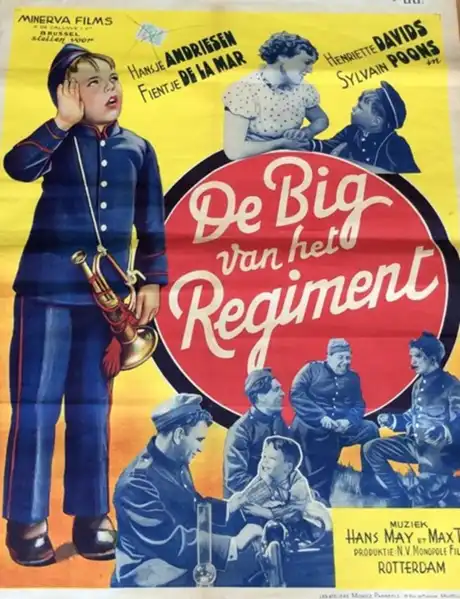
IMDb 6.5
1935
Community
Log in to comment.