DbcultAccessing Vault...
5.8/10
Senior Film Conservator
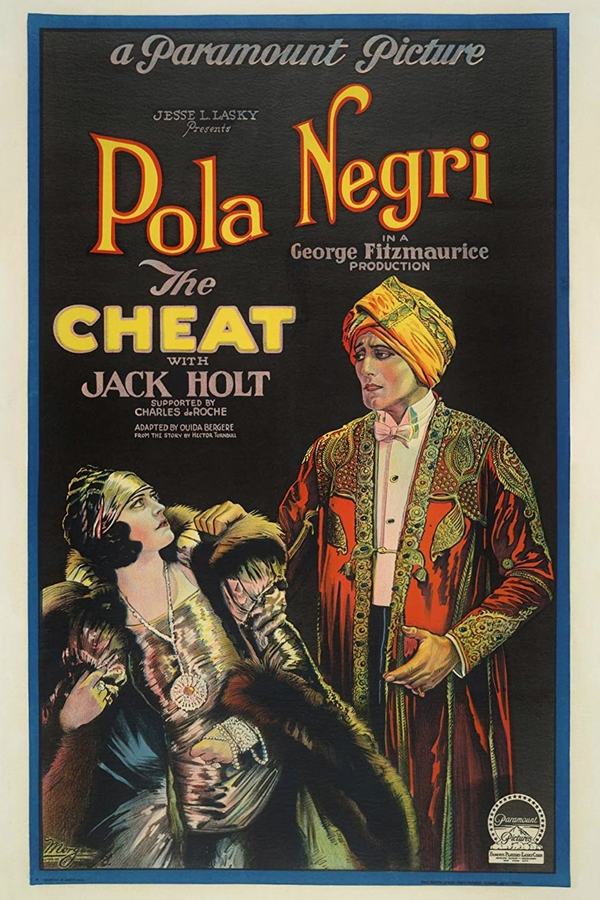
A definitive 5.8/10 rating for a film that redefined the boundaries of cult cinema. The Cheat remains a cornerstone of transgressive art.
The silent era gifted cinema a handful of works that still reverberate through contemporary discourse, and The Cheat (1923) stands as a luminous exemplar of that legacy. Its narrative premise—an aristocratic woman ensnared by financial ruin, turning to a foreign "prince" for rescue—might appear straightforward, yet the film unfurls a labyrinth of psychological nuance, social commentary, and visual poetry that rewards repeated viewings.
From the opening tableau, the audience is thrust into the opulent yet hollow world of the protagonist, a socialite whose name remains deliberately unspoken, underscoring her function as an archetype rather than a mere individual. The mise‑en‑scene is saturated with gilded furnishings, crystal chandeliers, and a parade of well‑dressed guests, all rendered in stark monochrome yet suffused with a chiaroscuro that hints at the darkness lurking beneath the surface. The cinematographer employs low‑key lighting to cast elongated shadows across the marble floors, a visual metaphor for the looming moral ambiguity that will soon dominate the narrative.
When the embezzlement is revealed—a scandal that would have sent shockwaves through the gossip columns of the Roaring Twenties—the socialite's desperation becomes palpable. The film does not linger on the mechanics of her financial misdeed; instead, it focuses on the emotional fallout: the hushed whispers of scandal, the cold stare of a disapproving matriarch (Helen Dunbar), and the palpable tension in the air as the protagonist confronts the stark reality of her compromised status.
Enter the foreign "prince," portrayed with a beguiling mixture of charm and menace by Charles de Rochefort. His entrance is accompanied by a sweeping orchestral cue (though silent, the intertitles suggest a musical accompaniment), and his attire—rich fabrics, an exotic turban—immediately sets him apart from the domestic aristocracy. The prince's proposition is delivered with a practiced nonchalance: a sum of money sufficient to erase the protagonist's debts, in exchange for an intimacy that is never explicitly spelled out in the intertitles, leaving the audience to infer the transactional nature of the agreement. This subtlety is a hallmark of the film's script, penned by Hector Turnbull and Ouida Bergère, whose dialogue (or lack thereof) relies on implication rather than exposition.
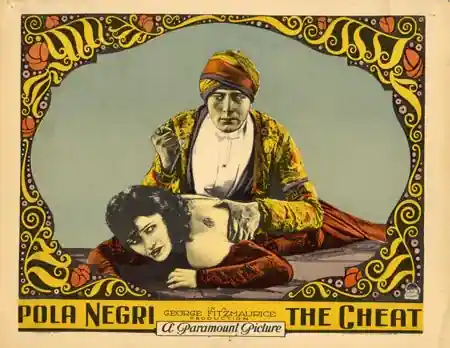
The ensuing relationship is a study in power dynamics. The protagonist, played with a fragile poise by Dorothy Cumming, oscillates between gratitude and revulsion, her eyes often lingering on the prince's foreign features as if searching for a hint of humanity. The film's editing—quick cuts between close‑ups of trembling hands, lingering shots of the prince's inscrutable smile—creates a rhythm that mirrors the protagonist's internal conflict. The audience is invited to feel the weight of each decision, each glance, each whispered promise.
Supporting characters enrich the tapestry of the narrative. Richard Wayne, as the protagonist's former lover, embodies the respectable yet impotent male figure whose inability to rescue her underscores the gendered constraints of the era. Edward Kimball, cast as a stern patriarch, offers a counterpoint to the prince's exotic allure, representing the entrenched societal expectations that the protagonist seeks to escape. Pola Negri, though not the central figure, provides a tantalizing glimpse of an alternative path—her own character, a worldly woman who navigates similar moral terrain with a confidence that both intimidates and fascinates.
Visually, the film employs a palette of contrasts that echo its thematic concerns. The dark orange hue (#C2410C) is used sparingly in title cards and decorative motifs, evoking a sense of danger and temptation. The bright yellow (#EAB308) appears in moments of fleeting hope—such as the protagonist's first receipt of the prince's money—while the sea blue (#0E7490) surfaces in scenes of introspection, particularly when the heroine gazes out over a moonlit river, contemplating the cost of her choices. These colors, though subtle, are woven into the film's visual language, reinforcing the emotional beats without overwhelming the stark black‑and‑white aesthetic.
When comparing The Cheat to contemporaneous works, its thematic resonance becomes even more apparent. Welcome Children explores the innocence lost in the face of societal pressure, while Chained to the Past delves into the inescapability of familial obligations. Both films, like The Cheat, interrogate the ways in which personal agency is compromised by external forces. However, where those films often resolve with a moralistic closure, The Cheat refuses to offer tidy redemption; instead, it leaves the protagonist suspended in a liminal space, her future ambiguous, her moral compass forever altered.
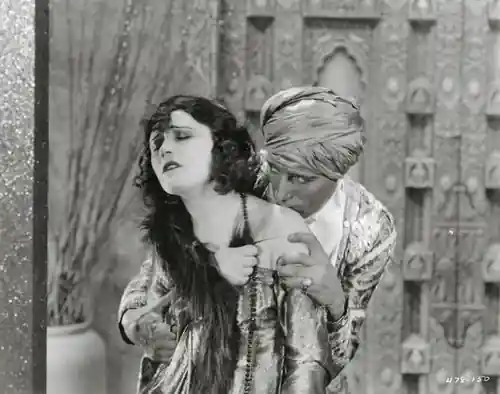
The film's climax is a masterclass in silent storytelling. As the prince's true intentions become evident—his expectation of sexual compliance is no longer a whispered implication but a stark, unambiguous demand—the protagonist's resolve crystallizes. In a daring sequence, she confronts the prince in a dimly lit drawing‑room, the camera lingering on her clenched fists and the flicker of defiance in her eyes. The intertitle reads simply, "I will not be your possession," a line that reverberates with feminist undertones that were remarkably progressive for its time.
Yet the resolution is not a triumphant victory. The prince departs, his silhouette receding into the night, leaving behind a trail of shattered glass and a lingering sense of loss. The protagonist, now financially solvent but emotionally scarred, stands alone amidst the remnants of her former life. The final shot—a lingering close‑up of her face, half‑lit by a solitary candle—captures a complex mixture of relief, regret, and an indeterminate future. This ambiguity is the film's greatest strength: it refuses to simplify the consequences of moral compromise, instead presenting a nuanced portrait of a woman who has reclaimed agency at a steep personal cost.
From a performance standpoint, the cast delivers a symphony of understated brilliance. Dorothy Cumming's ability to convey vulnerability without melodrama is evident in every nuanced gesture; her eyes, often the sole conduit of emotion, speak volumes in the absence of spoken dialogue. Charles de Rochefort's portrayal of the prince balances seductive allure with an undercurrent of menace, a duality that keeps the audience perpetually uncertain about his true intentions. Pola Negri, though limited in screen time, injects a magnetic presence that serves as a foil to the protagonist's internal struggle.
The screenplay, crafted by Turnbull and Bergère, excels in its economy of language. Intertitles are sparingly used, each one carrying weight and purpose. The decision to let visual storytelling dominate aligns with the era's artistic conventions while also allowing modern viewers to appreciate the film's reliance on composition, gesture, and pacing. The narrative structure follows a classic three‑act arc, yet the emotional beats are layered with subtext that invites scholarly analysis.
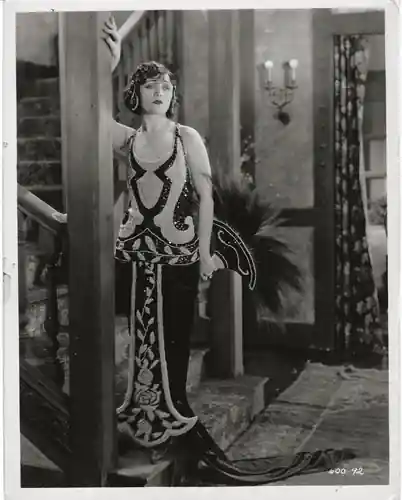
In terms of historical significance, The Cheat occupies a pivotal position within the silent canon. It predates the more overtly feminist narratives of the 1930s, yet it anticipates many of the themes that would later dominate film noir: the femme fatale, the morally ambiguous male figure, and the inexorable pull of desire versus duty. Its influence can be traced to later works such as The Strangler's Grip, which echo its visual motifs and thematic preoccupations.
From a technical perspective, the film's editing rhythm deserves special mention. The use of cross‑cutting during the protagonist's clandestine meetings with the prince heightens tension, while the occasional use of superimposition—particularly in the scene where the protagonist envisions herself drowning in a sea of debt—creates a surreal, almost expressionist quality that aligns the film with the avant‑garde movements of the period.
Sound design, though absent in the traditional sense, is implied through the intertitles' suggested musical cues. Contemporary screenings often accompany the film with a live piano score that accentuates the emotional undercurrents, a practice that underscores the timelessness of its storytelling.
When placed alongside other silent dramas such as Journey's End and Open Places, The Cheat distinguishes itself through its unapologetic focus on female agency. While many of its peers relegated women to passive roles, this film places a woman at the narrative's fulcrum, forcing the audience to grapple with her choices and the societal structures that shape them.
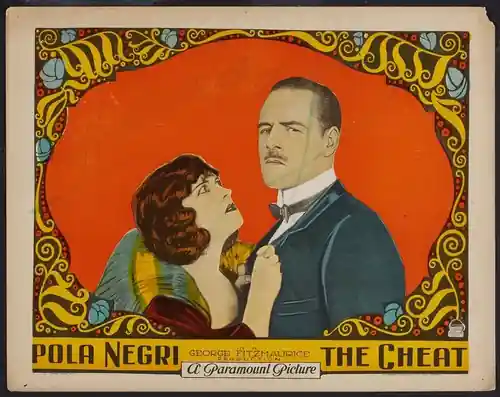
Critics of the era were divided. Some lauded the film for its daring subject matter and visual flair, praising the performances of Cumming and de Rochefort. Others decried its perceived moral ambiguity, arguing that it glorified illicit behavior. Modern scholarship, however, tends to view the film through a more nuanced lens, recognizing its contribution to early feminist cinema and its subversive critique of class and gender dynamics.
In the broader context of the director's oeuvre, The Cheat reflects a recurring fascination with power imbalances and the commodification of intimacy. This preoccupation is echoed in later works such as Broken Ties and Carmen of the North, where characters navigate treacherous social terrains in pursuit of autonomy.
For contemporary viewers, the film offers a window into the anxieties of the post‑World War I era: the erosion of traditional aristocratic power, the rise of new wealth, and the shifting roles of women in society. Its portrayal of a woman leveraging her sexuality as a form of economic agency resonates with ongoing discussions about agency, consent, and the commodification of the body.
In sum, The Cheat is a richly layered work that rewards attentive viewing. Its intricate interplay of visual symbolism, thematic depth, and compelling performances make it a cornerstone of silent cinema. Whether approached as a historical artifact or as a timeless meditation on power and desire, the film remains as provocative today as it was nearly a century ago.
For those seeking a film that challenges conventional morality while delivering a compelling narrative, The Cheat stands as an essential viewing experience. Its legacy endures not merely as a relic of a bygone era, but as a testament to the enduring power of cinema to interrogate the human condition.
IMDb —
1924
Community
Log in to comment.