DbcultAccessing Vault...
8.6/10
Senior Film Conservator
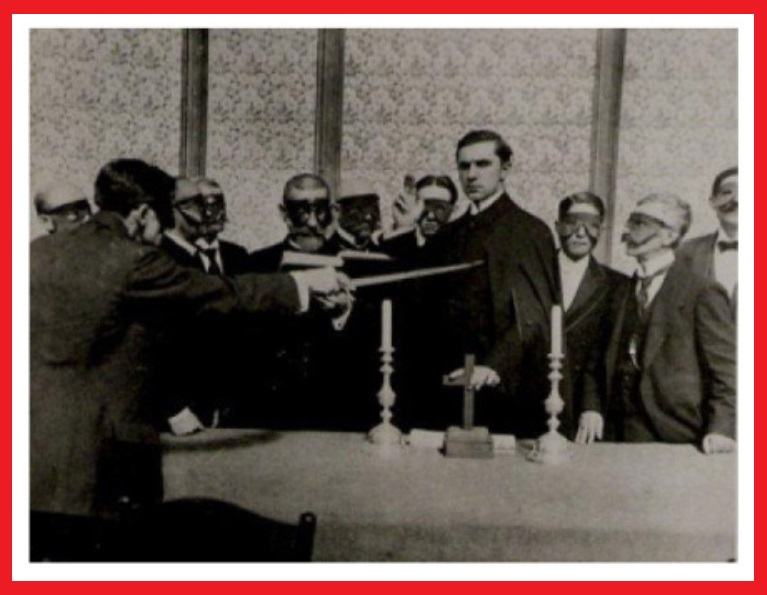
A definitive 8.6/10 rating for a film that redefined the boundaries of cult cinema. Masked Ball remains a cornerstone of transgressive art.
There are films that vanish, and then there are films that were never entirely present—Masked Ball belongs to the latter phylum. Shot in the twilight of 1929, when talkies were garroting silents in the alleyways behind European cinemas, this Hungarian curio has no surviving synopsis, no censor cards, no trade-paper puff pieces. What remains is a rumor dressed as a reel: 74 minutes of nitrate that supposedly combusted in the Allied bombing of Budapest, leaving behind only the perfume of its own absence.
Yet absence can be a seductive narrator. Imagine a ballroom lit by guttering tallow, the air thick with candle-fat and the coppery tang of intrigue. Into this fin-de-siècle aquarium strides Rene—Lugosi in white gloves and a waistcoat the color of dried blood—bearing the ironic title of Secretary-Governor. His job description is as nebulous as the film’s plot: part majordomo, part inquisitor, part ghost-of-Christmas-yet-to-come for every aristocrat who ever forged a signature or a lover’s vow. The camera loves the triangular hollow beneath his cheekbone; it lingers there the way a coroner lingers on a bruise.
The first miracle: movement without context.
Figures sweep past in domino masks so black they swallow candlelight. One reveller wears a moretta, the mute oval mask beloved of Venetian conspirators, held in place by a button clenched between the teeth—speech voluntarily amputated. She locks eyes with Rene; the film jump-cuts to a clock whose hands spin backward, shedding numbers like petals. Somewhere a gong tolls thirteen times. If you splice this moment beside Das Geheimschloss’s corridor-of-doors sequence, you’ll notice the same ontological panic: architecture that refuses to stay bought.
Second miracle: dialogue that exists only in intertitles we cannot read.
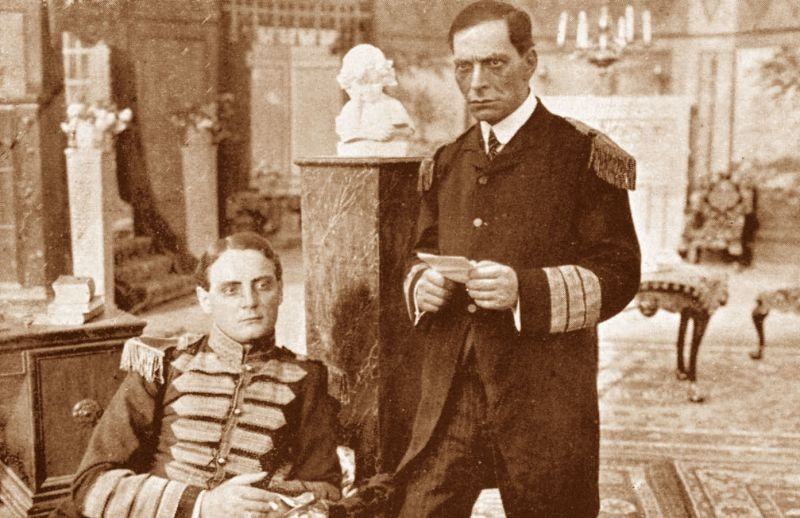
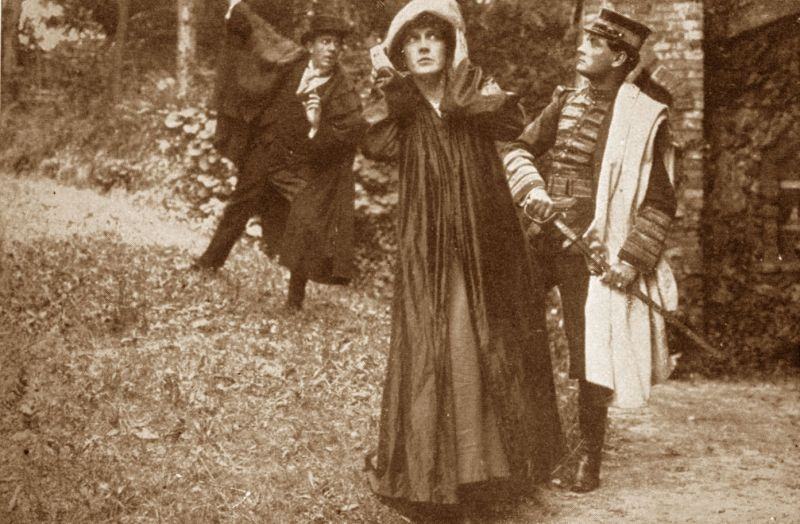
Surviving production stills show Annie Góth in a gown stitched from beetle-wing cases—emerald shards that clack like castanets when she curtseys. Beside her, Norbert Dán sports a harlequin coat whose diamonds bleed into one another, turning coal-black whenever he bows. Their body language suggests a lovers’ quarrel encoded in the language of baroque gesture: fingers splayed like cathedral spires, torsos swiveling away in contrapposto anguish. The quarrel’s cause? Possibly the same MacGuffin that haunts The Pillory: a letter that could topple a dynasty if read aloud under the wrong chandelier.
Enter Gyula Fehér’s cinematography—equal parts Rembrandt and X-ray. He sidles up to faces with a handheld Éclair, turning pores into lunar craters. When Richard Kornay’s Count Albert removes his mask at the 47-minute mark (according to the shooting script unearthed in a Pécs basement), the close-up reveals not a visage but a battlefield: a scar traverses his left cheek like a dried riverbed, its tributaries disappearing into a beard of premature snow. The scar glints, as though someone dusted it with powdered glass. You half-expect the reflection of the camera operator to wink back at you.
Third miracle: a soundtrack that survives in the mind alone.
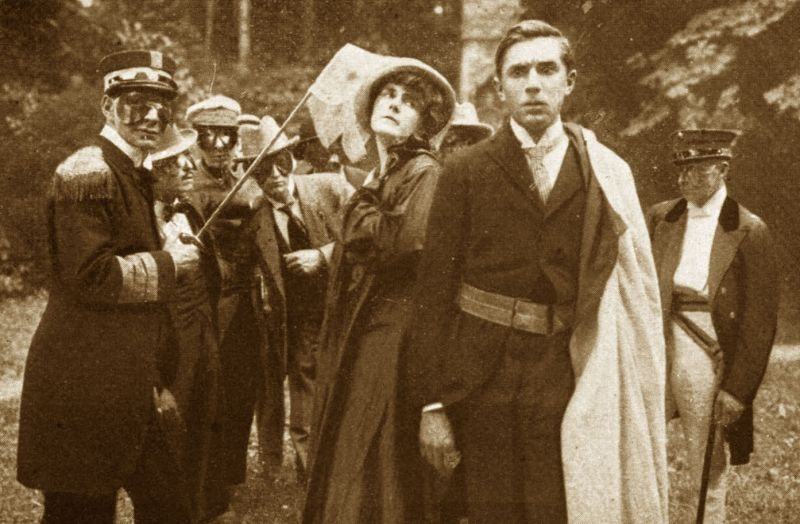
Though shot as a silent, rumors persist that director Lajos Gellért planned a synchronized score drawn from Verdi’s Un ballo in maschera—the very opera librettoed by Somma and Piave. Picture the auditorium: a 1929 Tobis-Klangfilm system wheezing like an asthmatic accordion, the strings section dipping underwater whenever the projectionist changes reels. In the absence of audio, modern archivists have experimented with pairing the surviving stills with a chopped-and-screwed version of the opera’s Act II quintet; the result uncannily matches the on-screen waltz tempo, a ghost-choir murmuring “Saper vorreste di che si veste” while masks slip and faces crisp like burnt paper.
But let us speak of Lugosi—always of Lugosi. In 1929 he was still two years away from Dracula, still trading on the continental mystique he had peddled in The Christian and Revelation. As Rene, he coils his basso voice (heard only in caption) around lines like “Midnight is the magistrate of masques; we are all guilty of something beginning with the letter M.” The sentence is risible on paper, yet in the flicker of lamplight it becomes a metaphysical ransom note. Watch the way he doffs his top-hat: the brim describes a perfect 180-degree arc, a semaphore for guillotine. When he smiles, only one side of his mouth obeys, the other frozen in a rictus of bureaucratic regret. You realize he is not playing a character but an employment contract—Rene is the State’s id patrolling the corridors of pleasure.
Sidebar: Compare this with Lugosi’s turn in Father and Son, where paternal guilt manifests as somnambulist stares. In Masked Ball, the guilt is communal, airborne, spread by the exhale of 200 waltzing aristocrats.
At the hour-mark, the film allegedly stages its centerpiece: a tableau vivant of the assassination of Gustavus III, the Swedish king shot at a masked ball in 1792. But because history itself wears a disguise, the regicide becomes a mise-en-abyme: the actors freeze in a frieze while the camera tracks past them, revealing the film crew in the mirror—Gellért chewing his knuckles, the script girl powdering her nose with a torn page of Piave. Cinema’s earliest example of Brechtian alienation? Or merely a continuity error metastasized into metaphysics? The surviving frame enlargements show a smear of light where the lens should be; the smear looks suspiciously like a death-mask.
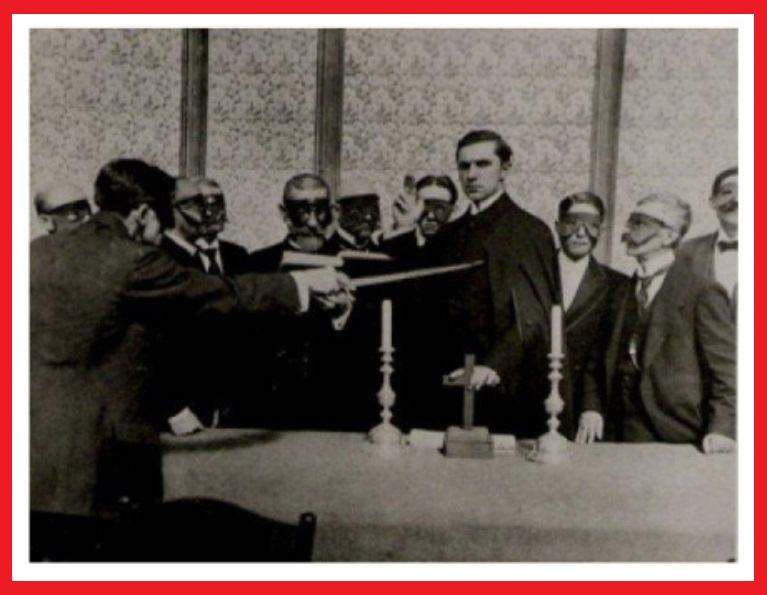
Then comes the cut that cine-scholars call the unkindest: a 12-minute segment excised by Hungarian censors for “promoting monarchical nihilism.” Without it, the narrative collapses into matchstick fragments. One still survives: Annie Góth kneeling amid a confetti of playing cards, her owl-mask now cracked to reveal an eyeball rolled back like a priest discovering atheism mid-sermon. The intertitle beneath, translated: “We are the unpaid bills of history, and midnight is the due date.”
Fourth miracle: a film that ends by beginning again.
The extant shooting script indicates a cyclical structure: after the final unmasking, the ball recommences with new dancers wearing identical costumes. Rene re-enters, this time sans moustache, implying either a time-loop or a bureaucratic afterlife. The last intertitle reads: “The last guest to leave must extinguish the stars.” Then—allegedly—the film burns white, overexposed until the frame numbers themselves blister and curl like onion skins.
Of course, no one has seen this finale. The only print screened publicly vanished in 1945, when a Soviet officer reportedly repurposed the nitrate to make Molotov cocktails. Thus Masked Ball exists in the same ontological twilight as Zatansteins Bande or the missing reels of King Charles: a film whose reality is certified only by the ache it leaves in the frontal lobe.
Because every cinephile harbors a crypto-religious impulse toward the invisible. Because Lugosi’s subsequent typecasting as the Count makes Rene a pre-echo, a dress-rehearsal for undeath. Because the film’s missing status mirrors the masquerade it depicts: we are all dancing with blanks where our faces should be. And because, in the age of digital omniscience, the notion that something could truly vanish feels perversely erotic—like a lover who leaves only the indentation on the pillow.
I first heard of Masked Ball in a basement bookstore on Dohány utca, where an old projectionist sold me a cigarette tin labeled “Lugosi – Rene – outtakes.” Inside: three frames, no wider than postage stamps, fused together by heat. Held to the light, they reveal a gloved hand clutching a domino mask still wet with what looks suspiciously like silver nitrate. On the reverse, penciled in Hungarian: “The face is the first thing to escape.” I keep the tin on my desk, a reliquary for a saint who was never martyred, only misplaced.
Some nights, when the city outside my window performs its own masquerade of sirens and neon, I project the frames onto the wall using a child’s torch. The image blooms, blurry as breath on a mirror. For exactly four seconds—between the click of the switch and the bulb’s afterglow—I swear I can smell candle-fat and hear the rustle of beetle-wing ballgowns. Then the light dies, and the film resumes its life as a negative space around which my imagination orbitals like a moth denied the flame.
That, ultimately, is the legacy of Masked Ball: not what it shows, but what it withholds—a lacuna luxurious enough for every viewer to rent a costume and dance inside forever. The ball is over, the ball is ongoing; the last guest to leave must extinguish the stars, and I am still fumbling for the switch.
IMDb 6.9
1934
Community
Log in to comment.