DbcultAccessing Vault...
4.6/10
Senior Film Conservator
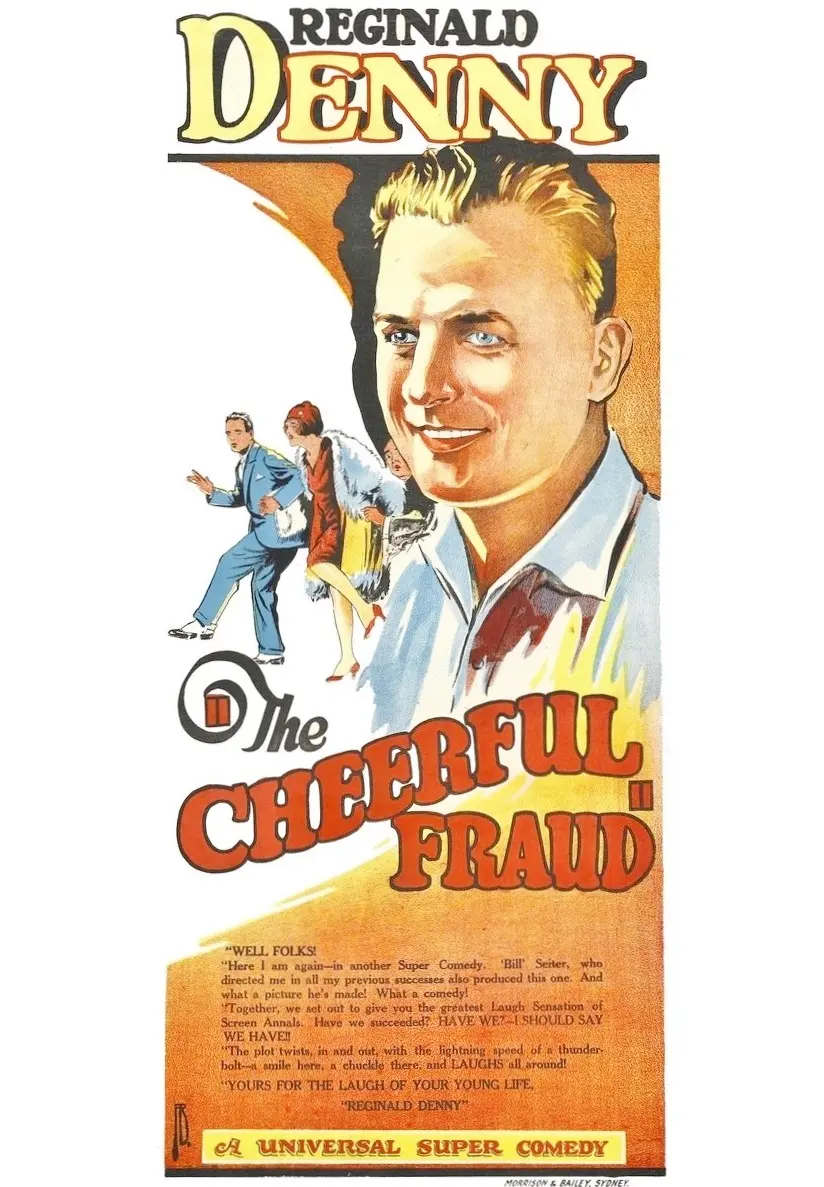
A definitive 4.6/10 rating for a film that redefined the boundaries of cult cinema. The Cheerful Fraud remains a cornerstone of transgressive art.
Is The Cheerful Fraud worth your time in an era of high-speed digital comedy? Short answer: Yes, but only if you have a refined palate for the physical mechanics of 1920s farce and the patience for its predictable class-based tropes.
This film is specifically for those who enjoy the 'gentleman in disguise' subgenre and silent film completists looking for a bridge between slapstick and sophisticated rom-coms. It is definitely not for viewers who demand complex character arcs or those who find the 'bribing a servant for their job' plot point more creepy than romantic.
Before we dive into the technicalities of this 1926 William A. Seiter production, let’s lay out the essentials for the modern viewer:
Reginald Denny is the engine that keeps The Cheerful Fraud from stalling. While his contemporaries like Buster Keaton were focused on architectural gags and Chaplin on pathos, Denny occupied a space of 'athletic sophistication.' In the opening rainstorm scene, notice how he uses his umbrella not just as a prop, but as an extension of his aristocratic entitlement. It is a subtle piece of character work that establishes him as a man used to getting his way before he ever steps foot in the Bytheway residence.
His transition from Sir Michael to 'Simmons' the servant is where the film finds its rhythm. Denny doesn't just change his clothes; he changes his posture. There is a specific moment when he is forced to serve the man who is currently impersonating him—the thief, Steve. The look of suppressed indignation on Denny’s face while he pours wine for a criminal wearing his own suit is the film's comedic peak. It is a sharp commentary on how clothes and titles define the man in the eyes of the British elite.
Director William A. Seiter, who would later go on to work with some of the biggest names in comedy, shows an early knack for spatial humor here. The Bytheway estate is treated like a giant chessboard. Seiter uses deep focus to show us what is happening in the background—usually a suspicious Steve or a prying Rose—while the main action occurs in the foreground. This keeps the audience one step ahead of the characters, a necessity for effective farce.
However, the pacing isn't perfect. Compared to a film like Lost: A Bridegroom, which maintains a frantic energy throughout, The Cheerful Fraud occasionally gets bogged down in its own subplots. The introduction of the blackmailer Rose feels like a distraction from the much more interesting dynamic between Michael and Ann Kent. Gertrude Olmstead plays Ann with a level-headedness that makes her the perfect foil for Michael’s impulsivity, but the script doesn't give her enough to do once the 'fake wife' plot takes over.
For a film nearly a century old, it remains surprisingly readable. The humor isn't found in title cards or puns, but in the universal awkwardness of being caught in a lie. If you can move past the dated concept of a wealthy man essentially stalking a woman by infiltrating her workplace, there is a genuine sweetness to the climax. It’s a film that asks if a man's character is found in his bank account or his ability to protect those he loves when the 'jewels' are on the line.
It works. But it’s flawed. The resolution is rushed, and the secondary characters are caricatures of the upper class that we’ve seen in dozens of other films from this era, such as Three X Gordon. Yet, the central performance is so magnetic that you find yourself rooting for the fraud anyway.
Pros:
- Reginald Denny’s charismatic lead performance.
- High production values for the 1920s, especially the London rain sequences.
- A clever subversion of class expectations.
- Short, punchy runtime that doesn't overstay its welcome.
Cons:
- The female lead is somewhat underwritten.
- The 'Steve the Crook' plotline is resolved a bit too conveniently.
- Some of the physical gags feel repetitive by the third act.
One surprising observation about The Cheerful Fraud is how it uses lighting to differentiate between Michael’s two lives. When he is Sir Michael in his flat, the lighting is harsh, high-contrast, and lonely. When he becomes Simmons at the Bytheway estate, the scenes are flooded with soft, warm light. It’s an unconventional visual cue: he is 'happier' and 'brighter' when he is pretending to be a servant than when he is living his real life of privilege. This visual storytelling elevates the film above standard genre fare like Harem Scarem.
"The film suggests that the only way for a 1920s aristocrat to find his humanity was to put on an apron and learn how to serve."
The Cheerful Fraud is a delightful, if slightly uneven, relic of the silent era. It lacks the profound genius of a Keaton feature, but it makes up for it with sheer, unadulterated charm. Reginald Denny proves he was one of the era's most capable leading men, handling both the physical comedy and the romantic beats with a grace that few could match. It’s a light snack of a movie—easy to digest, pleasant while it lasts, and a fascinating window into the social anxieties of the mid-20s. If you have an hour to spare and a love for the history of the rom-com, this fraud is well worth the investment.
IMDb —
1923
Community
Log in to comment.