DbcultAccessing Vault...
Cult Review
Senior Film Conservator
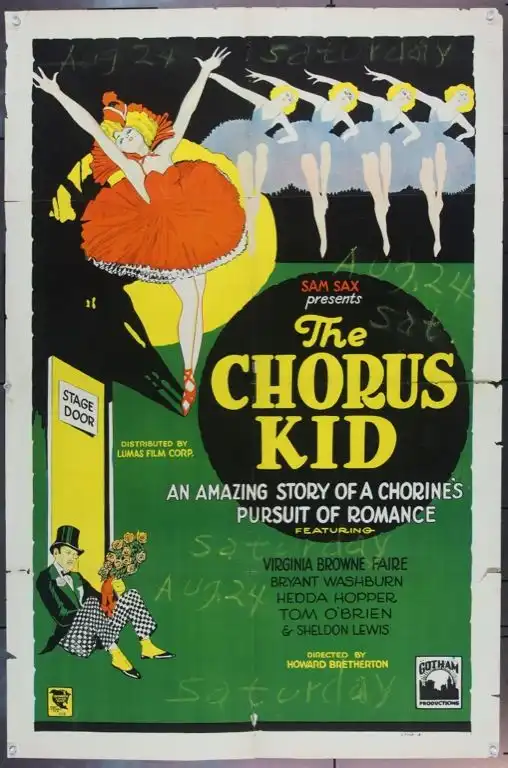
Alright, so, The Chorus Kid. Is it worth watching today? Look, if you’re not already predisposed to digging through early Hollywood’s less-trodden paths, probably not. This is for the curious, the film history buffs, or anyone who just wants to see what a certain kind of studio churned out back then. If you expect modern pacing, nuanced performances, or a plot that doesn't feel like it's been recycled a hundred times since, you’ll likely hate it. But for a certain kind of film enthusiast, there’s a quiet charm here, a window into a different era of moviemaking that’s occasionally illuminating, sometimes frustrating, and often just… odd.
The whole thing kicks off with Artye Folz, our titular chorus kid, looking all wide-eyed and hopeful. Her performance, especially in the early scenes, is pure early-cinema earnestness. You can almost see her trying to hit the marks, trying to convey emotion with a sweep of the hand or a dramatic tilt of the head. It’s less acting and more a series of poses, but sometimes, just sometimes, it lands.
There’s a scene where she’s practicing her dance routine – or what passes for one – in a cramped dressing room. The camera just kind of sits there, watching her for what feels like an eternity. It’s not particularly graceful, and the lighting makes the whole space feel claustrophobic, not aspirational. I kept wondering if it was supposed to show her dedication or just fill screen time. That’s a common feeling with this film: a lot of moments that just exist.
Sheldon Lewis, playing the gruff but ultimately decent stage manager, is probably the most watchable part. He has this weary authenticity that cuts through some of the more saccharine bits. When he barks at the other dancers, it feels less like bad acting and more like a guy who’s just sick of the whole song and dance. You get the sense he’s seen a hundred “chorus kids” come and go, and his patience is thin. His costume, a slightly rumpled suit, also feels genuinely lived-in, a nice contrast to some of the other, more pristine stage outfits.
The love interest, played by Bryant Washburn, is… fine. He’s handsome in that generic matinee idol way, but there’s not a whole lot of spark. Their romantic scenes often feel staged rather than felt. One particular shot, where they’re supposed to be having a tender moment by a prop fountain, has them standing awkwardly far apart, almost like they’re waiting for the director to yell “cut!” It’s a bit of a chemistry vacuum, honestly.
And then there’s Hedda Hopper, in a supporting role. She’s got this incredible presence, even in a small part. You can tell she’s already figured out how to command the camera. Her lines, though few, are delivered with a snap that makes some of the other dialogue sound even flatter by comparison. It makes you wish she had more to do, or that the film was actually about her character instead. It’s a real shame she’s relegated to the background for most of it.
The pacing is a real mixed bag. Some scenes rush by, almost like the editor got bored, while others just… drag. There’s a dramatic confrontation toward the middle that goes on for what feels like five minutes too long, with close-ups on each character’s face cycling through the same two or three expressions. It doesn’t build tension; it just tests your patience. You can almost feel the movie trying to convince you this moment matters, but it’s just not landing.
Visually, it’s mostly functional. The sets are what you’d expect from a low-to-mid-budget production of the era – painted backdrops for cityscapes, a surprisingly detailed but ultimately static stage set. The crowd scenes have this oddly empty feeling, like half the extras wandered off for a coffee break. It’s not terrible, but it never really transports you. There’s one shot of the chorus line dancing where the camera placement is just slightly off, cutting off the feet of the dancers on the right side of the frame. A small thing, but once you notice it, you can’t unsee it.
There are a few moments that unexpectedly work, though. A brief, wordless exchange between Artye Folz’s character and a much older, weary stagehand, where they just share a look of understanding. It’s subtle, and it conveys more about the grind of show business than any of the more overt dramatic speeches. These little human signals are what make watching these older, less polished films worthwhile.
The ending, as you might predict, ties things up with a neat bow, though the journey there feels a bit bumpy. The film doesn't really earn its emotional climax, relying more on genre convention than genuine character development. It’s not bad, but it leaves you feeling a little hollow, like you’ve just watched a play-by-numbers version of a story you’ve already seen.
Ultimately, The Chorus Kid is a curio. It’s not going to change your life, and it’s certainly not a hidden masterpiece. But if you’re into seeing how these stories were told before everything got so slick and polished, or if you just want to appreciate the raw, sometimes clunky efforts of early filmmakers, there’s something here. Just be prepared to forgive its many imperfections and maybe even find a little affection for them.
IMDb 7.1
1935
Community
Log in to comment.