DbcultAccessing Vault...
7/10
Senior Film Conservator
A definitive 7/10 rating for a film that redefined the boundaries of cult cinema. The Christian remains a cornerstone of transgressive art.
From the moment the opening credits unfurl, "The Christian" plunges its audience into a tumultuous odyssey of faith, ambition, and the enduring human spirit against the backdrop of a society grappling with its own moral compass. This cinematic achievement, a potent adaptation of Hall Caine's profound narrative, isn't merely a film; it's a visceral experience, a grand morality play writ large across the silver screen, demanding introspection and stirring the soul. It masterfully intertwines the personal journeys of its protagonists with broader societal critiques, exploring the treacherous currents beneath the veneer of respectability and the redemptive power of unwavering love.
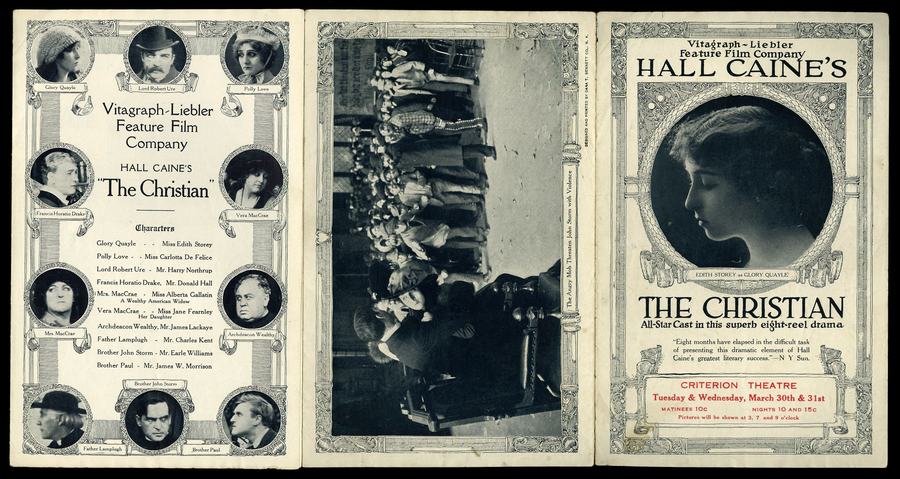
At its heart, "The Christian" presents a compelling dual portrait of individuals navigating vastly different, yet ultimately convergent, paths. On one side stands Glory Quayle, brought to life with captivating vivacity by Jane Fearnley. Glory is no shrinking violet; she is a force of nature, a natural-born mimic whose formidable talent propels her from the tranquil, if restrictive, confines of her pastoral upbringing into the dazzling, yet morally ambiguous, spotlight of the London stage. Her ascent is depicted not merely as a quest for fame, but as an assertion of self, a vibrant explosion of potential against the staid expectations of her origins. Fearnley imbues Glory with a nuanced blend of youthful exuberance, burgeoning ambition, and an underlying moral fortitude that will be tested to its very limits. Her journey is a fascinating exploration of the allure of worldly success and the compromises it often demands, a theme that resonates profoundly even today.
In stark contrast, we encounter John Storm, portrayed with earnest intensity by James Morrison, a man whose spiritual anguish forms the very bedrock of the film's philosophical inquiry. John, Glory's childhood sweetheart, finds himself on a spiritual precipice, convinced that his beloved is irrevocably lost to the seductive siren call of secular ambition. His retreat into the austere solitude of a monastery is a desperate, almost monastic, attempt to excise a love that, ironically, only deepens in his absence. Yet, the human heart, as the narrative eloquently demonstrates, is not so easily quelled. John's subsequent emergence from religious seclusion, not as a cloistered ascetic but as a passionate advocate for the impoverished, a celebrated "slum worker" and unwavering friend to the downtrodden, marks a profound evolution. His commitment to social justice transforms him into a Christ-like figure, a champion of the marginalized, echoing the moral fervor seen in narratives like "Father John; or, The Ragpicker of Paris", where selfless devotion to the less fortunate becomes a central tenet. Morrison's portrayal captures the internal conflict of a man torn between spiritual devotion and earthly attachments, between the sacred and the profane, without ever succumbing to caricature.
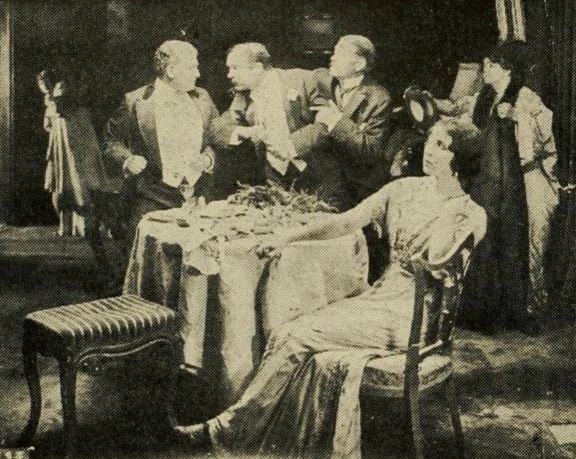
No grand drama is complete without a compelling antagonist, and "The Christian" delivers this in the chilling figure of Lord Robert Ure, embodied with menacing finesse by Donald Hall. Ure is not merely a villain; he is a personification of social depravity, a "social vampire" who preys on innocence and vulnerability with aristocratic impunity. His callous betrayal of Polly Love, Glory's trusting chum, serves as the catalyst that propels the narrative into its most harrowing dimensions. It's a stark reminder of the corrosive power of unchecked privilege and the devastating consequences of moral bankruptcy, themes that resonate with the tragic societal commentaries found in other classic narratives of victimhood and exploitation. The film unflinchingly exposes the hypocrisy of a society that often turns a blind eye to the transgressions of its elite while harshly judging the fallen.
The ensuing confrontation between John Storm's righteous indignation and Lord Robert's cold, calculating self-interest forms the dramatic core of the film's second act. John, armed only with moral conviction, demands that Ure rectify his egregious wrong by marrying Polly, thereby salvaging her honor. Ure's disdainful refusal, driven by his cynical pursuit of a wealthy American heiress, sets the stage for a "terrific clash" – a battle not merely between two men, but between the unyielding force of justice and the entrenched bastions of power. John's audacious act of exposing Lord Robert to the wider public, a powerful blow against a man accustomed to operating in the shadows of his status, is a moment of profound moral courage. Yet, such courage comes at a steep price. Ure's subsequent vow of revenge hangs heavy over the narrative, a dark premonition of the terror to come, and indeed, Polly's tragic demise from shame and a broken heart is the immediate, devastating consequence of his villainy and society's harsh judgment.
Lord Robert's fiendish revenge plot, a masterstroke of malicious manipulation, is arguably the most breathtaking and terrifying segment of "The Christian." He cunningly disseminates the false report that John Storm has prophesied the end of the world on Derby Day, England's most cherished and widely celebrated sporting event. This insidious fabrication taps into the deepest anxieties of the populace, weaponizing fear and ignorance to turn a national hero into a national pariah. The film brilliantly captures the ensuing societal meltdown: John, once revered, becomes an object of widespread hatred, his former friends abandoning him in a tide of public condemnation. The "uneducated and weak" are plunged into mortal terror, their vulnerability exploited by Ure's cruel deception.
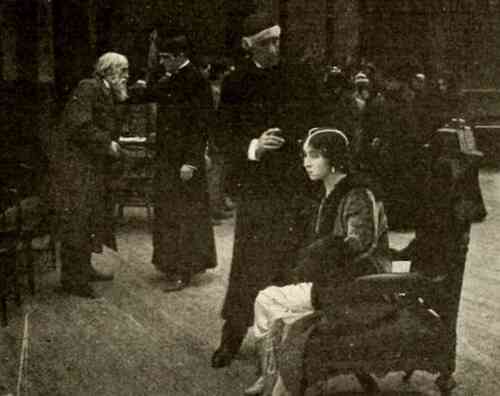
What unfolds on Derby Day is a cinematic spectacle of unparalleled intensity. The narrative vividly portrays the transformation of a joyous national holiday into a day of sheer terror, marked by "thousands and thousands" inciting riots against John. The "widespread and awful panics in the slums" are depicted with a raw, unflinching realism, highlighting the devastating impact of mass hysteria on the most vulnerable segments of society. The film's inclusion of "wonderful scenes of the world-famous Derby Race, with its great horses and its terrific crowds, taken in England especially for these scenes," is not merely an aesthetic flourish; it serves as a powerful juxtaposition. The grandeur and excitement of the race are starkly contrasted with the terrifying descent into mob rule, illustrating how easily order can collapse under the weight of fear and misinformation. These sequences are a testament to the film's ambition and its pioneering spirit in capturing large-scale events, placing it in a lineage of epics that sought to portray grand historical or social moments, much like the ambition seen in "Napoleon" in its scope, though vastly different in subject. John Storm, standing "alone, with all the world against him," becomes a living symbol of the individual crushed by the collective madness, a poignant figure of persecution.
It is in this crucible of chaos that Glory Quayle's true heroism shines brightest. Rushing to John's aid, she confronts the enraged multitudes, her presence a calming balm amidst the storm of hatred. Her ability to quell the "angry hordes" and save John from their vengeful wrath is a magnificent display of courage, demonstrating the profound influence of a singular, steadfast voice against the cacophony of mob fury. Glory's intervention is more than just a physical rescue; it's a symbolic reclamation of rationality and compassion in a world consumed by irrational fear.
However, the torment endured by John has taken a devastating toll. The relentless persecution, the betrayal by society, and the sheer terror of his ordeal have pushed his mind to the brink, leaving him "unbalanced." The film then delves into its most psychologically intense sequence: John, consumed by a desperate, warped desire to protect Glory from suffering a fate akin to Polly Love's, goes to her home with the intention of killing her. This shocking turn reveals the depth of his trauma, twisting his love into a horrifying impulse. It’s a moment that forces the audience to confront the fragility of the human mind under extreme duress, and the destructive potential of even well-intentioned but misguided actions.
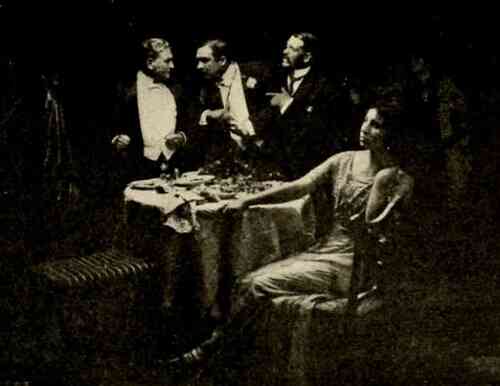
Yet, it is here that Glory rises "supreme," delivering a "magnificent defense" that transcends mere words. Her unwavering faith in John, her profound understanding of his fractured state, and her eloquent articulation of truth manage to pierce through the veil of his madness. She recalls him to his senses, not through force, but through the sheer power of her love and reason. This scene is the emotional and moral apex of the film, a testament to the transformative and healing power of genuine affection and unwavering belief. It's a powerful counterpoint to the earlier mob violence, demonstrating how individual integrity can restore order from chaos.
Beyond saving John from himself, Glory's resolute spirit extends to the public sphere. She becomes instrumental in establishing John's innocence, meticulously dismantling Lord Robert's web of lies and proving his guilt. This act of intellectual and moral clarity is crucial, restoring John's reputation and ensuring that true justice, though delayed, is ultimately served. The exposure of Lord Robert Ure is a satisfying, if somber, resolution to the film's central conflict, reaffirming the narrative's commitment to moral accountability. The film does not shy away from the arduous process of clearing a slandered name, reminding us that truth often requires tenacious advocacy.
In the aftermath of such profound tribulation, John and Glory's love, forged in the crucible of despair and illuminated by mutual resilience, culminates in a powerful union. Glory "accepts John's love" and "joins him for life, be it better or worse," signifying a mature, tested commitment that transcends superficial romance. Their journey, marked by "terror, the deep disappointment, the tribulations, the misunderstandings," ultimately leads them to profound happiness. It's a happiness not born of an absence of struggle, but rather, a happiness earned through enduring adversity together. This ending is not a naive fairytale; it's a profound statement on the strength of human connection and the redemptive power of shared experience. Their love story, in its complexity and ultimate triumph, offers a poignant message of hope, echoing the profound human connections that strive for meaning amidst chaos, a theme also explored in the heart-wrenching narratives like "Manon Lescaut", though with a far more optimistic outcome here.
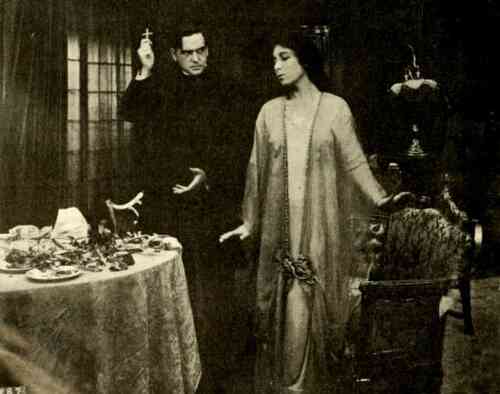
The cast of "The Christian" delivers performances that elevate the material beyond mere melodrama. Jane Fearnley, as Glory Quayle, commands the screen with a compelling blend of vulnerability and iron will. Her transformation from ambitious ingenue to a woman of profound moral courage is utterly convincing, making her the emotional anchor of the narrative. James Morrison, as John Storm, masterfully conveys the internal torment and spiritual conviction of his character, embodying the very essence of a man grappling with faith, love, and societal injustice. His descent into temporary madness is handled with a sensitivity that prevents it from becoming sensationalized, instead highlighting the brutal toll of persecution. Donald Hall's Lord Robert Ure is a chillingly effective antagonist, his suave villainy providing the perfect foil to the protagonists' earnestness. The supporting cast, including Harry Northrup, Alberta Gallatin, and Edward Kimball, contribute significantly to the rich tapestry of characters, each adding depth and texture to the film's expansive world.
From a directorial standpoint, the film exhibits a remarkable grasp of narrative pacing and visual storytelling, especially considering the era of its production. The Derby Day sequences, as previously mentioned, are a particular highlight, showcasing ambitious crowd control and dynamic cinematography that would have been groundbreaking. The contrast between the intimate emotional struggles of Glory and John and the grand, sweeping societal drama is expertly managed, ensuring that the personal stakes are never lost amidst the epic scope. The film's ability to create such widespread panic and then pivot to a deeply personal climax speaks volumes about its narrative sophistication and the skill of its creators. The writers, Hall Caine and Eugene Mullin, adapted Caine's own novel with a clear understanding of its thematic weight, translating its moral complexities into a compelling visual language.
"The Christian" stands as a powerful testament to the enduring human struggle against corruption, injustice, and the fickle nature of public opinion. It is a film that dares to ask difficult questions about faith, responsibility, and the true meaning of love. Its portrayal of mob mentality, the abuse of power, and the resilience of the human spirit remains remarkably relevant, offering a timeless commentary on societal vulnerabilities and individual strength. The film's message — that true happiness is found not in the absence of struggle, but in the unwavering commitment to love and truth through all adversities — resonates long after the final frame. It is a cinematic experience that challenges, inspires, and ultimately, affirms the profound capacity for goodness and redemption that lies within us all, solidifying its place as a compelling drama in the annals of early cinema, perhaps even more impactful than some of its contemporaries in its ambitious social critique.
In an era when cinema was still finding its voice, "The Christian" spoke volumes, delivering a narrative rich in moral complexity and human drama. It’s a compelling argument for the power of individual integrity to stand against the tide of collective delusion, and for the transformative potential of a love that endures beyond superficiality. This film is more than a historical artifact; it is a vibrant, pulsating narrative that continues to provoke thought and stir emotion, reminding us of the timeless battles fought within the human heart and the broader societal landscape. For anyone seeking a drama that combines grand spectacle with intimate psychological depth, "The Christian" offers an unforgettable journey into the very soul of human experience. Its ambitious scope and profound themes make it a significant entry in the cinematic canon, a film that continues to speak to the enduring power of conviction and the ultimate triumph of love against overwhelming odds. The sheer scale of its ambition, particularly in the Derby Day sequences, pushes the boundaries of early filmmaking, demonstrating a foresight into what cinema could achieve as a medium for grand storytelling and social commentary. The film's exploration of public hysteria and the manipulation of truth feels disturbingly prescient, offering a mirror to anxieties that persist in contemporary society. It's a powerful reminder that while technology evolves, the fundamental flaws and strengths of human nature remain constant. The film doesn't just tell a story; it performs an autopsy of societal morality, revealing the delicate balance between order and chaos, and the profound impact of individual choices on the collective consciousness. It serves as a stark warning against the dangers of uncritical acceptance of information and the ease with which fear can be weaponized. Ultimately, "The Christian" is a testament to the idea that even in the darkest of times, the light of truth and unwavering love can prevail, offering a beacon of hope through the tribulations.
Beyond its immediate narrative impact, "The Christian" provides a fascinating glimpse into the social fabric and moral anxieties of its time. The film's depiction of class divides, the vulnerability of the working class, and the unchecked power of the aristocracy offers a rich sociological texture. It grapples with questions of reputation, redemption, and the often-brutal consequences of societal judgment, particularly for women like Polly Love. The spiritual journey of John Storm, from monastic retreat to active social justice, reflects a broader cultural dialogue about the role of faith in a rapidly modernizing world. This isn't merely a period piece; it's a profound commentary on timeless human dilemmas that resonate with audiences across generations. Its exploration of mass psychology, particularly the ease with which a populace can be swayed by misinformation and fear, holds a chilling relevance in our own era of rapid information dissemination. The film challenges viewers to consider their own roles in upholding truth and justice, and the courage required to stand against the tide of popular opinion. It's a masterclass in how early cinema could tackle complex moral and social issues with both grandeur and intimate emotional depth, leaving an indelible mark on its viewers and cementing its legacy as a significant work of art.

IMDb —
1935
Community
Log in to comment.