DbcultAccessing Vault...
6.8/10
Senior Film Conservator
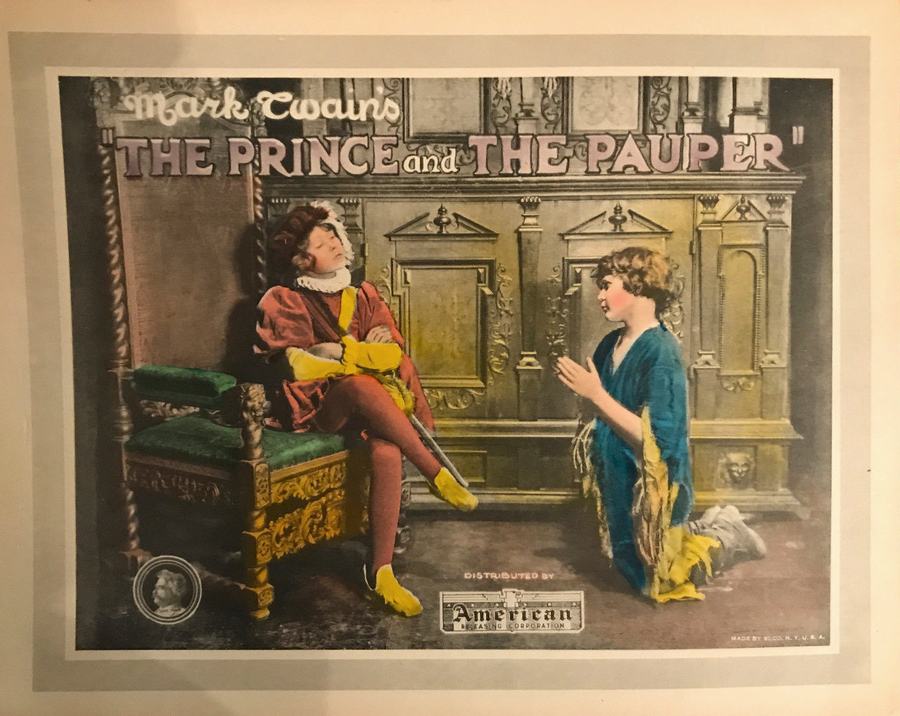
A definitive 6.8/10 rating for a film that redefined the boundaries of cult cinema. The Prince and the Pauper remains a cornerstone of transgressive art.
Before Alexander Korda became the undisputed titan of British cinema, his creative trajectory was forged in the fertile, albeit turbulent, soil of post-WWI Vienna. The 1920 production of The Prince and the Pauper represents a pivotal moment in silent film history, marking a transition from the experimental fervor of early European cinema to the high-gloss historical epics that would eventually define Korda's career. Collaborating with the erudite Lajos Biró, Korda didn't merely adapt Mark Twain; he deconstructed the American satirist’s work through a distinctly European, almost expressionistic lens. The Sascha-Film studios provided a playground for Korda to exercise his burgeoning penchant for grandiosity, utilizing sets that felt lived-in rather than merely constructed.
In this era, cinema was still grappling with its own visual vocabulary. While American films like The Law of the North were refining the rugged aesthetics of the frontier, Korda was interested in the psychological architecture of the Old World. His London is a character in itself—a labyrinth of shadows and jagged silhouettes that reflect the internal turmoil of its displaced protagonists. The film avoids the simplistic moralizing often found in contemporary works like Love or Justice, opting instead for a nuanced exploration of how environment dictates character. The stark contrast between the velvet-draped palace and the mud-caked alleyways serves as a visual shorthand for the socioeconomic disparity that Twain so vehemently critiqued.
The success of any adaptation of this tale rests squarely on the shoulders of the actor portraying both Tom Canty and Prince Edward. Tibor Lubinszky, a child actor of remarkable expressive range, delivers a performance that remains startlingly modern. In an age where silent acting often drifted into the realm of the histrionic, Lubinszky maintains a disciplined restraint. He distinguishes the two boys not through broad gestures, but through subtle shifts in posture and the haunted quality of his gaze. When he is the Prince, there is a brittle arrogance that slowly dissolves into a terrified vulnerability; as the Pauper, he conveys a wide-eyed bewilderment that eventually hardens into a dignified resilience.
"Identity is not a birthright but a costume, and Korda captures the moment the fabric begins to itch."
The technical achievement of having Lubinszky share the frame with himself cannot be overstated for 1920. The split-screen work and double exposures are handled with a precision that rivals the trick photography of the time, creating a seamless illusion of two distinct entities. This visual doubling reinforces the film's central theme: the arbitrary nature of social standing. Unlike the melodrama found in A Woman Alone, where the protagonist's plight is often tied to singular tragic events, The Prince and the Pauper suggests that the tragedy is systemic. Lubinszky’s dual presence is a constant reminder that only a change of clothes separates the ruler from the ruled.
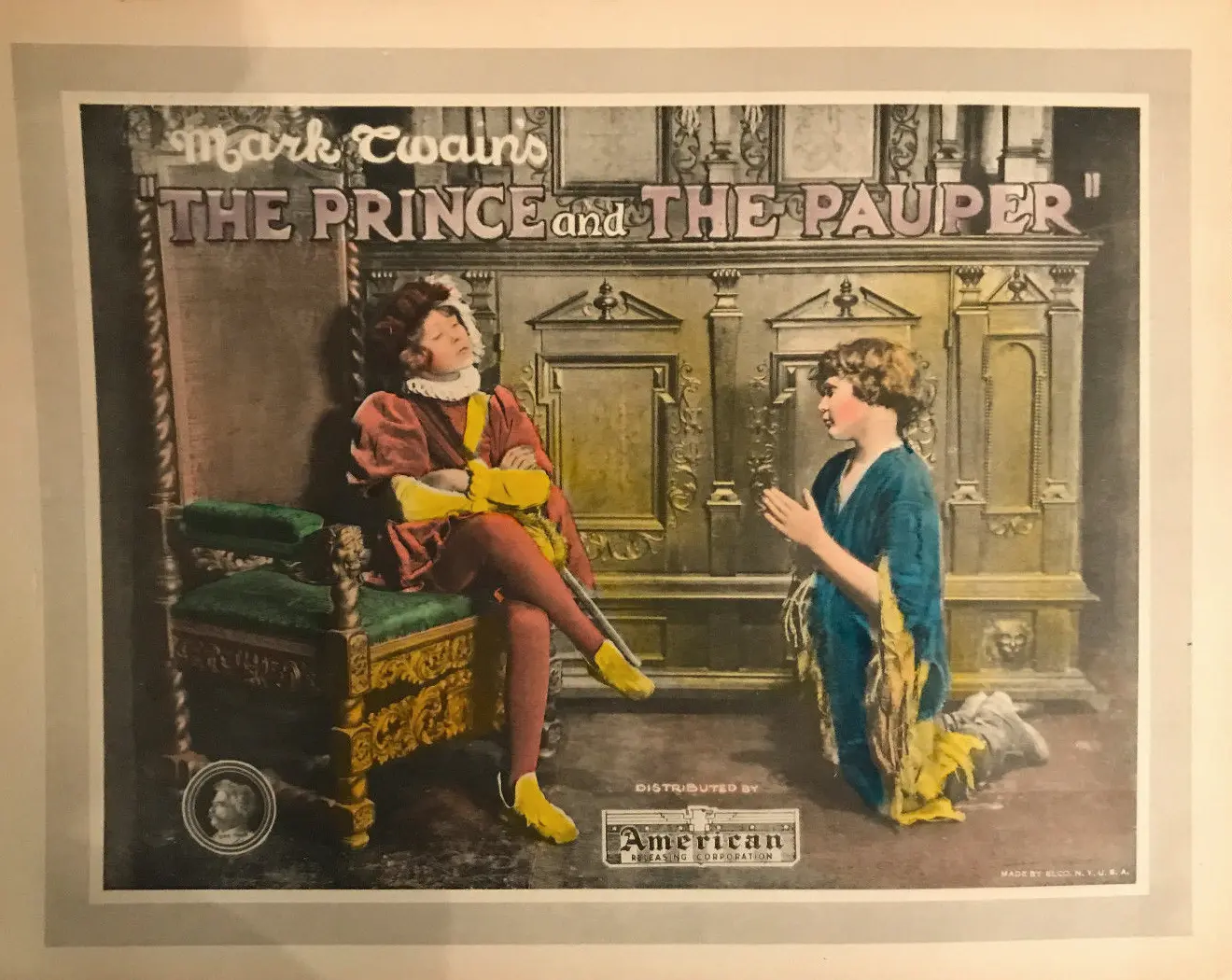
The cinematography in this 1920 gem is a testament to the ingenuity of the silent era. The lighting, often harsh and directional, creates a world of deep blacks and brilliant whites, emphasizing the moral and social dichotomies at play. The camera work is surprisingly dynamic, moving through the crowded marketplaces with a sense of urgency that predates the fluid camera movements of the late 1920s. Korda utilizes high-angle shots to diminish the pauper in the palace and low-angle shots to grant the prince a lingering, albeit misplaced, majesty in the slums. This visual hierarchy is far more sophisticated than the static framing seen in many 1910s productions like An International Marriage.
The art direction deserves its own monograph. The Tudor court is depicted with a stifling opulence—every frame is packed with ornate tapestries, heavy furniture, and an army of courtiers whose very presence feels like a cage. In contrast, the scenes in Offal Court are characterized by a claustrophobic emptiness. There is a tactile quality to the sets; you can almost smell the damp stone and the rot. This commitment to verisimilitude elevates the film from a mere fable to a gritty social commentary, echoing the thematic weight of films like Birth Control, which dared to look at the harsher realities of the human condition.
While Lubinszky is the heart of the film, the supporting cast provides the necessary gravity. Franz Herterich’s Henry VIII is a towering, grotesque figure of fading power, embodying the end of an era. His performance captures the terrifying instability of a monarch who is both a father and a tyrant. Adolf Weisse and Lilly Lubin round out a cast that understands the operatic requirements of the medium. There is a theatricality here, yes, but it is a theatricality born of the grand tradition of European stagecraft, filtered through the lens of a camera that misses no nuance.
The interactions between the characters often mirror the suspenseful dynamics found in mystery-thrillers like Seven Keys to Baldpate, where identity and deception are the primary currency. However, Korda’s film is less interested in the 'who-done-it' and more in the 'what-does-it-mean.' When the Prince is beaten by Tom's father, the violence is not just physical; it is a desecration of the divine right of kings. The shock on Lubinszky’s face is not just pain—it is the realization that his status is a fragile illusion that doesn't protect him once the silk is gone.
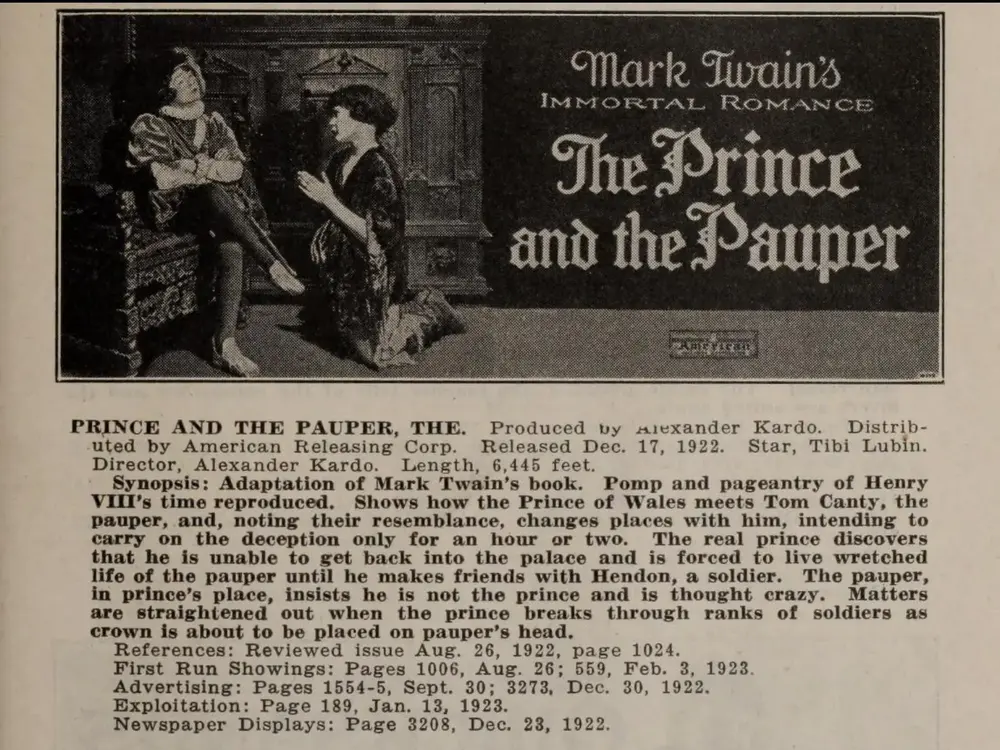
To watch The Prince and the Pauper in 1920 was to watch a world in flux. The Austro-Hungarian Empire had collapsed, and the notions of royalty and class were being radically redefined across Europe. Korda, a man who would later be knighted in his adopted home of England, was acutely aware of these shifts. The film reflects a skepticism toward inherited power that feels deeply contemporary to its post-war audience. It shares a certain thematic DNA with Maternità and La lussuria, films that probed the moral rot beneath the surface of polite society.
The scenes of the Prince witnessing the branding of 'criminals' and the burning of 'heretics' are played with a grim realism. These are not just plot points; they are an indictment of a legal system that punishes the poor for the crime of being poor. This subtext makes the film much more than a children’s story. It is a precursor to the socially conscious cinema that would emerge in the decades to follow. While films like Taming the West or Elmo the Fearless focused on individual heroism and external conflict, Korda focuses on the internal awakening of a soul forced to see the world as it truly is.
Lajos Biró’s screenplay is a marvel of condensation. Twain’s sprawling novel is distilled into a series of punchy, visually driven sequences that never lose momentum. The pacing is brisk, avoiding the languid stretches that often plague silent epics. Each scene serves a dual purpose: advancing the plot and deepening the thematic contrast. The editing, likely overseen by Korda with his characteristic precision, uses cross-cutting to emphasize the parallel lives of the two boys. As Tom struggles with a royal banquet, we cut to Edward struggling to find a scrap of bread. This rhythmic juxtaposition creates a sense of cosmic irony that keeps the viewer engaged.
In terms of genre, the film occasionally flirts with the adventure tropes seen in Daring Hearts or the grit of When a Man Sees Red, particularly in the sequences involving Miles Hendon. Hendon serves as the Prince’s protector, a figure of noble intent in a world of chaos. Their relationship provides the film with its emotional anchor, a rare moment of genuine human connection in a narrative defined by artifice and role-playing. It is through Hendon that the Prince learns that loyalty is earned, not commanded—a lesson that Tom Canty simultaneously learns in the palace through his interactions with the grieving court.
Why does this version of The Prince and the Pauper still resonate over a century later? It is partly due to Korda’s refusal to sentimentalize the material. There is a hardness to this film, a recognition of the cruelty of the world that later, more polished versions often gloss over. It captures the 'uncanny valley' of silent cinema—that strange, dreamlike quality where the lack of sound amplifies the visual metaphors. It doesn't need the technicolor splash of later adaptations to convey the richness of the Tudor court or the filth of the London streets; the silver-nitrate shadows do that far more effectively.
When compared to other films of the era, such as Rosie O'Grady or Fireman, Save My Gal!, Korda’s work stands out for its intellectual ambition. He wasn't just looking to entertain; he was looking to create a cinematic language that could handle the complexity of literature. The final coronation scene is a masterclass in tension and release. The stakes are not just the throne, but the very soul of the nation. As the crown descends, the film asks us: who is more worthy? The one born to it, or the one who has seen the suffering of those it rules?
In the grand tapestry of Alexander Korda's filmography, The Prince and the Pauper is the thread that connects his Hungarian roots to his eventual status as a global cinematic icon. It is a work of profound empathy and technical brilliance, a silent scream against the walls we build between ourselves. Whether you are a scholar of silent film or a casual viewer, this 1920 masterpiece offers a viewing experience that is as intellectually stimulating as it is visually arresting. It remains a definitive take on Twain’s classic, proving that even without words, the story of two boys and a crown can speak volumes about the human condition.
Reviewer Note: This analysis considers the restored versions of the film which highlight the intricate set designs of the Sascha-Film era. For those interested in the evolution of period dramas, comparing this to The Great Divide offers fascinating insights into how different cultures interpreted the concept of social barriers during the 1920s.
IMDb —
1921
Community
Log in to comment.