DbcultAccessing Vault...
6.7/10
Senior Film Conservator
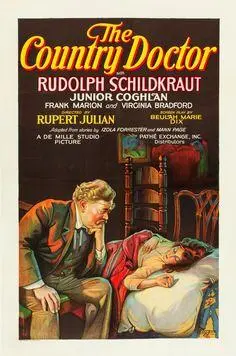
A definitive 6.7/10 rating for a film that redefined the boundaries of cult cinema. The Country Doctor remains a cornerstone of transgressive art.
Is this silent era relic worth your time today? Short answer: yes, but only if you appreciate the slow-burn emotional stakes of early American melodrama. This film is for the patient viewer who finds beauty in the nuances of performance and the historical evolution of the 'small-town hero' trope; it is decidedly not for those who require the kinetic energy of modern medical procedurals.
The Country Doctor (1927) is more than a simple narrative about a physician; it is a study of the fragility of social standing in a closed ecosystem. While many films of this era relied on slapstick or grand spectacles, this production leans into the quiet, often agonizing decisions that define a life of service. It captures a specific moment in cinematic history where the camera began to look deeper into the internal lives of its subjects.
1) This film works because it treats the doctor's dilemma with a grounded gravity that avoids the cartoonish villainy common in silent-era antagonists.
2) This film fails because the middle act suffers from repetitive pacing that threatens to stall the narrative momentum.
3) You should watch it if you have an interest in the history of 'The Doctor' as a cinematic archetype or if you enjoy character-driven silent dramas.
The narrative pivot occurs when our protagonist decides to help a young couple elope. In modern cinema, this might be seen as a minor plot point, but in the context of 1927, it is a radical act of rebellion against the patriarchal order. The boy's father isn't just an angry parent; he represents the financial and social bedrock of the community. When he turns against the doctor, the film effectively illustrates how quickly a community can turn on its most vital members.
Compare this to the tension found in Shame (1921). While that film deals with the weight of secrets, The Country Doctor deals with the weight of public perception. The doctor's struggle is visible and externalized, yet it feels deeply personal because of Rudolph Schildkraut’s nuanced performance. He doesn't play a saint; he plays a man who is tired but refuses to be broken.
Rudolph Schildkraut brings a level of gravitas to the titular role that keeps the film from drifting into sentimentality. His face is a map of rural hardship, and his eyes convey a weariness that dialogue titles could never fully capture. In one specific scene, where he sits alone in his office contemplating the loss of his practice, the stillness is deafening. It is a masterclass in silent acting that relies on restraint rather than grand gestures.
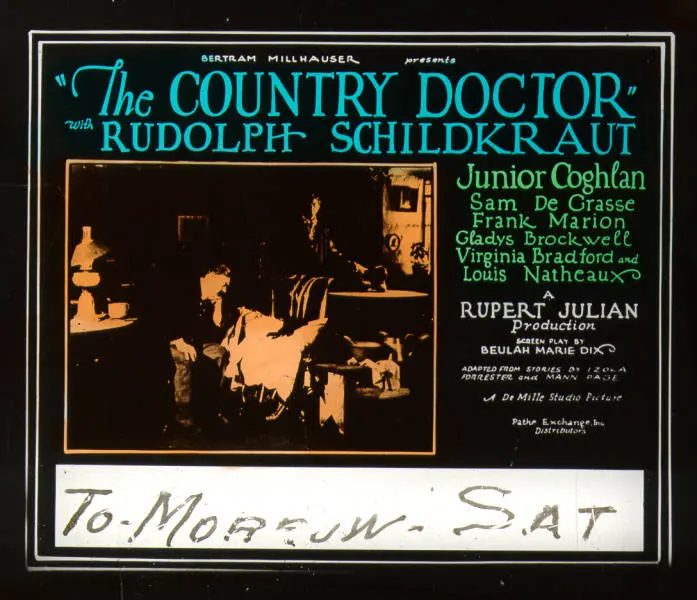
The supporting cast, including Virginia Bradford and Frank Marion as the young lovers, provide the necessary spark of hope that justifies the doctor's risk. However, it is Sam De Grasse, playing the hostile father, who provides the necessary friction. His performance is cold and calculated, representing a rigid old world that is slowly being challenged by the empathy the doctor represents. This isn't the broad, mustache-twirling villainy of The Hick; it is the mundane, dangerous power of a man who believes he is right.
Visually, the film utilizes the pastoral setting to enhance the isolation of the characters. The cinematography by Christopher Beery (and others) captures the vastness of the countryside, which serves as a stark contrast to the claustrophobic social pressure of the town. The use of natural light in the outdoor elopement scenes creates a sense of fleeting freedom that is quickly extinguished when the characters return to the domestic spaces controlled by the father.
The pacing is where the film shows its age. While the first act sets the stakes beautifully, the second act tends to meander through several subplots involving the townspeople. It lacks the tight, focused energy found in The Night Cry. However, the third act recovers by centering the focus back on the doctor’s ultimate sacrifice. The resolution is earned, even if the road to get there is occasionally bumpy.
Yes, The Country Doctor is worth watching for anyone interested in the roots of the American social drama. It provides a fascinating look at how early cinema handled the conflict between individual morality and community expectations. While it may not have the high-octane thrills of later silent era hits, its emotional resonance remains surprisingly intact for a film nearly a century old.
One unconventional observation is how the film treats the practice of medicine itself. It isn't just about healing bodies; it's about healing the social fabric. The doctor is a secular priest. When he is threatened with the loss of his practice, it’s not just a loss of income—it’s the removal of the town’s moral compass. This elevates the stakes from a personal tragedy to a communal one.
The film also manages to avoid the saccharine traps of later 'country doctor' stories. It is surprisingly cynical about the townspeople’s loyalty. They are quick to forget the lives he saved when the wind of power shifts. It’s a brutal, honest look at human nature that feels more modern than many of its contemporaries like Waifs or Gossip.
The Country Doctor is a poignant, if slightly uneven, piece of silent cinema. It works. But it’s flawed. The strength of the central performance and the timelessness of its moral conflict make it a worthy watch for the dedicated cinephile. It stands as a testament to the power of quiet storytelling in an era often remembered for its loudness. While it doesn't reach the heights of the era's greatest masterpieces, it remains a solid, respectable drama that deserves more than to be a footnote in film history. If you are looking for a film that explores the soul of small-town America, this is a essential viewing.
IMDb 5.2
1932
Community
Log in to comment.