DbcultAccessing Vault...
Cult Review
Senior Film Conservator
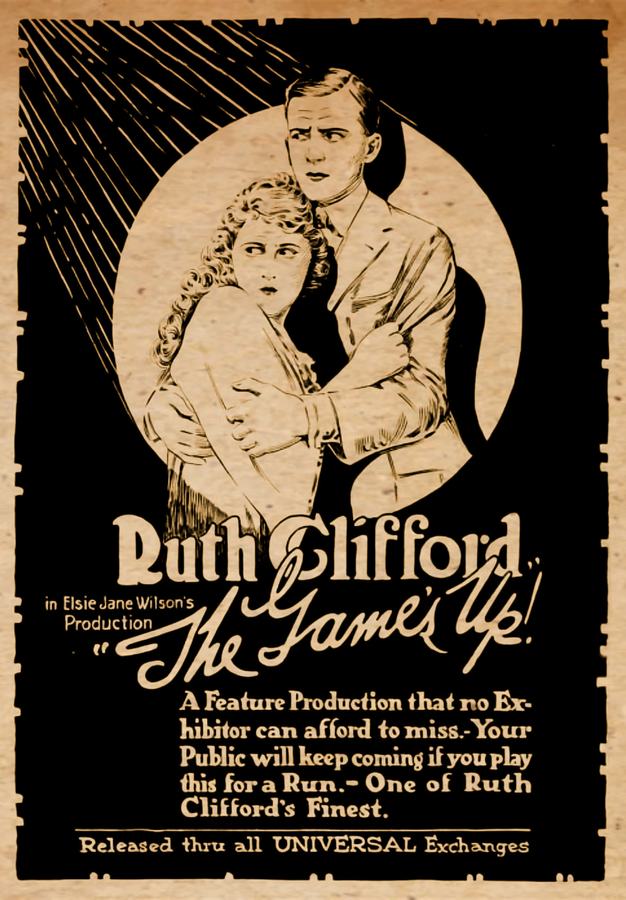
Stepping back into the nascent days of cinema, when storytelling relied solely on expressive gesture, evocative intertitles, and the sheer charisma of its performers, we encounter The Game's Up (1918). This silent-era romantic comedy, penned by Catherine Carr and Gladys Johnson, emerges as a delightful testament to the enduring power of a well-crafted farce, proving that laughter and love transcend the need for spoken dialogue. It's a film that, despite its century-old vintage, retains a sparkling effervescence, inviting modern audiences to revel in its intricate web of deception and burgeoning affection. It’s a compelling reminder that the foundations of cinematic comedy were laid with ingenuity and a profound understanding of human nature, even without the benefit of a synchronized soundtrack.
At the heart of The Game's Up lies Ruth Elliott, portrayed with a compelling blend of vulnerability and determined ingenuity by the captivating Ruth Clifford. Ruth, a struggling artist, finds herself entangled in a predicament of her own making: a fabricated narrative of artistic triumph conveyed to her dear Eastern friend, Mildred Colburn (Mildred Lee). The imminent arrival of Mildred in the West, en route to Honolulu, precipitates a scramble for verisimilitude. The solution? A temporary, five-hour charade, employing Peter Neyland (Albert Ray) as a hired chauffeur. Peter, unbeknownst to Ruth, is a scion of significant means, accepting the role purely for the sheer sport of it. This initial deception, a fleeting masquerade designed to maintain appearances during a brief transit from train station to tea house, is the spark that ignites a week-long comedic inferno.
The wrench in Ruth's meticulously planned, albeit short-lived, theatrical production arrives in the formidable shape of Mildred's chaperon, Mrs. Peabody Jones (Margaret Cullington). Her announcement of a week-long delay due to a postponed sailing to Honolulu shatters Ruth's fragile illusion and plunges her into an escalating comedic crisis. The need to sustain the pretense of success, now for an entire week, forces Ruth into increasingly desperate, and often hilarious, measures. Peter, observing Ruth's mounting distress and clearly enamored by her spirited struggle, steps in with a surprisingly generous, yet still anonymous, gesture: he offers his uncle's opulent apartment as a residence for the duration of Mildred's stay. This act, while solving Ruth's immediate housing dilemma, only serves to deepen the layers of mistaken identity and social pretense, transforming a simple lie into a sprawling, delightful farce. The tension between Ruth's frantic efforts to maintain her façade and Peter's quiet amusement at the unfolding spectacle provides a wonderfully engaging dynamic, hinting at the genuine connection beneath the surface of their elaborate charade.
The ensemble cast of The Game's Up brings this intricate narrative to vibrant life. Ruth Clifford, as Ruth Elliott, is an absolute revelation. Her performance is a masterclass in silent film acting, conveying a vast spectrum of emotions—from wide-eyed panic to resourceful determination, and ultimately, tender affection—with exquisite subtlety and impactful physicality. She navigates the emotional tightrope of her character's predicament with grace, making Ruth's struggle both relatable and endearing. It's a performance that holds the film's emotional core, allowing the audience to root for her despite her initial deception, a testament to Clifford's remarkable ability to infuse her character with humanity.
Albert Ray, as the dashing Peter Neyland, perfectly complements Clifford's energy. Ray imbues Peter with an aristocratic charm and a mischievous glint in his eye, making his decision to play along with Ruth's charade entirely believable. His transformation from playful observer to genuine suitor is handled with a delicate touch, his expressions and gestures conveying a growing affection that transcends the comedic chaos. The chemistry between Clifford and Ray is palpable, a crucial element that elevates the film beyond mere slapstick into genuine romantic comedy territory. Their interactions are a joy to behold, often communicated through stolen glances and subtle smiles that speak volumes without a single intertitle. Ray’s portrayal masterfully balances Peter’s privileged background with a down-to-earth curiosity, making him an ideal romantic lead who is both aspirational and approachable.
The supporting players are equally essential to the film's success. Margaret Cullington's Mrs. Peabody Jones is a delightful caricature of the demanding socialite, her imperious demeanor and insatiable desire for celebrity encounters providing much of the film's escalating humor. Her presence is a constant catalyst for Ruth's and Peter's increasingly elaborate schemes, a force of nature demanding satisfaction. Mildred Lee, as Mildred Colburn, is charmingly naive, a perfect foil for Ruth's anxieties and Peter's machinations, her innocence making the deceptions all the more precarious. The arrival of Peter's valet, McQuade (Harry Holden), and his friend, Ted Latham (Clifford Grey), adds another layer of comedic brilliance. Holden's McQuade, in particular, with his loyal but often bewildered assistance in the celebrity impersonation scheme, is a standout, providing moments of genuine hilarity as he awkwardly attempts to embody various luminaries. John Cossar and other uncredited cast members contribute to the rich tapestry of the film's world, each playing their part in the unfolding drama and comedy, creating a vibrant, believable backdrop for the central farce.
Catherine Carr and Gladys Johnson's screenplay for The Game's Up is a finely tuned machine of comedic timing and escalating absurdity. The plot unfolds with a relentless, yet never overwhelming, pace, each new development building logically upon the last, pushing the characters deeper into their self-made quagmire. The genius lies in how the initial, simple lie snowballs into a complex, multi-layered deception involving multiple characters and increasingly outlandish scenarios. The demand from Mrs. Jones to meet celebrities is a prime example, transforming Peter's elegant apartment into a stage for improvised theatrics, with McQuade and Ted Latham reluctantly stepping into roles far grander than their station. The sheer awkwardness of McQuade attempting to mimic a famous artist or Ted feigning the gravitas of a playwright is a source of continuous, delightful humor, teetering on the brink of exposure. This situation, leading to the mistaken arrest of Peter's actual uncle and butler, showcases a brilliant understanding of comedic causality, where one small deception leads to unforeseen, uproarious consequences.
The film's visual gags are executed with precision, relying on exaggerated expressions, quick cuts, and clever staging to convey humor. Silent films, by their very nature, necessitated a heightened visual language, and The Game's Up excels in this regard. The panic on Ruth's face as her world threatens to collapse, the knowing smirk on Peter's as he orchestrates solutions, the bewildered expressions of the "impersonated" celebrities – all contribute to a rich comedic tapestry. The director, Albert Ray (who also stars), demonstrates a keen eye for framing and movement, ensuring that even without dialogue, the audience is fully immersed in the unfolding farce. The use of intertitles is judicious, providing necessary exposition and dialogue without interrupting the flow of visual storytelling. This delicate balance is a hallmark of effective silent cinema, and here it is masterfully achieved, demonstrating a sophisticated understanding of how to communicate complex narrative and emotional beats through purely visual means.

Beyond the comedic elements, The Game's Up offers a fascinating window into the cinematic techniques and narrative conventions of the late 1910s. The cinematography, while perhaps rudimentary by today's standards, is effective in establishing mood and advancing the plot. Close-ups are used sparingly but powerfully to emphasize emotional reactions, drawing the audience into the characters' inner worlds. Wide shots effectively convey the grandeur of Peter's uncle's apartment and the various social settings, adding to the sense of scope and scale. The film's aesthetic, with its reliance on natural light and practical sets, grounds the fantastical elements of the plot in a tangible reality, making the stakes feel more immediate despite the comedic tone.
The performances, too, are emblematic of the era's acting styles. While often perceived as overtly theatrical, silent film acting required a nuanced understanding of gesture, posture, and facial expression to convey complex emotions without dialogue. Ruth Clifford and Albert Ray, in particular, demonstrate an exceptional command of this craft. Their ability to communicate affection, amusement, exasperation, and tenderness through subtle shifts in expression or a meaningful glance is truly remarkable. This is a film that rewards attentive viewing, allowing the audience to appreciate the artistry involved in communicating so much with so little. Compared to the more overtly dramatic or melodramatic performances seen in films like The Heart of Maryland or even the intense character studies of Carmen, The Game's Up stands out for its lighter, more agile touch, proving that silent cinema was adept at a wide range of genres and emotional registers. The subtle interplay between Ruth and Peter, especially as Peter's true feelings for Ruth begin to emerge, is a masterclass in non-verbal romantic tension.
The collaborative effort of writers Catherine Carr and Gladys Johnson is evident in the film's tightly constructed plot. They manage to juggle multiple narrative threads – Ruth's initial lie, Peter's secret identity, Mrs. Jones's escalating demands, the burgeoning romances – with remarkable dexterity. The story never feels convoluted, despite its intricate setup; instead, it feels like a meticulously choreographed dance of mistaken identities and romantic misdirection. The character arcs, though subtle, are satisfying. Ruth learns to embrace honesty, Peter finds genuine purpose beyond a lark, and both Mildred and Ted discover love amidst the chaos. The resolution, with its charming double wedding, feels earned, a natural culmination of the humorous entanglements. The script ensures that every comedic beat lands, and every romantic glance carries weight, making the journey from pretense to genuine affection utterly compelling.
Albert Ray's direction is similarly understated yet effective. He maintains a consistent tone throughout, balancing the farcical elements with moments of genuine emotional resonance. His experience as an actor likely informed his ability to elicit strong performances from his cast, particularly Ruth Clifford, who carries much of the film's emotional weight with grace and humor. The rhythm of the film, from the quick succession of comedic events to the more tender romantic interludes, is expertly managed, ensuring the audience remains engaged without feeling rushed. While not as overtly experimental as some of the more avant-garde silent films of the era, Ray's direction serves the story perfectly, ensuring clarity and engagement without unnecessary flourish. It's a testament to solid, classical filmmaking principles that stand the test of time, much like the enduring appeal of clever plotting found in films such as A London Flat Mystery, though in a vastly different genre. The skill in crafting such a complex yet coherent narrative is truly commendable, marking it as a significant achievement in early comedic cinema.
What truly makes The Game's Up resonate even today is its timeless exploration of human foibles: the desire for social acceptance, the thrill of deception, and the unpredictable nature of love. The film gently satirizes social pretensions and the superficiality of celebrity culture, themes that remain remarkably relevant in any era. Ruth's desperate need to appear successful, Peter's playful disregard for his own status, and Mrs. Jones's relentless pursuit of "important" people all speak to universal aspects of human behavior. The film's commentary, while lighthearted, offers a subtle critique of societal pressures to maintain appearances, a struggle that feels as contemporary now as it did a century ago.
Moreover, the film's central romantic arcs are genuinely heartwarming. The way Peter falls for Ruth, not despite her predicament but perhaps because of her spirited attempts to navigate it, is genuinely charming. Their relationship develops through shared secrets and mutual support, forging a bond that feels authentic amidst the artificiality. The secondary romance between Ted and Mildred, though less developed, adds a sweet parallel, reinforcing the film's overarching theme that authenticity, even if discovered through a labyrinth of lies, ultimately leads to happiness. This blend of lighthearted social critique and sincere romantic development ensures the film's lasting appeal. It demonstrates that silent cinema, far from being a relic, possesses a universal language capable of eliciting laughter, empathy, and joy across generations. Its charm is akin to the delicate balance of intrigue and sentiment found in films like The Key to Yesterday, albeit with a more pronounced comedic bent, and offers a refreshing contrast to the more serious examinations of social standing found in works like The Social Pirates.
In conclusion, The Game's Up is far more than a historical curiosity; it is a vibrant, engaging, and genuinely funny silent film that deserves a wider audience. Its clever plot, brought to life by outstanding performances from Ruth Clifford and Albert Ray, coupled with the astute direction of Ray himself, makes for a thoroughly enjoyable cinematic experience. It reminds us of the ingenuity and artistry that defined early filmmaking, and how effectively stories could be told without the aid of spoken dialogue. For anyone interested in the origins of romantic comedy, or simply in discovering a charming, well-crafted silent film, The Game's Up is an absolute must-see. It's a testament to the fact that some games, even when they involve a little deception, can lead to the most delightful outcomes. The film's enduring appeal lies in its ability to transport us to a simpler time, yet engage us with themes that are eternally complex and relatable. It's a joyful romp that proves that the foundations of cinematic storytelling were, even in their infancy, built on solid gold.
The intricate dance of mistaken identities and social climbing here is handled with a light touch that contrasts sharply with the more overt social commentary of films like Fine Feathers, which delves into the darker consequences of greed. Instead, The Game's Up chooses to celebrate the human capacity for invention, even if that invention starts with a lie, and ultimately, the triumph of genuine emotion over superficial facades. It's a delightful cinematic confection, perfectly balanced between humor and heart, making it a compelling watch for both silent film aficionados and newcomers alike. Its brilliance shines through its clever writing and the magnetic performances of its lead actors, ensuring its place as a cherished example of early romantic comedy that continues to charm and entertain a century later.
IMDb 6.8
1928
Community
Log in to comment.