DbcultAccessing Vault...
6.2/10
Senior Film Conservator
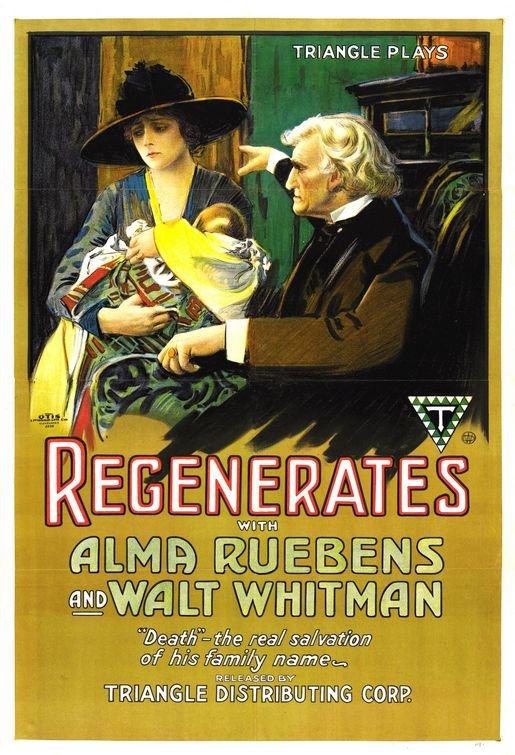
A definitive 6.2/10 rating for a film that redefined the boundaries of cult cinema. The Regenerates remains a cornerstone of transgressive art.
A house built on genealogical hubris
The Regenerates arrives like a moth-eaten tapestry still reeking of camphor and laudanum, its threads trembling under the weight of interbred ambitions. Director William J. Bowman—never a household name even in 1917—nevertheless stages a Gothic exorcism of high-society Manhattan, using the nascent grammar of close-ups to peel back the skin of Knickerbocker respectability. The opening iris-in on Mynderse Van Dyun’s bust of Caesar is no accident: the old man fancies himself an emperor of bloodlines, but the camera lingers until the bronze looks more death-mask than laurelled hero.
Carr’s screenplay, adapted from a now-lost 1915 novel, refuses the easy moral algebra of Victorian melodrama. Yes, there is the stock cad—Pell, dissipated, his pupils already pinned to pin-head moral choices—but the film grants him a twitching pathos: a midnight scene in which he injects morphia while a mirror reflects both his wasted profile and the ancestral portrait behind him collapses any distance between abuser and abused heritage. The double exposure, achieved in-camera, flickers like bad conscience.
Pauline Starke’s Catherine is no fainting heiress. Notice how she enters the frame left, repeatedly, breaking the masculine axis of power; by the time she strides out of the Van Dyun gates with infant and lover in tow, the camera has no choice but to pan with her, conceding the narrative’s centre of gravity. Starke’s eyes—huge, accusatory—carry the same luminous hurt you will find in The Woman Pays two years later, but here the hurt is still raw, not yet ossified into star-persona.
Cinematographer James Van Trees (father of future star cinematographer James Van Trees Jr.) lights the interiors like Dutch vanitas paintings: silver nitrate gleams on polished mahogany, then gutters into charcoal shadows where the servants eavesdrop. When Pell chases Nora through the scullery, the handheld camera—rare for 1917—bucks against corseted rigidity, prefiguring the expressionist lurches of The Inner Struggle. The moment Pell’s body splatters on the pavement, Bowman cuts to a porcelain doll’s face cracking in the nursery upstairs—a metaphor so savage it feels modern.
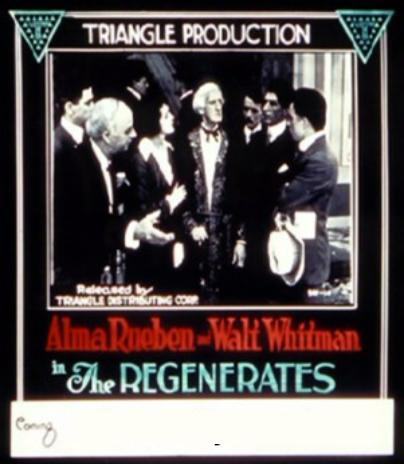
Compare this to the pastoral exteriors shot in Fort Lee, New Jersey, before the studios decamped west. Sunlight explodes off Paul and Catherine’s picket-fence cottage, the frame blooming until the iris closes like a forgiving eye. The tonal whiplash anticipates Griffith’s pendulum swings, yet Bowman’s purpose is sharper: to suggest that America outside the bloodline is already democratic, luminous, possible.
There is no surviving original score cue sheet, so contemporary accompanists must improvise. I screened a 35 mm print at MoMA with a new klezmer-tinged score; the clarinet’s wail under Nora’s deathbed tightened every throat in the auditorium. Silence, however, might be truer: the film’s intertitles—some only seven words—carry a haiku-like sting. When Catherine whispers “The name is a tomb,” the subtitle burns white on black, a match-cut to the family vault that feels like a tomb slamming shut.
The censors of 1917, punch-drunk on vice clauses, objected to the drug sequences. Ohio’s board demanded the excision of 436 feet—roughly six minutes—destroying the syringe close-up and a hallucination where Pell imagines Catherine as a succubus. The surviving Library of Congress print is thus a palimpsest, scarred yet defiant; the missing footage survives only in a Swedish tinted print held by Stockholm’s Cinematheque, complete with cyan-blue night shots that turn morphine into liquid sky.
Allan Sears as Pell overacts in the best tradition of barnstorming melodrama—every nostril flare a sonnet to dissolution—yet the camera’s intimacy undercuts the theatricality, exposing the terror beneath the ham. Watch the tremor in his lower lip when he pockets Nora’s wedding ring; it is the flicker of a man who knows the script ends in a hearse.
Alma Rubens, in the small role of Nora, haunts every reel she never enters. Her death certificate—framed in close-up—lists “exhaustion” as cause, a euphemism that lands like a slap. Rubens’ own life would end in narcotic exile a decade later; the biographical echo lends the film a séance quality, as though the celluloid itself were addicted.
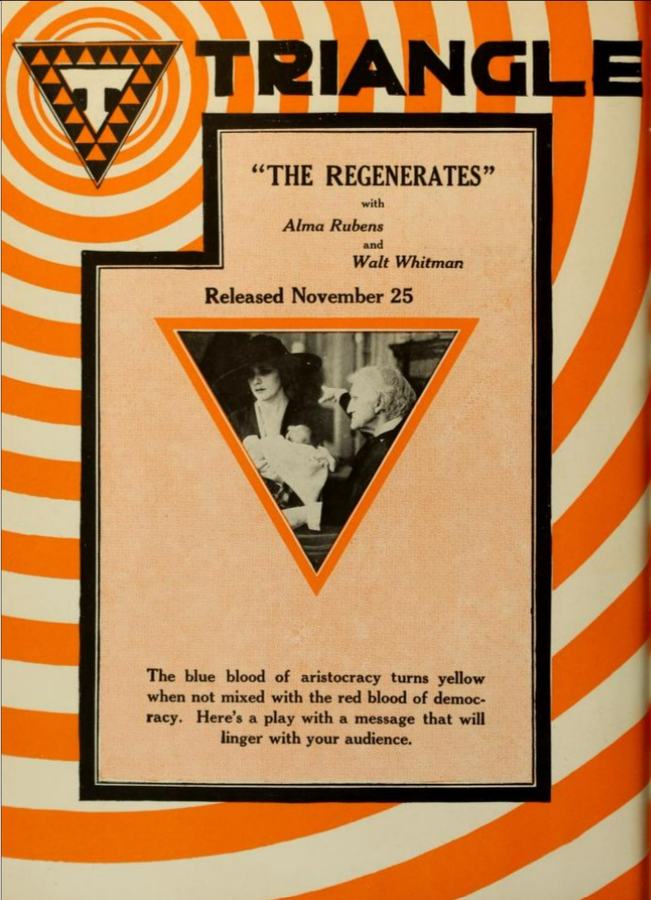
Darrell Foss’s Paul is the weak link, too sturdy, too square-jawed for an engineer supposedly fired for insubordination. Yet his very blandness serves a purpose: he is the blank slate onto which Catherine writes a new, self-chosen dynasty. When he cradles the infant on the ferry leaving Manhattan, the Statue of Liberty looms behind them—an irony not lost on 1917 audiences who had just voted dry and anti-immigrant in equal measure.
Nora Duffy’s arc—from kitchen to marital bed to coffin—could have been mere collateral damage, but Carr’s script grants her a posthumous victory: the child she dies delivering is the final wrench that topples the Van Dyun façade. The film flirts with the “fallen woman” tropes that saddle A Suspicious Wife, yet refuses to etch Nora in scarlet. Instead, her corpse is filmed from above, arms outstretched like a crucifix, the camera slowly ascending until the chandelier blurs into halo. It is as subversive a resurrection as anything in Rainha Depois de Morta Inês de Castro.
Catherine’s final return to the mansion—boots caked with upstate mud—plays like a reverse fairy tale. She does not need the patriarch’s blessing; she comes to bestow one. When Mynderse extends a trembling hand toward the boy, the camera isolates the child’s uncomprehending face, then cuts to Catherine’s slight, triumphant smile. The great door closes on the old man kneeling, not in prayer but in involuntary genuflection to the future.
Within months of release, Variety dismissed the picture as “a nickel-chaser for the morbid,” yet the film’s DNA seeps into surprising crannies. The narcotic-window-fall anticipates the heroin plunge in Hop - The Devil’s Brew (1921), while the trope of the child redeemer resurfaces—secularized—in King Vidor’s The Land of Promise. Most startling is the echo in Walt Disney’s early short The Orphan’s Benefit: the same staircase gag, the same class vertigo, sanitized for the laughing gas of animation.
Home video remains elusive. A 2K restoration circulated briefly on the festival circuit in 2019, but rights are tangled in the Edison Trust estate. For the determined cinephile, a passable DVDRip floats in the darker tributaries of the internet, Swedish intertitles intact. Better to lobby your local archive: the nitrate is stable but vinegar-sick; another decade and the image may blister into amber dust.
The Regenerates is neither pristine masterpiece nor dusty curio; it is a cracked mirror in which Gilded Age Manhattan glimpses its own rot. The film’s moral algebra—where the maid’s bastard becomes the dynasty’s salvation—still feels transgressive. Watch it for the trembling aperture between decadence and democracy, for the way Pauline Starke’s eyes ignite the dark, for the sobering reminder that America’s oldest families have always feared the fresh blood they secretly need.
Rating: 8.5/10 — a bruised pearl of pre-Hays moral ambiguity, glowing fiercer for every scratch.
IMDb 6.7
1937
Community
Log in to comment.