DbcultAccessing Vault...
Cult Review
Senior Film Conservator
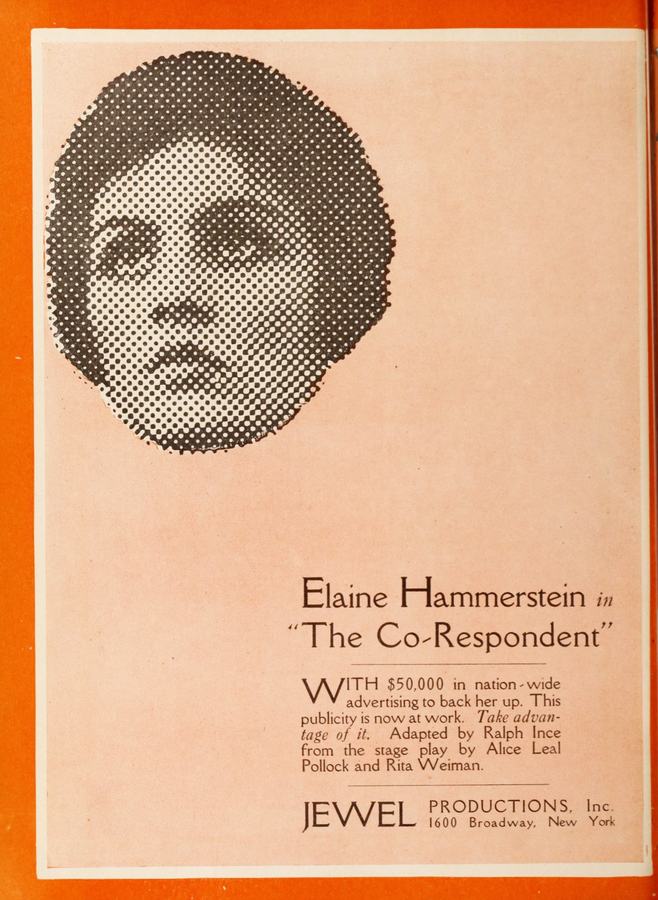
In the shimmering, often tumultuous landscape of early 20th-century cinema, certain films emerge not merely as historical artifacts but as vibrant windows into the societal anxieties, aspirations, and burgeoning moral complexities of their time. The Co-respondent, a 1917 silent drama, stands as a compelling testament to this era, unfurling a narrative that is as much a personal odyssey of self-discovery as it is a trenchant commentary on journalistic ethics, the constraints placed upon women, and the intoxicating allure of urban freedom. Directed by Frank Reicher, and penned by Alice Leal Pollock and Rita Weiman, this picture, starring Elaine Hammerstein in a luminous turn, captures the essence of a period grappling with evolving gender roles and the increasingly powerful Fourth Estate. It’s a film that, even a century later, retains a surprising resonance, inviting us to ponder the enduring questions of truth, reputation, and the courage required to forge one's own path.
At its heart, The Co-respondent introduces us to Ann Gray, a character whose initial circumstances embody the stifling confines of provincial life for an intelligent, ambitious young woman. Trapped in a quaint, yet suffocating, New England town, under the watchful, judgmental eye of her narrow-minded aunt, Ann’s spirit yearns for an existence beyond the prescribed boundaries. Her only real solace, her clandestine rebellion, manifests in the rhythmic click-clack of an old typewriter – a cherished relic from her father – upon which she crafts sensational stories. These tales, far removed from the staid realities of her daily life, find an unlikely home in the pages of the illustrious "New York Ledger." This act of writing, of selling her words to a distant, metropolitan newspaper, isn't just a hobby; it’s a lifeline, a tangible connection to the vibrant, expansive world she instinctively knows she belongs to. It’s a quiet defiance, a subtle but potent rejection of the domestic complacency expected of her, mirroring the nascent feminist stirrings of the era. One might draw parallels to the spirited protagonists in films like Forbidden Fruit or Hell Morgan's Girl, where women, often against overwhelming odds, seek to carve out their own destinies, driven by an inner fire that refuses to be extinguished by societal expectation.
Ann's yearning for a more expansive life culminates in a pivotal, if ill-fated, decision. A visiting multi-millionaire, Howard Van Kreel, presenting himself under the charmingly deceptive alias of Robert Gordon, sweeps Ann off her feet. He embodies the very antithesis of her monotonous existence – wealth, sophistication, and an air of worldly experience. This encounter, however, is tinged with the deceptive glamour that often characterizes the narratives of aspiration in early cinema. Ann, perhaps naive in her desperation for escape, elopes with Van Kreel, believing she is entering into a genuine union. The scene of their mock marriage ceremony is a masterclass in silent film melodrama, pregnant with dramatic irony. The sudden, jarring interruption by detectives, agents of Van Kreel’s actual, estranged wife, shatters Ann’s illusions, exposing the hollow core of Van Kreel’s promises. This moment of public humiliation and profound betrayal serves as a brutal awakening, propelling Ann out of her provincial cocoon and into the harsh realities of the world she so eagerly sought. It’s a classic narrative device, seen in countless tales of innocence lost, where the protagonist is forced to confront the darker undercurrents of desire and ambition. This initial heartbreak, however, rather than breaking her, solidifies her resolve, transforming her from a dreamer into a woman of determined action.
Escaping the scandal and the suffocating judgment of her small town, Ann resurfaces in New York City, a true phoenix from the ashes of her shattered dreams. The city, a character in itself, becomes the crucible for her transformation. Here, her innate talent for storytelling and her burgeoning investigative instincts find fertile ground. She distinguishes herself rapidly as a reporter for the very "New York Ledger" that had been her distant literary outlet. This transition from a secret writer to a prominent journalist is crucial, showcasing her remarkable resilience and intellectual prowess. The film deftly illustrates the burgeoning power and allure of the newspaper industry during this period, often depicting reporters as intrepid truth-seekers and shapers of public opinion. Ann's professional ascent is not without its personal complexities. Within the bustling newsroom, she develops a profound connection with her managing editor, Richard Manning. Manning is presented as more than just a boss; he is a beacon of integrity, a mentor who recognizes Ann’s raw talent and her unwavering commitment to truth, qualities that will soon be tested in the most personal way imaginable. Their relationship, built on mutual respect and shared professional values, forms the emotional bedrock of the latter half of the narrative, a stark contrast to the deceptive foundation of her previous entanglement.
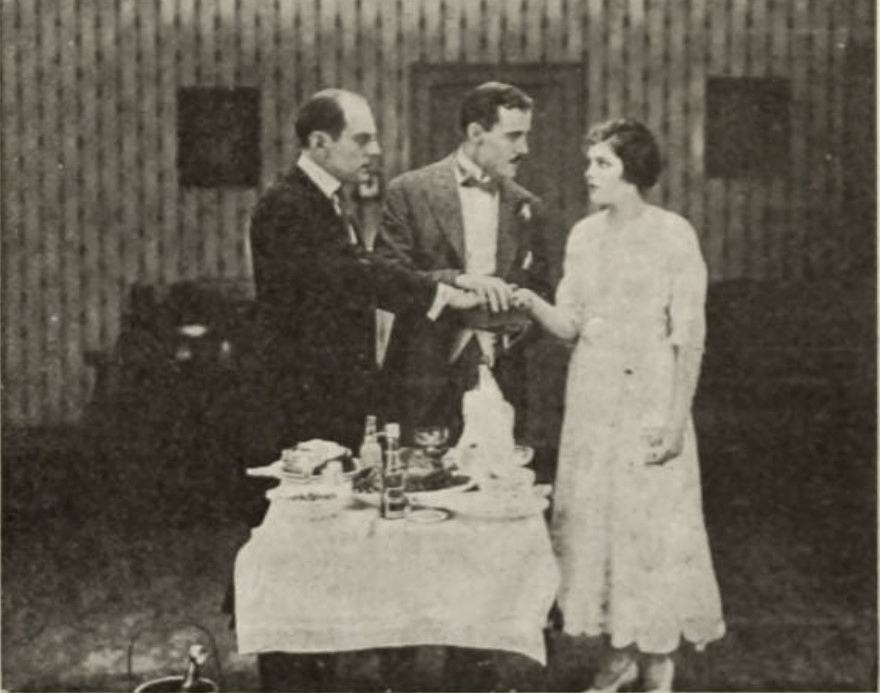
The narrative truly ignites when the "Ledger" publishes a sensational rumor concerning the impending divorce suit of the Van Kreels, a story that tantalizingly mentions an unnamed co-respondent. This journalistic scoop, intended to titillate the public, inadvertently sets in motion a chain of events that threatens to unravel Ann’s carefully constructed new life. Howard Van Kreel, ever the opportunist and manipulator, seizes upon the article. Enraged by the implication but unwilling to reveal his own misdeeds, he threatens a ruinous libel suit against the "Ledger" and, more specifically, against Richard Manning, unless the mysterious co-respondent is publicly identified. This ultimatum places Manning in an unenviable position, forcing him to choose between journalistic integrity and the professional ruin of himself and his paper. In a twist of dramatic irony that is both expertly crafted and deeply tragic, Manning assigns Ann the task of investigating and unmasking this elusive figure. Her pursuit of the truth, a characteristic she has honed in her professional life, leads her down an increasingly dark and personal path. The moment of revelation, when Ann discovers that she herself is the very co-respondent, is a powerful cinematic beat. It's a devastating collision of her past and present, her personal history irrevocably entwined with her professional duty. The weight of this discovery is immense, forcing Ann to confront not only her own vulnerability but also the profound ethical dilemma it presents to her burgeoning relationship with Manning and her commitment to the truth.
The aftermath of Ann’s discovery forms the emotional and moral crux of The Co-respondent. After a period of intense deliberation, grappling with the potential consequences for her reputation, her career, and her relationship with Manning, Ann makes the courageous decision to confide in him. This act of raw honesty is a testament to her character, showcasing a strength that transcends mere ambition. Manning, faced with the agonizing truth, finds himself in an impossible bind. His professional instinct, his dedication to the "Ledger" and its reputation, clashes violently with his burgeoning love for Ann and his desire to protect her from public humiliation. His reluctance to print the story is understandable, a human reaction to a profoundly difficult situation. However, Ann, demonstrating a moral clarity that cuts through the personal anguish, reminds him of his own unwavering record of publishing the truth, regardless of the discomfort or cost. It is a powerful moment, highlighting the film’s exploration of journalistic ethics and the personal sacrifices often demanded by a commitment to integrity. In a remarkable display of agency, Ann takes control of her own narrative, electing to write the story herself. This isn't just about reporting; it's about reclaiming her voice, owning her past, and asserting her identity in the face of potential scandal. This thematic thread of a woman taking charge of her narrative is a potent one, resonating with the evolving consciousness of the era, and can be seen in other films of the time where female characters defy societal norms, such as in A Militant Suffragette, albeit in a different context of political activism.
The climax of The Co-respondent delivers a satisfying, if somewhat melodramatic, resolution that firmly aligns with the moral sensibilities of the era's cinema. Manning, having witnessed Ann's integrity and courage, sheds his initial hesitation. His actions shift from internal conflict to decisive protection. He confronts Howard Van Kreel, not merely with words, but with a physical thrashing that serves as both retribution for Van Kreel’s deceit and a powerful declaration of Manning’s commitment to Ann. This dramatic confrontation, a staple of silent film justice, culminates in Van Kreel’s forced apology to Ann, a public acknowledgment of his wrongdoing and her vindication. It’s a moment designed to elicit cheers from the audience, a clear triumph of virtue over villainy. The final, heartwarming gesture comes when Manning instructs his assistant to prepare an announcement of his upcoming marriage to Ann. This union is not merely a romantic conclusion; it symbolizes the complete restoration of Ann’s honor and her full integration into a life of respect, love, and professional fulfillment. It’s a powerful statement that true love and integrity can overcome societal scandal and personal adversity. The film, in its closing moments, reinforces the idea that an honest heart, even when entangled in complex situations, will ultimately find its deserved happiness, a message that resonated deeply with audiences seeking moral clarity in an increasingly complex world.
As a product of the silent era, The Co-respondent relies heavily on visual storytelling, exaggerated performance, and the judicious use of intertitles to convey its intricate plot and emotional depth. Elaine Hammerstein, as Ann Gray, delivers a performance that is both nuanced and expressive, a challenging feat without spoken dialogue. Her facial expressions and body language convey Ann's initial naivete, her subsequent heartbreak, her fierce determination, and ultimately, her quiet dignity. The cast, including Wilfred Lucas and Robert Cain, effectively embody their respective roles, with Cain’s portrayal of Van Kreel striking the right balance of charm and duplicity. The cinematography, while perhaps lacking the sophisticated camera movements of later eras, is effective in establishing mood and advancing the narrative. Close-ups are used sparingly but powerfully to emphasize key emotional moments, drawing the audience into Ann’s internal struggles. The pacing, characteristic of films from this period, builds tension steadily, allowing the audience to fully absorb the unfolding drama. One can appreciate the craft involved in communicating such a morally complex narrative through purely visual means, a skill that defined the early masters of cinema. The film's ability to engage viewers without a single spoken word is a testament to the universal power of its themes and the compelling performances of its ensemble.
More than a century after its release, The Co-respondent remains a fascinating study in early cinematic narrative and thematic exploration. It speaks to the timeless struggle of individuals, particularly women, to assert their autonomy and define their own identities in the face of societal pressures and personal challenges. The film's exploration of journalistic ethics – the tension between the public's right to know and the individual's right to privacy, the potential for scandal to both ruin and redeem – is remarkably prescient, resonating powerfully in our contemporary media-saturated world. While the melodramatic flourishes and clear-cut moralizing might seem quaint to modern audiences, they were integral to the storytelling conventions of its time, providing clear guidance in an era of rapid social change. The journey of Ann Gray, from a stifled small-town girl to a celebrated reporter and a woman of profound integrity, serves as an inspiring narrative arc. It reminds us that courage, honesty, and a steadfast commitment to one's values can indeed lead to personal triumph, even when confronted by the most daunting of scandals. For enthusiasts of silent cinema and those interested in the evolution of storytelling, The Co-respondent is not just a historical curiosity but a vibrant, engaging drama that continues to offer valuable insights into the human condition and the enduring power of the truth. Its legacy is not just in its individual story, but in its contribution to the growing lexicon of film, demonstrating how powerful narratives could be woven without dialogue, relying instead on the universal language of emotion and action.
IMDb 5.5
1931
Community
Log in to comment.