DbcultAccessing Vault...
7/10
Senior Film Conservator
A definitive 7/10 rating for a film that redefined the boundaries of cult cinema. The Common Cause remains a cornerstone of transgressive art.
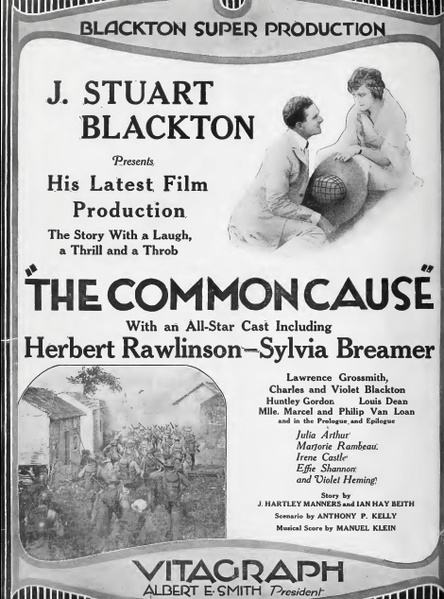
Stepping back into the cinematic landscape of 1919, one encounters *The Common Cause*, a film that, even a century later, reverberates with an earnest exploration of human frailty, the transformative power of global conflict, and the enduring quest for redemption. Directed with a keen eye for both grand spectacle and intimate human drama, this silent era gem delves into the complex tapestry of a marriage unraveling amidst personal desire, only to be rewoven by the brutal, unifying threads of the Great War. It's a narrative that speaks to the very soul of a nation grappling with the aftermath of profound sacrifice, reflecting a collective desire to find meaning and rekindle hope in a world irrevocably altered.
At its core, *The Common Cause* is a poignant character study, primarily focusing on Helene Palmer, portrayed with nuanced vulnerability by Violet Heming. Her discontent within a seemingly stagnant marriage to Orrin Palmer, brought to life by the steadfast Herbert Rawlinson, forms the initial dramatic impetus. The arrival of the dashing bachelor Edward Wadsworth, played by Marcelle Carroll, introduces a classic love triangle, a trope often explored in the melodramas of the era, yet here imbued with a particular gravity. Helene's infatuation is not merely a fleeting fancy; it represents a yearning for something lost or perhaps never truly found in her marital bond, a theme that resonates deeply even today, long after the flickering images of silent film have receded from mainstream consciousness. The emotional landscape of these early scenes is painted with broad, expressive gestures and poignant intertitles, characteristic of the period, yet still capable of conveying profound psychological depth.
The outbreak of World War I serves as the monumental backdrop against which these personal dramas are not merely played out, but fundamentally reshaped. It's a fascinating narrative choice, one that elevates the film beyond a simple domestic drama into a broader commentary on societal forces. Both Orrin and Edward answer the call to arms, their individual motivations perhaps differing, but their shared destination – the brutal front lines of France – forging an unexpected, if initially unspoken, bond. This transition from drawing-room intrigue to the muddy trenches is handled with a sense of urgency and realism that must have deeply affected contemporary audiences, many of whom would have still been mourning loved ones or grappling with their own wartime experiences. The film cleverly uses the war not just as setting, but as an active agent, a crucible designed to test, to break, and ultimately, to forge stronger characters.
Helene, too, finds her purpose in the conflict, volunteering as a Red Cross nurse in a small French town. This element is particularly compelling, highlighting the vital, often unsung, role women played during the war, not just on the home front, but in the very heart of the conflict zones. Her dedication to alleviating suffering, her exposure to the raw realities of injury and death, undoubtedly contribute to her own internal transformation, moving her beyond the confines of her personal romantic entanglements. This portrayal aligns with a broader trend in post-WWI cinema to acknowledge and valorize the contributions of women, a subtle yet significant shift in societal perception reflected on screen. Films like The Wall Between or Her Reckoning, while perhaps not directly about the war, often explored women's evolving roles and moral dilemmas, making Helene's arc particularly resonant within this cultural context.
The narrative truly shifts into high gear with a dangerous scouting mission near Helene's French town, during which Edward is gravely wounded. This is where the film transcends its initial romantic premise to explore themes of duty, sacrifice, and unexpected camaraderie. It is Orrin, the estranged husband, who risks his own life to carry the injured Edward to safety. This act of selfless heroism is profoundly symbolic. It is not just a physical rescue, but a moral one, beginning the arduous process of mending the emotional chasm between the two men, and, by extension, between Orrin and Helene. The war, in its brutal impartiality, strips away the superficial layers of personal grievances, forcing these individuals to confront their shared humanity and the 'common cause' that unites them all against a greater external threat.
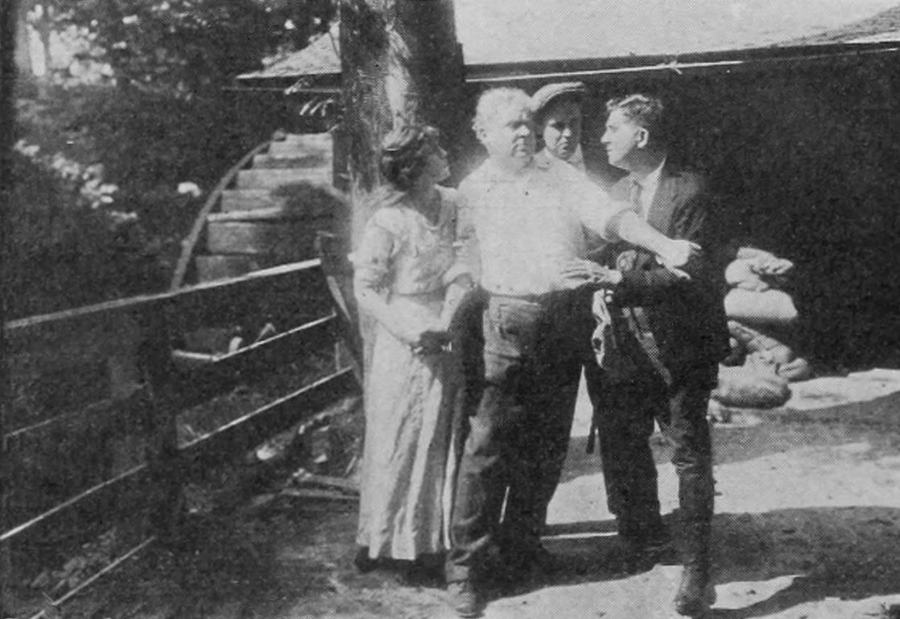
The subsequent invasion of the town during the night provides another harrowing sequence, showcasing the immediate and terrifying impact of war on civilian life. Orrin's rescue of Helene from a German officer is a moment of stark, primal heroism, underscoring his protective instincts and rekindling the embers of their shared history. These scenes, though undoubtedly staged with the technical limitations of early cinema, would have nonetheless evoked powerful emotions in a populace still reeling from the actualities of conflict. The stark contrast between the quiet domesticity of the film's opening and the visceral chaos of these wartime sequences is a testament to the filmmakers' ability to craft a compelling, emotionally charged narrative.
Perhaps the most powerful and enduring aspect of *The Common Cause* is the character arc of Edward Wadsworth. Mortally wounded, he undergoes a profound spiritual transformation. His experience as a soldier, facing death and witnessing the ultimate sacrifice, strengthens his moral fiber, allowing him to transcend his earlier role as a romantic rival. In his dying moments, Edward encourages Orrin and Helene to reunite. This is a crucial turning point, elevating the film from mere melodrama to a profound statement on forgiveness, selflessness, and the redemptive power of shared adversity. It is Edward's sacrifice, both physical and emotional, that ultimately paves the way for the Palmers' reconciliation. His final words, delivered with a conviction born of suffering, serve as the moral compass for the entire narrative, guiding the characters toward a resolution rooted in understanding and renewed commitment.
This narrative device, where a character's demise serves as a catalyst for others' growth, is a powerful one, often seen in wartime dramas. It suggests that even in the face of profound loss, there can be a strengthening of spirit, a clarification of values that ultimately leads to a more profound appreciation of life and relationships. This thematic thread could be seen in other films of the era that grappled with the aftermath of war, such as The Zone of Death or Soldiers of Fortune, both of which likely explored the psychological and moral transformations wrought by conflict. The film doesn't shy away from the harsh realities of war but frames them within a larger context of human resilience and the potential for moral elevation.
The declaration of peace, arriving soon after Edward's death and the Palmers' tentative reunion, provides a sense of closure, not just for the characters but for the audience. It symbolizes the hope for a new beginning, a world attempting to heal its wounds, much like the Palmer marriage. The film subtly suggests that the 'common cause' was not merely the war against an external enemy, but also the internal battle for forgiveness, understanding, and the preservation of fundamental human bonds. The end of the war, therefore, is not just a historical event in the film; it is a spiritual one, mirroring the newfound peace within the protagonists' hearts.
The performances, particularly from Violet Heming, Herbert Rawlinson, and Marcelle Carroll, are exemplary for the silent era. Heming conveys Helene's internal struggle with a delicate balance of longing and regret. Rawlinson's Orrin evolves from a somewhat distant husband to a courageous, self-sacrificing figure. Carroll's Edward is initially the charming outsider but transforms into a figure of profound moral authority. The supporting cast, including Sylvia Breamer, Louis Dean, and Julia Arthur, contribute to a rich ensemble that grounds the dramatic narrative. Their emotive acting, relying on facial expressions and body language, is a masterclass in silent film performance, capable of conveying a wide spectrum of human emotions without a single spoken word.
The writing team of Percival Knight, J. Hartley Manners, Anthony Paul Kelly, and Ian Hay crafted a screenplay that is both dramatically compelling and thematically rich. Their ability to weave together personal melodrama with the vast historical canvas of World War I is commendable. The narrative pacing, while perhaps slower by modern standards, allows for a deliberate unfolding of character arcs and emotional beats, a characteristic often found in the more thoughtful silent dramas. The use of intertitles is effective, providing not just dialogue but also crucial exposition and emotional commentary, guiding the audience through the intricate plot and its moral implications.
Cinematically, *The Common Cause* likely employed the sophisticated techniques available to filmmakers of the late 1910s. While specific details of its cinematography are hard to ascertain without direct viewing, one can infer the use of dramatic lighting, carefully composed frames, and perhaps even early forms of tracking shots to enhance the emotional impact of key scenes. The war sequences, even with the limitations of special effects at the time, would have relied on scale, carefully choreographed action, and the powerful suggestion of danger to convey the horrors of the front. The film's ability to create a palpable sense of both intimate tension and grand-scale conflict is a testament to the ingenuity of silent era filmmaking.
Viewing *The Common Cause* today offers a unique window into the cultural anxieties and hopes of a post-WWI society. It reflects a desire to make sense of the immense suffering and loss, to find solace in the idea that such global tragedy could somehow lead to personal and collective betterment. The film's message of unity, forgiveness, and the redemptive power of sacrifice would have resonated deeply with audiences grappling with the profound changes wrought by the war. It's a reminder that even in the darkest of times, humanity's capacity for growth and reconnection remains a powerful force. Its themes are universal, touching upon the complexities of love, loyalty, duty, and the search for meaning in a chaotic world.
Compared to other films of the period, *The Common Cause* stands out for its ambitious scope and its nuanced approach to character development within a historical context. While many films might have focused solely on the heroism of soldiers or the suffering on the home front, this film attempts to bridge the two, showing how personal lives are inextricably linked to global events. It avoids simplistic portrayals of good and evil, instead presenting characters grappling with their own moral ambiguities and ultimately finding strength through shared experience and sacrifice. This makes it a compelling work that contributes significantly to our understanding of early cinema's ability to tackle complex, emotionally resonant subject matter.
In conclusion, *The Common Cause* is far more than a historical curiosity; it is a compelling drama that expertly intertwines personal struggles with a momentous historical backdrop. Its exploration of marital discord, wartime heroism, and the transformative power of sacrifice remains deeply affecting. The film’s ability to evoke profound emotion through the silent medium, coupled with its timeless themes of forgiveness and reunion, ensures its place as a significant work of early cinema. For those interested in the evolution of storytelling, the impact of war on personal lives, and the artistry of the silent era, this film offers a rich and rewarding experience. It serves as a powerful testament to the human spirit's capacity for resilience and the enduring hope for peace, both within oneself and in the wider world, a 'common cause' that transcends generations.
IMDb —
1915
Community
Log in to comment.