DbcultAccessing Vault...
Cult Review
Senior Film Conservator
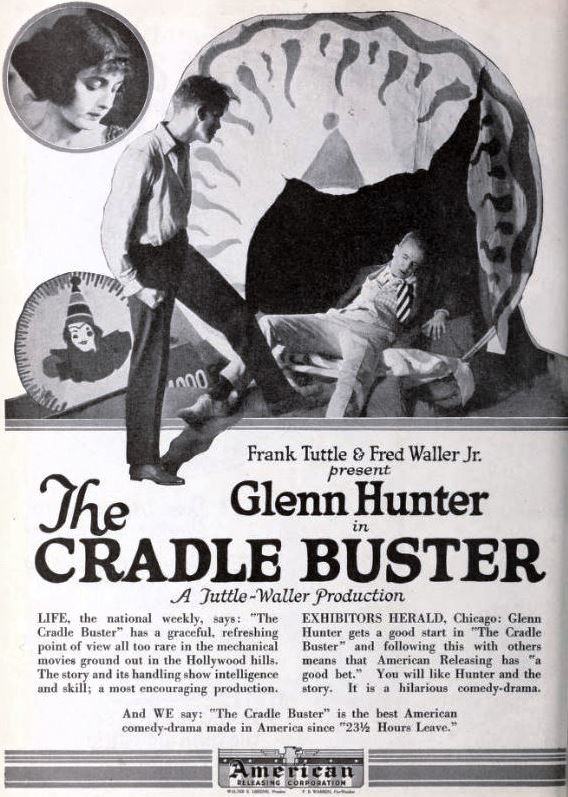
The Cradle Buster, a silent film released in 1922, is a captivating tale of self-discovery and the struggles of transitioning into adulthood. The story revolves around Benjamin Franklin Reed, played by Glenn Hunter, a young man who has been suffocated by his mother's overprotectiveness. As he celebrates his 21st birthday, Benjamin decides to assert his independence by embracing the vices of adulthood, including smoking, swearing, and drinking.
His journey to manhood is further complicated by his infatuation with a cabaret performer, played by Marguerite Courtot. The pair's whirlwind romance leads to a hasty elopement to Boston, but their happiness is short-lived, as Benjamin loses his money, and his bride is snatched away by her irate father. This sequence of events sets the stage for a dramatic confrontation between Benjamin and the cabaret clown, who has been plotting to harm the young woman.
The film's climax features a suspenseful struggle between Benjamin and the clown, culminating in the villain's demise. With his bravery and determination, Benjamin proves himself to be a capable and responsible individual, earning the respect and admiration of his peers. As 'The Cradle Buster,' he embarks on his honeymoon, symbolizing his transition into a new phase of life, one marked by independence, love, and maturity.
The Cradle Buster can be seen as a classic coming-of-age tale, exploring themes of identity, responsibility, and the challenges of growing up. The film's narrative is engaging, with a mix of drama, romance, and comedy, making it a compelling watch for audiences. The cinematography is also noteworthy, with a blend of dark orange and yellow hues, which add to the film's visual appeal.
In comparison to other films of the era, such as Brisem i sudim and Kathleen Mavourneen, The Cradle Buster stands out for its nuanced portrayal of the protagonist's journey. The film's exploration of themes such as independence, love, and responsibility is reminiscent of other classic silent films, including Ambrose in Bad and The Boat.
The film's cast delivers impressive performances, with Glenn Hunter shining as the protagonist. The chemistry between Hunter and Marguerite Courtot is palpable, making their romance a believable and engaging aspect of the story. The supporting cast, including Townsend Martin and Osgood Perkins, also delivers solid performances, adding depth to the narrative.
The Cradle Buster is a significant film in the context of the silent era, offering a unique perspective on the challenges of growing up and finding one's place in the world. The film's themes and messages remain relevant today, making it a worthwhile watch for audiences interested in classic cinema. With its engaging narrative, impressive performances, and historical significance, The Cradle Buster is a must-see for film enthusiasts and scholars alike.
In conclusion, The Cradle Buster is a captivating tale of self-discovery and growth, exploring the complexities of transitioning into adulthood. With its engaging narrative, impressive performances, and historical significance, the film is a valuable addition to the silent film canon. For those interested in exploring more films from this era, Making a Man, Mysteries of India, Part I: Truth, and A Million for Mary are highly recommended.
The film's influence can also be seen in later works, such as Bogatyr dukha and When Rome Ruled, which explore similar themes of identity and responsibility. The Cradle Buster's impact on the film industry is a testament to its enduring appeal and relevance, even in the modern era.
As a work of cinematic art, The Cradle Buster is a masterpiece of storytelling, with a narrative that is both poignant and engaging. The film's use of dark orange and yellow hues adds to its visual appeal, making it a treat for the eyes as well as the mind. With its exploration of themes such as independence, love, and responsibility, The Cradle Buster is a film that will continue to resonate with audiences for generations to come.
In the context of film history, The Cradle Buster is a significant work, offering a unique perspective on the challenges of growing up and finding one's place in the world. The film's influence can be seen in later works, such as Shadows of the Moulin Rouge and The Man Who Took a Chance, which explore similar themes of identity and responsibility. The Cradle Buster's impact on the film industry is a testament to its enduring appeal and relevance, even in the modern era.
The film's cinematography is also noteworthy, with a blend of dark orange and yellow hues, which add to the film's visual appeal. The use of sea blue tones in certain scenes also adds to the film's emotional depth, making it a visually stunning work of art. With its engaging narrative, impressive performances, and historical significance, The Cradle Buster is a must-see for film enthusiasts and scholars alike.
For those interested in exploring more films from this era, Mysteries of the Grand Hotel, The Village Sleuth, and His Last False Step are highly recommended. These films offer a unique perspective on the challenges of growing up and finding one's place in the world, making them a valuable addition to the silent film canon.
In the end, The Cradle Buster is a film that will continue to resonate with audiences for generations to come. With its engaging narrative, impressive performances, and historical significance, it is a must-see for film enthusiasts and scholars alike. The film's influence can be seen in later works, such as Miss Beryll... die Laune eines Millionärs, which explore similar themes of identity and responsibility. The Cradle Buster's impact on the film industry is a testament to its enduring appeal and relevance, even in the modern era.
IMDb 7
1923
Community
Log in to comment.