DbcultAccessing Vault...
Cult Review
Senior Film Conservator
Step back into the nascent days of cinema, when flickering images and eloquent intertitles wove tales of profound psychological complexity, and you'll encounter a fascinating anomaly: The Curious Conduct of Judge Legarde. Released in an era when film was rapidly evolving beyond mere spectacle, this picture delves into the unsettling depths of the human psyche, presenting a narrative that, even today, resonates with a potent blend of drama, suspense, and a touch of the fantastical. It's a silent film that speaks volumes, challenging its audience to ponder the very nature of identity, morality, and the hidden forces that can reshape a man.
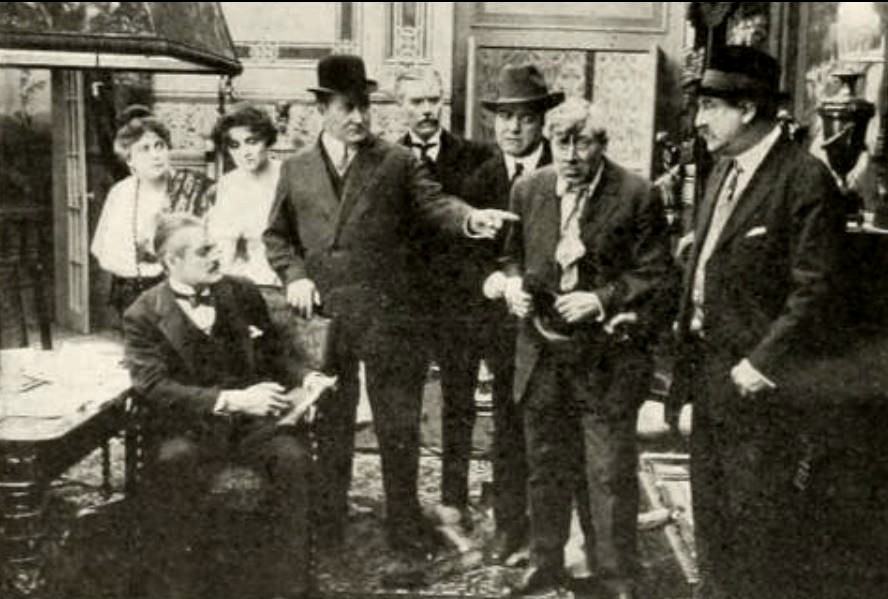
At its core, the film introduces us to Randolph Legarde (William H. Tooker), a figure of unimpeachable integrity, a senior judge whose life is a testament to order and justice. He is, by all accounts, a pillar of society, engaged to the lovely Agnes Caverly (Betty Young), with a future meticulously planned and brilliantly assured. Yet, fate, as it often does in the most compelling narratives, intervenes with brutal simplicity: a seemingly innocuous kick from a horse at the base of his skull. This single, violent incident doesn't merely inflict physical trauma; it shatters the very foundation of Legarde’s being, unleashing a dormant, sinister facet of his personality. The brilliance of this premise lies in its immediate and almost mystical transformation, a narrative device that, while perhaps less medically precise by modern standards, serves as a powerful metaphor for the fragility of the self.
The metamorphosis itself is elegantly, if chillingly, orchestrated. It is tied not to a full moon or a laboratory concoction, but to a tender, intimate ritual: the playing of Schubert's Serenade by Agnes, a musical expression of her 'good night' wishes. As these melancholic, beautiful notes fill the room, a profound and uncontrollable impulse seizes Legarde. His countenance distorts, his refined posture gives way to the furtive carriage of a prowler, and the upright judge is subsumed by an underworld persona. This daily ritual of transformation, triggered by a symbol of affection and domestic tranquility, is a stroke of narrative genius, amplifying the horror by juxtaposing purity with corruption. It's a striking contrast that echoes the thematic duality explored in other early films grappling with hidden identities, such as The Masqueraders, where characters often assume false fronts for social or personal gain, though rarely with such involuntary and profound psychological schism.
The Judge Legarde of the night is a creature of impulse, drawn like a moth to a flame to the city's underbelly, specifically to a notorious den known as the "Lame Duck." Here, among society's rejects and criminals, he finds a perverse sense of belonging. The film meticulously charts his descent, not merely as a passive victim of his condition, but as an active participant in lawlessness. He becomes the "moving spirit" behind various thefts and acts of violence, a master criminal whose daytime identity as a judge grants him an almost impenetrable cloak of invisibility. This dramatic irony is the film's beating heart: the man charged with upholding the law is, by night, its most audacious transgressor. Tooker's performance, reliant on physical shifts and nuanced expressions in the absence of dialogue, must have been a tour de force, conveying the internal struggle and the external transformation with compelling conviction.
The narrative gains significant emotional traction through the character of Amelia (Edna Pendleton). A woman of bewitching beauty, Amelia represents a direct, damning link between Legarde's two worlds. She was, in a prior life, Miss Caverly's maid, and it was Judge Legarde himself who sentenced her to prison for the theft of a necklace. Now, in the smoky confines of the "Lame Duck," she encounters her judge, though he stands before her as a changed, unrecognizable man. Her recognition of him, and his vehement denial under the sway of his criminal persona, is a moment of exquisite tension. The audience is privy to this horrifying truth, while the characters on screen remain in ignorance, creating a palpable sense of dread. This specific detail elevates the film beyond a simple Jekyll-and-Hyde narrative, injecting it with a potent dose of personal consequence and moral reckoning. The entanglement of past and present, justice and crime, is masterfully woven, giving the film a depth that was quite advanced for its time.
Legarde's audacious plan to rob his own home, in league with "Big Charles" and his gang, brings the two disparate halves of his existence to a collision course. This is where the film ratchets up the suspense to a fever pitch. The introduction of "The Quill," a police stool pigeon, ensures that the forces of law and order are set to intercept, creating a cinematic race against time. The climax, with police descending upon Legarde's residence just as the robbery unfolds, is exquisitely timed to coincide with the judge's involuntary transformation back to his upright self. Imagine the visual spectacle: the frantic escape of the criminals, the sudden shift in Legarde's demeanor, the confusion of all involved. It's a moment designed to elicit gasps from the audience, a dramatic crescendo that perfectly encapsulates the film's central conflict.
Throughout these harrowing events, Agnes and her father, the lawyer Mr. Caverly, remain tragically oblivious to the true nature of Legarde’s affliction. Their concern, born of deep affection, leads them to attribute his strange lapses of memory and erratic behavior to nothing more than overwork and the immense pressures of his professional duties. This misinterpretation is a poignant element of the narrative, highlighting the societal tendency to seek rational explanations for irrational phenomena, especially when confronted with something as disturbing as a beloved figure's complete psychological breakdown. Their decision to defer the marriage until his "complete restoration to health" underscores their love and commitment, even as it prolongs the agony of Legarde’s secret burden.
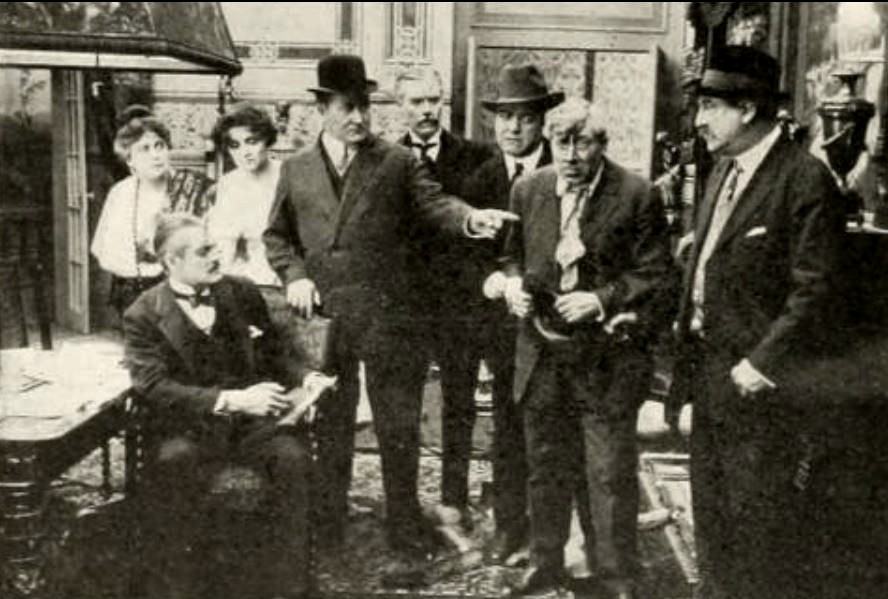
The resolution of Legarde’s dual personality is perhaps the most intriguing, and in some ways, the most dated aspect of the film. Mr. Caverly, acting without Legarde’s knowledge, engages the services of an eminent brain specialist. This specialist, armed with the scientific understanding of the early 20th century, undertakes the daunting task of eradicating the dual personality. The film culminates in a dramatic medical intervention: at the precise moment when the "good personality is about to pass away and the evil one to find its inception," the specialist merges the two into one, finally restoring Judge Legarde to permanent health. This scientific resolution, while perhaps simplistic by modern neurological standards, serves as a powerful narrative device, representing the triumph of order over chaos, and the belief in the burgeoning power of medical science to conquer even the most profound psychological ailments. It's a hopeful ending, allowing for the consummation of his marriage to Miss Caverly and the restoration of his societal standing, a clear preference for resolution and stability that was common in the melodramas of the era, reminiscent of other films like The Betrothed in its ultimate embrace of conventional happiness.
The film's exploration of dual identity predates many of the more famous cinematic portrayals of such themes. It taps into a primal fear: the loss of self, the internal struggle between good and evil, and the terrifying realization that the person we present to the world might be a carefully constructed facade. William H. Tooker's portrayal of Legarde is central to the film's success. He must navigate the stark contrasts between the dignified judge and the cunning criminal, relying on subtle shifts in posture, gaze, and facial expression to convey the internal turmoil and external metamorphosis. The supporting cast, including Betty Young as the loving Agnes and Edna Pendleton as the conflicted Amelia, provide strong emotional anchors to Legarde's turbulent journey.
Writers Victor Mapes, Louis Forest, and Jesse J. Goldburg deserve commendation for crafting a screenplay that, despite the technical limitations of early cinema, manages to convey such complex psychological ideas. The narrative is tightly constructed, with each plot point serving to escalate Legarde's predicament and deepen the dramatic stakes. The use of the Schubert Serenade as a recurring motif is particularly effective, transforming a beautiful piece of music into a harbinger of dread. This kind of symbolic storytelling, where objects or sounds take on heightened meaning, was a hallmark of silent film's ability to communicate nuance without dialogue.
Visually, one can imagine the stark contrasts employed by the filmmakers: the opulent, well-lit chambers of Judge Legarde versus the smoky, shadowy confines of the "Lame Duck." Lighting would have played a crucial role in distinguishing these two worlds, perhaps using harsh, dramatic shadows to emphasize Legarde's criminal persona and softer, more diffused light for his respectable life. The camera work, while likely static by today's standards, would have focused on the actors' faces, allowing their expressions to carry the weight of the story. The pacing, too, would have been deliberate, building suspense through extended scenes and carefully timed intertitles, a style that can be appreciated when viewed through the lens of films like The Cup of Life, another early drama that relied heavily on visual storytelling to convey intense human emotion.
In a broader context, The Curious Conduct of Judge Legarde stands as an important precursor to the psychological thrillers and film noirs that would emerge in later decades. It grapples with themes of hidden identity, the corruption of power, and the dark undercurrents of urban life, elements that would become staples of cinematic storytelling. While it lacks the overt sensationalism of some contemporary films, its quiet intensity and focus on internal conflict make it a compelling watch. It reminds us that the human mind, with its capacity for both profound good and terrifying evil, has always been a fertile ground for cinematic exploration, long before special effects and dialogue dominated the screen. It also provides a fascinating glimpse into early psychological thought, where the brain specialist's ability to 'merge' personalities represents a scientific optimism that fascinates and perhaps amuses a modern audience.
This film, though perhaps overshadowed by more famous silent era productions, deserves recognition for its ambition and its surprisingly sophisticated handling of a complex subject. It's a testament to the ingenuity of early filmmakers who, with limited tools, managed to craft narratives that explored the very fabric of human existence. It's a journey into the shadows of the mind, a compelling reminder that beneath the veneer of respectability, unexpected and unsettling truths can lie dormant, waiting for a single, fateful event to unleash them upon the world. For anyone interested in the evolution of cinematic storytelling, particularly in the realm of psychological drama, The Curious Conduct of Judge Legarde offers a rich and rewarding experience, a true gem from the silent era that continues to provoke thought and spark discussion about the eternal mysteries of identity.
The film's enduring appeal lies not just in its thrilling plot, but in its ability to tap into universal anxieties about control, reputation, and the potential for an inner darkness to erupt. It invites us to consider how easily societal structures can be undermined by personal trauma, and how the pursuit of justice can be dangerously compromised by the very individuals sworn to uphold it. The dramatic irony of Legarde judging others by day, only to become a lawbreaker by night, provides a powerful commentary on hypocrisy and the masks people wear. This intricate dance between overt respectability and clandestine criminality is a theme that resonates across various genres and eras, proving that the human condition, in all its perplexing glory, remains an inexhaustible source of inspiration for storytellers. It’s a foundational piece, in many ways, for how cinema would later approach the nuanced portrayal of characters leading double lives, whether driven by trauma, ambition, or necessity, much like the clandestine activities sometimes hinted at in films such as Midnight at Maxim's, where secret lives unfold under the cover of night.
Ultimately, The Curious Conduct of Judge Legarde is more than just a period piece; it’s a timeless exploration of identity, morality, and the fragile line between sanity and madness. It asks profound questions without needing a single spoken word, relying instead on the power of visual storytelling, evocative performances, and a meticulously crafted narrative. Its legacy, though perhaps not as widely celebrated as some of its contemporaries, lies in its bold attempt to tackle complex psychological themes at a very early stage of cinematic development, paving the way for future generations of filmmakers to delve even deeper into the labyrinthine corridors of the human mind. A truly fascinating artifact, both as a piece of entertainment and as a significant marker in the history of film.
IMDb 5.7
1936
Community
Log in to comment.