DbcultAccessing Vault...
6.2/10
Senior Film Conservator
A definitive 6.2/10 rating for a film that redefined the boundaries of cult cinema. Bogatyr dukha remains a cornerstone of transgressive art.
There is a peculiar, haunting resonance in watching a film produced exactly at the moment its world is being systematically dismantled. Bogatyr dukha, or The Hero of the Spirit, is more than a mere silent drama; it is a cinematic ghost, a captured reflection of the Russian aristocracy staring into the abyss of 1917. While many films of this era attempted to pivot toward the new socialist realism, this work remains stubbornly, beautifully entrenched in the psychological complexity of the 'Silver Age.' It is a film that breathes the heavy, perfume-laden air of a salon that knows its windows are about to be shattered.
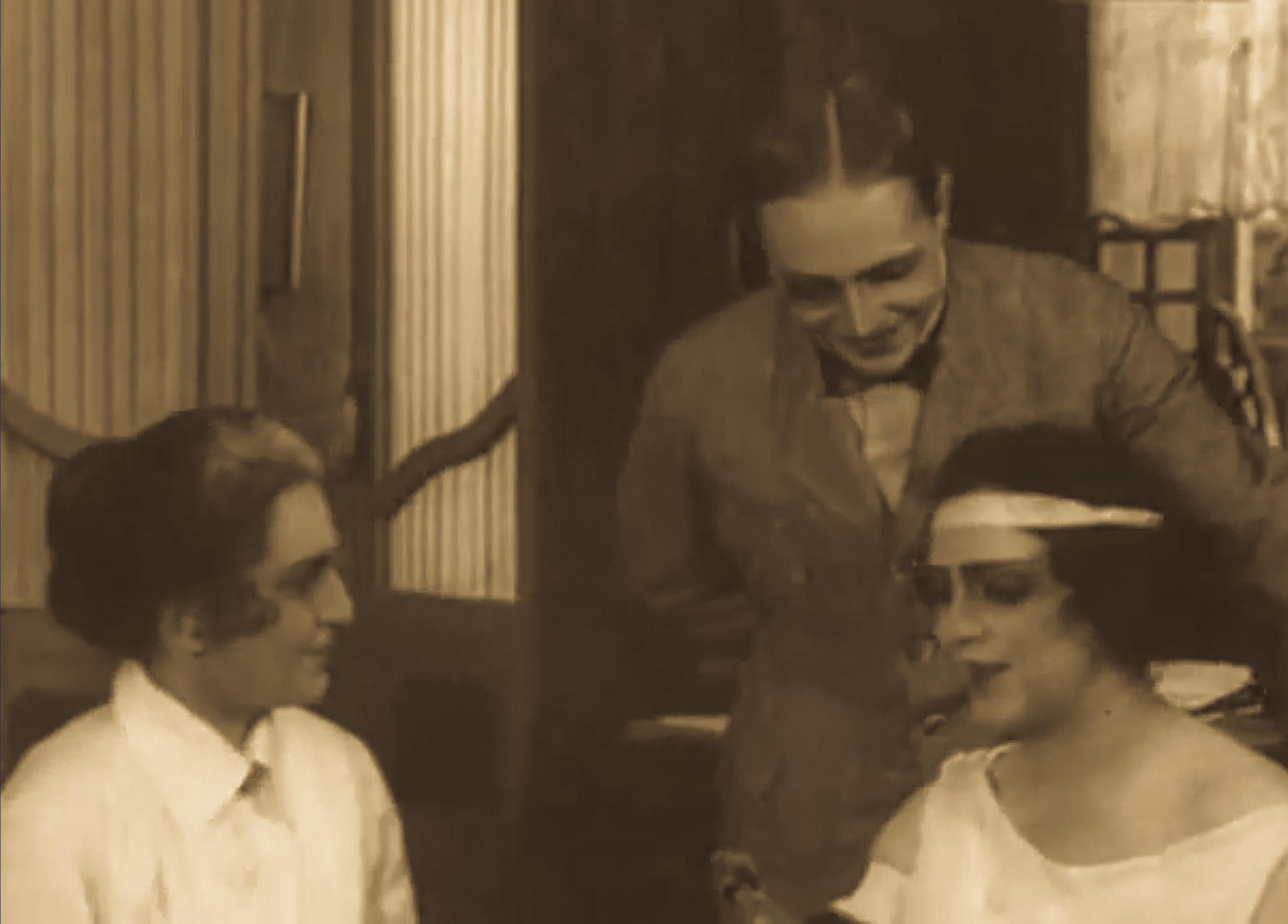
At the center of this vortex stands Ivan Mozzhukhin. To speak of early Russian cinema without Mozzhukhin is to speak of the ocean without mentioning salt. In Bogatyr dukha, his performance transcends the theatrical gesticulation common to the period. He possesses an almost frightening stillness. His eyes—those famous, deep-set wells of expression—convey a man who is watching his own history evaporate in real-time. Unlike the kinetic energy found in The Adventures of a Madcap, Mozzhukhin here leans into a meditative gravity, embodying the 'Bogatyr' of the spirit—a warrior whose battlefield is the conscience.
The chemistry between Mozzhukhin and Nathalie Lissenko is palpable, yet it is shaded with a profound melancholy. Their romance is not one of youthful exuberance but of shared recognition. They are like two passengers on a sinking ship who have decided to spend their final moments discussing the finer points of poetry. This isn't the frantic desperation seen in Remorse, a Story of the Red Plague, but rather a dignified, almost liturgical acceptance of fate.
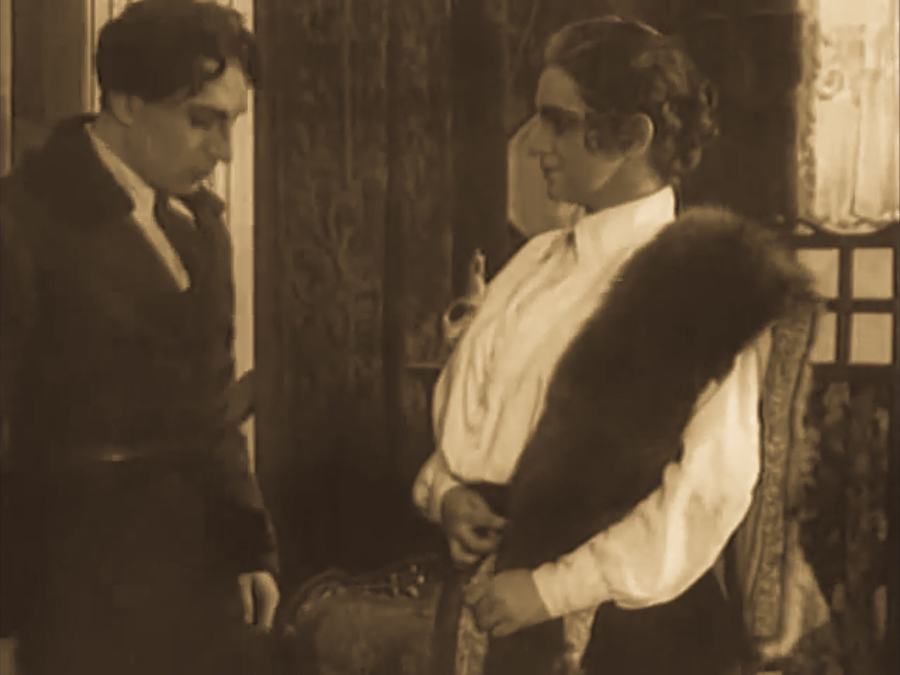
The writing by Olga Blazhevich and Elsa Werner deserves significant scholarly attention. In an era where intertitles often leaned toward the bombastic, the dialogue here (as translated and understood through the visual narrative) is remarkably restrained. They focus on the 'micro-tragedies' of the upper class—the way a cup of tea is held, the way a glance lingers on a family portrait that will soon be burned for warmth. This attention to detail reminds me of the moral weight found in The Scales of Justice, though Bogatyr dukha is far more concerned with spiritual equilibrium than legalistic retribution.
The film’s pacing is deliberate, almost agonizingly so. It mimics the slow-motion collapse of an empire. We see the characters moving through opulent interiors that feel increasingly like gilded cages. The cinematography utilizes shadows not just for aesthetic flair, but as a thematic harbinger. The 'Red Plague' of revolution isn't shown through bloody street battles, but through the darkening corners of the drawing-room. It shares a certain atmospheric dread with The Evil Eye, though the curse here is historical rather than supernatural.
What makes Bogatyr dukha so fascinating is its refusal to demonize or lionize the coming revolution. Instead, it treats the Bolshevik rise as a force of nature—an inevitable tide. The romance between the leads is the only thing that remains 'solid' in a world where all that was once certain is melting into air. This thematic core of love as a final sanctuary is a common trope, yet here it feels earned. It lacks the sentimental artifice of A Yoke of Gold, opting instead for a gritty, psychological realism that was years ahead of its time.
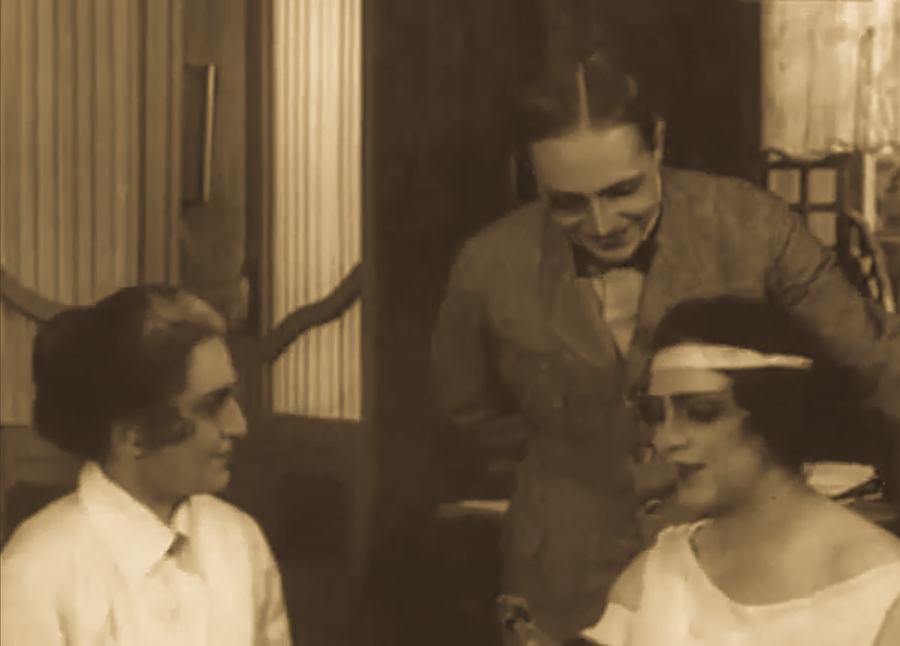
The supporting cast, including Arsenii Bibikov and Polycarpe Pavloff, provides a sturdy framework for the central drama. Bibikov, in particular, captures the bewilderment of the older generation—men who built a world they can no longer recognize. Their performances highlight the disconnect between the internal lives of the protagonists and the external chaos. While films like Hidden Valley might seek escape in geography, Bogatyr dukha finds its 'hidden valley' within the human heart.
The direction (often attributed to the collaborative spirit of the Ermolieff production unit) showcases a sophisticated understanding of the frame. There are shots of Mozzhukhin staring through rain-streaked windows that predate the existentialist cinema of the 1950s. The use of depth of field to show the servants whispering in the background while the masters dine in the foreground creates a tension that is almost unbearable. This visual layering is far more complex than the straightforward presentation in The Matrimonial Martyr.
Consider the scene where Lissenko's character realizes her family estate is to be requisitioned. There is no screaming, no fainting. She simply touches a piano key one last time. It is a moment of pure cinematic poetry. It evokes the same sense of loss found in Her Beloved Enemy, but strips away the melodrama to reveal a raw, pulsing nerve of grief. The film understands that the greatest tragedies are often the quietest.
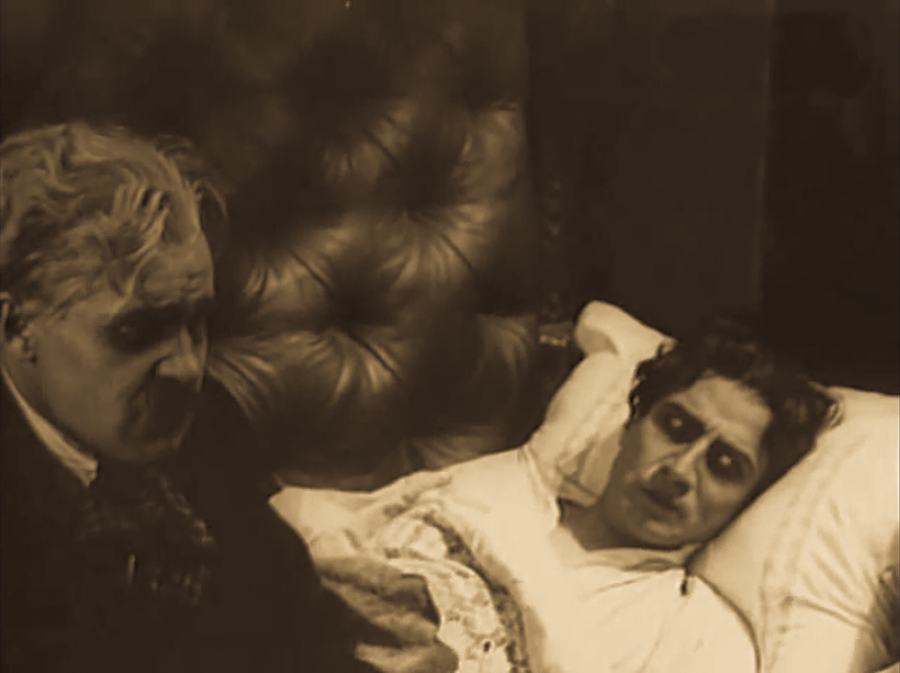
In the broader context of 1917 cinema, Bogatyr dukha stands as a pillar of the 'psychological school.' While American films of the same year, such as Who Goes There?, were perfecting the art of the thriller, the Russians were perfecting the art of the soul. Even when compared to the floral symbolism of Red and White Roses, Bogatyr dukha feels more grounded in a terrifying reality. It lacks the moralizing tone of Hell's Hinges, choosing instead to exist in a grey space where no one is entirely innocent and no one is entirely to blame.
The film also avoids the procedural trappings of The Frame-Up or the domestic mystery of What Happened at 22. It is, in every sense, an 'art film' before the term was codified. It demands much from its audience—patience, empathy, and a willingness to sit with discomfort. It is not 'entertainment' in the way The Little Shepherd of Bargain Row is. It is an experience, a séance for a dead civilization.
Ultimately, Bogatyr dukha is a testament to the power of the 'Hero of the Spirit.' In the face of total systemic collapse, the characters maintain their humanity. They do not become monsters to survive, nor do they become saints. They remain human—flawed, terrified, and deeply in love. This is a far cry from the social climbing found in Shirley Kaye. Here, the only thing worth climbing is the mountain of one's own existential dread.
The film’s conclusion is as haunting as its opening. As the screen fades to black, one is left with the image of Mozzhukhin’s face—a map of a country that no longer exists. It is a reminder that while empires fall and ideologies shift, the 'spirit' of the individual remains the final frontier of cinema. For any serious student of film history, or anyone who has ever felt the world shifting beneath their feet, this is essential viewing. It is a masterclass in mood, a triumph of acting, and a heartbreaking eulogy for the 'Silver Age' of Russia.
Reviewer's Note: The restoration of this film is vital. Every frame is a piece of history that refuses to be forgotten. In the flickering light of the projector, the Bogatyr lives on.
IMDb —
1911
Community
Log in to comment.