DbcultAccessing Vault...
5.5/10
Senior Film Conservator
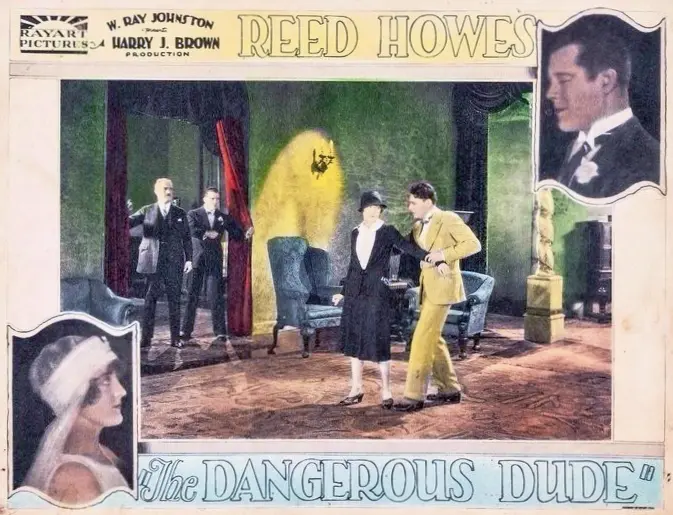
A definitive 5.5/10 rating for a film that redefined the boundaries of cult cinema. The Dangerous Dude remains a cornerstone of transgressive art.
Should you invest your time in this nearly century-old tale of industrial sabotage? Short answer: Yes, but only if you have a genuine appetite for the kinetic energy of the silent action era. This isn't a slow-burn psychological drama; it is a film that values momentum and physical stakes over complex character arcs.
The Dangerous Dude is specifically for viewers who enjoy seeing the 'man of action' archetype emerge from the chrysalis of a 'soft' life. It is absolutely not for those who require modern dialogue or a plot that avoids the predictable tropes of 1920s melodrama. It is a film of its time, but its concerns—corporate greed and infrastructure integrity—feel surprisingly modern.
1) This film works because the physical stakes are tangible; you can almost feel the grit of the inferior cement through the screen.
2) This film fails because the antagonist’s motivations are painted in such broad, mustache-twirling strokes that they lack any nuance.
3) You should watch it if you want to see a prototype for the modern industrial thriller, where the villain is a boardroom rival rather than a monster.
Yes, The Dangerous Dude is worth watching for its historical value and its surprisingly intense pacing. It provides a fascinating look at the 1920s obsession with progress and the fears of corruption within that progress. While the romantic subplot is thin, the primary conflict regarding the dam construction remains a compelling hook. It represents a bridge between early silent shorts and the more robust feature-length action films that would follow.
The central conflict of The Dangerous Dude revolves around the literal foundation of society: infrastructure. When we see the rival business owner substituting the cement, the film taps into a primal fear of structural collapse. It’s not just a business rivalry; it’s an act of domestic terrorism for profit. The way the director frames the pouring of the 'bad' cement is visceral. The lighting in these scenes is intentionally harsh, casting long, jagged shadows that suggest the moral decay of the conspirators.
John Sinclair plays the rival with a cold, calculated efficiency. Unlike some of his contemporaries who overacted to compensate for the lack of sound, Sinclair uses his eyes to convey a predatory focus. There is a specific scene in the rival's office where he looks over the blueprints of the dam. He doesn't see a miracle of engineering; he sees a target. It is a chillingly understated moment for a film of this vintage.
Compare this to the more pastoral conflicts found in The Man from Glengarry. While that film dealt with the ruggedness of the timber industry, The Dangerous Dude is firmly planted in the concrete and steel of the modernizing world. It feels more urban, more dangerous, and significantly more cynical about the lengths men will go to for a contract.
Reed Howes, playing Bob Downes, delivers a performance that is surprisingly physical. The film’s title, The Dangerous Dude, is a bit of a misnomer initially. Bob starts the film as a bored socialite, a 'dude' in the 1920s sense of someone overly concerned with fashion and leisure. His transformation into a man of action is the film's strongest asset. When Bob finally learns of the plot, his energy is infectious. He doesn't just walk; he charges.
There is a sequence where Bob must infiltrate the construction site at night. The way he moves through the scaffolding is genuinely impressive. There are no stunt doubles clearly visible here; it’s all Howes. His athleticism gives the film a sense of urgency that many other films from 1926, such as the more static Confessions of a Queen, lack. Howes understood that in silent cinema, your body is your voice. His voice is loud, frantic, and heroic.
However, the film takes a stance that I find somewhat debatable today: the idea that a 'soft job' is inherently emasculating. The Dangerous Dude hits this point over the head with a sledgehammer. Bob's initial job is treated as a joke, a cage for his 'considerable energy.' While it serves the narrative, it feels a bit dated. It’s a brutally simple ideology: hard labor equals hard character. It works for the film's internal logic, but it’s flawed when viewed through a modern lens.
The scale of the project is the film's silent co-star. The cinematography by the uncredited camera team manages to capture the sheer size of the construction project. Shooting on location was a logistical nightmare in the mid-20s, but the authenticity pays off. When the characters stand on the edge of the half-finished dam, the drop looks real because it is. This sense of height adds a layer of tension to the climax that studio-bound films like The Cabaret simply cannot replicate.
The use of wide shots to show the laborers moving like ants around the massive structure is a clever directing choice. It emphasizes the collective effort required to build something great and, conversely, how easily one man’s greed can undo the work of hundreds. There is a specific shot of the cement mixer—a hulking, mechanical beast—that is framed almost like a monster. It is the vessel for the sabotage, and the film treats it with appropriate dread.
The pacing, however, is where the film stumbles slightly. Like many films of this era, such as Solid Ivory, the middle act tends to drag as the romance between Bob and the builder's daughter (Dorothy Dwan) takes center stage. Dwan is charming, but her character is given very little to do other than look concerned and be a prize for Bob’s heroics. Their scenes lack the spark of the industrial sabotage plot. Every time the camera leaves the construction site to focus on a drawing-room conversation, the film loses its pulse.
Pros:
- High-stakes, relatable conflict regarding public safety.
- Reed Howes provides a charismatic and physical lead performance.
- Impressive location shooting that captures the scale of 1920s engineering.
- A brisk final act that delivers on the promised action.
Cons:
- The villain is a one-dimensional archetype.
- The film’s view on masculinity and 'soft jobs' is archaic.
- Dorothy Dwan is underutilized in a standard 'damsel' role.
To truly appreciate The Dangerous Dude, one must understand the era of its release. The 1920s were a time of unprecedented growth, but also of rampant corruption, as seen in other films like Prohibition. The 'builder' in this film represents the idealized American spirit—honest, hardworking, and building for the future. The rival represents the 'new' corruption—the middleman who creates nothing and only seeks to profit from the destruction of others.
This film isn't just a story; it's a warning. It’s a cinematic plea for integrity in an age of speed. The scene where Bob discovers the 'bad' cement is played with the gravity of a murder discovery. He touches the mixture, and it crumbles in his hands. It’s a simple, effective visual metaphor for a society built on lies. The film argues that without men like Bob—men willing to get their hands dirty to protect the foundation—the whole structure of society will come crashing down.
Interestingly, the film shares some thematic DNA with Charity, which also explored the darker side of social institutions. However, while Charity is more somber, The Dangerous Dude opts for the thrill of the chase. It’s a populist film, designed to make the audience cheer when the bad guy finally gets his due. It doesn't ask you to think too hard about the systemic issues that allow such a rival to exist; it just wants you to watch Bob punch him.
The Dangerous Dude is a solid, if somewhat formulaic, piece of silent cinema. It succeeds because it anchors its melodrama in a high-stakes scenario that still resonates today. Who hasn't feared that the people in charge of our safety are cutting corners for a buck? Reed Howes is a delight to watch, bringing a level of physicality that keeps the film from feeling like a museum piece. It works. But it’s flawed. The romance is a relic, and the villain is a cartoon. Yet, when the cement starts pouring and the clock starts ticking, none of that seems to matter. It is a kinetic, gritty reminder that sometimes, to save the day, you have to be a little dangerous.
IMDb 5.7
1935
Community
Log in to comment.