DbcultAccessing Vault...
Cult Review
Senior Film Conservator
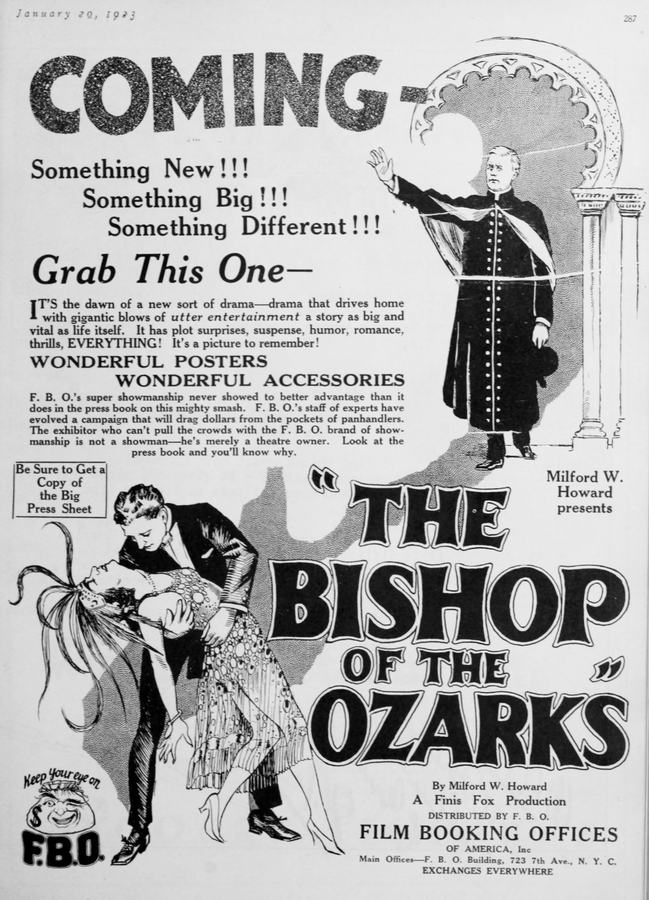
Stepping back into the nascent days of cinematic storytelling, one occasionally stumbles upon a relic that, despite its brevity or perhaps because of it, offers a fascinating glimpse into the nascent anxieties and narrative ambitions of its era. Such is the case with *The Bishop of the Ozarks*, a film from 1923 that, on paper, promises a tantalizing descent into the macabre. At its core, the premise is deceptively simple, yet pregnant with potential: a mad doctor, armed with the formidable, almost supernatural power of telepathy, exerts an unholy dominion over a beautiful young woman. This isn't merely a tale of physical abduction, but a more insidious violation, a psychic enslavement that speaks to primal fears of losing one's very self.
The film, a creation of writers Finis Fox and Milford W. Howard – with Howard also gracing the screen as part of the ensemble – attempts to navigate the treacherous waters of psychological horror in an age where special effects were rudimentary and exposition relied heavily on intertitles and expressive pantomime. The challenge for any silent film tackling such an abstract concept as telepathic control lies in its visualization. How does one convey the invisible tendrils of a mind reaching out, twisting another's will? Here, the performances become paramount, the subtle shifts in gaze, the involuntary tremors, the silent screams of a soul under siege. Derelys Perdue, as the beautiful young girl, bears the heavy burden of conveying this internal struggle. Her portrayal must oscillate between moments of serene innocence and the harrowing contortions of a spirit fighting an unseen adversary. It's a demanding role, requiring a nuanced understanding of silent acting's exaggerated yet precise language.
Milford W. Howard, presumably taking on the role of the titular (or perhaps antagonist) figure, the 'mad doctor,' would have been tasked with embodying malevolence without resorting to overt villainy in every frame. The true terror of a telepathic puppet master lies in their insidious charm, their ability to appear normal even as they orchestrate a reign of terror from within. The film's success hinges on his ability to project an aura of intellectual menace, a subtle, chilling power that emanates from his very being. Comparisons here are difficult without seeing the full performance, but one might imagine a silent film equivalent of Dr. Mabuse, whose hypnotic gaze and psychological manipulation formed the core of his menace in Fritz Lang’s contemporary works. The very notion of a 'Bishop' in the title, combined with 'Ozarks,' suggests a juxtaposition of spiritual authority or rural innocence with a profoundly disturbing aberration, hinting at a corruption that transcends the ordinary.
The supporting cast, including Mrs. Milo Adams, Fred Kelsey, Cecil Holland, George Reed, R.D. MacLean, William Kenton, and Rose Melville, would have been instrumental in establishing the world around this central conflict. Their reactions, their bewilderment, their helplessness in the face of an inexplicable evil, would serve to amplify the doctor's power and the girl's isolation. In a silent film, every gesture, every facial expression, carries immense weight, contributing to the overall atmosphere. One imagines scenes where the girl's loved ones observe her strange, uncharacteristic behavior, their confusion deepening into fear as they realize she is no longer truly herself. This external perspective is crucial for grounding the abstract horror of telepathy in tangible human emotion.
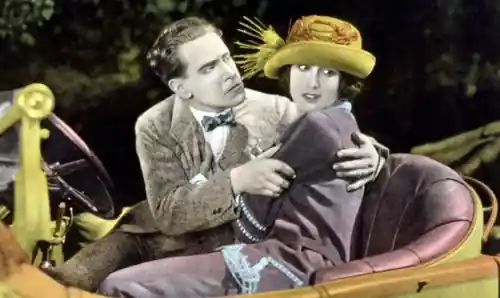
Thematically, *The Bishop of the Ozarks* touches upon profound anxieties of the early 20th century. The burgeoning fields of psychology and parapsychology were both fascinating and terrifying to a public grappling with the unseen forces of the mind. The idea of one's thoughts being accessible or, worse, controllable by another, taps into a deep-seated fear of losing autonomy, a fear perhaps amplified by the social and political upheavals following World War I. It speaks to a vulnerability that transcends physical threats, assaulting the very sanctuary of personal identity. This exploration of mental control echoes, in a more fantastical vein, the societal pressures and psychological traps seen in films like The Price of Silence (1920), which, while dealing with blackmail and social ostracism, similarly delves into the erosion of a character's peace of mind through external manipulation. However, *The Bishop of the Ozarks* elevates this to a supernatural plane, making the threat even more insidious and inescapable.
The direction of the film, uncredited in the provided information, would have been crucial in balancing the theatricality of silent acting with the need for genuine suspense. The pacing, the use of close-ups, and the composition of each shot would all contribute to building a sense of dread. One can envision sequences where the doctor's eyes hold the frame, conveying his sinister intent, or wide shots that emphasize the girl's isolation even when surrounded by others. The Ozarks setting, if utilized effectively, could provide a backdrop of rustic charm contrasting sharply with the urbanity often associated with mad scientists, adding a layer of unsettling incongruity. This rural backdrop might lend a folk-horror sensibility, a sense that ancient, unexplainable evils can fester even in idyllic landscapes.
Comparing this film to others of its era reveals both its unique ambition and its potential limitations. While films like A Woman of Paris: A Drama of Fate (1923) explored nuanced human relationships and societal hypocrisy with sophisticated character development, *The Bishop of the Ozarks* likely leans into more overt genre thrills. It's less concerned with social commentary and more with the visceral impact of its fantastical premise. One might even draw a parallel to the more lighthearted, yet still physically demanding, antics of Maciste poliziotto (1921), where the extraordinary strength of the protagonist is a source of spectacle, much as the doctor's telepathy would have been. Both films bank on the audience's fascination with abilities beyond the human norm, albeit for vastly different narrative purposes.
The challenge of conveying an internal, psychological struggle in a purely visual medium cannot be overstated. Unlike films that rely on clear external conflict, such as the heroic journey in A Long, Long Way to Tipperary (1914) or the dramatic stakes of The Kentucky Derby (1922), *The Bishop of the Ozarks* requires its audience to infer a great deal from subtle cues. The success of the film hinges on its ability to make the invisible visible, to externalize the internal horror through the actors' craft and the director's visual ingenuity. This is where the artistry of silent cinema truly shines, or, conversely, where it can falter if not executed with precision.
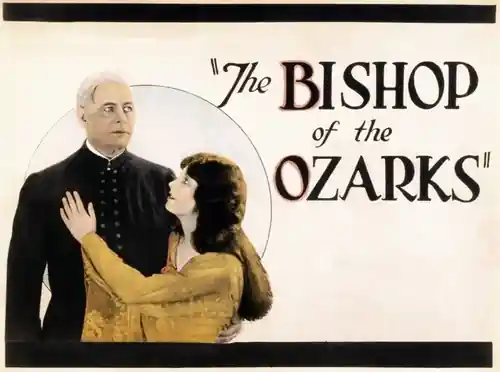
Consider the broader landscape of films from this period. While Sherlock Brown (1922) offered comedic mystery and The Primitive Woman (1918) explored gender dynamics, *The Bishop of the Ozarks* ventures into a more fantastical, almost proto-sci-fi territory. It stands apart by embracing a supernatural element as its core conflict, rather than a mere plot device. This willingness to explore the unknown, the inexplicable, sets it on a different path from many of its contemporaries. One might even see echoes of early European horror, like the unsettling atmosphere of Moderens Øjne (1915), which also delved into psychological distress, albeit through different means. The Danish film's focus on a mother's grief and madness, though distinct, shares with *Bishop* an interest in the fragile human psyche.
The casting of Milford W. Howard not only as a writer but also an actor is intriguing, suggesting a deep personal investment in the material. This dual role often imbues a project with a particular vision, allowing the writer's original intent to be more faithfully translated to the screen through their own performance. It speaks to the collaborative, often multi-hyphenate nature of early filmmaking. The film's place in the pantheon of early horror or psychological thrillers is significant, even if it remains a lesser-known title. It contributes to the evolving cinematic language for depicting the unseen, the mental, and the terrifyingly personal. It’s a testament to the fact that even with limited technology, filmmakers were eager to push boundaries and explore the darkest corners of the human condition.
The film's exploration of control and agency also finds distant parallels in the broader narrative of silent cinema, where characters often found themselves at the mercy of forces beyond their control, be they societal expectations as in Love Everlasting (1913) or the whims of fate. However, the explicit, supernatural nature of the doctor's telepathy in *The Bishop of the Ozarks* elevates this theme to a more visceral, almost existential threat. It's not just circumstance, but a direct, malicious assault on the very core of one's being. The film likely capitalizes on the audience's discomfort with the unknown, making the doctor's powers all the more frightening because they defy rational explanation. This contrasts sharply with films like The Sport of the Gods (1921), which grounds its drama in socio-economic realities.
In conclusion, *The Bishop of the Ozarks* represents a fascinating, albeit perhaps elusive, piece of cinematic history. Its audacious premise of telepathic control in an age before sophisticated visual effects speaks volumes about the daring spirit of early filmmakers. It challenged actors to convey complex internal states through sheer physical and emotional expression, and it invited audiences to grapple with abstract horrors. While we may never fully recover its original impact without experiencing it firsthand, its narrative skeleton alone suggests a profound engagement with the darker aspects of human potential and vulnerability. It's a reminder that the seeds of psychological thrillers and supernatural horror were sown deeply in the silent era, blossoming in often unexpected and daring ways. The film is a whisper from a bygone era, echoing the fears of a world just beginning to understand the power of the moving image to explore the unseeable. Its legacy, however faint, persists in the annals of early genre cinema, a testament to the enduring allure of a mind unbound by conventional morality and armed with extraordinary, terrifying power.
IMDb 6.9
1929
Community
Log in to comment.