DbcultAccessing Vault...
Cult Review
Senior Film Conservator
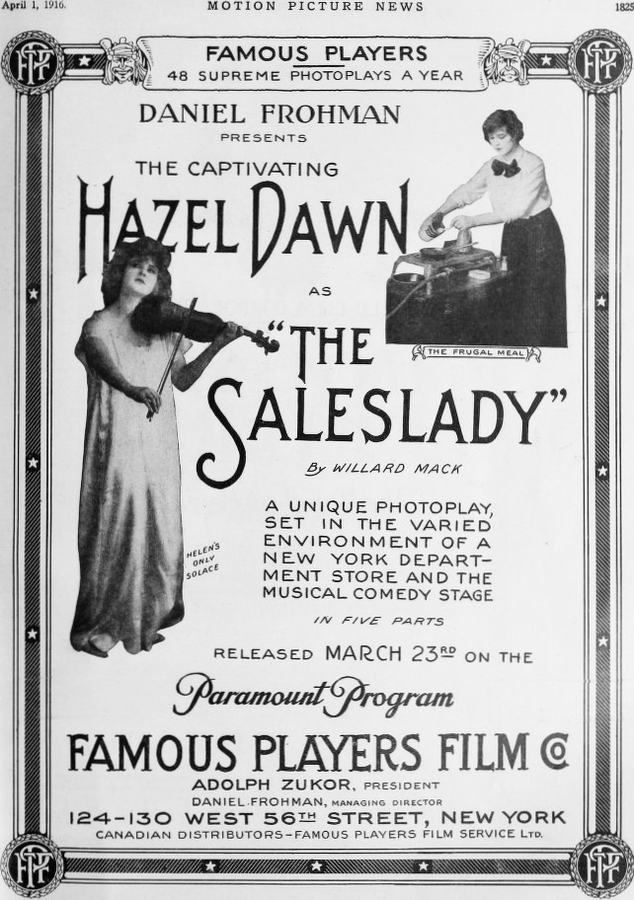
The flickering silver screen of the early 20th century, often dismissed by casual observers as merely a rudimentary precursor to modern cinematic grandeur, frequently housed narratives of profound social commentary and deeply human drama. Among these forgotten gems, Willard Mack's 1917 production, 'The Saleslady', emerges as a compelling testament to the era's storytelling prowess, offering a nuanced exploration of resilience, class struggle, and the indomitable spirit of a woman navigating a treacherous urban landscape. Starring the luminous Hazel Dawn, alongside Arthur Morrison, Irving Cummings, Dorothy Rogers, and Clarence Handyside, this silent drama, penned by Mack himself, is far more than a simple melodrama; it is a vital historical artifact reflecting the anxieties and aspirations of a rapidly modernizing America.
Our protagonist, Helen Shirley, embodied with exquisite fragility and burgeoning strength by Hazel Dawn, begins her journey as a quintessential country lass. Her migration to the sprawling, cacophonous metropolis of New York City is not born of ambition or wanderlust, but of the harsh exigencies of poverty. This initial premise immediately situates the film within a rich tradition of narratives exploring the clash between rural purity and urban corruption, a theme perennially popular in silent cinema. Unlike the calculated, often cynical protagonists seen in later, more cynical eras, Helen is characterized by an almost naive guilelessness, a quality that renders her particularly vulnerable to the city's myriad dangers. It is this very vulnerability that makes her an easy mark for a notorious band preying upon young, unsophisticated girls—a stark reminder of the social ills that plagued burgeoning urban centers.
The boarding house, initially perceived as a haven, quickly reveals itself as a headquarters for this nefarious gang, a chilling detail that underscores the pervasive threat lurking beneath the city's glittering surface. This plot point, while melodramatic in its execution, serves as a powerful commentary on the predatory nature of urban life for unchaperoned women, echoing similar concerns found in contemporaneous works like The Love Girl, which also delved into the moral ambiguities of city life. Helen’s initial failure to secure employment further exacerbates her precarious situation, pushing her to consider unconventional means of livelihood. Her decision to offer violin lessons, a gentle pursuit rooted in her country sensibilities, becomes an unexpected pivot in her narrative, leading her down a path of profound compassion.
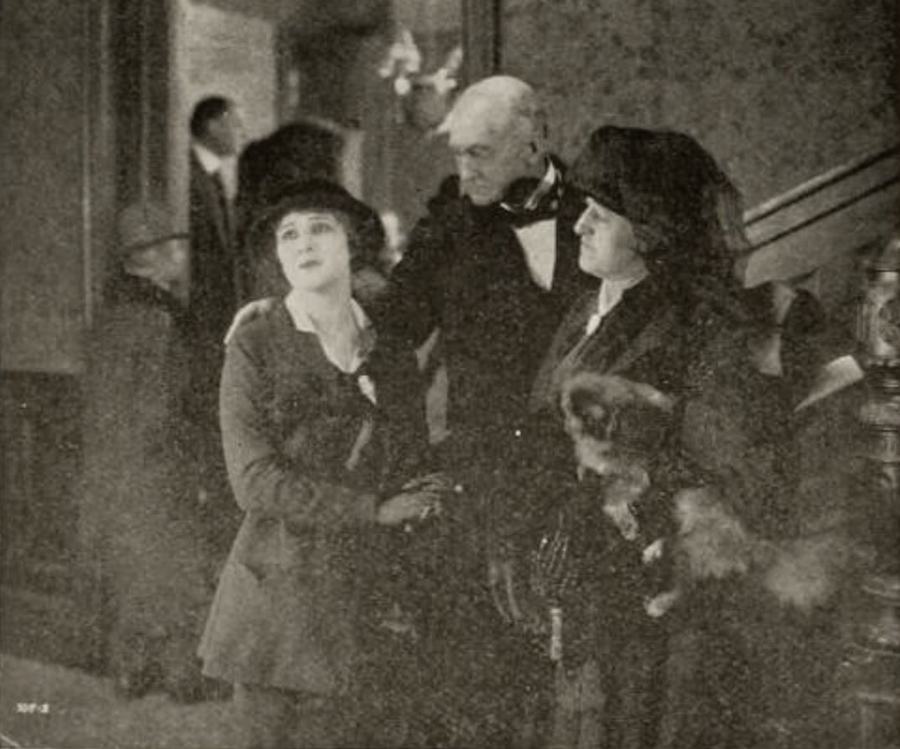
It is during her violin practice that Helen overhears the agonizing cough of a girl in the adjacent room, a sound that pierces the thin walls and, more significantly, her tender heart. This seemingly minor detail blossoms into a pivotal moment, revealing Helen's inherent goodness and moral fortitude. Investigating, she discovers the girl in the advanced stages of tuberculosis, a disease that ravaged populations in the early 20th century, often claiming the lives of the impoverished. The grim diagnosis—that only immediate removal to the mountains will save her—presents Helen with an impossible dilemma. Practically penniless, her only source of amusement and perhaps her last tangible link to her past life, is a beautiful dog. In a truly heart-wrenching act of impulsive compassion, Helen sells her beloved canine companion, sacrificing her own comfort and emotional support to secure the girl's passage to recovery. This selfless deed, while admirable, leaves Helen practically destitute, leading to her swift ejection from her room.
This sequence, though brief in plot summary, is rich with thematic weight. It highlights the stark realities of poverty and illness, and Helen's response elevates her beyond a mere victim of circumstances; she becomes an agent of change, however small. Her sacrifice is a stark contrast to the greed and indifference often depicted in the urban landscape, suggesting that even in the darkest corners, human kindness can flourish. It is a moment that resonates with the raw emotional power often found in silent films, where grand gestures and facial expressions conveyed depths of feeling that intertitles could only hint at. This kind of pure, selfless act of charity is a recurring motif in cinema of the period, often serving as a moral compass for audiences, much like the benevolent interventions seen in films such as The Majesty of the Law, where personal integrity often triumphs over systemic failures.
Just as Helen's situation appears most dire, a glimmer of hope emerges in the form of young Bruce Kerwin, a wealthy New Yorker played with a certain earnest charm by Irving Cummings. Attracted by Helen's inherent beauty and, one presumes, her evident grace even in destitution, Bruce learns of her plight. His intervention, though indirect—inducing one of the other girls in the house to "loan" Helen some money—is crucial. This introduces the classic trope of the wealthy benefactor, a common narrative device in silent cinema, often used to bridge the chasm between social classes. However, it's not simply a deus ex machina; Bruce's attraction is rooted in Helen's character, suggesting a depth beyond mere superficiality. This dynamic sets the stage for a romance that challenges societal norms, a theme explored with varying degrees of success in films like The Banker's Daughter, where class distinctions often dictate romantic outcomes.
Through the combined efforts of Burke, a mounted policeman, and his sweetheart, Helen eventually secures employment in a department store. This new setting, while seemingly more respectable, introduces a fresh set of challenges, highlighting the pervasive nature of vulnerability for women in the workplace. The advances of a predatory floorwalker, a character type often used to represent institutional sexism and abuse of power, quickly annoy Helen. Her principled repulsion of his advances leads to her unjust discharge, a stark reminder that even legitimate employment could be fraught with peril. Yet, Helen's unyielding spirit once again shines through. Her decision to tell her story to the matron, rather than simply accepting her fate, demonstrates a burgeoning sense of agency. This act of defiance leads her to the manager, who, upon hearing her truthful account, reinstates her and presumably reprimands the floorwalker. This small victory is significant, illustrating that even within rigid hierarchies, justice can occasionally be found through persistence and honesty. It is a subtle nod to the burgeoning women's rights movement, suggesting that a woman's voice, when heard, could effect change.
The romance between Helen and Bruce deepens, but their relationship is not without its formidable obstacles. The floorwalker, seeking revenge or perhaps simply delighting in sowing discord, informs Bruce's father, the elder Kerwin (Clarence Handyside), of his son's involvement with a "shopgirl." This revelation ignites a furious row between father and son, a classic dramatic confrontation that underscores the rigid class distinctions of the era. Bruce's father, representing the entrenched aristocracy, cannot countenance his son's affection for someone of a lower social standing. However, Bruce, demonstrating a profound commitment to Helen, defies his father's wishes, leaving his home and subsequently marrying Helen. This act of rebellion is a powerful statement, elevating their love story beyond mere sentimentality to a declaration of personal autonomy and a challenge to societal expectations. Such narratives of love triumphing over class barriers were immensely popular, providing aspirational fantasy for audiences, much like the romantic entanglements in The Mail Order Wife, though often with less dramatic conflict.
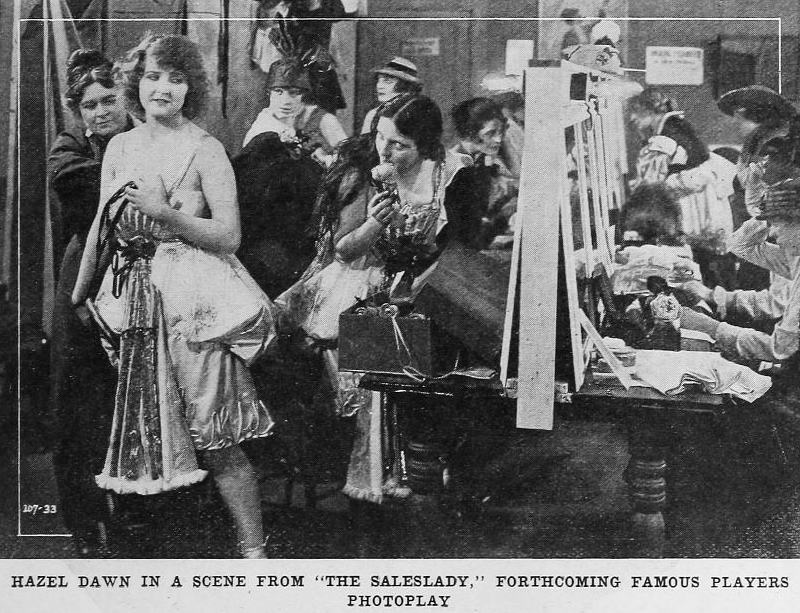
Tragedy, however, strikes once more. Soon after their marriage, Bruce is injured, leaving Helen with the burden of supporting them. This setback, rather than breaking her spirit, compels Helen to embrace a daring new path: the stage. Her decision to try her luck in theater is a remarkable leap, transforming her from a vulnerable country girl into a confident performer. And what a transformation it is! Helen proves to be a tremendous success, captivating audiences and scoring a great hit. This segment of the film is crucial for Helen's character development, showcasing her adaptability, talent, and an inner strength that blossoms under pressure. The stage provided a unique avenue for women to achieve independence and fame during this period, often a stark contrast to their limited roles in conventional society. Hazel Dawn's portrayal here would have been particularly vital, conveying Helen's stage presence through gesture and expression, a true test of a silent film actor's abilities.
The true dramatic genius of Mack's screenplay unfolds in the subsequent chapters of Helen's theatrical career. Among her many admirers, captivated by her stage presence, is none other than the elder Kerwin, Bruce's father. He remains blissfully unaware that the enchanting actress he so admires is, in fact, his estranged daughter-in-law. This exquisite piece of dramatic irony is the narrative's crowning achievement, creating a tension and anticipation that would have gripped silent film audiences. Helen, of course, is acutely aware of his identity. With remarkable grace and strategic acumen, she orchestrates a meeting with him, not as the scorned shopgirl, but as the celebrated stage star. In this carefully constructed encounter, she adroitly wins his heart, charming him with her wit and talent before revealing her true identity. This revelation, when it comes, is designed not as a weapon, but as a bridge to reconciliation. It is a testament to Helen's growth, her ability to navigate complex social dynamics, and her unwavering desire to mend the fractured family.
This resolution, while perhaps leaning into the melodramatic conventions of the time, offers a satisfying emotional arc. It suggests that true character and talent can transcend superficial class distinctions, and that love, ultimately, can heal old wounds. The elder Kerwin's transformation, from a rigid, prejudiced patriarch to an admiring, accepting father-in-law, is a powerful symbolic victory for Helen and for the film's underlying message of social fluidity. It is a narrative choice that speaks to the era's hopeful, if sometimes idealized, vision of social progress. The film, in this sense, echoes broader cinematic themes of transformation and societal acceptance, often seen in films where characters defy expectations, much like the intricate social maneuvering found in The Social Highwayman, albeit with different moral implications.
At the heart of 'The Saleslady' is the captivating performance of Hazel Dawn. Known for her expressive eyes and graceful demeanor, Dawn imbues Helen Shirley with a compelling blend of vulnerability and steely resolve. Her journey from wide-eyed innocence to sophisticated stage siren is rendered with remarkable conviction, demonstrating the nuanced acting required in the silent era, where emotions were conveyed through exaggerated yet precise gestures, facial expressions, and body language. She avoids the pitfalls of caricature, maintaining a core authenticity that makes Helen's triumphs and tribulations deeply felt by the audience. Her ability to convey Helen's transformation without the aid of dialogue is a masterclass in silent film acting.
The supporting cast, including Arthur Morrison, Irving Cummings, Dorothy Rogers, and Clarence Handyside, provide solid foundations for Dawn's performance. Cummings, as the earnest Bruce Kerwin, portrays a convincing romantic lead who transcends his privileged background. Handyside, as the elder Kerwin, skillfully navigates the character's arc from stern patriarch to benevolent admirer, a testament to the power of a well-executed character transformation. While specific details about cinematography are scarce for many films of this vintage, it is safe to assume that the visual storytelling would have relied on conventional silent film techniques: clear shot compositions, effective use of intertitles to convey dialogue and narrative progression, and lighting designed to emphasize dramatic moments and character emotions. The film’s pacing, a crucial element in silent features, would have been carefully managed to build tension and allow emotional beats to land effectively.
Willard Mack's 'The Saleslady' stands as a compelling example of early American cinema's capacity for intricate storytelling and social commentary. Its narrative, while rooted in the melodramatic traditions of the era, offers timeless insights into themes of urban survival, class conflict, the empowerment of women, and the redemptive power of compassion. The film's examination of the dangers faced by young women in the city, the rigidity of social hierarchies, and the eventual triumph of personal merit over inherited status, resonates even today. In an age where discussions about social mobility and gender equality continue to evolve, Helen Shirley's journey provides a fascinating historical lens through which to view these ongoing struggles.
For enthusiasts of silent film, 'The Saleslady' offers a valuable opportunity to appreciate the artistry and narrative sophistication that characterized this formative period of cinema. It reminds us that even without synchronized sound, films possessed an extraordinary ability to evoke powerful emotions, tell complex stories, and reflect the societal currents of their time. The performance of Hazel Dawn, in particular, solidifies her place as an underrated star of the silent screen, capable of carrying a demanding narrative with grace and emotional depth. This film, alongside other significant works of the era like Intolerance, though vastly different in scope, underscores the silent film era's capacity for profound social engagement and artistic innovation.
Ultimately, 'The Saleslady' is more than just a historical curiosity; it is a vibrant narrative that speaks to the enduring human spirit. It celebrates the resilience of an individual against overwhelming odds, the unexpected kindness that can emerge in the darkest of times, and the transformative power of self-belief. Its intricate plot, driven by compelling character development and sharp social observation, ensures its place as a notable entry in the annals of silent film history, deserving of renewed attention and appreciation.

IMDb —
1928
Community
Log in to comment.