DbcultAccessing Vault...
6.2/10
Senior Film Conservator
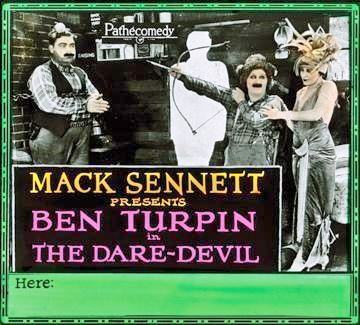
A definitive 6.2/10 rating for a film that redefined the boundaries of cult cinema. The Dare-Devil remains a cornerstone of transgressive art.
The opening tableau of The Dare-Devil thrusts the audience into a bustling studio lot where the clamor of clapperboards and the scent of oil‑slicked wood converge. Art Rowlands, whose eyes betray a perpetual squint, wanders onto the set as an extra, his gait unsteady, his demeanor a study in earnest bewilderment. The camera lingers on his misaligned gaze, a visual gag that foreshadows the cascade of errors to follow.
A sudden commotion erupts when a seasoned stunt coordinator, portrayed by Gordon Lewis, misplaces a crucial harness. Rowlands, oblivious to the gravity of the situation, steps forward, offering a hand that is both literal and metaphorical. The ensuing sequence—an unplanned tumble from a scaffold, a frantic scramble to catch a falling prop—exemplifies the film’s commitment to kinetic comedy, each beat punctuated by the slapstick precision that defined Sennett’s productions.
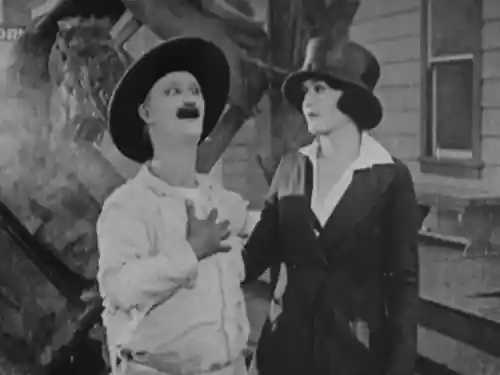
Madeline Hurlock, embodying the studio’s leading lady, delivers a performance that oscillates between coquettish allure and exasperated patience. Her interactions with Rowlands are laced with a subtle commentary on gender dynamics within early Hollywood, as she alternately rescues and rebukes the hapless stuntman. The chemistry between Hurlock and Rowlands is a study in contrast: her poise against his clumsy earnestness creates a visual rhythm that propels the narrative forward.
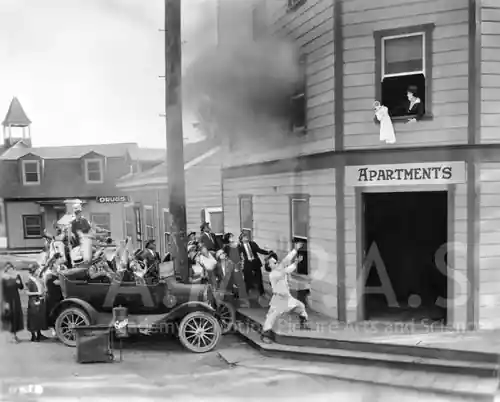
Ben Turpin’s cameo, a brief interlude of exaggerated physicality, serves as a reminder of the era’s penchant for visual exaggeration. His cross‑eyed stare mirrors Rowlands’ own, yet Turpin’s movements are deliberately hyperbolic, underscoring the film’s meta‑commentary on the nature of spectacle. The juxtaposition of Turpin’s seasoned slapstick against Rowlands’ naïve improvisation highlights the film’s thematic preoccupation with the apprenticeship of chaos.
The screenplay, crafted by Wagner and Sennett, weaves a tapestry of mistaken identities that rivals the convolutions of classic farce. When a rival studio attempts to poach the film’s star, the plot thickens: Rowlands is mistaken for a celebrated dare‑devil, a misidentification that spirals into a series of increasingly audacious stunts. The narrative’s escalation—from a simple pratfall to a perilous high‑wire act over a simulated canyon—mirrors the protagonist’s own ascent from obscurity to accidental fame.
Cinematographer John J. Richardson employs a dynamic visual language, employing rapid cuts and inventive angles to amplify the sense of vertigo. In the climactic set piece, the camera tracks Rowlands as he hurtles across a collapsing façade, the frame trembling in tandem with his precarious balance. This kinetic framing not only heightens tension but also serves as an homage to the daring physicality of contemporaneous works such as The One-Man Trail, where the frontier of danger is similarly explored.
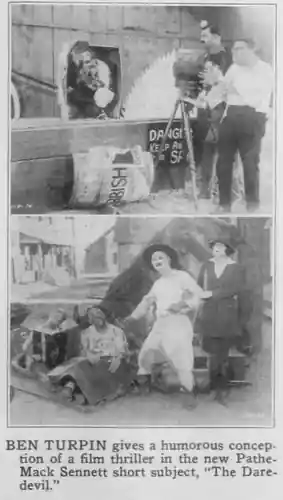
The film’s mise‑en‑scene is saturated with a palette that, while rendered in monochrome, evokes the vibrancy of its comedic intent. The set designers employ exaggerated props—oversized pistols, comically tall ladders—that function as visual metaphors for the inflated egos of the stunt world. Each prop becomes a character in its own right, contributing to the layered satire that permeates the film.
A recurring motif is the use of mirrors, both literal and figurative, to reflect the duality of performance and authenticity. In a scene where Rowlands rehearses a stunt before a mirrored wall, his distorted reflection underscores the fragmented nature of his identity: part performer, part impostor. This visual echo resonates with the thematic concerns of Toonerville's Fire Brigade, where the line between chaos and control is perpetually blurred.
The score, though sparse, punctuates moments of heightened tension with a jaunty brass motif that mirrors the film’s brisk tempo. When Rowlands teeters on the edge of a collapsing set, the music swells, a crescendo of anticipation that amplifies the audience’s breathlessness. The auditory restraint aligns with the silent era’s reliance on visual storytelling, allowing the physical comedy to breathe without auditory interference.
Andy Clyde’s role as the beleaguered director provides a meta‑narrative layer, his frantic gestures and exasperated mutterings offering a glimpse into the chaotic machinery behind early film production. Clyde’s performance is a study in controlled pandemonium, his eyes darting between the camera and the on‑set mayhem, embodying the director’s perpetual battle to harness disorder.
The film’s pacing is relentless, each scene segueing into the next with a seamless fluidity that mirrors the unbroken reel of a silent picture. The editing, overseen by Robert H. Wagner, employs a rhythmic montage that juxtaposes the protagonist’s blunders with the polished precision of seasoned stuntmen, creating a visual dialogue that underscores the film’s central irony.
When the narrative reaches its apex—a daring leap from a towering scaffold onto a moving carriage—the audience is treated to a masterclass in suspenseful choreography. Rowlands, clutching a rope that appears to fray with each heartbeat, embodies the archetype of the tragicomic hero. The moment is accentuated by a flash of sea‑blue lighting—a visual cue that evokes both danger and exhilaration—which bathes the set in an otherworldly hue, momentarily suspending the film’s monochrome reality.
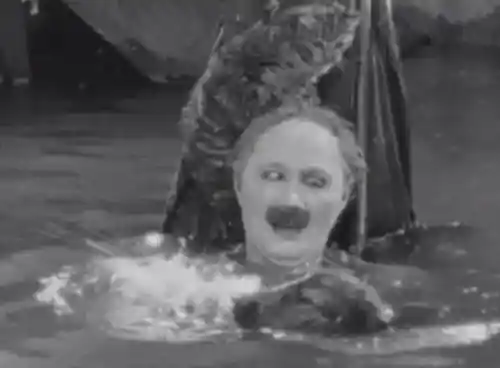
The denouement, rather than offering a tidy resolution, leaves Rowlands perched atop the carriage, his cross‑eyed stare fixed on the horizon, a silent testament to the perpetual allure of the spotlight. The final frame lingers, inviting contemplation on the cyclical nature of ambition and the ever‑present specter of performance.
Beyond its immediate comedic brilliance, The Dare‑Devil functions as a cultural artifact, encapsulating the transitional period of early twentieth‑century cinema where stunt work began to emerge as a distinct art form. Its self‑reflexive humor anticipates later meta‑cinematic endeavors, positioning the film as a precursor to works like Have You Heard of Schellevis‑Mie?, which similarly interrogate the boundaries between reality and performance.
The supporting cast, including Natalie Kingston and Kewpie Morgan, provide nuanced layers of comic relief, their performances punctuated by exaggerated gestures that echo the physicality of Chaplin’s pantomime while retaining a distinct Sennettian flair. Their contributions enrich the film’s tapestry, ensuring that each frame is populated with purposeful absurdity.
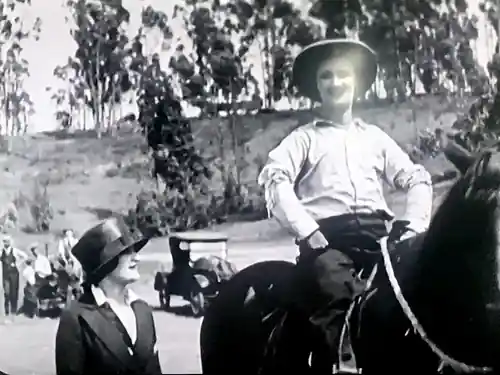
From a scholarly perspective, the film invites analysis of its intertextual references. The recurring theme of the “dare‑devil” archetype aligns with the mythic hero’s journey, yet subverts it through the lens of slapstick, rendering the hero’s triumphs both spectacular and ludicrous. This duality resonates with the narrative structure of Peer Gynt, where the protagonist’s fantastical exploits are tempered by an undercurrent of existential questioning.
The film’s legacy endures in its influence on subsequent stunt‑centric comedies. Its daring set pieces prefigure the elaborate sequences found in later silent epics such as The Governor's Ghost, where the interplay between danger and humor reaches new heights. Moreover, the film’s emphasis on physical comedy over dialogue underscores the universal language of visual humor, a principle that continues to inform modern cinema.
In terms of preservation, the surviving prints of The Dare‑Devil exhibit remarkable clarity, allowing contemporary audiences to appreciate the nuanced performances and intricate set designs. Restoration efforts have ensured that the film’s original frame rate is maintained, preserving the intended comedic timing that is essential to its impact.
For viewers seeking a broader context, the film’s thematic resonance can be juxtaposed with the melodramatic intensity of Blind Youth, offering a comparative study of how silent cinema navigated the spectrum between tragedy and comedy. Similarly, the narrative’s exploration of identity aligns with the psychological undercurrents present in The Unknown, albeit through a markedly lighter tonal lens.
The film’s humor, while rooted in the physicality of its era, transcends temporal boundaries. Modern audiences, accustomed to rapid-fire editing and CGI spectacle, will find in The Dare‑Devil a refreshing reminder that comedy can thrive on simplicity, timing, and the earnestness of a performer who, despite his flaws, persists in the face of absurdity.
In sum, The Dare‑Devil stands as a testament to the ingenuity of early filmmakers who dared to blend narrative daring with slapstick audacity. Its layered performances, inventive set pieces, and self‑aware commentary render it a pivotal work in the silent comedy canon, deserving of both scholarly attention and unbridled enjoyment.
IMDb —
1917
Community
Log in to comment.