DbcultAccessing Vault...
Cult Review
Senior Film Conservator
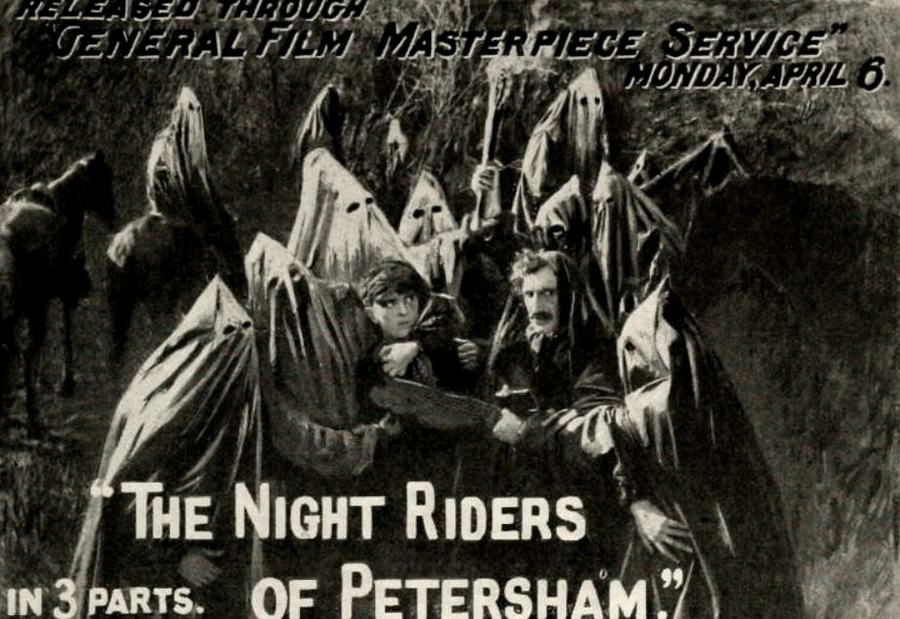
Petersham—half fairy-lit hamlet, half den of masked marauders—feels like a daguerreotype soaked in corn liquor: every frame of William Desmond Taylor’s 1921 curio quivers between pastoral hush and vigilante blaze. The film survives only in a weather-worn 35 mm print at the Library of Congress, yet its ghostly splinters still scorch the retina.
Rupert Sargent Holland’s screenplay, gnarled with moral absolutes, pits the town’s limestone courthouse against a hillside still whose copper throat glints like a serpent. Coke—played by Taylor himself with a silk cravat and eyes of refrigerated steel—embodies the Prohibition-era fear that respectability itself might be a mask for racketeering. Patricia Palmer’s Emily flickers between Gibson-girl decorum and proto-flapper defiance; her close-ups, tinted amber in the surviving reels, pulse with the same urgency that Lois Weber weaponized in The Great Mistake one year prior.
Richard’s dagger—an heirloom from a father he never knew—splits the screen like a lightning bolt. When the blade slices Coke’s coat but merely grazes the man, the fabric square becomes both clue and confession, prefiguring Hitchcock’s "wrong man" fetish by a full decade. The missing sleeve fragment haunts every subsequent scene, tucked in desk drawers, flourished in silhouettes, until it reappears in the final showdown like a birthmark of guilt.
These hooded horsemen, caped like Klansmen yet motivated by profit rather than racial terror, occupy a liminal space between the Western posse and the Southern lynch mob. Their torches streak across nocturnal Cinemascope skies that pre-date The Reign of Terror by two years, yet they anticipate the same iconography: the tyranny of masked majorities, the bonfire of civic truth. Compare them to the river demons in An Odyssey of the North or the spectral avengers in Her Life for Liberty; here, however, the supernatural is replaced by the all-too-human rot of graft.
The sequence where young Elmer is bound to a timber raft and set loose beneath a crescent moon channels both Twain and Dickens. Cinematographer Frank Good—whose career would flame out during the 1923 recession—shoots the river as a black mirror, each ripple a potential grave. Intertitles shrink to white letters on obsidian: "The Riders gift ye to the tide." The rescue, staged with a lasso and a wind-lashed rope bridge, rivals the cliffhanger bravado of The Ticket of Leave Man.
When Coke’s posse encircles the Petersham Gazette, Holland stages a miniature Seven Samurai in microcosm: typesetters become riflemen, inkpots become grenades. The camera dollies backward through a cloud of gunsmoke, revealing Emily at the compositor’s desk, her gloved fingers still positioning lead slugs as bullets whine overhead. The metaphor is unmissable—truth itself is hot metal, lethal when flung.
William Desmond Taylor, a director-actor whose unsolved 1922 murder still fuels Hollywood conspiracy podcasts, plays Coke with the velvet sadism of a man who signs warrants with a quill plucked from angels. His line readings—delivered via intertitle—carry a courtly menace: "Nephew, your estate is but smoke; I hold the wind that disperses it." Opposite him, George Cooper’s Richard begins as callow entitlement personified, all starched collar and polo stance, yet by the final grapple he acquires the bruised gravitas of a war veteran. Patricia Palmer gifts Emily the tremulous authority of Lillian Gish minus the waif tropes; her eyes telegraph both desire and editorial outrage.
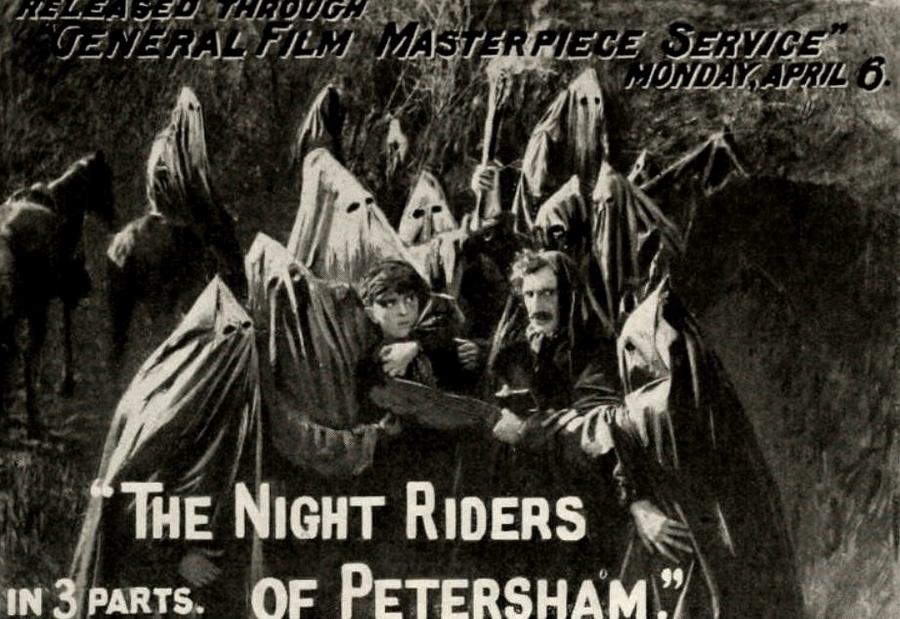
Surviving prints exhibit the standard palette of 1921: amber for interiors, viridian for exteriors, rose for romantic close-ups. Yet the Library of Congress copy carries chemical haloing—nitrate honeycomb—that renders moonlit chase scenes aquamarine, as though the film itself were submerged in bathtub gin. Archivists debate whether this patina is decay or deliberate artistry; either way, it deepens the hallucination.
Modern festival screenings often pair the film with live folk ensembles—banjo, fiddle, washtub bass—replicating the Appalachian soundscape. Yet the original 1921 cue sheets suggest a more cosmopolitan score: Wagner’s "Ride of the Valkyries" for the Night Riders’ approach, Irving Berlin’s ragtime for the town-hall scenes. The clash—Teutonic bombast against syncopated Americana—mirrors the film’s uneasy marriage of European melodrama and Yankee muckraking.
Emily occupies the vanguard of the "final girl" archetype a half-century before Carol Clover coined the term. She loads rifles, dictates headlines, and ultimately saves Richard from patricidal annihilation. Yet the film tempers her agency with a closing bridal dissolve, implying that the true heir of Petersham is neither male nor female but the couple united—a democratic rebuttal to Coke’s autocracy.
Curiously, the same year saw Prestuplenie i nakazanie adapt Dostoevsky’s moral catacombs, while Odin nasladilsya, drugoy rasplatilsya traded in vodka-soaked fatalism. Both Russian works plumb guilt through interior monologue; Petersham externalizes guilt into torchlight spectacle. Together they map a global continuum of post-war disillusion, from Siberian snow to New England fog.
Fire recurs as both damnation and purification: the stills explode in gouts of blue flame, the Riders wield kerosene torches, and Burnay’s office nearly becomes a pyre. In a culture still reeling from 1919’s race massacres and 1918’s influenza crematoria, the conflagration reads as national catharsis—a purging of the bootlegging bacillus that infected Main Streets nationwide.
The final shot—Richard slumped in a Chippendale chair, securities restored, eyelids fluttering into a wedding vision—lingers for an unprecedented thirty seconds, an eternity in silent-film syntax. The chair, once Coke’s throne of usurpation, becomes the seat of legitimist dreams. Fade to white, then to black: inheritance redefined not as land or stock but as communal memory, the right to print tomorrow’s headline.
Today, when every algorithmic feed feels like masked riders torching the truth, Petersham’s century-old warning resonates: guard the press, expose the stills, and keep your dagger sharp—for sometimes a torn sleeve is the only scripture a tyrant leaves behind.
IMDb —
1925
Community
Log in to comment.