DbcultAccessing Vault...
Cult Review
Senior Film Conservator
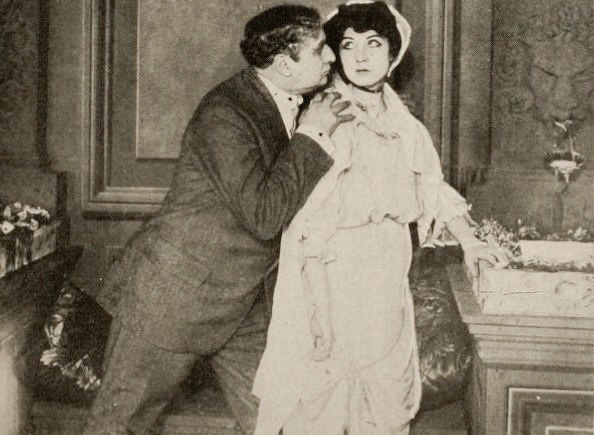
In the nascent years of the feature film, few directors possessed the sociological eye of J. Searle Dawley. In his 1915 opus, The Daughter of the People, Dawley transcends the mere melodrama of the 'cotton famine' to deliver a searing indictment of early American capitalism. The setting of Rockton is not merely a backdrop; it is a claustrophobic character, a town whose very heartbeat is synchronized with the thrum of the Stillman and Thornton looms. When Arthur Stillman (played with a chilling, aristocratic detachment by Frederick de Belleville) silences those machines, he doesn't just halt production—he lobotomizes the community's hope.
The cinematic language employed here is remarkably sophisticated for its era. Dawley utilizes the stark contrast between the opulent, light-filled interiors of the Stillman estate and the shadowy, soot-stained hovels of the laborers to emphasize a chasm that no amount of philanthropy could bridge. Unlike the more visceral, dirt-under-the-fingernails realism found in Germinal; or, The Toll of Labor, this film focuses on the psychological toll of economic manipulation, framing Stillman’s hoarding not just as a crime of greed, but as a calculated act of social dominance.
At the center of this storm stands Dell Hamilton, portrayed by Laura Sawyer with a nuanced vulnerability that eschews the histrionics common in the silent era. Dell is the moral compass of Rockton, yet her journey is one of tragic compromise. Her decision to enter into what she believes is a legitimate marriage with Stillman is a classic 'Damsel in Distress' trope inverted; she isn't saving herself, but her entire tribe. This self-immolation on the altar of the community’s survival provides the film with its most potent emotional resonance.
As we watch Dell traverse the nine-mile expanse between the starving town and the hidden warehouse of plenty, her physical journey mirrors her internal transition from a simple mill girl to a political pawn. The film captures the exhaustion of the working class through her weary eyes. It’s a performance that rivals the psychological depth seen in The Actress' Redemption, where the protagonist's public identity is at odds with her private suffering.
Arthur Stillman is a fascinating specimen of early cinema villainy. He is not a mustache-twirling caricature but a man of refined cruelty. His proposal to Dell—work for the people in exchange for her soul—is presented with a business-like coldness that is more terrifying than any overt threat. The 'sham marriage' subplot was a staple of the time, yet here it serves a deeper thematic purpose: it illustrates how the elite view the law as a flexible tool for personal gratification.
The irony that Dawley explores is that Stillman eventually falls in love with the woman he defrauded. This transformation from predator to genuine lover is handled with a disturbing complexity. We see a man who has everything but can only possess the one thing he truly wants through a lie. This moral rot reminds the viewer of the spiritual decay depicted in The Magic Skin, where every desire fulfilled comes at a devastating cost to the soul.
The sequence where Sam Lloyd (Robert Broderick) discovers the cotton warehouse is a masterclass in tension. The visual of the massive bales of 'white gold' sitting idle while children starve is a powerful indictment of the hoarding culture. When Sam returns to Rockton to incite the mob, the film shifts from a domestic drama to a proto-revolutionary thriller. Bill Slinger, the 'strapping big-hearted fellow,' represents the raw, unrefined power of the masses—a force that Stillman can only contain through deception.
This segment of the film shares a kinetic energy with The Corbett-Fitzsimmons Fight, not in terms of sports, but in the raw physicality of the conflict. The mill hands aren't just angry; they are desperate animals backed into a corner. Dawley captures this collective fury through wide shots of gathering crowds that feel genuinely spontaneous and dangerous.
The third act of The Daughter of the People is perhaps its most cynical and modern. When Dell returns to the mill, expecting to be hailed as a savior, she is met with the cold shoulder of suspicion and the hot fire of resentment. Her father's renunciation is a visceral blow, highlighting the fragility of communal bonds when they are tested by the appearance of betrayal. The people see not a savior, but a woman who has 'sold out' to the master of the house.
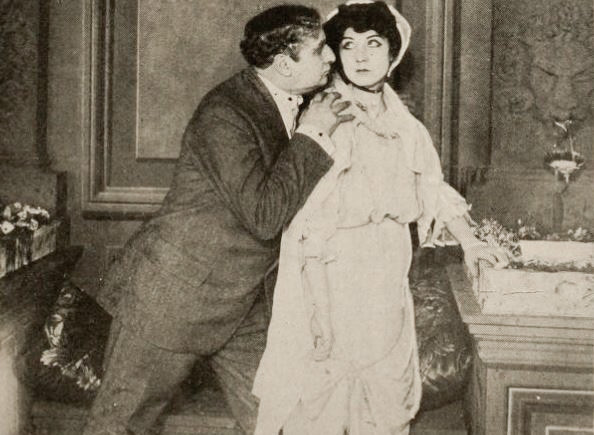
This themes of social alienation and the misunderstanding of noble intent are also present in A Fatal Lie. Dell’s isolation is total. Even Sam, her supposed lover, has moved on, his heart hardened by her perceived abandonment. The scene in the boiler room—a place of heat and pressure—is the perfect setting for Dell’s final realization that her old life is incinerated. She is a woman caught between two worlds and belonging to neither.
J. Searle Dawley’s direction is characterized by a restraint that was rare in 1915. He allows the camera to linger on the faces of the mill hands, capturing the hollowed-out cheeks and the sunken eyes of the impoverished. The editing, while rudimentary by modern standards, creates a rhythmic pulse between the idle machinery of the mill and the growing agitation of the townsfolk. The use of natural light in the outdoor scenes—particularly the journey to Springdale—adds a documentary-like quality that grounds the melodrama in a tangible reality.
Comparing this to Cameo Kirby or A Gentleman from Mississippi, one can see that Dawley was pushing the medium toward a more somber, socially conscious form of storytelling. He wasn't just interested in entertaining; he wanted to provoke a reaction to the industrial injustices of his time.
The film’s conclusion is its most controversial and fascinating element. Dell’s decision to return to Stillman is not presented as a romantic triumph, but as a weary acceptance of fate. She realizes that Stillman, despite his villainy, is the only one who truly 'sees' her, even if that vision is skewed by his own obsession. It is a psychological surrender that echoes the grim resolutions of Dostoevsky, particularly the themes of guilt and eventual submission found in Prestuplenie i nakazanie.
Is Dell a victim of Stockholm Syndrome, or is she a pragmatist who realizes that in a world of starvation and rejection, the only safety lies with the devil you know? Dawley leaves this question hanging in the air, refusing to provide the audience with a comfortingly moralistic ending. This ambiguity is what elevates The Daughter of the People from a simple silent flick to a complex piece of cinematic art.
Ultimately, The Daughter of the People stands as a monumental achievement in early social realism. It captures a specific moment in American history—the rise of the industrial titan and the corresponding struggle of the labor movement—with a clarity and emotional honesty that remains striking over a century later. While some of the plot devices, like the intercepted letter and the sick sister, are hallmarks of the era’s storytelling, the central conflict of class and the personal cost of survival are timeless.
For those interested in the evolution of the labor drama, this film is essential viewing. It lacks the religious allegory of The Life and Passion of Jesus Christ, but it possesses a secular spirituality—a belief in the endurance of the human spirit even when it is crushed by the gears of the machine. It is a haunting, beautiful, and deeply cynical look at the price of bread and the cost of a soul.
If you find yourself drawn to stories of karmic retribution and the cyclical nature of human suffering, I also recommend exploring The Reincarnation of Karma and the political intrigue of Gira política de Madero y Pino Suárez. Each of these films, in their own way, contributes to the rich tapestry of early 20th-century cinema that The Daughter of the People so brilliantly anchors.
Final Rating: A vital, if somber, relic of industrial storytelling that refuses to blink in the face of human cruelty.
IMDb —
1917
Community
Log in to comment.