DbcultAccessing Vault...
Cult Review
Senior Film Conservator

In the annals of early cinema, few narratives capture the raw, unvarnished essence of human frailty and the arduous path to redemption quite like George Scarborough and O.A.C. Lund's 'The Painted Madonna' (1915). This silent era gem, starring the compelling Edith Reeves, Sidney Mason, and Albert Tavernier, is more than a mere melodrama; it's a profound meditation on societal judgment, the transformative power of art, and the enduring quest for spiritual absolution. Viewing it today, one is struck not just by its historical significance but by its timeless resonance, a testament to its powerful storytelling and the nuanced performances that breathe life into its characters.
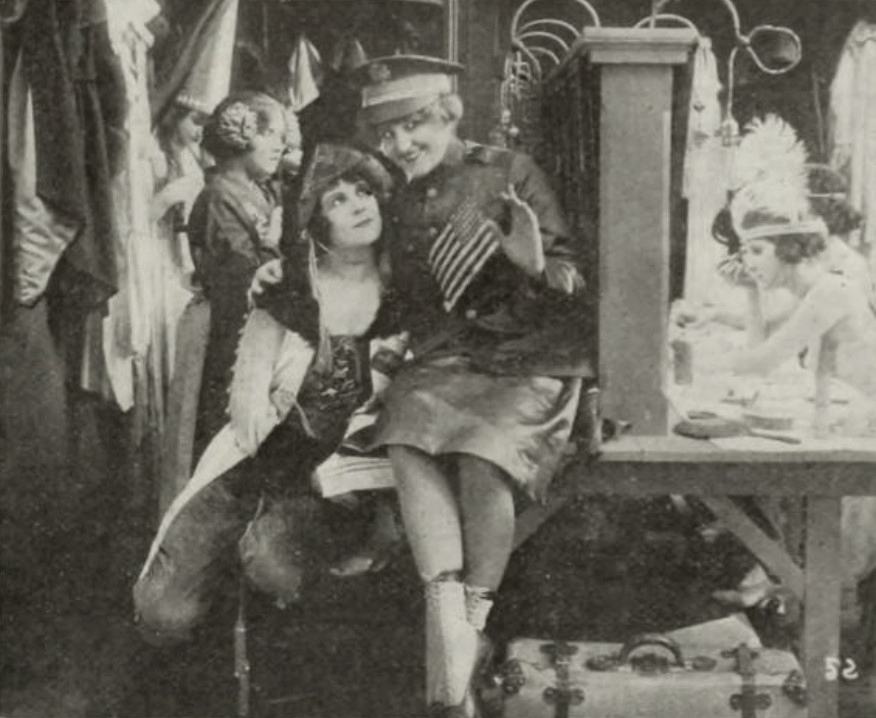
The film introduces us to Stella Dean, a veritable embodiment of rustic purity, whose life in the idyllic countryside of Pleasantville is abruptly shattered by the callous actions of John Radon. This dishonor, a wound both personal and societal, propels her from the familiar comfort of home into the bewildering anonymity of the bustling city. It's a journey not just geographical but existential, mirroring the dramatic shifts in moral landscapes often explored in films of this period, much like the stark choices faced by characters in Only a Factory Girl or the societal pressures depicted in From Gutter to Footlights. Stella's transformation into the 'Black Nightingale' is nothing short of breathtaking – a calculated reinvention born of necessity and survival. She sheds her innocent skin for the glittering façade of a profligate chorus girl, eventually ascending to the pinnacle of a courtesan's wealth and influence. This isn't merely a change of attire; it's a complete re-sculpting of identity, a defiant embrace of a life that, while outwardly lavish, is inwardly fraught with the echoes of her past.
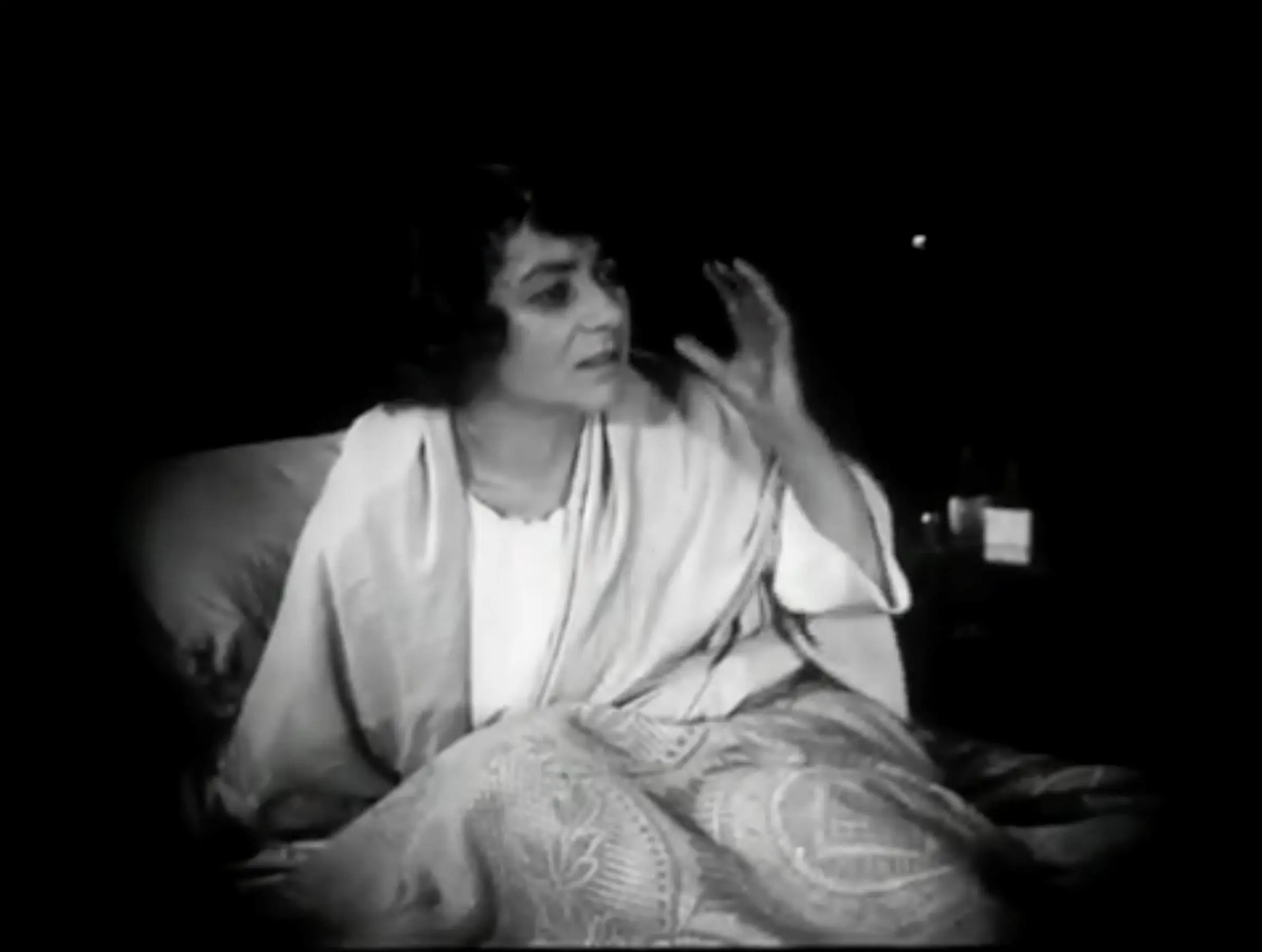
The narrative truly deepens with the re-entry of Milton Taylor, an artist from Pleasantville, played with earnest conviction by Sidney Mason. Unaware of Stella's notorious urban identity, he sees only a woman whose profound beauty and hidden depths make her the perfect muse for his magnum opus: a portrait of the Madonna. This encounter is the film's beating heart, a pivotal moment where the sacred and the profane converge. For Stella, posing as the Madonna is not just an act of modeling; it's a profound spiritual exercise. The act of embodying purity, even if only for a canvas, begins to chip away at the hardened layers of her 'Black Nightingale' persona. It's a cleansing, a quiet confession, a silent prayer for the innocence she believed irrevocably lost. Edith Reeves' performance during these scenes is particularly poignant, conveying a complex interplay of vulnerability, longing, and a nascent hope for atonement without uttering a single word. Her eyes, her posture, her subtle gestures communicate volumes, allowing the audience to witness her internal struggle and gradual spiritual awakening.
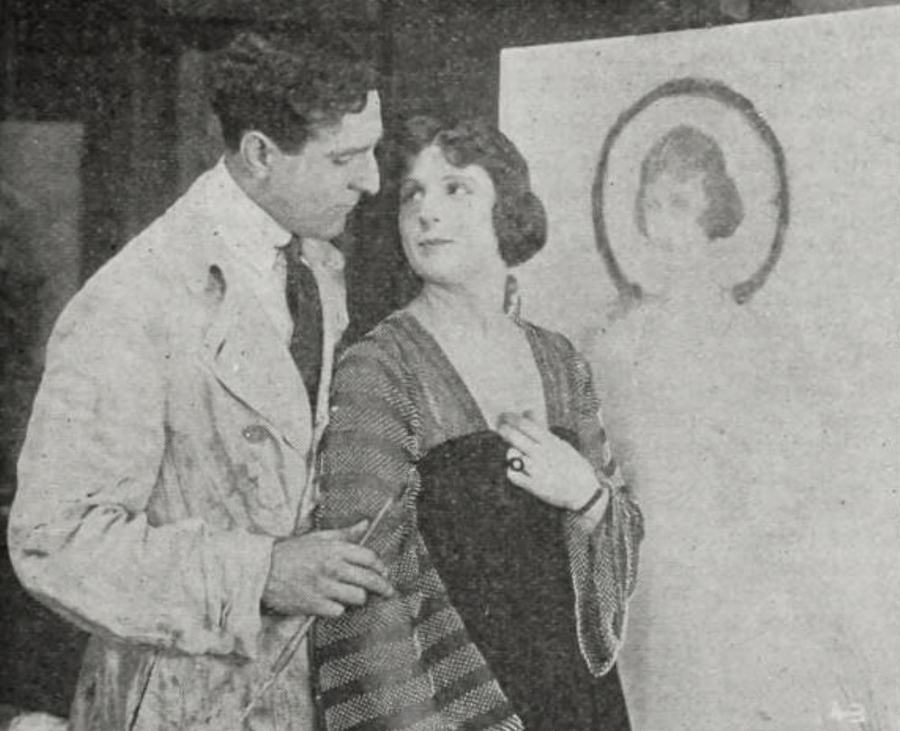
The dramatic tension escalates when Milton, blinded by his idealized vision of Stella, inevitably discovers her true identity as the notorious courtesan. His reaction is visceral and devastating, a testament to the era's rigid moral codes and the crushing weight of societal expectations. His illusions, meticulously constructed around the woman who posed as his Madonna, are shattered. The artist, whose vision sought to capture divine purity, finds himself confronted with what he perceives as its antithesis. This profound disillusionment drives him to drink, a descent into personal chaos that underscores the fragility of human judgment and the destructive power of shattered ideals. It's a familiar trope in melodrama, yet here it feels earned, a tragic consequence of a society that often offered no easy path back for those who strayed. The portrayal of Milton's anguish is a powerful counterpoint to Stella's earlier suffering, highlighting the ripple effect of past transgressions on present relationships.
Stella's response to Milton's despair is not one of resignation but of profound repentance. This is where 'The Painted Madonna' elevates itself beyond mere tragic romance. Her conversion of her opulent mansion into a refuge for foundlings is a powerful act of selflessness, a tangible manifestation of her cleansed soul. It's a radical gesture, transforming the very symbol of her 'fallen' life into a sanctuary for the innocent, mirroring perhaps the redemptive acts seen in films like The Little Orphan, where compassion becomes a driving force. This act is not for show; it's an internal imperative, a genuine desire to atone and to give back. Her subsequent return to Pleasantville is not a retreat into anonymity but a courageous homecoming, a testament to her spiritual rebirth. The reconciliation with Milton, though perhaps inevitable in the conventions of the time, feels deeply earned. It's a quiet, understated moment that speaks volumes about forgiveness, understanding, and the possibility of a second chance, even after profound missteps.
Edith Reeves, as Stella Dean, delivers a performance that anchors the entire film. Her ability to convey the dramatic arc from naive country girl to sophisticated courtesan, and then to a woman seeking spiritual solace, is remarkable. She navigates these complex emotional landscapes with an understated grace, her expressions and gestures speaking volumes in the absence of dialogue. Sidney Mason's Milton Taylor provides a suitable foil, embodying the artistic temperament and the pain of disillusionment with conviction. Albert Tavernier, Anita Navarro, Gretchen Hartman, David Herblin, Julia Stuart, William Lampe, and Lois Scott, though perhaps in smaller roles, contribute to the rich tapestry of characters that populate Stella's world, each adding a layer of authenticity to the period setting. The ensemble works in concert to build a believable, albeit morally charged, universe for Stella's journey.
'The Painted Madonna' is a film rich in thematic depth. It explores the hypocrisy of societal judgment, particularly towards women, a theme that resonates even today. Stella's forced exile and subsequent reinvention highlight the limited options available to women who had 'fallen' from grace. The film also delves into the redemptive power of art, not just for the artist but for the subject, illustrating how creative expression can facilitate profound personal transformation. The contrast between urban vice and rural innocence, a common motif in early American cinema, is handled with nuance, suggesting that true virtue is found not in geography but in the heart. The screenplay by George Scarborough and O.A.C. Lund is commendably intricate for its time, weaving together personal tragedy, moral dilemma, and spiritual awakening into a cohesive and compelling narrative. Their writing ensures that Stella's journey, though melodramatic, never feels entirely contrived, allowing for genuine emotional investment.
Beyond its narrative, 'The Painted Madonna' offers a fascinating window into the cinematic techniques and storytelling conventions of the 1910s. The pacing, though slower by modern standards, allows for meticulous character development and emotional build-up. The use of intertitles is effective, providing not just dialogue but also narrative exposition and moral commentary, guiding the audience through Stella's complex inner world. The cinematography, while perhaps lacking the sophisticated camera movements of later eras, is adept at capturing the stark contrasts between Stella's different lives – the sun-drenched fields of Pleasantville versus the opulent, shadowed interiors of her city mansion. The film’s moral clarity, typical of its period, delivers a message of hope and the possibility of forgiveness, a sentiment that would have undoubtedly resonated with contemporary audiences seeking tales of moral fortitude and eventual triumph over adversity. It stands as a testament to the power of storytelling even in the nascent stages of film as an art form.
In conclusion, 'The Painted Madonna' is far more than a historical curiosity. It is a powerful, emotionally resonant film that tackles timeless themes of sin, salvation, and the enduring human capacity for change. Edith Reeves' portrayal of Stella Dean is a masterclass in silent acting, guiding us through a journey that is both heartbreaking and ultimately uplifting. For those interested in the evolution of cinematic narrative, the power of visual storytelling, and the exploration of profound moral dilemmas, this film remains an essential viewing. It reminds us that even when life paints us into a corner, the canvas of our spirit always holds the potential for a new, purer image.
IMDb 6.5
1936
Community
Log in to comment.