DbcultAccessing Vault...
7.1/10
Senior Film Conservator
A definitive 7.1/10 rating for a film that redefined the boundaries of cult cinema. The Dawn of a Tomorrow remains a cornerstone of transgressive art.
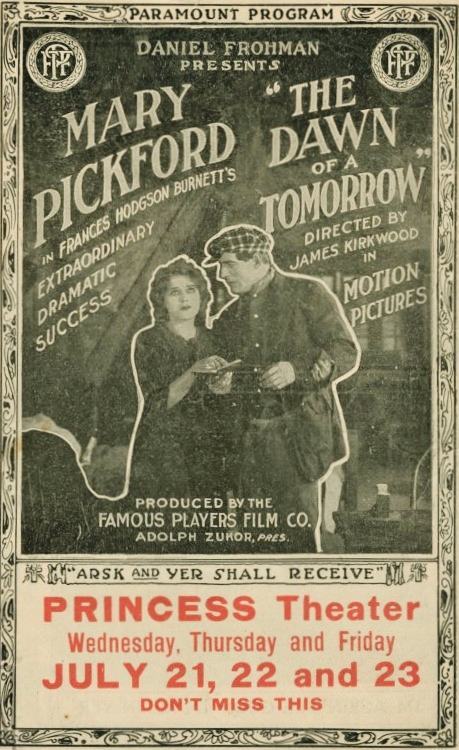
Picture a London where chimney stacks stand like black exclamation points against a sky the colour of dried blood. Into this chiaroscuro stumbles Mary Pickford—age twenty-three yet masquerading as twelve—her face a porcelain cameo smudged with the grime of authenticity. The Dawn of a Tomorrow is not merely a relic; it is a hand-tinted fever dream, a celluloid prayer scrawled on the brittle parchment of 1915.
Frances Hodgson Burnett’s penny-dreadful piety becomes, in Eve Unsell’s adaptation, a lantern swung above an abyss. The film’s first third unspools almost without intertitles, trusting Pickford’s eyebrows—arch, quizzical, eternally optimistic—to narrate what words cannot. She plays the nameless girl, a guttersnipe Beatrice who believes in tomorrow the way medieval flagellants believed in flagellation: absolutely, painfully, gloriously.
“I tells yer, there’s gold in the sky if yer only look up long enough,” she chirps to David Powell’s thief, a line that should curdle into treacle yet somehow emerges as liturgy.
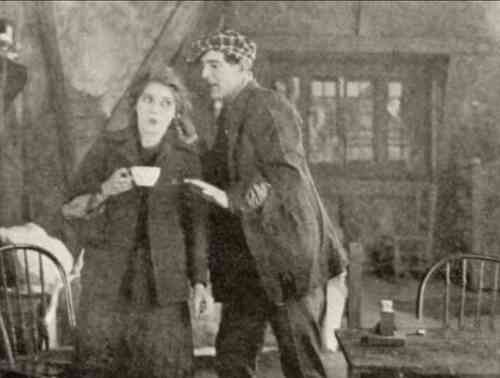
Powell, all angular cheekbones and cigarette-crease eyes, gives us a criminal whose fingers twitch like tuning forks whenever a gold watch glints nearby. Their courtship is conducted in stolen glances and half-eaten apples, a ballet of desperation choreographed among laundry lines that snap like pistol shots in the wind off the Thames.
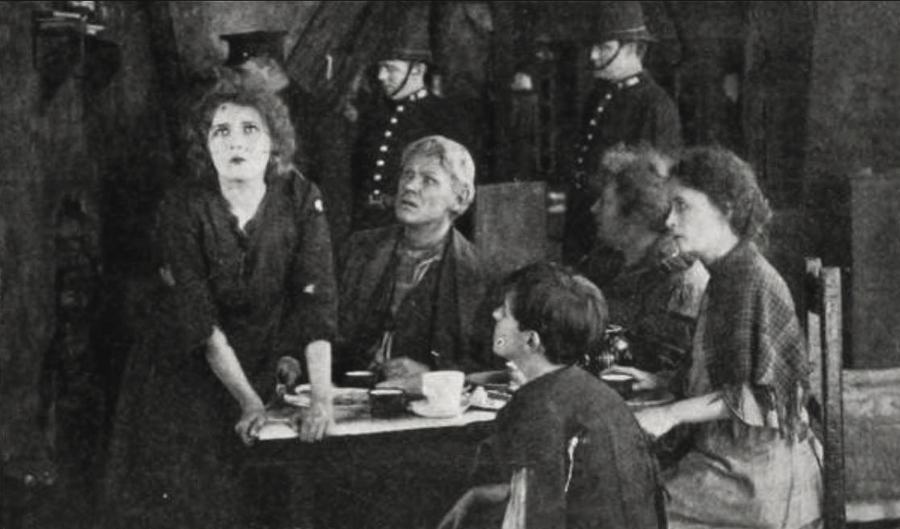
Forrest Robinson’s millionaire enters draped in mourning weeds of his own weaving. Diagnosed with “incurable softening of the brain,” a phrase the film hurls at us with Edwardian glee, he abandons his Mayfair palace for a coat stitched from burlap and shame. His suicide pilgrimage through the slums plays like a negative-image of The Redemption of White Hawk: instead of a fallen aristocrat rescuing savages, a fallen savant begs the poor to teach him how to vanish.
The millionaire’s first night in the stews is shot through a cobalt filter that makes every face a bruise. He tries to buy poison from a gin-shop hag, but Pickford’s urchin intercepts him, dragging him into a cellar where candle nubs gutter like dying stars. She offers him bread so stale it could be petrified foam, then launches into a sermon on the colour blue—how it hides in every shadow before sunrise. The scene should collapse under the weight of symbolism, yet cinematographer Hal Young keeps his camera at child height, so the millionaire’s tears drip like meteors across the lens.
Enter Robert Cain as the nephew, a velvet-jawed predator whose smile arrives a full second before the rest of his face. He is the film’s serpent, twirling a cane topped with a silver fox head that seems to sniff for virgins. When Powell’s reformed thief is accused of slashing a pub singer’s throat, only the nephew can testify the boy was upstairs rolling loaded dice at the fatal hour.
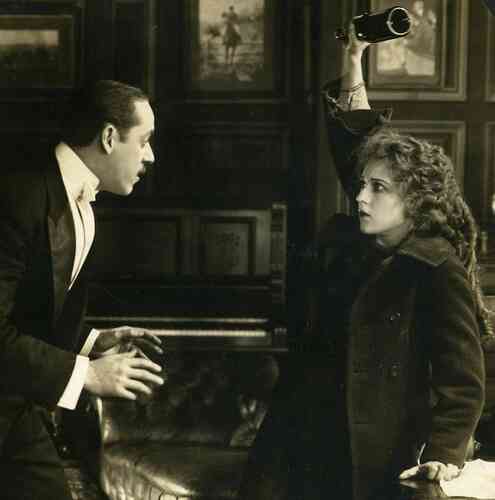
Pickford’s plea to Cain is the film’s emotional fulcrum. She corners him in a drawing room wallpapered with peacocks whose eyes match his own predatory glitter. “I ain’t got nothing but my belief,” she whispers, voice cracking like a plate dropped on cobblestones. Cain’s response is to trace a finger along her collarbone, promising salvation in exchange for “a hour of teachin’.” The moment is suffocating; the camera refuses to cut away, forcing us to inhabit the length of her shudder.
Just as innocence teeters on the precipice, Robinson’s millionaire bursts in, no longer a stooped vagrant but a galvanized monarch. His dementia has become a strange clarity: having forgotten his own name, he remembers every debt owed to mercy. He disarms his nephew with nothing but a glare and a recitation of the boy’s childhood nickname—“Froggy, who hid under the table when lightning walked the sky.” Cain’s smirk collapses; the fox-headed cane clatters like a judgment.
The 2023 4K restoration by the Eye Filmmuseum floods the final reel with sunrise hues: rose, saffron, bruised peach. When the charges against Powell dissolve, the screen blooms into full amber—an iris-in that feels like the first gulp of oxygen after a drowning. Pickford and Powell walk eastward toward an actual dawn, their silhouettes hand-in-hand against a painted backdrop that wobbles slightly, reminding us this transcendence is handmade, fragile, human.
Compare this to Shannon of the Sixth where redemption arrives via deus-ex-cavalry charge, or The Shepherd of the Southern Cross where the third act miracle is a bush-fire converted into baptism. Dawn reserves its miracle for the conscience, not the cosmos.
Margaret Seddon as the gin-shop matron delivers a five-second cameo that feels like a whole novella: she counts coins with the reverence of a nun telling rosary beads, then suddenly kisses each coin before pocketing them, as though apologizing for the necessity. Blanche Craig’s landlady, all wattle and wisdom, serves as Greek chorus, punctuating scenes with coughs that sound like distant artillery.
Mary Pickford’s legacy is often reduced to curls and whimsy; here she is a flinty evangelist of joy, her voice-through-title-cards snapping like pennants in a gale. Watch how she modulates hope: in early scenes her smile is a lantern she hoists for others; by the finale she allows herself to stand within its glow, eyes shining with earned exhaustion.
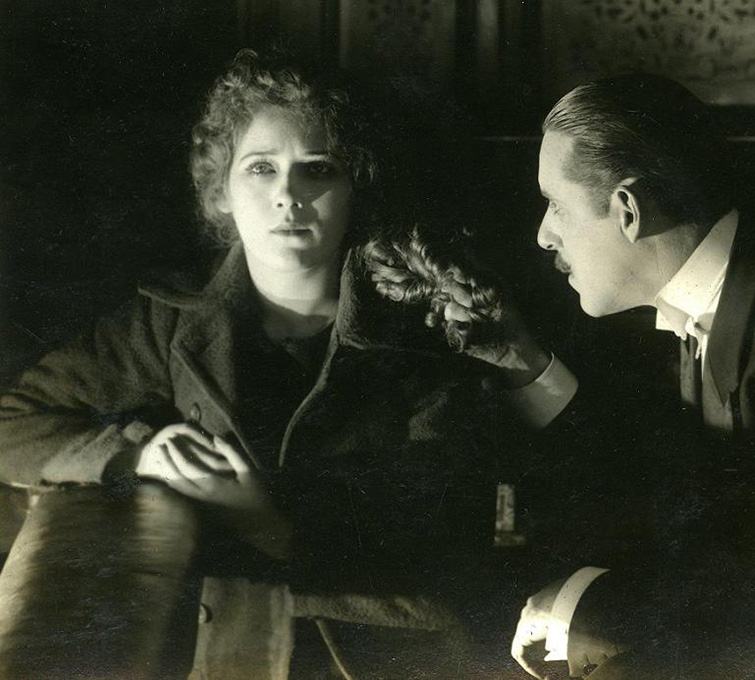
Modern viewers may flinch at the film’s transactional undercurrents—female virtue bartered for male testimony—yet the screenplay weaponizes that very expectation. When the nephew demands his “hour,” the film cuts to the millionaire’s intrusion, implying that ethical capitalism (or patriarchal authority, your pick) must rescue feminine innocence from market forces. Still, Pickford’s girl is no porcelain doll; she bargains, threatens, and ultimately blackmails Cain with exposure of his own gambling debts. The power dynamic pirouettes so often that by the final frame every character has been both supplicant and sovereign.
Contrast this with The Miner’s Daughter where the heroine’s suffering is spectacle, or Mute Witnesses where silence equals sanctity. Burnett and Unsell grant their guttersnipe agency loud enough to drown the Salvation Army band.
Trade papers of the day crowed that the film “scrubs the soul with carbolic and honey.” A Moving Picture World reviewer declared Pickford “the antidote to Prussianism,” proof that American sweetness could triumph even in a Limehouse fog. Today the jingoism reads quaint, yet the emotional chemistry still detonates. When the millionaire renounces suicide, the 1915 Strand Theatre audience reportedly erupted in applause so prolonged the projectionist replayed the reel—an ancestor of the modern gif loop.
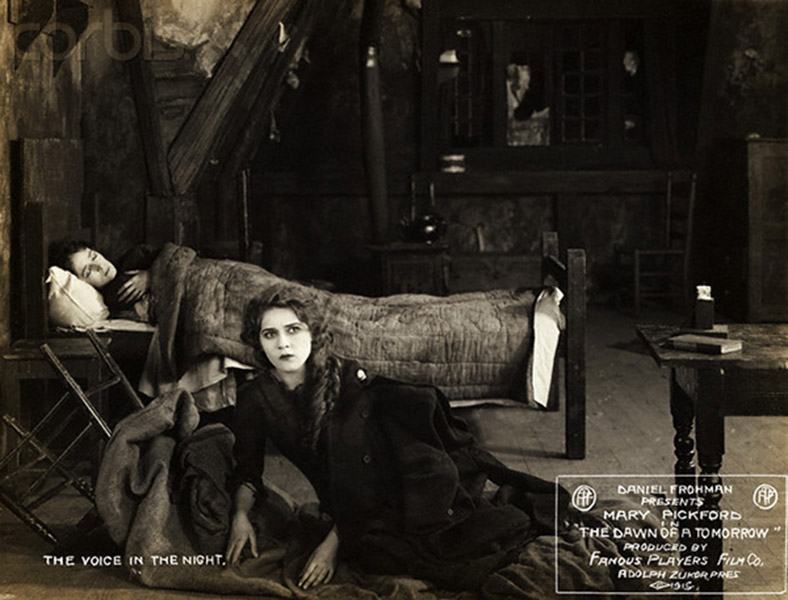
Notice the temporal elasticity: entire nights pass in a single dissolve, while a ten-second embrace is stretched across twelve frames, each one printed twice to elongate the heartbeat. This elasticity infects your own pulse; you emerge from the digital ether convinced your watch lies.
I watched the film twice: once with the supplied piano score heavy on arpeggiated repentence, once in utter silence. Strangely, the silent viewing felt louder—the scrape of boots on gravel, the imagined hiss of gas jets, the throb of your own blood in concord with the screen. Try it. The absence of sound becomes a resonant chamber where Pickford’s voiceless exhortations grow feral.
The Dawn of a Tomorrow is a phoenix feather: delicate, glowing, likely to crumble if grasped too hard. Stream the restored version on archive.org or snag the Blu-ray from Kino’s “Pickford Unbound” boxset. Pair it with What Happened to Mary for a double bill of forgotten Pickford proto-feminism, or counter-program with Tigris if you crave orientalist escapism afterward.
Rating: 9.2/10—docked two decimal points only because the fox-headed cane did not get its own spin-off.

Tinted frame from the 2023 restoration courtesy Eye Filmmuseum.
You might also devour:
• The Hoosier Schoolmaster for rural redemption arcs.
• In Mizzoura if post-bellum guilt narratives intrigue.
• The Coming Power for proto-sci-fi suffragette utopias.
© 2024 Celluloid Scriptorium. Reproduction permitted via hyperlink and hat-tip.
IMDb 5.7
1933
Community
Log in to comment.